On the Edge of a Plan: Jerusalem’s Waiting Game for Gaza’s Next Chapter
Jerusalem in late autumn carries a particular hush — a city where the call to prayer threads through morning traffic and Orthodox prayers ripple down alleys of the Old City. It is also a place where negotiations look like a game of patience and power, and where the lives of people who never sought headlines are quietly rearranged by diplomatic timetables.
That hush was punctuated this week by an unusually candid moment. Standing outside the Prime Minister’s Residence, Benjamin Netanyahu sounded cautiously optimistic about the “second phase” of a high-stakes American plan to end the fighting in Gaza — and then, as if reminding listeners of the brittle reality, he listed the knots still waiting to be untied.
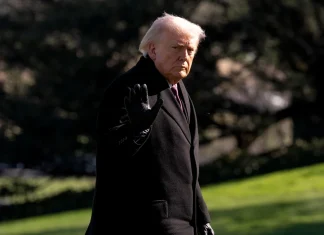
“Phase two is close,” he told reporters alongside Germany’s Chancellor Friedrich Merz, “but the timetable, the forces, the details — they remain open questions.” Then, speaking of an invitation extended by the White House, Mr Netanyahu said he would carry those questions to Washington and discuss them with US President Donald Trump at the end of the month.
What the “Second Phase” Promises — and Why It’s Fragile
The blueprint, as described by officials involved, is straightforward in theory and fiendishly complicated in practice: Israel would pull back from more of Gaza; a transitional authority would be installed to govern; Gaza would be demilitarised and Hamas disarmed; reconstruction efforts would begin, and a multinational security presence would stand watch.
Under the first phase of the plan — tied to the release of hostages and detainees — Israel retained control of some 53% of Gaza’s territory, a point Netanyahu emphasized as a necessary security measure. The multinational coordination centre established in Israel is meant to shepherd the transition, but those who track the process say it has, so far, moved at the pace of a hesitant relay team.
“There are practical questions we cannot finesse,” Mr Netanyahu said. “What will be the timeline? Which forces will come in? Will there be international forces? If not, what are the alternatives?”
- Territorial control: Israel retained control of 53% of Gaza during the first phase.
- Casualties since the truce: Gaza’s health ministry reports 373 Palestinians killed since the ceasefire began; Israeli officials report three soldiers killed by militants during the same period.
- Hostages and remains: The handover of the final hostage remains — those of an Israeli police officer from the 7 October clashes — remains pending.
Voices from the Ground: Fear, Hope, and Frustration
In the cramped neighborhood of Mea She’arim, an elderly man named Avi sat outside a bakery and watched the smoke of a wood-fired oven blur the skyline. “We want peace,” he said. “But peace that means safety. Not promises.” He tapped his chest. “We need guarantees.”
Across town in West Jerusalem, a Palestinian pharmacy worker, who asked not to be named for fear of repercussion, folded a receipt into her pocket and offered a quieter assessment: “People here are tired of the same horizons. We need hospitals, schools, electricity. Not just troops coming and going.”
Experts warn that the human stakes behind the political language are enormous. “This is a junction where security logic collides with humanitarian urgency,” said Dr. Leila Haddad, a Middle East analyst who has followed Gaza reconstruction efforts for two decades. “The longer we wait for a clear, enforceable multinational presence, the more reconstruction stalls — and the more fertile the ground for renewed militancy.”
Germany’s Calculus — and the Global Ledger
Chancellor Merz spoke with measured urgency. Germany, he said, is prepared to assist in rebuilding Gaza — but Berlin wants clarity about what Washington will commit before it writes its own checks or sends engineers and money into a landscape still dotted with uncertainty.
“Phase two must come now,” Merz told reporters. “But we need to know: Who is on the ground? What is the mandate? Without answers, there is no responsible way for us to proceed.”
Those words reflect a wider European dilemma: nations want to help, but many are loath to assume responsibility for security tasks they cannot fully control. The idea of a multinational force — whether European, Arab, or a NATO-style coalition — has proven thorny: who leads it, under whose rules does it operate, and how long does it stay?
The Uncomfortable Middle: Ceasefire, Violations, and the Hard Work of Trust
The ceasefire that began in October has, at times, resembled a fragile glass bowl balanced on a table: whole, but under constant strain. Both sides have accused the other of violations. Israel says it conducts strikes to fend off attacks or to destroy militant infrastructure; Palestinian authorities tally civilian casualties and warn that reconstruction cannot begin in earnest until safety is secured.
“You cannot rebuild on the basis of a handshake,” said an unnamed Israeli security official. “You need boots, data, verifiable weapons caches, and a regional commitment that this won’t be a brief pause before the next eruption.”
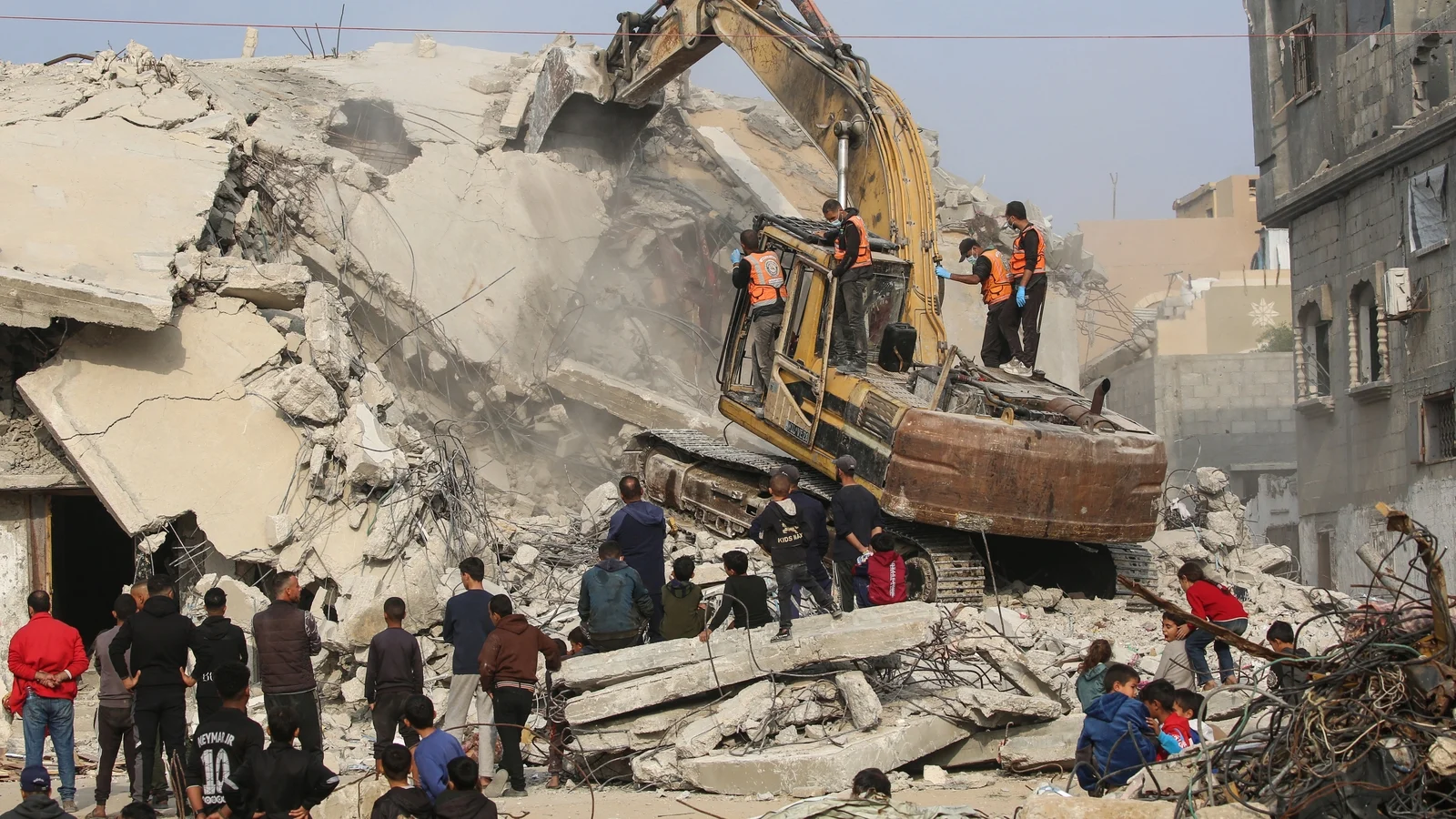
On the other side, Gazans who returned to pick through rubble have spoken of small joys and persistent fears. “I planted tomatoes on the roof this week,” said Amal, a schoolteacher who returned to Gaza City to see what was left of her home. “The plants drink the same water, the sun is the same, but the nights are different now. We wake at every sound.”
Beyond Gaza: A Regional Chessboard
Netanyahu mentioned another strand of conversation he intends to bring to the White House: the push to normalise relations with Arab and Muslim states. “There’s a path to broader peace with Arab states,” he said, “and possibly a workable peace with our Palestinian neighbours.” Yet he insisted Israel would press to retain security control over the West Bank — a non-starter for many Palestinians.
Donald Trump, Mr Netanyahu noted, has reportedly assured Muslim leaders that Israel would not annex the West Bank — a remark that adds yet another layer to the negotiation. The question of political annexation remains alive and unresolved, even as diplomats convene.
What Comes Next — and What We Should Watch For
So where does this leave ordinary people who are not diplomats or generals? With questions that demand answers, and hard ones at that.
Will a multinational force arrive with a clear mandate and the logistics to disarm militant groups? Will reconstruction cash arrive along with accountability to ensure it reaches hospitals, not bunkers? Can a transitional authority govern without being perceived as an occupying force?
We should watch for three signals that would show tangible progress:
- A signed agreement specifying the mandate, composition, and duration of any international security force;
- Rapid deployment of humanitarian reconstruction resources, coupled with transparent oversight mechanisms;
- Concrete commitments from regional states — not just statements of intent — to support a sustainable political settlement that respects Palestinian rights and Israeli security concerns.
Readers, ask yourselves: What would you accept as a fair trade-off between security and sovereignty? How much confidence do you place in international forces and diplomatic guarantees?
The answers matter, not just for policymakers, but for the father planting tomatoes on a rooftop in Gaza, the Israeli grandmother watching the news with dread, and the diplomats who are now, quietly and urgently, trying to stitch together a next chapter. In Jerusalem, that work is underway; but whether it will bring healing or a protracted intermission depends, as always, on the messy arithmetic of trust, deterrence, and the human need for normalcy.