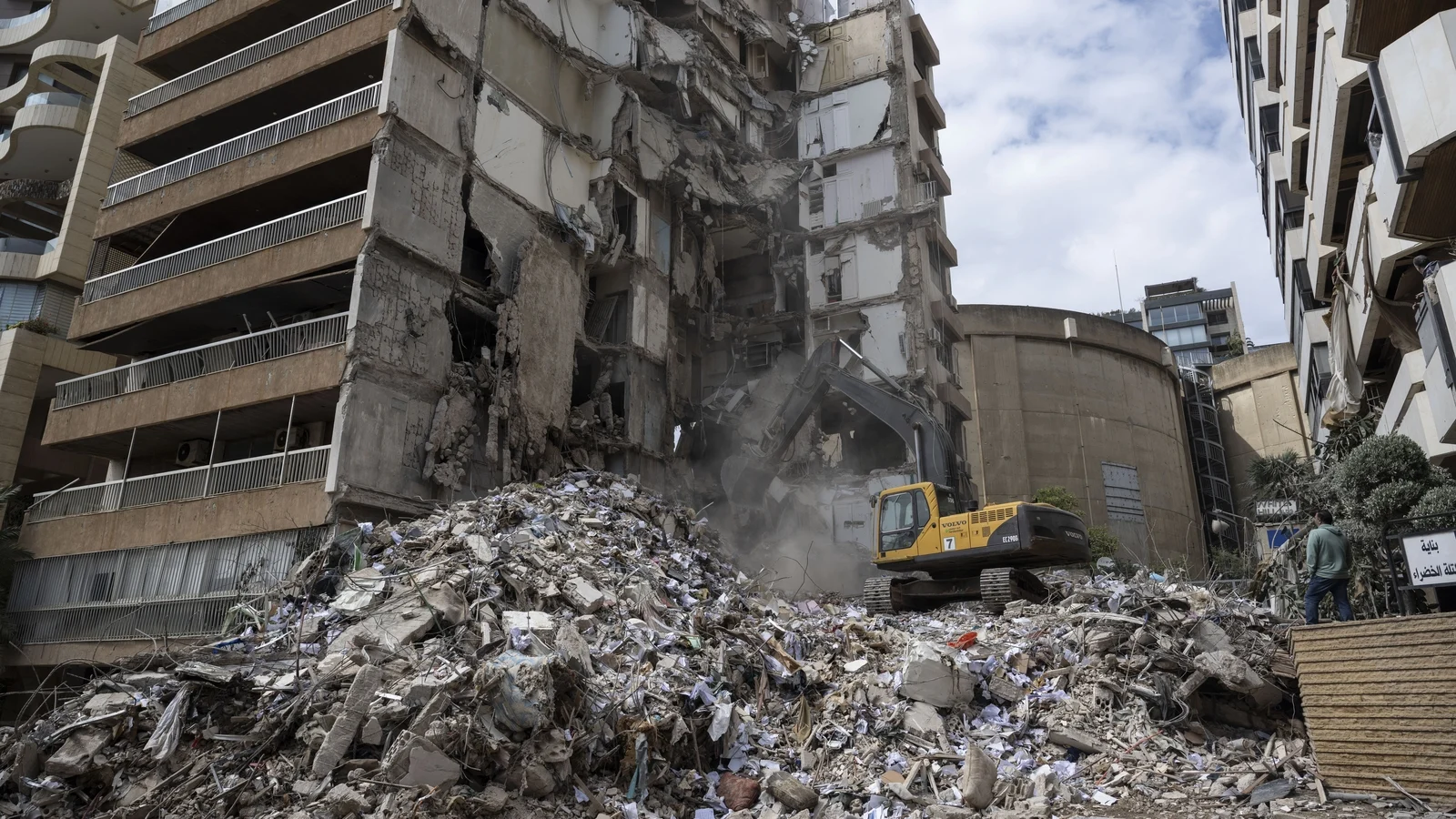
After the Blast: Beirut’s Streets, a Fragile Truce, and the Long Shadow of the Strait
In the gray light of another ruined morning, Rafik Hariri University Hospital looks like a map of a city under glass—corridors jammed with stretchers, the smell of antiseptic mixing with the acrid tang of smoke, and families who walk in as if in a trance, searching for names on lists they hope are not there.
“We bring bodies in pieces,” said a rescue worker who asked to remain anonymous. “Whole families are split across different wards. We used to count survivors. Now we count fragments.” His voice was flat, weary, as if it had been stretched to breaking by a week that felt like a year.
That is the human geometry of the moment: a pause in one place, a blast in another, and the rest of the world watching a geopolitical clock tick toward either wider calm or fresh violence. A US-brokered ceasefire, announced abruptly by President Donald Trump late Tuesday, promised respite. In reality, the first 24 hours looked like a street that had been told to breathe but kept coughing.
The ceasefire and its invisible lines
The declaration in Washington looked simple on paper: a halt to large-scale strikes between the United States and Iran after six weeks of tit-for-tat destruction. But the lines of the truce were drawn in shadow and contradiction.
In practice, the Strait of Hormuz—through which some 20 percent of the world’s oil and liquefied natural gas once flowed—remains nearly sealed. Where 140 vessels a day threaded the narrow waterway before the war, the first day of the truce logged a single oil products tanker and five dry-bulk ships. That figure is not just a statistic; it is an economic heartbeat slowed.
“When the chokepoint closes, everything behind it stutters—power stations, factories, even the gas in your car,” said Dr. Mira Soliman, a maritime economist in London. “This isn’t a localized shutdown. It’s systemic.”
Diplomacy on the move—Islamabad, Washington and whispered corridors
Talks are being convened in unlikely places. Pakistan, its capital under tight security, is preparing to host the first round of US-Iran negotiations. Islamabad’s usually bustling streets felt like a city waiting for a verdict—shops shuttered, checkpoints manned, diplomats moving in guarded convoys.
“We are trying to make a room where both sides can be heard,” a Pakistani official involved in the talks told me. “Safe spaces are the first gestures toward trust.”
Yet even as diplomats gather, there is a gash in the truce: Washington and its regional partners maintain that Lebanon was never part of the ceasefire. Tehran and several mediators insist the opposite. Within that gap lie the rockets and the bodies.
Beirut’s plea and Netanyahu’s volte-face
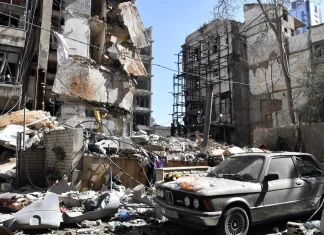
Lebanon woke to the worst bombardment since the conflict began, and grief swept like a third front through cities and villages. Lebanese officials declared a national day of mourning after deadly strikes in Beirut’s southern suburbs tore through dense residential neighborhoods.
Outside the hospital, people queued in long lines—some for blood donations, many simply to look for relatives whose phones had stopped answering. A volunteer named Samar, 28, with soot-streaked hands and a hoodie flecked with dust, summed up a strange, brittle hope.
“People here want two things,” she said. “We want the bombs to stop. And we want to know who will protect the ones who are left.”
Into that air stepped Israel’s Prime Minister Benjamin Netanyahu. After previously rebuffing offers of direct negotiation, he announced instructions to begin talks with Beirut “as soon as possible” with a clear agenda: disarm the Iran-aligned militant group Hezbollah and secure a formal peace.
“We are ready to talk, and the talks will be about disarming Hezbollah and establishing peaceful relations between Israel and Lebanon,” Netanyahu said in a televised statement. The words landed like a hand offered to the wounded—with equal parts sincerity and strategic calculation.
Lebanese President Joseph Aoun indicated a parallel diplomatic track was in motion and felt cautiously optimistic. “Diplomacy must be exhausted before more blood,” he said. “The international community has a role. We are asking for space to breathe.”
Hezbollah, the army, and the paradox of disarmament
But those breathing spaces are contested. Under a US-mediated 2024 accord, Lebanon agreed that the state alone should carry arms—an agreement that, on paper, implies the full disarmament of Hezbollah. In reality, disarming a political-military movement embedded in communities is like trying to unpick a sweater without tearing the fabric.
“We will not enter talks that ignore the reality on the ground,” said Hezbollah lawmaker Ali Fayyad. “If the Lebanese government comes to the table, there must first be a clear and immediate ceasefire. Anything else is theatre.”
The Lebanese army attempted a disarmament push last year but came up short. For many Lebanese, Hezbollah is both protector and problem—an armed actor that has defended against invasions but also entangled the country in wider regional wars.
Voices from the water and the corridors of power
On state television in Tehran, an attributed statement from Iran’s Supreme Leader declared that Tehran was not seeking a wider war—but that it would “not forfeit its rights” and would take “the management of the Straits of Hormuz into a new phase.” The sentiment was part warning, part claim of victory.
“We are not after civilisation-ending conflict, but neither will we abandon our defensive capabilities,” the read statement said, according to state media. Whether that posture leads to negotiations over commercial navigation or more brinkmanship remains to be seen.
Yet both Tehran and Washington publicly claimed success of different kinds: the Americans pointed to a reduction in immediate attacks, while Iran framed the truce as validation of its regional leverage. Both claims were factious and incomplete; neither side fulfilled the other’s ultimate objectives.
“What we are seeing is a classic pause, not a resolution,” said Professor Hisham al-Karim, a scholar of Middle Eastern security. “If underlying grievances—arms, governance, economic deprivation—aren’t resolved, the pause simply stores up pressures for another explosion.”
Why this matters to you
This is not just a local story. When the Strait of Hormuz constricts, gasoline prices ripple across continents. When Lebanon convulses, a diaspora of millions holds its breath. When ceasefires are ambiguous, markets and families pay the price of that ambiguity.
Ask yourself: how should the international community balance the urgency of immediate protection with the harder business of long-term political solutions? Can diplomacy truly work when its boundaries are disputed and its participants move with such uneven trust?
No one in Beirut, Washington, Tehran, or Islamabad will be satisfied with tidy answers tonight. But the survivors and the wounded—those who count body parts and those who count the ships that don’t come through—will live with the consequences.
Quick facts
- First 24 hours of the ceasefire: 1 oil products tanker and 5 dry bulk carriers passed through the Strait of Hormuz, versus about 140 ships per day before the conflict.
- Lebanon’s Health Ministry: death toll since March 2 risen to 1,888 with more than 6,000 wounded.
- Ceasefire brokered amid talks hosted by Pakistan; Washington and Tehran disagree on whether the agreement covers Lebanon.
In a world that keeps insisting on binary narratives—victory or defeat, war or peace—the truth is usually dustier and more human. For the families in Beirut gathering under tarps and in hallways, there is no elegant diplomacy that replaces a lost child, a shattered home, or a quiet neighborhood turned field hospital. There are only choices to be made now: who will talk, who will listen, and who will finally step forward to help the living rebuild what the guns have taken away.