When a Parliament Votes to Make Death the Default: A Country at a Crossroads
On a cold, fluorescent-lit day in Jerusalem, the Israeli parliament — the Knesset — voted to turn a punitive idea into law. Sixty-two lawmakers, among them Prime Minister Benjamin Netanyahu, raised their hands. Forty-eight opposed. One abstained. The result: a new statute that makes the death penalty the default sentence for Palestinians convicted in military courts of lethal attacks.
The number of votes tells only part of the story. Behind the tally are charged faces in the chamber, a far-right minister’s relentless campaign, the echo of a trauma that still refuses to die, and the strained silences of a global community watching a democracy negotiate its values under exceptional pressure.
What the Law Does — and What It Leaves Out
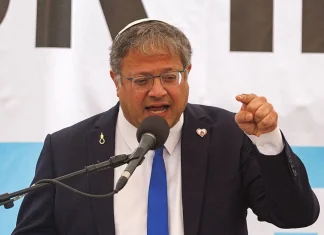
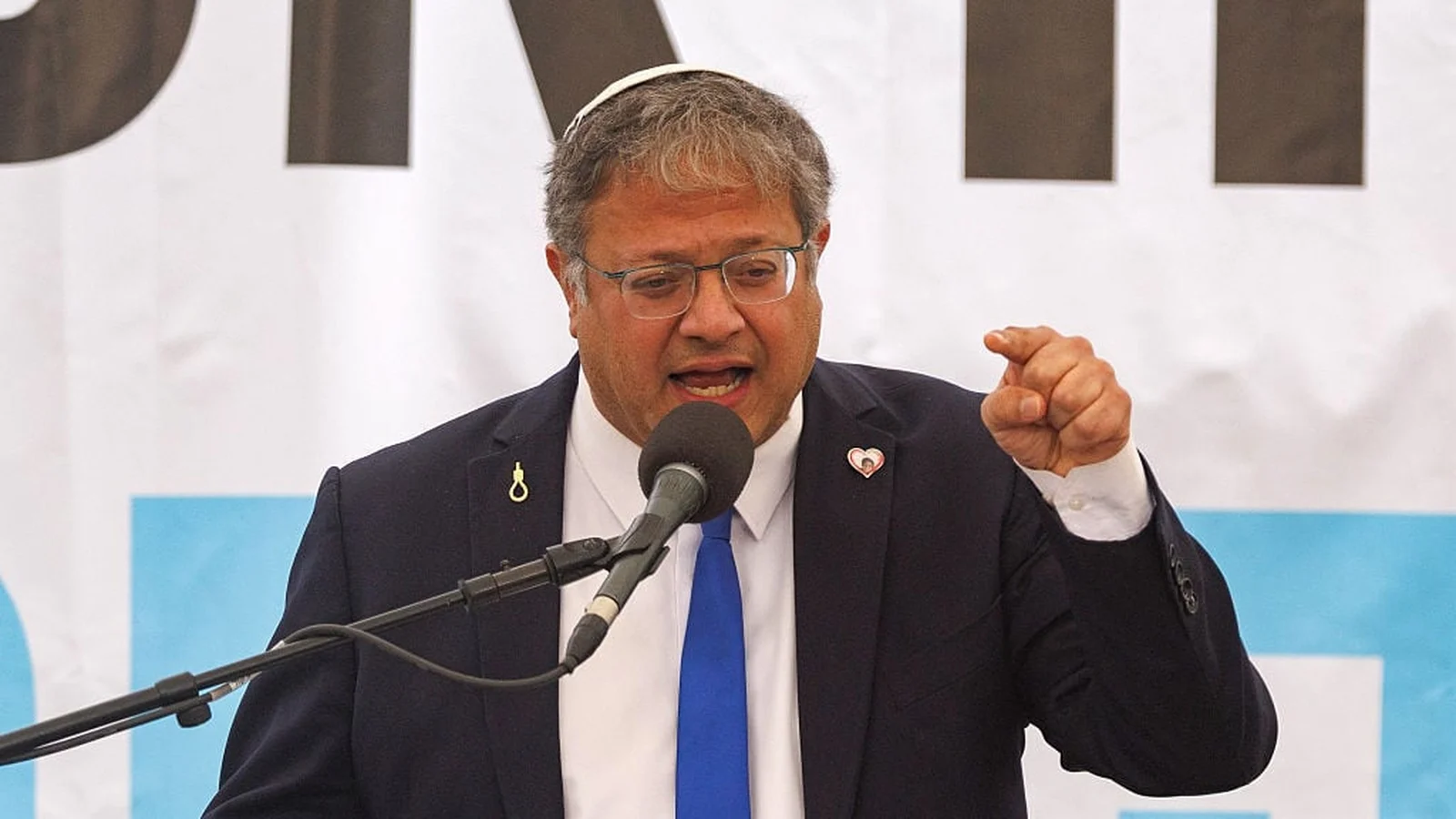
The law, championed by National Security Minister Itamar Ben-Gvir, instructs military courts that try Palestinians to hand down the death penalty for killings of Israelis, unless “special circumstances” are found. Sentences must be passed within 90 days, and the statute strips away the possibility of clemency.
Some key features:
- Default death sentence for lethal attacks tried in military courts.
- Mandatory sentencing within 90 days.
- No right to clemency or pardon in ordinary lines of appeal.
- Revisions to the original draft allow for life imprisonment as an alternative in some cases.
Why This Matters
To many Israelis who watched the October 7, 2023 Hamas assault — the attack that killed nearly 1,200 people inside Israel — the law is framed as an answer to an existential shock. Supporters argue it will deter future atrocities and deliver swift justice.
“We cannot afford paralysis when blood is still warm,” said one proponent from the coalition, leaning on a familiar argument: that severe punishment curbs violence. “This is about protecting Israeli citizens and their children.”
But across the occupied West Bank, among human rights lawyers and diplomats, the law reads very differently. Military courts in the West Bank try Palestinians almost exclusively. Rights groups such as B’Tselem point out conviction rates in those courts approach the high 90s, and they allege a pattern of coerced confessions and inadequate defenses.
“This is not justice,” said Laila Mansour, an attorney who represents Palestinian detainees. “It is an acceleration of a system already tilted against the accused. When trials are perfunctory and the possibility of error is high, the death sentence is not a penalty — it is a sentence of permanent injustice.”
International Alarm and Domestic Politics
The law has strained relations between Israel and a number of its European partners. Ireland’s foreign minister, Helen McEntee, condemned the move as discriminatory and urged Israel not to implement it. The foreign ministers of Germany, France, Italy and the UK voiced similar concerns, describing the measure as de facto discriminatory toward Palestinians.
United Nations experts added their voices, warning that the bill contains “vague and overbroad” definitions of terrorism that could criminalize behavior that is not truly terrorist in nature. Amnesty International echoed long-standing research indicating that capital punishment does not demonstrably reduce violent crime more effectively than life sentences.
“There is no credible evidence that executions save lives,” said an Amnesty spokesperson. “What we see instead is the irreversible risk of executing the innocent.”
Within Israel, the passage was not unanimous. Forty-eight lawmakers voted against the bill, a sizable minority signaling political fissures. Israeli media reported that Prime Minister Netanyahu requested adjustments to the original draft to soften certain elements — a sign that international pressure and political calculations influenced the final text.
History, Law, and the Weight of Precedent
Israel abolished the death penalty for murder in 1954. The only civilian ever executed after a civil trial was the Nazi architect Adolf Eichmann in 1962. Military law, however, retained the theoretical option of capital punishment — until now, unused.
Globally, the tides have turned away from the gallows. Amnesty International documents that some 113 countries have abolished the death penalty for all crimes, while roughly 54 retain it in law or practice. The global trend over recent decades has been one of gradual abolition, even as a handful of democracies continue to permit executions.
What the Numbers Hide
Statistics can comfort and confuse. Conviction rates in West Bank military courts are commonly reported to be in the mid-to-high 90s. Palestinian authorities and international monitors give divergent death counts from the broader conflict—figures often used as political currency and casualty tallies that families clutch like rosaries. The human cost behind those numbers is irreducible: fathers, mothers, children, neighbors.
“When they speak of deterrence, remember why people are desperate,” said Dr. Amina Baraka, a social anthropologist who studies the occupied territories. “Deterrence means little when communities feel there are no political solutions, only cycles of retaliation.”
Voices from the Ground
In a West Bank village beneath a sky the color of unwashed porcelain, an olive farmer named Yusuf paused from pruning to answer questions. His son, he said, had been held in Israeli detention for months.
“We carry our olive trees through winters and summers,” Yusuf said. “We know patience. But when they make laws that say there is no mercy for people like my boy, where is the rule of law? Where is the fairness?”
Across the seamline in a Tel Aviv café, a mother who lost a cousin on October 7 spoke softly. “We do not want to become a country that kills on impulse. We want safety and a sense that justice works. Punishment without due process is not justice.”
What Comes Next?
Legal challenges are almost certain. Israeli human rights organizations have already announced plans to appeal the law to the Supreme Court. International pressure may influence how, and if, the law is implemented. But the passage marks a political and symbolic rupture—one that will shape debates over occupation, security, and the nature of Israeli democracy for years to come.
There are deeper questions here, ones that should unsettle readers everywhere: Can security and human rights coexist when the machinery of law is used asymmetrically? How do democracies balance collective trauma and the rule of law without tipping into collective punishment?
Questions for the Reader
If you live in a democracy that once prized due process, how would you feel to see a law that makes death the default for a distrusted minority? If you are somewhere broiling under conflict, what do you think will truly stop violence—more severity or more political solutions?
There are no easy answers. But we neglect the harder questions at our peril: the relationship between justice and revenge, between deterrence and dignity, between retribution and restoration. These are not merely legal matters; they are moral ones.
Global Connections
This moment in Jerusalem is not an isolated incident. Across democracies, we have seen surges of punitive lawmaking in response to terror and crime—quick fixes that often outlast the moment that birthed them. From capital punishment debates in Asia to sentencing reforms in Europe and America, the tension between fear-driven policy and long-term rule-of-law must be navigated carefully.
As nations wrestle with security threats, they are also deciding what kind of people they want to be. Will we be communities that lean into mercy, rights and robust judicial safeguards? Or will we respond to fear by eroding the very legal bulwarks meant to protect us all?
When a legislature votes to make death the default, it is more than a policy shift. It is a mirror held to a society’s soul. What we will see in that reflection depends not only on who casts the votes, but on who decides how to argue, resist, and repair.
For now, families wait. Courts prepare for appeals. Foreign capitals issue statements. And across a land threaded with checkpoints and prayers, the ordinary people who suffer the consequences continue to ask one humbling question: who will decide which lives matter most?