Behind the Photos: A Secret Archive Warms Under Public Scrutiny
There is a peculiar intimacy to old photographs: the way light catches a smile, the careless looseness of a tie, the tiny, private details that transform a stranger into someone almost known. Last week, a tranche of images liberated from Jeffrey Epstein’s estate landed in the public sphere—19 prints in a collection Democrats on the House Oversight Committee say is merely a sliver of more than 95,000 images now under review.
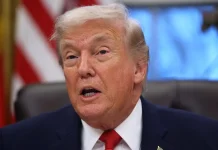
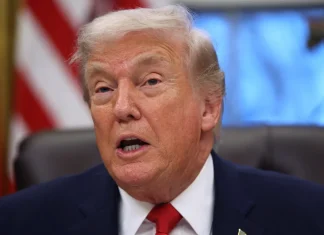
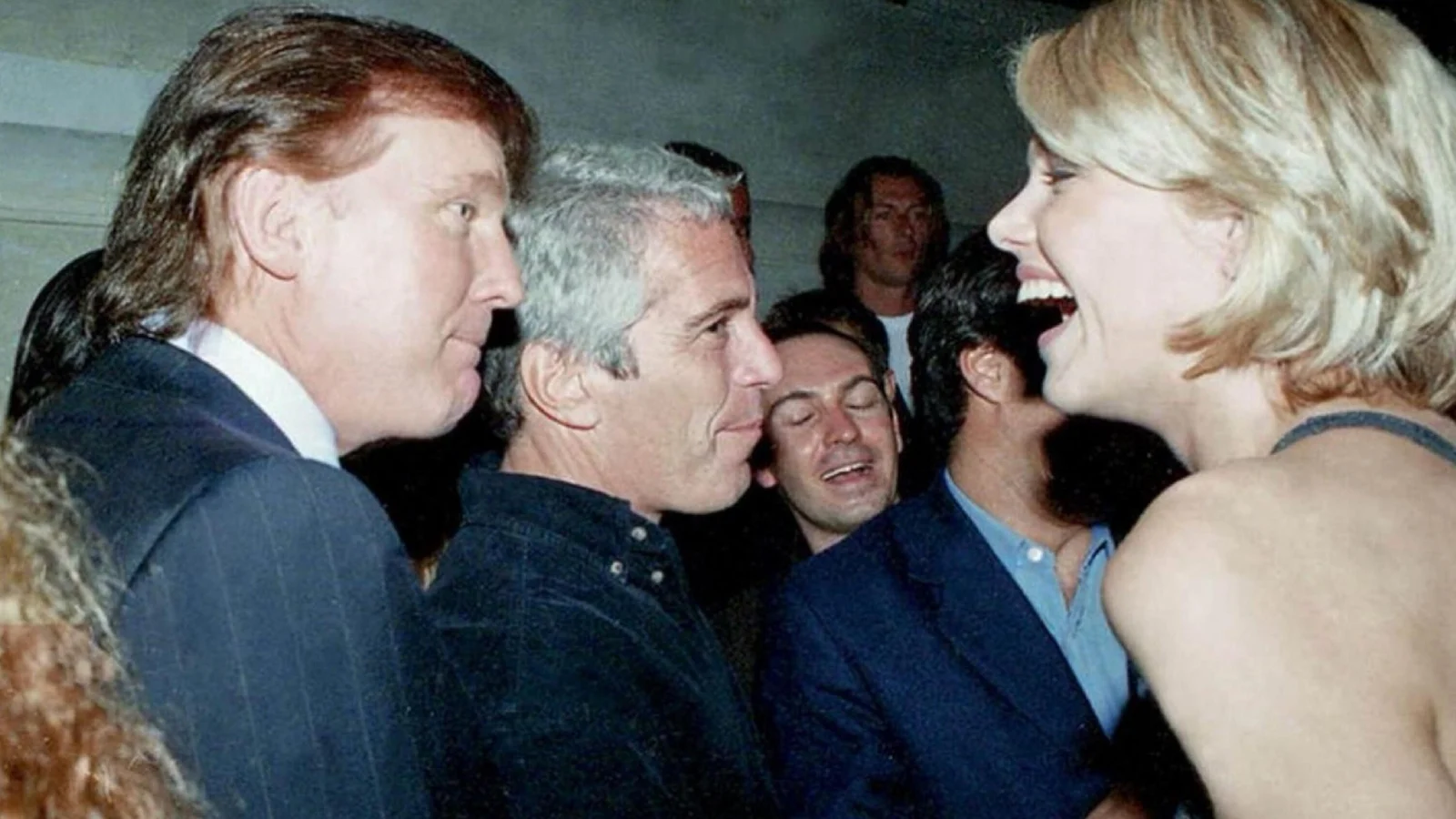
Among them: three pictures that include the face of US President Donald Trump. Black-and-white and grainy, one shows a wide grin flanked by women whose faces are redacted to protect alleged victims. Another frames Trump standing beside Epstein; a third, less clear, has him seated with a loosened red tie. There is no timestamp on these small windows. No caption to tell us what was said or when. And, to be blunt, there is no indication in these photos alone of criminal activity.
What the committee released — and what it chose to hide
The Democrats who published the images explain their editorial choices plainly: they blurred the faces of women to shield the identities of people they say were abused. That decision is, for many, proof of a caution that borders on compassion—an acknowledgement that these images are not historical curiosities but possible pieces of a survivor’s life.
- Number of images produced by the estate under review: more than 95,000
- Number of images released by House Oversight Committee Democrats: 19
- Notable individuals appearing within the released batch: former president Bill Clinton, former Trump aide Steve Bannon, Bill Gates, director Woody Allen, and former Treasury Secretary Larry Summers
- Other items in the batch: photographs of sex toys and a novelty $4.50 “Trump condom”
“These disturbing photos raise even more questions about Epstein and his relationships with some of the most powerful men in the world,” Representative Robert Garcia of California said in a statement. “We will not rest until the American people get the truth. The Department of Justice must release all the files, NOW.”
Faces, redactions, and the power of what is left out
Imagine standing in a dim room where every frame contains a story, but the central characters’ features have been inked out. It’s a strange kind of portraiture: fully revealing and deliberately withholding at once. For survivors and advocates, the redactions are necessary. For investigators and historians, they are maddening.
“You can feel the ghost of a life through these pictures,” says Elena Rivera, director of a New York-based survivors’ advocacy group who asked to be identified by her first name. “But the photos themselves are only part of a trail—metadata, timestamps, witness accounts, travel logs—that will tell us whether these were moments of social interaction or moments that facilitated harm.”
The committee’s release arrives at a high-stakes moment. Congress recently passed legislation—signed into law by President Trump, according to committee statements—that forces the Department of Justice to make unclassified Epstein-related files public within a 30-day window. The deadline, the committee notes, is fast approaching.
Why this matters beyond a set of portraits
Photographs have always had a peculiar civic power. They can humanize, scandalize, exonerate, or implicate. But their value lies not just in what they show, but in what they set in motion: questions, investigations, reforms.
Consider the broader context. Jeffrey Epstein’s death in 2019 and the murky prosecutorial decisions surrounding earlier plea deals have been the subject of public outrage, legislative action, and multiple investigations. The release of images from his estate slots into a larger narrative about accountability, privilege, and how institutions respond when high-profile wealth collides with alleged criminality.
“We are watching a test of the system,” says Daniel Chen, a legal scholar who studies accountability in white-collar crime. “Do institutions prioritize victims? Do they prioritize transparency? Or do they allow secrecy to protect the reputations of the powerful?”
Local color and the geography of influence
Epstein’s properties—Manhattan townhouses, a Palm Beach home, a private island that has since become shorthand for secrecy—are almost characters in their own right. Palm Beach gossip still carries the soft buzz of society’s upper echelons: cocktail parties with ruby lipstick, chauffeurs in crisp uniforms, and the uneasy distance between the glitter and the household staff who knew the rhythms inside.
A neighbor in Palm Beach, who asked not to be named, remembers seeing a parade of unfamiliar cars decades ago and now views the photographs through that long lens of recollection. “Back then, it was just another social season,” she says. “Now it feels like we all lived next door to a locked drawer.” Her voice cracks on the last syllable; the sentence hangs like a curtain.
Questions for readers—and for democracy
What should a democratic society do when the private lives of the powerful bleed into public harm? How much transparency is enough? And who gets to decide when privacy protects survivors or shields the guilty?
These are not rhetorical diversions. They are practical, urgent concerns. The committee says it is continuing to obtain documents even while the Justice Department prepares to release unclassified files. That bureaucratic double-act suggests both an appetite for disclosure and a recognition of the legal and ethical tightrope involved.
For many survivors, the photographs are a small solace, an outward sign that their stories have not been buried. For others, they are a reminder that justice remains unfinished.
“Photos don’t heal,” Elena Rivera says. “But they can dismantle secrecy. They can force institutions to answer. The question is whether the answers will be sufficient.”
What to watch for next
In the coming days and weeks, expect a flood of follow-up: lawyers parsing image dates and locations, prosecutors combing for corroborating evidence, advocates demanding release of travel logs and financial documents. Social media will amplify fragments; newsrooms will sift for context. The challenge will be to keep the focus on survivors and accountability, not tabloid spectacle.
And if you’re reading this from another country, where “power” plays out in different costumes and languages, think about the parallels. Secrecy and privilege are not uniquely American problems. Across the globe, transparency—or the lack of it—shapes whether institutions protect people or protect reputations.
So I ask you: when we lift the veil on these images and the files that surround them, what do we want to see revealed—not just for the sake of spectacle, but for justice, for truth, and for the quiet dignity of those whose names have been blacked out?
The photographs are only the beginning. What follows will tell us whether the light they shed is a flash in the pan or the start of something steadier: accountability made visible, and perhaps, finally, a measure of closure.