Thursday, December 4, 2025
Home Blog Page 101

Spain Bans Goods From Israeli Settlements Deemed Illegal

Spain bans imports from illegal Israeli settlements
Spanish Prime Minister Pedro Sánchez announced nine measures to increase pressure on Israel to end the suffering in Gaza and the West Bank

A Small Country, a Big Break: Spain’s Hard Line on Settlements and the New Morality of Trade

There are nights in Madrid when the city hums with a kind of ordinary stubbornness — cafés spill warm light onto cobblestones, and neighbors argue about football and weather and little things that matter. Last week that ordinary hum was punctured by a decision that feels anything but small: Spain announced a suite of measures aimed squarely at Israel’s military campaign in Gaza, including a ban on goods made in Israeli settlements in the occupied Palestinian territories and a prohibition on ships or aircraft carrying weapons to Israel from entering Spanish ports or airspace.

For many Spaniards, the move read like a moral line in the sand. For others, it read like geopolitics being performed on a domestic stage. And across the Mediterranean, the decision has been met with anger, denial and counter-accusations that risk widening an already painful rift.

What Madrid has done — and why it matters

Prime Minister Pedro Sánchez described the measures as part of a nine-point package “to stop the genocide in Gaza, pursue its perpetrators and support the Palestinian population.” Among the most concrete steps are:

  • a ban on imports from illegal Israeli settlements in the occupied Palestinian territories;
  • a prohibition on ships and aircraft carrying weapons to Israel from using Spanish ports or airspace;
  • a pledge of €150 million in humanitarian aid for Gaza and new agricultural and medical collaboration projects to support the Palestinian Authority;
  • a restriction of consular services for Spanish citizens living in Israeli settlements to the legally required minimum;
  • a policy barring entry to anyone Spain considers directly responsible for what it calls genocide, violations of human rights or war crimes in Gaza.

These aren’t mere gestures. The import ban mirrors a growing European tendency to draw legal and economic lines around the question of settlements — lines that have, until now, been mostly rhetorical. Belgium and Slovenia have already instituted similar bans, and lawmakers in other countries are debating legislation that could follow in Spain’s wake.

Voices from the plaza: how people are reacting

On a rainy afternoon in Lavapiés, a multicultural neighborhood in central Madrid where the news dominated conversation in barbershops and bodegas, reactions were varied and heartfelt.

“I don’t take joy in this kind of politics,” said María, a nurse who has worked shifts at a refugee clinic. “But when you watch children starve and hospitals run out of fuel, you can’t stay neutral. This is the government trying to act with what little power it has.”

By contrast, Javier, who runs a small import business near Atocha station, worried about unintended consequences. “Trade is complicated. I understand the sentiment, but small traders like me will feel pressure. Someone at the top needs to plan for that.”

Across town in a Spanish-Jewish community center, conversations took a more fearful tone. “We are not against human rights,” said Esther Cohen, a teacher. “But we feel targeted. There is a fine line between critiquing a government and creating a climate that can feed anti-Semitism.” Her voice was steady; the worry around her eyes was not.

From Madrid to Jerusalem: the political blowback

Predictably, Israel’s response was fierce. The Israeli foreign ministry called the measures unacceptable and accused Spain of waging an “anti-Israel and anti-Semitic campaign.” Officials in Jerusalem announced an entry ban on Spain’s deputy prime minister and a senior youth minister from the hard-left Sumar party — a move that has deepened the diplomatic chill.

“We will not tolerate this kind of singling out,” an Israeli official told reporters, arguing that national security and history must shape any discussion about borders and settlements. Whether framed as security or retaliation, the message was unmistakable: Madrid’s choices would have a cost.

Legal waters run deep: law, trade and the International Court of Justice

Spain’s measures do not stand in a vacuum. Belgium, Slovenia and others have already taken similar steps, and Ireland’s parliament is considering legislation that could outlaw both goods and services from the occupied territories. And hanging over all of this is a case before the International Court of Justice. Israel denies allegations that its conduct amounts to genocide and is contesting that claim at The Hague.

“What we’re witnessing is a broader recalibration of how states apply international law to commercial activity,” said Dr. Ana Ribeiro, an expert on international humanitarian law. “States used to separate trade from human rights concerns. Now that separation is eroding, and it’s forcing businesses to make ethical as well as legal calculations.”

Humanitarian lifelines and pragmatic politics

Spain’s €150 million pledge to Gaza, and its promise to bolster UNRWA and the Palestinian Authority with food, agriculture and medical projects, is meant to balance pressure with aid. Aid workers on the ground say that money — carefully channeled — can be lifesaving, even if it won’t fix the political catastrophe.

“Money helps keep clinics open, children fed and families from falling further into despair,” said Layla Haddad, a field coordinator for a Madrid-based NGO working in the West Bank. “But humanitarian aid is not a substitute for justice or security. We need both.”

Coalition strains and domestic politics

Spain’s decision also exposes fault lines at home. The Sumar party, the junior partner in Sánchez’s coalition, has been a driving force behind the tougher stance — a move that has brought praise from activists and criticism from opponents who accuse the government of politicizing foreign policy while wrestling with domestic scandals.

“Foreign policy is increasingly domestic theater,” said Rafael Ortega, a political analyst. “Parties use external issues to consolidate bases and distract from internal problems. That said, public sentiment in Spain is powerful and real. Leaders are responding to something deeper than electoral calculus.”

What does this mean for ordinary people — and for the future?

These decisions tug at the threads that connect ethics, commerce and everyday life. A ban on settlement goods might not topple leaders, but it asks consumers and companies to consider where products come from and what systems they support. It forces a conversation about complicity and accountability in a world where supply chains cross battle lines.

Will more nations follow Madrid’s lead? Will these measures nudge negotiations, or harden positions on both sides? Can economic levers be effective where diplomacy has so often faltered?

What feels certain is that Spain’s choice has reopened a debate many hoped was settled: can trade be neutral in the face of alleged human rights abuses? In parks and parliament chambers, in shops and on social media, that question is now unavoidable.

So ask yourself: when morality and commerce collide, where do you stand? And what would you expect your government to do?

Closing thought

Spain’s move is a reminder that small states can exercise outsized moral influence, and that trade policy is increasingly political. It is also a test — for Spain, for Europe, and for a world that keeps asking whether the rules we make can ever match the values we proclaim. Whether this chapter softens suffering, inflames tensions, or does a bit of both remains to be seen. But it has already changed the conversation. And sometimes, changing the conversation is the first step toward changing the facts on the ground.

French government toppled after Prime Minister Bayrou’s confidence motion fails

French govt ousted as PM Bayrou loses confidence vote
Francois Bayrou took office as prime minister only nine months ago

When the Rafale of Politics Hits the Boulevard: France’s Government Falls and the Country Holds Its Breath

Paris in late summer can be forgiving — tourists drift along the Seine, boulangeries steam with warm croissants, and the city hums with small comforts. But on the day Prime Minister François Bayrou’s government was toppled in a confidence vote, the usual warmth of the boulevards felt brittle, like a croissant left too long in the window.

It was not a slow unraveling so much as a staccato. In a packed National Assembly, 364 deputies declared they no longer trusted the government; 194 said they did. The result was abrupt and historic: Bayrou will submit his resignation, and President Emmanuel Macron has been handed a new, knotty domestic problem just as he steers France’s foreign-policy ship amid the Ukraine war.

A high-stakes gamble that misfired

Bayrou’s decision to call a confidence vote was a political high-wire act. He framed it as necessary — a sort of political defibrillator for a nation sinking under debt. “The biggest risk would have been doing nothing,” he told MPs, arguing that roughly €44 billion in savings were essential to curbing a “life-threatening” debt trajectory. It was a dramatic appeal for what he called political courage. It did not work.

“He bet the house,” said an aide close to the prime minister who asked not to be named. “He believed a clear choice would break the logjam. He misread the floor.”

What the vote underlined is the fragility of a political construct that’s been changing shape with dizzying frequency. Bayrou is the sixth prime minister since Macron’s 2017 victory and the fifth to take office since 2022. That churn is not just a matter of political trivia; it’s a symptom of deeper fractures in French politics and society.

Faces in the crowd: how everyday people are reacting

On Rue Cler, a narrow market street not far from the Assembly, I spoke with Jeanne, a 58-year-old baker who has lived through more than one French political crisis. “We’re tired of haggling in the corridors while bread prices climb,” she said, buttering a tart. Her hands showed the kind of patience that has weathered decades. “We want stability. My customers want their pensions protected. They want to keep their jobs.”

Across town, in a lycée near République, a history teacher named Karim reflected on how politics plays out in classrooms. “My students are more cynical than hopeful,” he said. “They see that votes happen but their lives don’t change fast enough.”

And in a café where union posters still plaster the walls from earlier strikes, Marie Dubois, a trade union organizer, offered a different note. “This is an opportunity. The government tried to push austerity without a social consensus. People will resist cuts that hit working families.”

Polls, pressures, and possibilities

The numbers in the public domain paint a grim picture for Macron. A poll by Odoxa-Backbone for Le Figaro reported that 64% of respondents want Macron to step down rather than appoint a new prime minister — a demand Macron has repeatedly rejected. Another Ifop poll for Ouest-France found his approval ratings down to 23%, his worst-ever recorded figure.

Those statistics matter because they reshape the levers available to the president. He now must wrestle with two stark options: name a new prime minister and try to forge a parliamentary compromise, or call snap legislative elections in the hope of securing a more sympathetic Assembly. Neither path is simple, and neither promises a neat outcome.

  • Appointing another prime minister risks another hasty coalition or a short-lived administration.
  • Calling elections could rebalance the Assembly — or deepen fragmentation and empower extremes.

The wider political chessboard

Beyond the immediate governmental drama lies a larger canvas. The left — with the Socialist Party tentatively expressing readiness to lead — could attempt to compose a new majority, though whether such a government would survive the Assembly’s pressures is an open question. On the right, heavyweight ministers trusted by Macron, like Justice Minister Gérald Darmanin, would face the risk of being voted out under a left-led coalition.

And then there is the far-right, whose prospects appear, to many analysts, more potent than they have ever been. Marine Le Pen’s National Rally has been gathering momentum even amid legal setbacks. In March, Le Pen was convicted in a case tied to fraudulent jobs at the European Parliament — handed a four-year sentence, two years suspended, and a €100,000 fine. The conviction also included a five-year ban from standing for office, though an appeal scheduled for January–February 2026 could reopen her political future long before the 2027 presidential race.

Le Pen’s reaction to Bayrou’s fall was immediate: she called for snap elections, describing the ousted government as a “phantom” that never commanded legitimacy. “Holding elections is not optional,” she told cheering MPs, pushing Macron toward a choice that could reshape France’s path for years.

Social fault lines and the calendar of unrest

A political crisis does not live in a vacuum. It bleeds into the streets. Left-wing groups like “Block Everything” have called for days of action, and trade unions have already urged workers to strike. The social calendar is thick with protests and strikes, a recurrent theme in French public life that reflects a robust — if fractious — tradition of civic engagement.

“When budgets bite, people show up,” said Dr. Sophie Laurent, an economist at Sciences Po. “There’s an economic logic. Austerity tends to constrict demand, and that hits the middle and working classes hardest. Politically, that fuels polarization.”

What’s at stake beyond France

This is not only a Parisian problem. Macron’s standing on the world stage — particularly his diplomatic role in the Ukraine war — adds another layer of urgency. Allies watch closely; instability in a major European nation can ripple through markets, defence coordination, and EU politics. A new government could mean different priorities on European defence spending, migration policies, or economic recovery strategies.

So where does that leave the French public, and where should we, as observers and citizens, place our attention? Do we accept the inevitability of more churn and hope for a durable consensus to emerge? Or do we prepare for a period of intensified political fragmentation leading up to the 2027 election?

These are not rhetorical questions. They are the choices that will shape schools, hospitals, work schedules, pension reforms, and the very fabric of daily life in France. And for a global audience, the choices also reflect wider democratic trends: the pressures of austerity, the polarization of politics, the potency of populist movements, and how nations balance security and social welfare during turbulent times.

Closing thoughts: a nation in a turning moment

France has seen crises before — and each time its streets, cafés, and chambers of power have produced a messy, sometimes inspiring, democratic answer. For now, the Assembly’s vote has closed one chapter and flung the next one wide open. President Macron must make a consequential decision. Bayrou will leave the Élysée corridors at dawn with his resignation in hand.

As Jeanne the baker slid a fresh baguette into my bag, she smiled with the weary optimism common in her trade. “We’ll eat and we’ll argue, and then we’ll eat again,” she said. “France is noisy. That’s how it finds its way.”

Can political noise be a path to clarity? Or will it drown out compromise? Keep watching — and ask yourself: what kind of leadership do you think can heal both a nation’s books and its soul?

Lady Gaga Crowned Artist of the Year at MTV VMAs

Lady Gaga named artist of the year at MTV's VMAs
Lady Gaga was named Artist of the Year

A Night of Stardust and Surprise: The 2025 VMAs in Long Island

There are nights when the air itself seems to hum — fluorescent, electric, scented a little like arena popcorn and thousands of shared expectations. That was the feeling outside UBS Arena on Long Island: a mingled tide of sequins, band T‑shirts and glow sticks, a crowd that had come to celebrate music in an era when charts, streams and viral moments collide. Inside, drumbeats and camera flashes stitched together a two‑hour snapshot of popular culture: the 2025 MTV Video Music Awards, a show at once playful and fiercely competitive, where the trophies were plentiful and the loyalties even more so.

By the end of the evening one artist rose above the rest: Lady Gaga, crowned Artist of the Year. It was a victory that felt like a long exhale — twelve nominations in the bag, four trophies carried home, and a show‑stopping mix of theatrical craft and big pop hooks that reminded everyone why she’s still a force on the charts and in imaginations. “This is for the people who have never stopped believing,” a teary Gaga might have said walking offstage, her voice threaded with gratitude. She dedicated the honor to her fan community — the Little Monsters — and to her fiancé, Michael Polansky, signaling that the award was as much about shared stories as it was about career milestones.

Gaga’s Nights and Midnight Flights

Gaga’s haul wasn’t just Artist of the Year. Her aesthetic eye won Best Direction and Best Art Direction for the dizzying, occult-tinged Abracadabra, and she shared Best Collaboration with Bruno Mars for the bittersweet Die With A Smile. The image of Gaga accepting an award at UBS and then later appearing at New York’s Madison Square Garden to perform songs tied to Netflix’s cult hit Wednesday — Abracadabra and The Dead Dance — captured the strange mobility of 21st‑century stardom: artists moving through multiple stages, platforms and narratives in a single night.

“A great pop performance is like a promise,” said a longtime music critic backstage. “Gaga keeps making good on hers.”

Three Wins That Said Something About the Moment

While Gaga took the night’s top prize, the ceremony was refreshingly diffused — awards distributed across a wide palette of artists and sounds. Sabrina Carpenter and Ariana Grande each walked away with three statuettes, their own forms of validation in a year packed with high‑profile releases and cinematic videos.

Grande’s Brighter Days Ahead was a watershed: Video of the Year, Best Pop Video and Best Long‑Form Video. There was an intimate moment when she thanked her father for a surprise cameo in the film, underscoring how modern pop sometimes cradles old‑fashioned family stories inside high‑concept direction. “We build worlds now,” said a filmmaker who worked with Grande, “and when those worlds include the real people you love, they land differently.”

Sabrina Carpenter’s Short n’ Sweet grabbed Album of the Year, and she was named Best Pop Artist while also winning for Visual Effects with Manchild — recognition that honored both songwriting craft and cinematic imagination. “It feels like the industry is finally making room for earnestness and spectacle together,” a pop producer observed.

Honors, Tributes and the Global Beat

The show threaded through decades as well as newness. Mariah Carey, whose career has been stitched into pop history for nearly three decades, collected the R&B prize for Type Dangerous and then accepted the Michael Jackson Video Vanguard Award — a symbolic, career‑spanning honor that had many in the crowd whooping. “About time,” a fan in a bedazzled jacket shouted into the night; Carey’s response — gracious, lightly amused — acknowledged the irony and joy of finally being formally recognized on MTV’s storied stage.

Latin and hip‑hop legacies were present and honored: Ricky Martin received the Latin Icon Award, and Busta Rhymes was presented with the Rock The Bells Visionary Award. “We want to keep music alive and break boundaries at the same time,” Martin said onstage, a simple credo for an industry built on reinvention and cross‑pollination.

There were also moments of rock reverence. A tribute to Ozzy Osbourne, who passed away earlier this year, was introduced with a family video message and brought together audacious performers — Yungblud, Steven Tyler, Joe Perry and Nuno Bettencourt — to spin out Crazy Train and Mama, I’m Coming Home. It was one of those poignant collisions of grief and celebration that award shows handle awkwardly well: public mourning turned into a communal sing‑through.

Global Winners, Local Color

What struck many viewers was the international texture of the winners list: Rosé and Bruno Mars’ Apt. won Song of the Year; Blackpink were acclaimed as Best Group; Shakira took Best Latin for Soltera; Coldplay earned Best Rock with All My Love; and Sombr won Alternative for Back To Friends. The spread reflects an ongoing truth about music today: borders matter less than ever in how a song catches fire.

On the concourse outside UBS, fans held Korean light sticks for Blackpink and waved Colombian flags for Shakira with equal fervor. “We came from Queens and Brooklyn,” said Javier, a 27‑year‑old who queued since dawn. “It’s not just the music. It’s seeing people who sound like us or come from places we love.”

Trends, Tensions and the Changing Shape of Stardom

There’s a deeper pattern under this year’s confetti: awards spread across a broader array of artists speaks to fragmentation and abundance in the streaming era. Playlists, social platforms and cinematic tie‑ins mean that an album can be both a global phenomenon and a niche, cult favorite. The VMAs reflected that pluralism: a night where legacy acts and breakout stars shared the same spotlight.

Does this dilution make awards less meaningful? Or does it finally allow room for more voices? Consider this: Ariana’s long‑form piece won alongside Sabrina’s intimate visual work and Gaga’s high‑camp pageantry — three very different ways to make an impression in 2025. Each wins for a different reason, and each points to a different audience relationship.

After the Curtains: What to Watch Next

Some awards were announced after the broadcast on X, an indication of how modern ceremonies stretch across platforms and time. Post Malone performed remotely from Germany, proving that geopolitics and tech glitches are no longer barriers to a live feel. And beneath the trophies, the mood was less about tallying victories than about the business of culture itself: collaborations that cross genre, the revival of theatrical music videos, and a global audience that is simultaneously niche and massive.

So what did we get from the VMAs this year? Theater, tenderness, tribute. Surprises that felt like fresh paint on old walls. And a reminder that even in a streaming age, a live night of music still has the power to glue strangers together for a few luminous hours.

Who won your heart, and which performance would you put on repeat? The awards tell one story — the music tells another. Which one matters more to you?

  • Artist of the Year: Lady Gaga
  • Video of the Year: Ariana Grande — Brighter Days Ahead
  • Album of the Year: Sabrina Carpenter — Short n’ Sweet
  • Michael Jackson Video Vanguard Award: Mariah Carey
  • Latin Icon Award: Ricky Martin
  • Rock The Bells Visionary Award: Busta Rhymes

Israeli strikes leave 12 dead as UN condemns mass killing

Israeli attacks kill 12 as UN condemns mass killing
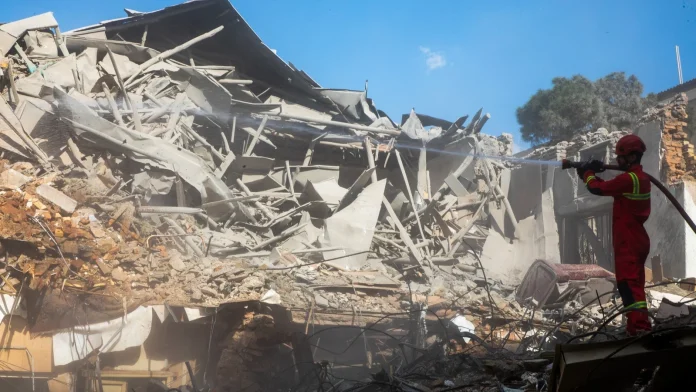
A house is seen in ruins following an Israeli attack on the Nefaq neighborhood of Gaza City

Dawn over rubble: Gaza’s fragile morning

When the sun rose over Gaza City this morning, it found a landscape that looked more like a memory than a neighborhood: skeletal high-rises, streets littered with glass and twisted metal, and the thin, stubborn smoke that never quite leaves.

In the hours before dawn, medics in ambulances with dust-streaked windshields counted at least a dozen more people dead across the territory — neighbors, children, and one man known in the tight-knit community of Palestinian reporters as Osama Balousha.

“Osama would call me three times a day just to check in,” said a colleague who asked not to be named. “He was there where everyone else fled, trying to tell the world what was happening. Now he is gone.” His voice broke on the last syllable; outside, a mosque’s minaret sent up a lonely prayer.

Ceasefire terms and a tense pause

Against this backdrop of grief, a diplomatic gambit unfolded in Europe. Israel’s Foreign Minister announced in Budapest that the country was prepared to accept a ceasefire proposal presented by US President Donald Trump — a plan that, according to senior Israeli sources, would tie an immediate halt in fighting to the return of hostages and the disarmament of Hamas.

The essence of the proposal, as summarized by Israeli officials, would see all remaining hostages — 48 people according to the latest briefings — returned on the first day of a ceasefire, with negotiations to follow over the broader conditions for ending the conflict. Hamas said it was studying the plan, insisting any release must be bound to a definitive announcement that the war had ended and Israeli forces had withdrawn.

The exchange of proposals and counterproposals unfolded as airstrikes continued. For many in Gaza, diplomatic language offered little immediate comfort.

Threats, trumpets and the language of war

On social media, Israeli ministers sharpened their rhetoric. One senior figure warned that Gaza faced “a mighty hurricane” of strikes if Hamas did not release the hostages and surrender. Military communiqués and blunt warnings reverberated through the region’s already taut nerves.

At the same time, Hamas reiterated its willingness to free those being held, but only within a framework that would guarantee the withdrawal of Israeli forces and an end to what Palestinians describe as an existential assault on their homes and livelihoods.

On the ground: neighborhoods that once were whole

Residents described waves of explosions across Sheikh Radwan, Zeitoun and Tuffah — neighbourhoods where families have tried to rebuild amid ruins since the war’s most intense phases two years ago. Witnesses said the military detonated decommissioned armoured vehicles in city streets, a tactic that flattened clusters of houses and threw families into separate shelters.

“We came back because we have nowhere else to go,” said Fatima, a 42-year-old who has been living in a one-room makeshift shelter with her children. “If they tell us to leave again, where will we leave to? These are our graves.” Her hands kept tracing a burned pattern on the cot beside her.

The killing of the storytellers

The death of Osama Balousha is not an isolated headline — it is part of a devastating pattern. Palestinian authorities say nearly 250 journalists have been killed in Gaza during this war, a toll that makes this conflict one of the deadliest on record for members of the press.

Israel excludes foreign reporters from entering Gaza, meaning most — if not all — journalists killed inside the territory have been Palestinian. Palestinian officials allege deliberate targeting of media workers; Israeli authorities deny such claims, saying operations are aimed at combatants. The result, however, is the same: fewer independent eyes in a place where independent reporting has never been more vital.

Man-made famine and mounting suffering

Beyond bombs and broken buildings, Gaza is watching a slower, crueler enemy: hunger. The territory’s health ministry reported six more deaths from malnutrition and starvation in the past 24 hours, bringing the official toll from such causes to at least 393 — most of them recorded in just the last two months.

International monitors have been stark. The global Integrated Food Security Phase Classification (IPC) has characterized the situation here as an entirely man-made famine. UN human rights officials have echoed that alarm, pointing squarely to policies that have blocked or slowed lifesaving assistance and choked off the steady flow of essentials.

“It’s as if the life sources of an entire population have been turned off,” a senior humanitarian worker in Rafah told me. “When aid convoys arrive, there are more mouths than parcels; the rationing is impossible.” He kept his eyes low, as if he carried the images of waiting children like stones inside him.

International law, the court of conscience

In Geneva this week, the UN human rights chief delivered a blistering critique, accusing Israel of mass killing of Palestinian civilians and of impeding the delivery of critical aid. He said the evidence mounting could amount to a legal case before the International Court of Justice — a claim that reverberates far beyond legal halls and into living rooms and refugee camps.

Scholars and international bodies have debated whether the legal threshold for genocide has been met; last week an association of genocide scholars concluded that it had. For many families in Gaza, however, these abstract judgments cannot answer the immediate question: how to feed a child, how to bury a loved one with dignity, how to find a quiet night.

Voices you will not see on television

Walk a few alleys away from the main thoroughfares and you hear the smaller sounds of survival: the hiss of a kettle over a salvaged stove, the faraway laughter of a child making a game of rubble. Trade stalls sell olives and prayer beads, fishmongers shout prices at dawn. These are ordinary rhythms unmoored by violence.

“I used to sell tea to the workers who repaired the electrical grid,” said Mahmoud, an elderly vendor near the rubble of a marketplace. “Now the grid has no workers and my tea kettle is a relic. Still, I come every day. People stop and talk. We need that.” His smile was a thin braid of defiance.

What do we do with what we know?

As readers from Berlin, Lagos, New York, or Tokyo, what are we to make of this sprawl of facts and faces? How do we measure the moment when law, diplomacy and desperate human need collide? How do we weigh the hard demand to return hostages and the equally vital demand to protect civilian life?

These are not questions with tidy answers. They demand, at minimum, that the world keep looking, keep speaking, and keep insisting on corridors for aid, safe passage for the vulnerable, and independent verification of what has happened. They demand that journalism — even when it is dangerous, even when it is forbidden to outsiders — is supported and protected.

At the crossroads

Whether the ceasefire proposal becomes a turning point or another temporary pause depends on decisions that will be made in conference rooms, on battlefields, and in the quiet hearts of leaders and fighters. For the families I met today, the measure of any agreement is simple: will it let them feed their children, mourn their dead, and rebuild a life?

You, reading this now, are part of that global conscience. What line will you draw? What question will you ask your representatives? How long can the world look away before the cost becomes unbearable? These are the hard questions — and the answers will shape more than headlines; they will shape lives.

Armed attackers kill six in shooting at Jerusalem bus stop

Six killed after gunmen open fire at Jerusalem bus stop
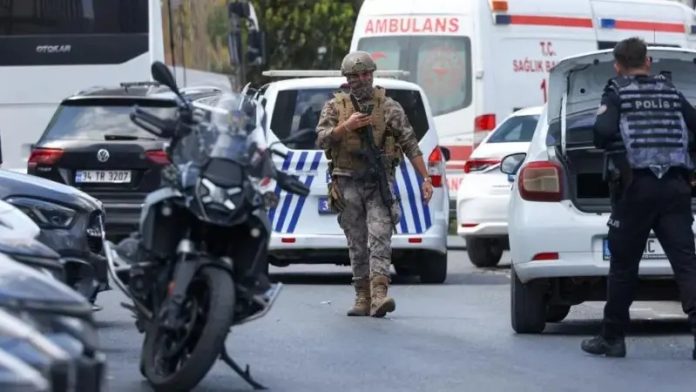
Two Israeli policemen walk past the windshield of a bus, riddled with bullet holes, at the scene of the shooting

Gunfire at the Ramot Junction: A Bus Stop, a Burst of Violence, and the City that Keeps Counting Losses

The scene at Ramot Junction felt, in the first moments, like a bad dream you couldn’t wake from: the staccato rat-a-tat of gunfire, the sickening thud of people falling into dust and pavement, a city’s ordinary rhythm ruptured in an instant.

Witnesses later described shards of glass glittering on the road where a commuter bus had stopped and passengers had been waiting on a routine weekday. Dashboard camera footage that circulated online showed people sprinting across the asphalt as gunshots cut the air. The bus’s windscreen and its windows were peppered with bullet holes—silent testimony to how fast normal life can become a headline.

“Suddenly I hear the shots starting … I felt like I was running for an eternity,” said Ester Lugasi from her hospital bed, one of the injured. “I thought I was going to die.”

Who Was Hurt, Who Survived

Medical teams and emergency services confirmed the dead numbered six, and the wounded totaled 11, six of them in serious condition with gunshot wounds. The ambulance service identified five victims—a 50-year-old man, a woman in her fifties and three men in their thirties—before a later confirmation of a sixth fatality. Names, identity details and families’ statements were still coming through as investigators worked the perimeter.

A paramedic who arrived early on described the eerie calm that follows such violence. “You move through shock—blank faces, a smell of copper, people whispering names,” she said. “It’s the same scene, different faces.” Her training kicks in, but none of that erases the weight of having seen lives split open by a few minutes of violence.

What Happened—According to Authorities

Israeli police say two attackers arrived by car and opened fire at the bus stop at Ramot Junction on the outskirts of Jerusalem. Several weapons, ammunition and a knife were recovered at the scene. A security officer and a civilian at the scene returned fire and neutralized the attackers, police said, and officers scoured the area amid an expanding cordon of blue-uniformed personnel and border guards.

Israeli Prime Minister Benjamin Netanyahu, speaking at the scene, said forces were pursuing suspected accomplices. “We will not allow terror to set the rules of life here,” he told reporters, a refrain often heard after such attacks, intended to reassure but that also underscores how routine these briefings have become.

Militant Groups Praise the Shooting

Hamas praised the two individuals it called “resistance fighters,” while Islamic Jihad also issued statements of support. Neither group immediately claimed operational responsibility in the way they sometimes do—yet their quick and public praise adds a political tenor to the attack beyond the immediate human tragedy.

Lives Interrupted: Voices from the Street

On the pavement near the junction, a bakery owner swept away broken glass from his doorway and spoke of a neighborhood on edge. “We’re used to the tensions—everyone is—but not like this,” he said, lighting a cigarette and shaking his head. “You know half the people here; they buy their challah and cigarettes from me. It’s not numbers, it’s names.”

A young Arab woman who lives nearby stood with her hands wrapped around a thermos of hot tea. She had been late to work that morning and had seen the aftermath from a distance. “It doesn’t matter who you are in this city—this violence reaches every kitchen,” she said. “We fear for our families on the bus, in the markets. It’s tiring. It’s all-consuming.”

Patterns, Context, and the Broader Picture

To understand this attack is to chart a worrying pattern. In recent years, bus stops and public transport hubs in Israel and the Palestinian territories have been targeted repeatedly, chosen for their concentrated civilian presence. In November 2023, two gunmen killed three people at a Jerusalem bus stop—an attack that Israeli security services said was linked to Hamas. In October 2024, a combined gun-and-knife attack in Tel Aviv claimed seven lives. These incidents are the mortar in a harder wall of daily fear.

And yet, the 2024 Gaza war remains the context no one can ignore. The October 2023 assault by Hamas that precipitated the war resulted in 1,219 deaths, mostly civilians, according to an AFP tally based on Israeli figures. Israel’s subsequent offensive has exacted an even larger toll in Gaza: the Hamas-run health ministry there reports over 64,000 dead, mostly civilians—a number the United Nations has said its agencies consider reliable. These numbers are not abstractions. They are the sum of parents, apprentices, students, neighbors—the people who used to stand at bus stops.

Experts Weigh In

Security analysts note that such attacks thrive on both local grievances and the larger theater of conflict. “This is tactical terrorism in an urban setting,” said Dr. Miriam Levin, a security scholar who studies asymmetric warfare. “There’s a calculable logic—target a civilian hub, maximize media impact, force a security response. But there’s also the social logic: when a community feels pushed against a wall, some individuals choose violence.”

Another expert, a psychologist working with trauma survivors in Jerusalem, stressed the ripples. “Survivors will carry this for years,” she said. “You see people who can’t ride the bus for months. Kids who were on that bus will feel distrust for public spaces. The social cost is enormous and undercounted.”

Small Details that Tell the Larger Story

Ramot, a neighborhood on Jerusalem’s northern ridge, is a mosaic—ultra-Orthodox synagogues sit near secular apartments, Arabic signs hang in shop windows, and the city’s ancient stones feel only a short walk away. It is not a place of abstract politics; it is a place where lunch is eaten, shoes are shined, and people argue about football.

On evenings after such attacks, shawarma stands and hummus shops fill with people exchanging theories and grief, sometimes in Hebrew, sometimes in Arabic. Children ask why their parents are sad. Older men recall other attacks as if they were yesterday. Ordinary rituals continue because they must; life and loss are braided together here.

What Now? Questions That Remain

Will the neutralization of the shooters end this episode of violence? Will arrests of alleged accomplices follow? Will political leaders find themselves once again moving the chess pieces of military response and security measures? Each answer conceals new problems: curfews, raids in the West Bank, military exchanges—measures that, in turn, ripple back to civilians on both sides.

And beyond immediate security operations, there are broader questions we rarely answer in the heat of the moment: How do communities rebuild trust after such public traumas? How do we measure success—by arrests, by fortifications, or by the quieter work of reconciliation and addressing root causes?

Summing Up: The Human Ledger

  • Deaths reported: 6 (early official tallies)
  • Injured: 11, with six in serious condition
  • Perpetrators: Two gunmen identified by Israeli authorities as Palestinians from the Israeli-occupied West Bank
  • Militant response: Hamas and Islamic Jihad praised the attack
  • Context: Part of a pattern of deadly urban attacks during a wider and devastating conflict between Israel and Gaza

More than numbers, what remains are the stories: the woman who bought a bus ticket and never made it home; the security guard whose quick action may have saved lives; the shopkeeper who keeps sweeping even when his hands tremble. In this city, grief is a public affair and resilience is private labor.

What do you think breaks cycles like this—tightened security, political negotiations, deeper efforts at coexistence, or something else? If we are to imagine a different future, we need to decide collectively which uncomfortable steps we are willing to take.

For now, the glazing sun over Jerusalem will cast its ordinary light over streets scarred by extraordinary violence, and people—wounded, wary, determined—will begin the slow work of living again.

RW Xamze oo la kulmay Danjiraha cusub ee Midowga Yurub

Sep 08(Jowhar)-Ra’iisul Wasaaraha Xukuumadda Jamhuuriyadda Federaalka Soomaaliya Mudane Xamze Cabdi Barre, oo maanta xafiiskiisa ku qaabilay Danjiraha cusub ee Midowga Yurub (EU) u fadhiya Soomaaliya Danjire Francesca Di Mauro.

Shan qof oo Israel ah oo lagu dilay toogasho ka dhacday magaalada Qudus

Sep 08(Jowhar)-Shan qof ayaa lagu dilay toogasho ka dhacday meel baska laga raaco oo ku taalla magaalada Qudus, sida Ay sheegeen waaxda gurmadja deg dega ah ee Israel, iyadoo boolisku sheegeen in raggii falkan ka danbeeyay la dilay. Lama oga cidda fulisay weerarka ama sababta ka dambeysa.

Afghan survivor describes ‘total destruction’ after deadly earthquake

'Total destruction' - Afghan man on deadly earthquake
Sangar Hashimi said his cousin 'lost five of his family members'

From Roscrea to Noorgal: When an Earthquake Travels by Phone

When the phone lit up late one night in Roscrea, County Tipperary, it carried a different kind of time and place. The messages were short, urgent, and impossible to make sense of at first: a deep rumble, houses crumbling, people running into the dark. For Raoof Safi, 17 years in Ireland could not mute the sound of a homeland being torn apart.

“I felt every message like a small earthquake in my chest,” Raoof told me over a steaming mug of tea in his modest home. “You are 7,000 kilometres away but your ears are glued to every voice on the line. You listen to how someone cries, and you try to count the cost.”

The tremor he was hearing about struck the Noorgal District in Kunar province at roughly 11:45pm on 31 August — a 6.0 magnitude quake, according to local reports. Taliban authorities put the human toll in the thousands, saying thousands had been killed and thousands more injured. For families already battered by poverty, conflict and isolation, the numbers translate into a very simple cruelty: roofs that collapsed on sleeping children, walls that gave way while families lay in bed, and, in many places, entire villages rendered unlivable.

Stories You Can’t Ignore

Raoof’s phone became a conduit for grief. First came the disorienting accounts — a neighbour’s voice, breathless; a cousin sending shaky video from beneath a tarp. Then came the lists of names. In the days after, the hazy tally of loss hardened into reality: members of his extended family among the dead.

“I remember when my uncle called. He kept saying, ‘We have nothing. The house is nothing. The walls, they have fallen,’” Raoof said. “The thing that haunts me is that we had no time. People woke up and the ceilings were on them.”

Not every story carried the same shape of sorrow. Sangar Hashimi, a journalist who has worked for Kabul’s 1TV Media and insists on returning to report from remote valleys, described scenes that read like pages from a cruel, intimate novel.

“I stood in front of a mass grave and counted blankets instead of bodies,” Sangar said. “A man told me he lost 14 members of his family. A little girl I filmed was the only one left in her household. These are not numbers on a map. They are the faces I have known.”

Homes of Mud and Memory

Across Kunar, many dwellings are built of mud-brick and unreinforced stone, materials that are cheap and available but unforgiving under seismic stress. When the ground moves, these homes do not flex — they fall.

“We built our houses like our fathers did, with mud and stone,” said Abdul Hadi Sarwari, who watched his home in Bar Noorgal village tilt and then collapse. “Now we sleep in the open. Twenty-two of us are on my uncle’s farm. We sit under trees at night. If the wind comes, it feels like everything could be taken again.”

There are hundreds, perhaps thousands, of similar makeshift encampments across the affected valleys, where families have clumped together on fields and hillsides to escape the shadow of another aftershock. Tents are scarce; many are simply too remote to have received emergency supplies in the first days. Children play amid rubble, their games edged with a new fragility.

Winter Is Coming — and So Is the Hardest Test

The calendar is more than a convenience in Afghanistan’s highlands. Winter can be a matter of survival. Temperatures in these parts routinely fall below freezing; when snow comes, isolated communities can be cut off for weeks. For the displaced, the threat is immediate and sharp.

“When you lose your home before winter,” said Dr. Leila Mahmoud, who has worked with humanitarian agencies in eastern Afghanistan, “you lose your shield against the cold. Blankets and stoves are good, but they are tiny bandages when entire villages have been leveled. Hypothermia, chest infections, diarrhoea—these are the next wave.”

Humanitarian access is a familiar problem here: steep terrain, narrow footpaths, and intermittent communications make relief operations slow and costly. Aid workers who did reach the worst-hit communities had to walk long distances, sometimes for days, carrying food, blankets and medical supplies on their backs.

Voices That Won’t Be Silenced

Closer to home in Ireland, Raoof has become something of an informal coordinator — a son who wants to speak for those whose words cannot cross the mountains. “I feel responsible,” he said. “Not because I am heroic, but because I can call, I can write, and other people can hear.”

Across the world, that voice matters. It pushes a story beyond an item in a newsfeed and into the messy, human work of response: donations, pressure on decision-makers, and the steady churn of journalists and aid workers trying to reach the inaccessible.

“We must not only mourn,” Sangar added quietly. “We must remember that rebuilding is a moral choice. Who will help rebuild those homes when attention moves on?”

Why This Scares Us — and Should Make Us Think

There are broader lessons here. Natural disasters rarely occur in isolation; they intersect with politics, poverty and neglect. In Afghanistan, decades of conflict have left infrastructure weak and social services fragmented. When the earth moves, it finds those fault lines and exploits them.

Ask yourself: how would your community fare if a quake hit tonight? Do you have the social safety nets, the infrastructure, and the will to rebuild equitably? These are uncomfortable questions, but the kind worth asking.

What People Need Now

  • Immediate shelter: tents, tarpaulins, warm blankets.
  • Food and clean water: to prevent disease and malnutrition.
  • Medical care: for the injured and for those at risk from hypothermia and infection.
  • Longer-term aid: materials and tools to rebuild safer homes, and psychosocial support for trauma.

Local leaders, relief workers and diaspora communities are trying to respond. But resources are finite. Voices like Raoof’s can help translate grief into action.

Where Do We Go From Here?

If you find yourself moved by these stories, consider supporting well-established humanitarian organizations that operate in Afghanistan and the region. Small gestures—donations, raising awareness, or even urging your local representative to support humanitarian channels—can expand the circle of care.

Raoof himself is carrying a quieter mission. “When I speak about Noorgal,” he told me as dusk pooled in his living room, “I am carrying my childhood with me. I want people to see the fields where we played, not just the collapsed walls. I want them to know that when houses fall, memories fall too.”

Earthquakes rearrange landscapes, but they also reconfigure obligations. They force distant relatives to become advocates, neighbours to share what little they have, and the international community to choose whether it will answer. In the weeks and months ahead, the real measure of this crisis will not be the headline figure on day one, but how many lives are made whole again.

What would you do if a single phone call could mean the difference between being heard and being forgotten?

Madaxweyne Xasan oo ka qeyb galaya furitaanka biya xireenka GERD ee Itoobiya

Sep 08(Jowhar)- Madaxweynaha Soomaaliya Xasan Sheekh Maxamuud ayaa ka qaybgalaya furitaanka Biyo Xireenka GERD ee Itoobiya oo qorshaha yahay inuu beri qabsoomo.

Trump oo digniintii u danbeysay siiyay Xamaas

Sep 08(Jowhar)-Ururka Xamaas ayaa sheegay in ay Maraykanka ka heleen hindisayaal loo soo marsiiyay dhexdhexaadiyayaasha oo ku saabsan sidii xabbad joojin looga gaadhi lahaa Qasa.

Meta to remove under-16s from social media in Australia

Meta set to ban under-16s from Australian social media platforms

0
The Day the Platforms Began to Empty: Australia’s Youth Social Media Pause On a slow Monday in early December, the feeds of thousands of Australian...
Israel's conduct of war in Gaza 'fundamentally wrong'

Israel’s handling of Gaza war called ‘fundamentally wrong’

0
When Diplomacy Frays: A Secretary-General’s Stark Warning from the Rubble There are moments when a speech stops being a statement and becomes a tremor felt...
Democrats release photos of Epstein's private island

Democrats unveil photos of Jeffrey Epstein’s private island

0
The Island, the Images, and the Questions That Won’t Stay Buried Imagine turquoise water so clear you can read the ocean floor like a map....
EU agrees deal to ban Russian gas by autumn 2027

EU agrees landmark ban on Russian gas imports by autumn 2027

0
A Quiet Midnight in Brussels — and a Loud Decision for Europe It was the kind of decision that arrives in the small hours: hurried...
Former EU foreign policy chief accused of corruption

Former EU foreign policy chief now facing corruption allegations

0
A Quiet City Shaken: Bruges, Brussels and the Echoes of an EU Scandal On a damp morning in Bruges, the kind that softens the cobbles...