Friday, December 19, 2025
Home Blog Page 107

Gaza City civilians rush to flee amid relentless bombing campaign

Palestinians try flee Gaza City as bombardments continue
Palestinians queue for food aid at the Nuseirat Refugee Camp

Gaza City’s Long Walk South: A Portrait of Displacement

At first light the city looked like a photograph that had been scorched at the edges. Smoke rose in thick black columns, and the horizon — once a patchwork of apartment blocks and orange trees — was obscured by a haze that carried the bitter tang of burning. Along the narrow coastal roads and the cracked alleyways, people moved like a slow, somber river: families on foot, battered cars groaning under the weight of mattresses, women balancing bundles on their heads, a few holding tired children, and donkey carts packed with the last things they could lift.

“You cannot imagine how it sounds,” said Aya Ahmed, 32, who was sheltering with thirteen relatives in a crowded house in Gaza City. “Artillery, planes, drones — the noise is constant. We were told to evacuate south, but there is nowhere to go where life still exists.”

This is not a momentary displacement. It is part of a campaign that has pushed whole neighborhoods into motion. Israeli tanks and warplanes stepped up strikes on Gaza City this week, and residents describe the assault as relentless — a grinding pressure that forces families to decide between staying under bombardment and risking a dangerous trek to the south.

The Numbers That Haunt the Streets

Statistics do not capture the smell of smoke or the way a child clings to a father who can only hold him with one arm. But they do underscore the scale of human suffering. In the last 24 hours alone, the Hamas-run Gaza health ministry reported at least 79 Palestinians killed by strikes or gunfire across the Strip. A separate, devastating tally shows that at least four more died in that same window from malnutrition and starvation — bringing the total deaths from hunger-related causes since the war began to at least 435 people, including 147 children.

On a broader scale, the ministry’s figures place the Gaza death toll from the offensive at more than 65,000 people, overwhelmingly civilians — a number the United Nations considers reliable and that resounds through corridors of humanitarian aid offices and diplomatic briefings.

According to UN estimates at the end of August, about one million people were living in and around Gaza City. Israeli authorities say roughly 350,000 of them have fled. But “fleeing” is not a neat statistic here: it is a chaotic, dangerous act that can cost a family everything and still offer no safety.

When the Internet Goes Quiet

In the middle of the displacement, phone and internet lines went dead across much of Gaza. For many residents this was not only an administrative inconvenience; it was a bad omen. “When the networks go, you know something very brutal is about to happen,” said Ismail, who preferred to give only one name. He was using an e-SIM to get a signal from higher ground, a precarious method that carries its own risks.

The Palestinian Telecommunications Company blamed the outages on “ongoing aggression and the targeting of the main network routes.” The blackout severed lifelines: families could no longer call for help, hospitals could not coordinate transfers, and the sparse reporting that remains risked being flattened under the fog of war.

Hospitals Under Siege

Hospitals are filling and fraying at the edges. Al-Shifa, Gaza’s largest medical center, said it had received the bodies of 20 people killed since midnight in recent strikes. Aid groups and the World Health Organization warn that hospitals are on the brink of collapse — supplies blocked, power intermittent, and staff exhausted.

“The military incursion and evacuation orders in northern Gaza are driving new waves of displacement, forcing traumatised families into an ever-shrinking area unfit for human dignity,” Tedros Adhanom Ghebreyesus, director-general of the WHO, wrote in a message that captured the international alarm. “Hospitals, already overwhelmed, are on the brink of collapse as escalating violence blocks access and prevents WHO from delivering lifesaving supplies.”

Voices from the Road

Walking alongside convoys and clusters of people reveals intimate, wrenching details. Shadi Jawad, 47, described the day his family fled: “There were crowds everywhere, the sound of explosions, people crying. Our truck had a flat tyre and everything spilled on the road. I wanted to scream, but instead I looked up and prayed.” The prayer was not for deliverance from danger alone, but for an end to the exhaustion that has become daily life.

Transport to purportedly safer southern areas has become a grim market. People report that the cost of a lift south has surged — in some cases topping $1,000. Imagine a family paying the equivalent of a year’s wages for a single passage where shelter is no longer certain. “There are no tents, no money, no transport,” Aya said. “What are we supposed to do?”

Politics, Protests and the Global Response

The offensive has been met with outrage and condemnation internationally. A United Nations inquiry earlier accused Israeli officials of incitement and possible “genocide” — language that Israel has vehemently rejected as “distorted and false.” The probe’s head, Navi Pillay, likened aspects of the campaign to methods seen in Rwanda in 1994, and said she hoped responsible leaders would be held accountable.

Back home, the politics are raw and personal. Families of Israeli hostages who were taken in the October 2023 attack have protested against the pace and direction of operations, gathered outside the prime minister’s residence to demand action and answers. “My boy is dying over there. Instead of bringing him back, you have done the exact opposite — you have done everything to prevent his return,” Ofir Braslavski told the prime minister during one demonstration.

On the battlefield, Israeli forces say they are targeting what they call “Hamas terror infrastructure,” and report combat losses of their own, including four soldiers killed during operations in southern Gaza.

Why This Feels Like More Than a Local Tragedy

What is unfolding in Gaza taps into global anxieties about war, displacement, and the limits of international law. We live in a world where images travel fast but solutions move slowly. Supply convoys are delayed by security checks, aid workers face mounting risks, and political parries play out in international courts and social media feeds.

When I stood near a UN school converted into a shelter, a child held a stuffed animal that had lost its eye. “It doesn’t sleep,” his mother told me. “We keep it for luck.” Luck, in these circumstances, is fragile. The refugee crisis in Gaza is not an isolated episode; it is part of a pattern we see elsewhere — families pushed into protracted displacement, health systems collapsing, and the most vulnerable paying the heaviest price.

Questions to Hold Open

As you read this, ask yourself: what does solidarity mean when the channels of communication are cut off? How do we hold leaders and armed groups accountable when facts are contested and access limited? And finally, how do we measure responsibility in a conflict that has left entire neighborhoods emptied and thousands dead?

There are no easy answers. But the faces on the roads — the mothers cradling babies, the old men leading donkeys, the teenagers carrying what remains of their lives — are a constant reminder that beyond statistics lie human stories that demand more than indifference. They demand urgent attention and, if possible, a durable end to the violence that makes displacement and hunger routine.

For now, as the smoke continues to rise over Gaza City, the question that echoes from street to street is elemental and heartbreaking: where can people go to be safe, and who will make that safety possible?

Gaza death toll from Israeli strikes surpasses 65,000, officials report

Death toll from Israeli attacks on Gaza passes 65,000
Palestinians search among rubble after an Israeli attack on the Rimal neighbourhood of Gaza City

Gaza City on the Move — and the People Who Refuse to Be Moved

The morning felt like any other across much of Gaza City — the air heavy with dust, the distant thud of shells like a monstrous, tragic heartbeat — until new leaflets fluttered down from the sky with instructions: leave. For 48 hours, Israel opened a corridor on Salahudin Road, urging civilians to head south. But in a place where every street is a scar and every roof a memory, “leave” is not a simple command. It is a wrenching question about return, survival and identity.

Local health authorities say at least 63 people were killed in the latest waves of strikes and gunfire, most of them in Gaza City. Those numbers push the wider death toll in the territory to more than 65,000 since October 2023 — a figure that officials and rescue workers warn is almost certainly an undercount, as bodies remain trapped beneath collapsed buildings and rubble-strewn neighborhoods.

Walking away — or staying put

“If leaving means you’ll never come back, why go?” asked Ahmed, a schoolteacher in Sabra, whose voice trembled through a short phone call. “I teach the children here. This is my home. If they erase it, I want to be here when that happens.” His words landed with the blunt force of truth: displacement is not just a physical move but the severing of histories, livelihoods, and hope.

Nearly 190,000 people have reportedly headed south from Gaza City, while an additional 350,000 are said to have moved to central and western areas. Yet hundreds of thousands remain reluctant to flee. Some fear the perilous route itself — attacks along the way, not enough food, the crushing reality of overcrowded southern camps. Others are paralyzed by the dread of permanent exile.

  • At least 63 killed in the most recent strikes across Gaza, according to local health officials.
  • The broader death toll in Gaza has been reported at over 65,000 since October 2023.
  • Some 190,000 people were reported to have moved south from Gaza City; 350,000 relocated within the city’s central and western zones.

Hospitals, children and the calculus of danger

Hospitals — sanctuaries that should be inviolable — have themselves become frontlines. Authorities reported a drone strike on a floor of the Rantissi Children’s Hospital, a facility that treats cancer, kidney failure and other life-threatening pediatric conditions. There were no casualties in that particular strike, but some 40 families fled, dragging oxygen machines, suitcases and the fragile bodies of their children into alleyways and the uncertain sun.

“These are not numbers; they are small people with big names,” said Fikr Shalltoot, Gaza director of the charity Medical Aid for Palestinians. “When a specialist children’s hospital takes a hit, the loss is measured in futures denied.” The image of parents carrying children with IV lines waving like solemn flags will likely remain one of the war’s most searing memories.

Cramped corridors, desperate departures

Scenes on the ground were cinematic in their misery. Families fled on foot, by donkey cart, squeezed into trucks, or simply shouldering their lives. In Nuseirat refugee camp, the ground shook as a high-rise building collapsed under an airstrike, and neighbors ran into the street like people surfacing from a nightmare. Others pushed through rubble-strewn lanes clutching ration packs of stale bread and sacks of donated rice.

For many, the southern “humanitarian zone” is not a haven but a pit of uncertainty. Reports of empty aid warehouses and long queues for food and water keep many rooted in place. Humanitarian organizations warn of a looming hunger crisis: when an entire urban population is packed into a few overcrowded zones, disease, malnutrition and the collapse of basic services are never far behind.

The politics of a battlefield and the diplomatic aftershocks

This latest push comes as Israeli forces press toward Gaza’s western and central districts. Tanks have inched forward from multiple directions, a slow, grinding advance against a maze of streets, tunnels and fighters. An Israeli official told reporters that the priority is to open evacuation routes and move civilians south — language that reads differently from every vantage point.

On the diplomatic front, tensions flared after an Israeli strike in Doha that targeted senior Hamas figures, killing members of the group and reportedly a Qatari security officer. The attack — which took place amid ongoing ceasefire discussions — prompted anger from Qatar, which has been a key mediator. A senior US official traveled to Doha to urge Qatar to remain at the bargaining table, underscoring how fragile, and yet essential, those channels of communication remain.

The UN Independent International Commission of Inquiry has said its investigation points to acts that meet the legal threshold of genocide, a charge Israel has categorically rejected. The report has polarized international opinion: some countries, like France and Qatar, have called for an immediate halt to the offensive while urging renewed negotiations; others remain aligned with Israel’s security rationale.

Voices from the rubble

“They told us to leave and gave us a road to follow. But the road is littered with bodies and the fear of disappearing,” said Leila, who packed her elderly father into a battered Nissan and headed for a southern camp. Her voice cracked. “What’s left of us if we lose our home? What will our children call ‘home’?”

Rescue workers — volunteers who have become part of the local fabric — spoke of a grinding, demoralizing rhythm: pull someone from the dust, perform CPR on a neighbor, bury a child, and then go back to looking for more. “We keep our phones charged not to speak to relatives, but because there might be a call about someone trapped,” one volunteer said. “We are all waiting for good news that never comes.”

What does this mean for the world?

When a city like Gaza City — ancient, layered with history and memory — is flattened block by block, it forces uncomfortable questions upon distant listeners: What do we owe civilians in a modern conflict? How do we balance national security with human security? And how many warnings, leaflets, and corridors does a people need before their rights as human beings are respected?

These are not theoretical questions. They are lived realities: parents trying to keep a child’s fever down without medicine, an old man refusing to leave the shelter holding the photo album that is all he has, health workers repurposing every room to care for anyone who walks through the door.

Invitation to reflect

As the world scrolls past snapshots and short clips, consider this: what does accountability look like when cities are emptied and futures erased? How can the international community, NGOs, and diplomats act in ways that protect people on the ground rather than simply score points in a geopolitical ledger? And for those of us who watch from afar — what will we remember when the cameras leave?

For now, Gaza’s streets remain full of those who have not fled and those who, fleeing, carry with them the unbearable weight of what they might never get back. The leaflets may have fallen. The choice to go or stay is far more complicated than a printed message and a timetable. It is the daily arithmetic of loss and hope, compassion and courage, and the stubborn, human need to belong.

French unions stage nationwide strikes over austerity, raising pressure on Macron

French unions strike against austerity, pressuring Macron
Protesters near Porte de Vincennes in Paris

France in the Streets: A Day of Strikes, School Blockades and a Nation on Edge

Morning in Paris felt like a city holding its breath. The usual rhythm of metro announcements and café clatter was punctuated by the distant thrum of drums, clusters of teenagers chanting outside lycée gates, and the occasional skirl of a police siren. Across France — from the tight alleys of Marseilles to the sunburnt highways near Toulon — a tapestry of strikes and protests unfolded, each thread tied to one stubborn knot: a budget crisis that looks and feels personal to millions.

What happened and who joined in

Teachers, train drivers, pharmacists, hospital staff and even farmers answered the unions’ call. Teenagers in hoodies and backpacks were blocking school entrances. Metro lines were slated to be suspended for much of the day in Paris, operating mainly during morning and evening peaks. Regional trains were heavily disrupted; the TGVs — the country’s high-speed arteries — ran more normally, but the backlog and unpredictability were enough to scramble commuters’ plans.

Interior Ministry sources in the capital estimated as many as 800,000 people could take part nationwide. One in three primary school teachers were reported on strike, the FSU-SNUipp union said, while the pharmacists’ union USPO said a survey indicated roughly 98% of pharmacies might close for the day. The farmers’ union Confederation Paysanne also mobilised, sending tractors and banners to slow traffic and make a visible point.

“We are angry because this isn’t abstract maths,” said Léa Martin, a primary teacher from Rouen who stood with colleagues outside a closed school gate. “It’s our classes, our kids, our future. You can’t ask people to tighten belts forever and then take away the small protections that make life livable.”

Politics, pensions and the pressure cooker

The protests come at a volatile political moment. President Emmanuel Macron and his newly appointed Prime Minister Sébastien Lecornu face mounting pressure to steady France’s finances. The immediate cause of the unrest is a package of austerity measures drafted under the previous government, a plan that reportedly sought around €44 billion in savings. Critics call it “brutal” and “unfair.”

France’s budget deficit last year was described as close to double the EU’s 3% ceiling — roughly in the neighborhood of 6% of GDP — and Brussels’ fiscal rules and market watchdogs are watching closely. The push to curb public spending includes proposals to make people work longer to qualify for a full pension — an echo of the controversial pension reform debate that has roiled the country since 2023, when the retirement age was raised.

“We will keep mobilising as long as there is no adequate response,” said Sophie Binet, head of the CGT union, after a meeting with Prime Minister Lecornu earlier in the week. “The budget will be decided in the streets.”

Scenes from the day: small moments, big meaning

In the eastern suburbs of Paris, a bus depot gate was surrounded early by striking drivers. Police removed some blockades, but the mood was quiet and resolute rather than chaotic. In Toulon, protesters used slow-moving traffic as an act of civil obstruction — a human speed bump that turned the motorway into a moving conversation about fairness and dignity.

A pharmacist in Nice who asked to be identified only as Karim explained why his drawer was staying shut. “Margins are squeezed, drug prices are regulated, paperwork is endless. Today we close not because we want to cause trouble, but to show how fragile small businesses are under these plans,” he said. “It’s our patients who will suffer if we’re not heard.”

Across the country, the state prepared for trouble. Interior Minister Bruno Retailleau warned of up to 8,000 people he feared might try to “sow disorder,” and some 80,000 police and gendarmes were deployed, with riot units, drones and armoured vehicles standing by. The presence of such numbers in the streets was a reminder that a fiscal argument can quickly become a question of public order.

Voices from the frontline

“We’re not just defending pay,” said Émile Durand, a 52-year-old hospital porter in Lyon, his hands folded protectively over a union leaflet. “We’re defending a system people depend on. If hospitals lose staff, the most vulnerable lose first.”

Conversely, a small-business owner near Bordeaux, Nathalie Perrin, held a different concern. “I don’t want taxes to jump and eat into what little I make,” she said. “But I get the teachers’ anger. These debates feel like they’re taking place above us, not with us.”

Economists watching from Paris and beyond fear that how France handles this moment will ripple across the eurozone. “Investors watch headlines and number crunchers watch deficits; politicians watch polls,” said Dr. Maria Vogel, an economist at the European Policy Institute. “If France can’t credibly reduce its deficit while protecting core public services, borrowing costs could rise and the dominoes start to fall elsewhere.”

More than a French problem

This day of action is not merely domestic drama. It is a story about the tensions at the heart of modern democracies: how to reconcile fiscal responsibility with social equity; how to ask citizens to make sacrifices while preserving trust in institutions; and how to manage the social consequences of a decade of slow growth, rising living costs and uneven recovery after the pandemic.

Across Europe, policymakers face the same calculus. Citizens everywhere are asking: who pays, how much, and who decides? That’s why what happens in France matters — not just for the Eurogroup’s next meeting or France’s bond yields, but for the democratic contract across the continent.

Questions to sit with

As the day wound down and streets cleared, the questions lingered. Can compromise be found that preserves essential services without plunging public finances into deeper trouble? Can leaders rebuild trust with people who feel ignored? And fundamentally: in an era of tight budgets, what do societies choose to protect?

“We need answers in Parliament, yes,” Sophie Binet said, “but we also need them in classrooms, pharmacies and hospitals where the impact is concrete.”

As night fell, the drumbeats faded to distant echoes. But the unease did not. Across France, community cafés stayed open later, people spoke in low voices, and a nation that often meets its political battles in the streets prepared for more days like this — full of noise, nuance and the raw business of democracy.

  • Estimated participants: up to 800,000 nationwide (Interior Ministry source)
  • Police deployed: around 80,000 officers and gendarmes
  • Targeted budget cuts: approximately €44 billion proposed under previous plan
  • Reported pharmacy closures: survey suggesting about 98% could close for the day
  • Primary school teachers on strike: roughly one in three

What would you do if your public services were at stake — tighten your belt, or resist in the streets? France is asking that question aloud. The answer will shape more than a budget; it will shape trust in the democratic bargain itself.

Deputy Prime Minister attends Federal Darwish Graduation Ceremony in Mogadishu

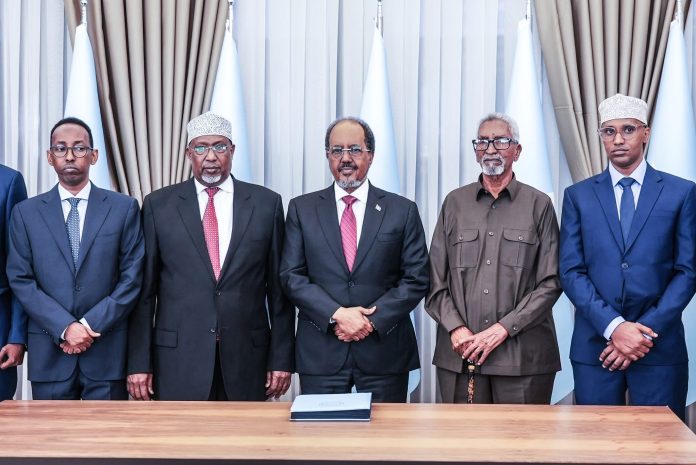
On 17 September, 99 Federal Darwish trainees attended their graduation ceremony, held at International Compound in Mogadishu, in the presence of H.E. Deputy Prime Minister Salah Ahmed Jama and other high-level officials.

Gunman fatally shoots three police officers, wounds two in U.S.

Gunman kills three police officers and injures two in US
Pennsylvania Governor Josh Shapiro said it was a tragic and devastating day for York County (file image)

When a Quiet Pennsylvania Road Turned Into a Scene of Mourning

On a sun-bleached stretch of road in Codorus Township, where cornfields slope toward creaky farmhouses and church bells still mark the hour, a small community woke on an ordinary morning to an extraordinary grief. By midafternoon the hush had been replaced by flashing lights, a growing line of cars, and a handful of faces that knew their neighborhood had changed forever.

Three law enforcement officers were killed and two others critically wounded in an exchange of gunfire after returning to a residence in York County to follow up on an earlier, domestic-related investigation. The shooter, according to state police, was also killed. The precise details remain under investigation; what is already clear is the raw human cost—for families, for the officers’ colleagues, for neighbors who drove past and saw the black tape and the grief-struck embrace of a volunteer firefighter.

What we know so far

Here are the confirmed facts authorities have shared and the fragments local residents have pieced together:

  • The incident took place in Codorus Township, in southeastern York County, Pennsylvania.
  • Three officers were fatally shot; two others were seriously wounded and transported to nearby hospitals in critical but stable condition.
  • State police say the officers had returned to the scene to follow up on an investigation that began the day before; investigators have described it as “domestic-related.”
  • The person who opened fire was fatally shot by responding officers. Authorities have declined to release the suspect’s identity pending notification of next of kin and further inquiry.
  • State and federal authorities are coordinating; the governor has offered condolences and noted that federal resources were being made available.

Faces, Names, and a Town’s Response

In the absence of full details, people instinctively fill the silence with stories of those they know. “He would be the first to bring you a shovel in a snowstorm,” said Elaine Murray, who has lived two houses down from the property where officers returned. “The whole street is just stunned.”

A volunteer EMT who has served Codorus Township for more than two decades, who asked not to be named, described the area’s rhythms—the 4-H fairs, the VFW post breakfasts, the small-town rituals that make neighbors more like extended family. “We take care of one another,” she said. “That’s why this cuts so deep.”

York County, home to roughly 450,000 people, straddles both blue-collar industrial history and fertile agricultural land. Its towns are stitched together by volunteer fire companies and Friday-night high school football, by diners where you still hear the waiter call out names to takeout orders.

Behind the Headlines: What This Means

When officers are killed in the line of duty, the story is never simply about one suspect or one gun. It is about the intersection of domestic conflict, firearms availability, policing tactics, and the fragile frameworks we rely on to protect one another. The state police described the matter as domestic-related—a sign, experts say, that the violence began in what should have been a private sphere.

“Domestic incidents are unpredictable,” said Marion Hargrove, a criminal justice analyst who has worked with police departments on de-escalation strategies. “They often involve heightened emotion, weapons in the home, and histories that don’t always appear on a single paper file. When officers return to follow up, they’re trying to piece together what was missed—but they’re also exposing themselves to risks that aren’t always evident from a report.”

Nationally, thousands of law enforcement officers are assaulted each year and hundreds are killed in the line of duty; organizations that track these tragedies emphasize how quickly routine calls can escalate. At the same time, more than 40,000 Americans have died from firearms annually in recent years, a grim backdrop that changes how communities feel about public safety.

Voices from the Ground

On a side street near the scene, Pastor Gene Alvarez of a small community church stopped to cradle a thermos of coffee in both hands and shake his head. “These families are going to need more than flowers,” he said. “They’ll need counseling, time off, a village. When someone gives their life like that—it’s sacrificial. We must not let ritual condolences be the only answer.”

A local high school senior, Samir Patel, stood at a distance and spoke of a different strain of fear. “I see police every day at my uncle’s factory,” he said. “It makes you wonder: are they safe? Are we safe? When things like this happen, it’s not just the officers’ families; it’s the kids, the small businesses, the elderly who trusted breakfasts at the diner. That trust is shaken.”

Questions Worth Asking

How do communities like Codorus reconcile the need for law enforcement with the risks officers face when doing follow-up work? What more can be done to protect those who answer calls into volatile domestic settings? And finally, what are the supports—mental health resources, conflict mediation services, safe surrender options—that could prevent domestic situations from spiraling into fatal confrontations?

Those are not simple policy questions; they are moral ones. They ask us to consider both the rules we give to people who wear badges and the web of social services that could intervene before tragedy becomes inevitable.

What comes next

Investigators will continue to comb the scene for evidence, interview neighbors, and review the events of the prior day’s interaction. The identities of the fallen officers were being withheld pending notification of next of kin. State officials have pledged to release more information as investigations permit, while offering logistical and emotional support to the families and departments involved.

“This is an absolutely tragic and devastating day for York County,” a statement from the governor’s office read, invoking a plea for prayers and for the community to rally around those in mourning. “These families who are grieving right now—how proud they are of their loved ones who put on the uniform to keep us safe.”

Beyond Mourning: A Call for Reflection

Walking away from the scene, it’s hard not to think of the everyday rituals that form a community’s backbone—potlucks, school plays, the volunteerism that fills the gaps between government budgets and human need. When a single morning fractures that rhythm, how do towns come back?

They gather. They cook. They hold vigils. They ask hard questions. They lobby for better resources and training. They tell the stories of those they lost, not as headlines but as neighbors—someone’s child, sibling, spouse, friend.

We invite you to sit with that for a moment. How does your community honor those who protect it? What conversations would you start if the people you love faced the same risks? In moments like these, the answers shape not only policy but the future of how we care for one another.

Haweeney Inkabadan $2 Milyan u aruusisay Shabaab oo xukun lagu riday

Sep 18(Jowhar)-Maxkamadda Gobolka Banaadir ayaa maanta 16 sano oo xabsi ah ku xukuntay Caasho Macallin Mursal Cali, kadib markii lagu helay eedeymo culus oo ku saabsan maalgelinta falal argagixiso, dhaqidda lacago sharci-darro ah iyo taageeridda kooxda Al-Shabaab.

Madaxweyne Xasan oo si cad u sheegay inaan dalka lagu iman karin Baasaboor Ajnabi ah Fiiso la’aan

Sep 18(Jowhar)-Madaxweynaha Soomaaliya Xasan Sheekh Maxamuud ayaa sheegay in dalka Soomaaliya aanu imaan karin qof ajanabi ah oo aan dal ku gal (Viiso) haysan isla markaana waxaa uu ku celceliyay in qofka Soomaaliga ah ee haysta baasaboor dal kale uu la mid yahay qofka dalkaasi u dhashay ee ay isku sharciga yihiin.

Leading suspect in Madeleine McCann investigation freed from custody

Prime suspect in Madeleine McCann case released from jail
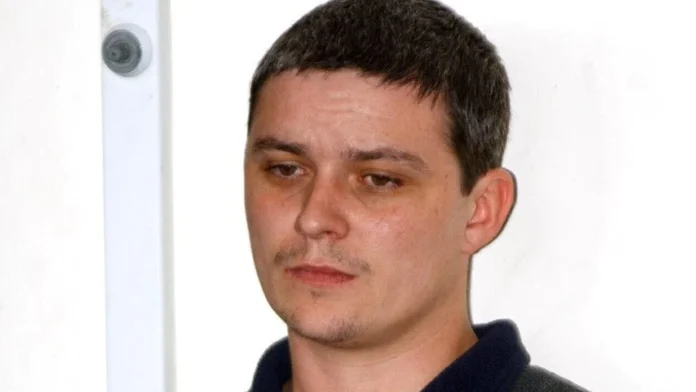
Christian Brueckner had been serving a seven-year prison sentence for the rape of an elderly woman in Portugal in 2005

A Quiet Release, Loud Questions: The Man at the Center of the Madeleine McCann Case Walks Free

On an overcast morning near Hanover, the gates of Sehnde prison opened and Christian Brueckner — the 49-year-old German who has loomed over one of Europe’s most enduring mysteries — stepped into the light. He left as a free man, having served a seven-year sentence for the 2005 rape of an elderly woman in Praia da Luz. He remained, at least for now, the prime suspect in the disappearance of a three-year-old girl named Madeleine, who vanished from a holiday flat in Portugal in 2007.

What at first seems like a single, procedural event in the criminal justice system is, for many, a shockwave. It ripples through the McCanns’ private grief, into the Algarve town that never quite shrugged off that July night, and back to police files piled high in three countries. It ripples, too, into the public imagination — into social feeds, coffeehouse conversations, and the exhausted memory banks of a generation who watched this story unfold like a slow-motion thriller.

The scene and the facts

German police confirmed Brueckner left Sehnde prison shortly after 9:15am local time. The Metropolitan Police in London — which runs Operation Grange, the UK inquiry into Madeleine’s disappearance — said it had sent an international letter of request asking to speak with him upon his release. Brueckner declined.

He has repeatedly denied any involvement in Madeleine’s disappearance. In October last year, a German court cleared him of certain other alleged sexual offences that were said to have occurred in Portugal between 2000 and 2017. Yet he had documented ties to the Algarve region: investigators say he spent time in the area from 2000 to 2017 and that photographs and videos show him near Barragem do Arade reservoir, a location roughly 30 miles (about 48km) from Praia da Luz.

What we know — and what remains painfully unknown

Madeleine McCann disappeared in May 2007 from a holiday apartment in Praia da Luz while her parents, Kate and Gerry McCann, were dining a short distance away. The case has prompted repeated searches across Portugal and Germany: the latest known searches took place near Lagos in Portugal in June, and investigators in 2023 focused on the Arade reservoir area.

The scale of the investigation underlines the difficulty and expense of pursuing old leads. Operation Grange has cost more than £13.2 million (€15.1m) since it began in 2011, according to official figures, with an additional £108,000 (€124,000) provided by the UK government in April. Those numbers are not just accounting items; they represent years of interviews, forensic work, cross-border collaboration — and a refusal to let a case go cold.

Voices from the Algarve

In Praia da Luz, where the town’s whitewashed streets roll down toward the Atlantic, there’s a particular gravity now. The cafe near the marina where holiday brochures and newspaper clippings once sat untouched has a new sense of watchfulness.

“You’d think time would soften things,” said Maria Lopes, a local shopkeeper who remembers the flurry of reporters almost two decades ago. “But every time his name comes up, our town remembers that night. Mothers look over their shoulders. We all feel we must keep remembering, even though it hurts.”

A retired hotel manager, who asked to be unnamed, added: “The tourists still come for sun and sea, but there’s always a question. People whisper. It’s as if the town is holding its breath for an answer.”

Investigations, denials, and courtroom resets

The arc of this story bends through courts, across borders, and across years. Brueckner’s release follows the completion of his sentence for the 2005 rape — a conviction that tied him to Praia da Luz in a physical and legal sense. His denials about Madeleine’s disappearance, and the German court’s acquittal on some other alleged offences, complicate any simple narrative.

Inspector Sarah Milton, a hypothetical former investigator now turned private consultant, reflects on the strain of decades-long inquiries: “When cases sit for so long, evidence ages, memories blur, witnesses die or move, and yet the duty to the missing person remains. We have to be rigorous, but also human. Families live in the pauses between investigations.”

Questions that linger

  • What did Brueckner know of Praia da Luz and its rhythms when she vanished?
  • What new forensic opportunities exist now, and how far can they reach into evidence that is almost two decades old?
  • How do legal systems balance the presumption of innocence with the court of public opinion when a suspect has such a loaded profile?

Beyond one case: Why the world watches

This is not just a local tragedy revisited; it’s a phenomenon that reveals how the global public processes unresolved loss. The Madeleine case became a template for modern missing-persons coverage: lurid headlines, international searches, private fundraising, internet sleuths, and conspiracy theories. It also exposed the limits of jurisdictional power. When a child disappears in Portugal, is suspected involvement found in Germany, and inquiries are funded by the UK, the result is messy cooperation or bureaucratic stasis — depending on how well agencies communicate.

We live in an era where evidence can cross borders as fast as images on a phone, but legal processes crawl. It’s tempting to think technology has shrunk the world into one seamless investigation. In practice, state boundaries, legal thresholds, and different evidentiary rules mean cases like this often require painstaking diplomacy as much as detective work.

What comes next?

Brueckner’s release likely means renewed pressure on investigators to secure his cooperation voluntarily. It means renewed public debate. It means new headlines and a fresh round of speculation on social media. But it also means, perhaps most painfully, that the McCann family and millions of others must live with uncertainty a little longer.

“We don’t want headlines,” a person close to the family might say in a scene like this. “We want answers. The public can help. But the real work is quiet — talking to people, reexamining old steps, waiting for a thread that hasn’t snapped.”

Closing thoughts: How do we measure closure?

As you read this, consider what closure means in a globally connected age. Is it a conviction? A confession? A body recovered? Or is it the slow, hard acceptance that answers may arrive in drips, not in torrents? For families of the missing, closure is practical and spiritual. For investigators, it is methodical and patient. For the public, it is the uncomfortable knowledge that the story did not end when the tabloids moved on.

On a broader level, Brueckner’s release prompts a question we rarely like to ask: when the machinery of justice turns slowly, who is asked to keep waiting? The answer is almost always the same: the victims, their families, and the communities who still bear the scars.

Will this release lead to revelation or to another loop of uncertainty? Only time and tenacity will tell. Until then, Praia da Luz keeps its shutters closed a little longer at night, and the world watches — as it has watched for nearly two decades — hoping that a long-sought truth will finally surface.

Yulia Navalnaya says lab results point to her husband’s poisoning

Yulia Navalnaya says tests show her husband was poisoned
Yulia Navalnaya demanded that the laboratories release their findings about what she called the 'inconvenient truth'

A Cold Silence: New Claims, Old Wounds and the Question of Truth After Navalny’s Death

The wind off the Arctic carries rumors differently. It strips them down to bones and leaves you with names, dates and the sharp, indelible scent of injustice. On a bitter February morning this year, the Russian opposition lost Alexei Navalny—47, charismatic, relentless—inside a prison camp above the Arctic Circle. Now, months later, his wife Yulia has pushed a sealed envelope of accusation into the public square: two foreign laboratories, she says, tested biological samples taken from him and concluded the same thing the world feared — that he had been poisoned.

“These labs in two different countries reached the same conclusion: Alexei was killed. More specifically, he was poisoned,” Ms Navalnaya said in a video posted online. She demanded that the laboratories publish their findings, calling the results “of public importance” and insisting that “we all deserve to know the truth.”

From the Intensive Care of Global Headlines to an Arctic Cell

Navalny’s story was never meant to align with a tidy ending. The man who once returned to Russia from Germany in 2021 — after being treated for a poisoning widely ascribed by Western labs to a Novichok-type nerve agent — did not bend to exile. He came home, was arrested upon arrival, and was parceled out into a series of convictions that supporters call politically motivated.

Prisons above the Arctic Circle are less known by their names and more by their reputations: remote, bureaucratically dense, and designed to mute the rest of the world’s attention. According to official reports, Navalny fell ill on 16 February 2024 while in what his wife described as a small exercise cell. He crouched on the floor, in pain, she said. He complained of burning in his chest and stomach. He vomited. He was later moved to a punishment cell where the final hours unfolded. A photograph Ms Navalnaya shared showed a small, grey concrete room and a heap on the floor she said was vomit. It is a picture that seems to ask the same question over and over: who gets to call something an accident when the power balance is so unequal?

What the Kremlin and Outside Observers Say

The Kremlin has dismissed the allegation that Russian authorities killed Navalny as nonsense. When asked about Ms Navalnaya’s video, Kremlin spokesman Dmitry Peskov said he could not comment, saying, “I don’t know anything about these statements of hers.” Kremlin rhetoric has long characterized Navalny and his circle as extremists bent on destabilizing Russia with foreign support, a framing that resonates in some corners of the country and is rejected in others.

Not all intelligence pictures are the same. US outlets have reported that some US intelligence agencies found no evidence that President Vladimir Putin ordered Navalny’s death, a finding that has been cited in the The Associated Press and the Wall Street Journal. That leaves space for ambiguity—and for competing narratives to settle like dust on the furniture of geopolitics.

Two Labs, One Conclusion — or Two Claims?

Ms Navalnaya said biological samples were smuggled out of Russia in 2024 and sent to two foreign laboratories for analysis. She did not publicly name the facilities or the specific poison they allegedly discovered. That reticence has hardened the divide between those calling for transparency and those treating the claim with skepticism.

“If these results exist, transparency is non-negotiable,” said Elena Morozova, a Moscow-based human rights lawyer who has worked with political detainees for a decade. “The families, the Russian public, the international community—none of us can be asked to accept silence. We can tolerate grief, but not the absence of facts.”

Other voices are cautious. “Scientific tests need chains of custody, peer review, accessible data,” said Dr. Antonio Rinaldi, a toxicologist at a European university not involved in any such testing. “Without knowing how the samples were handled and what methods were used, it’s impossible to weigh the evidence properly.”

People on the Ground: Grief, Memory and a Country Divided

In a coffee shop in central Moscow, a teacher named Sergey folded his hands around a steaming cup and looked at a photograph of Navalny pinned to his phone. “He made people feel like they were not alone,” Sergey said. “There’s fear, yes. But there is also this unbearable need to know what happened.”

In a northern port city where the winter light is a thin, melancholic thing, a retired miner named Lidia recited fragments of Navalny’s speeches as if they were prayers. “He called out those who stole from us,” she said. “Whether he was poisoned or died of illness, someone should be held to account. This is how small towns die quietly—without truth.”

Statistical Shadows

Numbers are blunt instruments, but they frame reality. Since 2021, tens of thousands of people have been detained in Russia in anti-government protests, according to monitoring groups. The scale of prosecutions for “extremism,” “treason,” or other politically charged charges has increased, according to rights organizations that track the trend. The net effect has been a thinning of public space and a thickening of suspicion.

Beyond the Headlines: Why This Matters Globally

Navalny’s death and the cloud of questions around it are not just a Russian domestic tragedy; they ripple outward. They touch on the integrity of scientific analysis in politically charged situations, the responsibility of governments to ensure transparent investigations, and the moral obligations of international actors who may possess relevant information.

“When politics encroaches on medicine and forensic science, trust collapses,” said Dr. Rinaldi. “We have to protect the independence of labs and ensure results are open to scrutiny. The stakes here are not just one man’s life—they are the credibility of systems that are meant to uncover truth.”

What Comes Next?

Ms Navalnaya has called for publication of the laboratories’ findings. The Kremlin has said nothing definitive. International observers and human rights groups have renewed calls for an independent inquiry. The families and friends of the detained continue to send letters, hang photographs at vigils, and whisper into the ears of a world that sometimes listens and sometimes looks away.

So, what should the global community do with this? Demand transparency, yes. Press for independent, multi-jurisdictional review of any biological samples and keep scientific inquiry untethered from geopolitical wants. Hold forums where evidence can be presented with safeguards for chain-of-custody and peer review. Protect whistleblowers and journalists who chase uncomfortable truths.

And ask ourselves: when a political system becomes so brittle that even the death of a single, prominent dissenting voice fractures public trust, what does that say about governance, legitimacy, and the social contract? Who benefits from confusion? Who is diminished by silence?

A Quiet Room with a Loud Question

At the end of the day, the picture Ms Navalnaya released—a small cell, a stain on the floor—will likely be remembered as a raw symbol. It begs a simple question that refuses to be simple: how do we collectively ensure that truth is not a luxury but a right? As the Arctic winter slides into spring, the world watches for answers. The labs, if they exist and if they have evidence, have an obligation. The rest of us have a responsibility to keep asking until the silence is either explained or broken.

What would justice look like in a case like this, and how willing are we—individually and as nations—to demand it? The answer will shape a great deal more than the fate of one man’s legacy.

Catholic priest in Gaza City describes harrowing threats and widespread fear

Catholic priest in Gaza City tells of danger and fear
The Holy Family Church in Gaza City was hit in an Israeli strike in July

Inside a Bombed-Out Sanctuary: Life, Fear and Faith in Gaza City’s Holy Family Compound

The courtyard smells of dust and boiled coffee. Children — some with visible scars, some who rock back and forth with the silent tremor of shock — press against the cool stone walls of a church that has become a lifeline. This is Holy Family Catholic Church in Gaza City: a shelter, a hospital, a parish, and for 450 people right now, the only home they know.

“People are scared. Everybody is scared, we are all scared,” Father Carlos Ferrero tells me over a line that cracks with distance and grief. He speaks from the center of the compound, where stray bullets have been found as close as the schoolroom and where, he says, the sisters’ home has been bombed three times. “The two ladies were killed last time, December 2023, by the sniper.”

A sanctuary under siege

When a church becomes a refuge rather than a house of worship, the plaintive rituals of daily life take on a different cadence. The eucharist is offered between roll calls. Confessions happen in whispered clusters while medics stitch a wound nearby. The sacraments are administered like medicine — as essential as water for those who can still make sense of prayer in the rubble.

Inside the compound are disabled children, elderly men who cannot walk, and people whose bodies and minds are marked by trauma. “Some of them have lost their mind,” Father Ferrero says, “and some, due to their age, are bedridden and others are sick.” He explains why he and the nuns have decided to stay: “We intend to remain in Gaza city… for those people.”

The church’s role here is less a choice than a moral imperative. “These are people who cannot go anywhere by themselves,” he adds. “We assist them.”

The numbers that matter

Numbers can blur the human detail; still, they frame the scale of the crisis. Father Ferrero said roughly 250,000 people have been ordered to leave Gaza City by Israeli forces — a staggering evacuation that, by his accounting, left as many as one million people behind in the densely packed urban landscape.

Globally, the Gaza Strip is home to roughly 2.3 million people, depending on the figures you consult — a small territory at immense density, where the difference between a home and a hospital can be a matter of inches. When orders to move come in a conflict zone that many describe as “nowhere is safe,” the calculus for families is terrifyingly simple: move and risk the unknown, or stay and face the immediate danger.

Fear, faith and perseverance

In the compound’s small chapel, a nun I met — Sister Miriam, who asked that her surname not be used for safety reasons — adjusted a blanket around an old woman who sleeps through the day and cries through the night. “We will not abandon them,” she said. “We promised when we took our vows to be present in good times and in terrible times.”

For Father Ferrero, the answer to what sustains him is elemental. “God, of course,” he says, without hesitation. “Jesus.” But his faith is layered with a steady moral clarity: people, he says, “don’t question God; they question human beings.” It’s an observation that rings like an indictment.

There’s something quiet and jaw-clenching in the way the faithful persist. “There are millions of people who are praying for peace,” he told me. “That’s kind of a moral miracle all over the world.”

Close calls and hard decisions

When stray bullets puncture a schoolroom wall or when a bomb collapses the roof of a sister’s house, the decisions people make are not strategic but desperately practical. Where will the elderly go? How will a family carry an oxygen tank through a checkpoint? Who will care for a child who cannot walk?

“We have young nurses who try to help; there are volunteers,” said Layla, a woman who fled a northern neighborhood and now cooks for those sheltering at the church. “But food is not enough — people need stability, and there’s no guarantee of that.”

Aid organizations have repeatedly warned that faith institutions have become de facto first responders across Gaza. “When hospitals are overwhelmed and roads are dangerous, churches, mosques and schools become the last line of civilian protection,” said Dr. Miriam Al-Khalidi, a humanitarian affairs analyst with experience in the region. “They shelter those who cannot move and offer crucial continuity of care.”

Services on the front line

  • Spiritual care: Masses, prayers, and sacraments to sustain morale.
  • Basic medical assistance: Wound care, basic medications, and palliative care for the sick and elderly.
  • Food and shelter coordination: Rations, water distribution, and makeshift bedding.
  • Psychosocial support: Volunteers trying to comfort children and adults suffering trauma.

These acts of care are not charity in the blink-box sense. They are lifelines. “We serve because nobody else can come in right now,” Sister Miriam said, her voice small but firm.

When diplomacy becomes personal

Global actors, too, surface in the conversation. Father Ferrero said the pope has been in touch and that the papal nuncio in Israel and the patriarch are communicating with the church directly. “He is very much concerned,” the priest told me. Those gestures matter not because they change the battlefield but because they remind people that the world is watching — and, sometimes, that watching can turn into pressure or, at least, attention that nudges aid and advocacy.

“We need more than statements,” Dr. Al-Khalidi warned. “We need corridors for aid, guarantees for civilian protection, and accountability for violations of international law.”

Small gestures, enormous courage

There are scenes you won’t see in briefings: an old man humming hymns while a child sprinkles water from a plastic jug; a volunteer mother braiding hair to give a girl a moment of dignity; a medic offering a cigarette to a man who cannot sleep. Those small acts — of grooming, of tending, of conversation — are how people keep ordinary life alive amid extraordinary danger.

“When there is a bomb very near here, things are falling down in our compound, so we have to be careful from everywhere,” Father Ferrero said. That carefulness is not simply about safety; it’s about preserving the fragile humanity of those inside.

What do we owe each other?

As you read this from a different continent, ask yourself: what is the value of presence? What does it mean to risk everything to stay? Faith communities across Gaza have made a pragmatic, sacrificial choice — to remain present with those who cannot move. Their story challenges our assumptions about neutrality and action in conflict zones.

Will global attention translate into safer passage, more aid, and legal protections? Will the images of frightened children and bombed roofs move policy makers to act? Or will the daily courage of places like Holy Family Church become another footnote in the fog of war?

Father Ferrero speaks not with rhetoric but with the kind of plainness reserved for those who have seen too much. “Persevering,” he says, is the only way forward. “Let God help us, but not going against God, but saying human beings can do bad things.”

He, the nuns, the cooks and volunteers, and the 450 souls sheltering beneath those battered walls remind us that in the worst of times, ordinary acts of care and stubborn faith can create unexpected sanctuaries. They also remind us that the world’s response — from emergency aid to diplomatic pressure — will determine whether those sanctuaries survive.

What will we do with the knowledge of their struggle? Will we look away, or will we lend our voice, our policy influence, our compassion? The question is not abstract. It is the measure of shared humanity.

Trump adding name to Kennedy Center in Washington DC

Trump seeks to add his name to Washington’s Kennedy Center

0
A Name on the Façade and a Debate on the Stage On a crisp evening in Washington, where the city's monuments often feel like a...
Rob and Michele Reiner died of 'sharp force injuries'

Rob and Michele Reiner died from fatal sharp-force injuries

0
A Quiet Street in Brentwood, a Family in Ruins: The Reiner Tragedy and the Questions It Leaves On a sun-stung cul-de-sac in Brentwood, where palm...
How does the EU want to use Russia's frozen assets?

How does the EU plan to repurpose Russia’s frozen assets?

0
Europe’s audacious financial gamble: Turning frozen rubles into a lifeline for Ukraine On an overcast morning in Brussels, beneath the glass façade of a gray...
Mercosur treaty signing postponed amid tense scenes

Mercosur treaty signing postponed amid tense clashes and protests

0
Smoke, Potatoes and a Trade Deal: Brussels Becomes the Stage for a Global Fight Over Food By midmorning the air above Brussels smelled of smoke...
Israel oo Duqeymo Cirka ah ka Fulisay Koonfurta Lubnaan

Israel Carries Out Multiple Airstrikes Across Southern Lebanon

0
Morning sirens and smoldering fields: another day in the uneasy calm between wars At first light, the hills east of Tyre were amber with dawn....