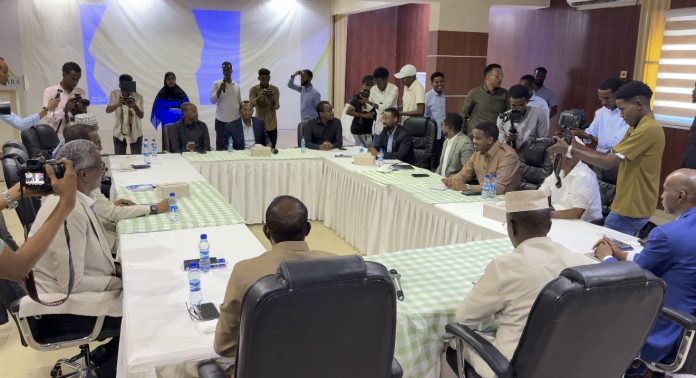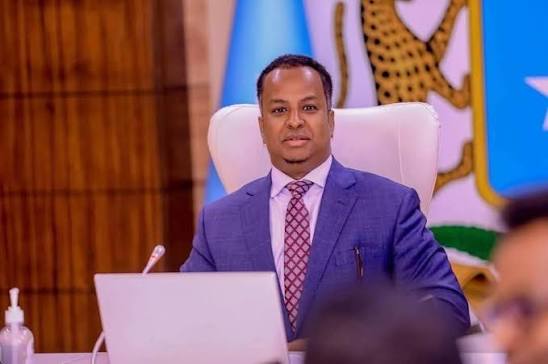
Jan 29(Jowhar)-Dawladda Mareykanka ayaa dib u fasaxday gargaarkii bani’aadamnimo ee ay siinaysay Soomaaliya, kaas oo loo marsiin doono Hay’adda Cuntada Adduunka ee WFP, kadib hakad ku yimid maalmihii la soo dhaafay.
Colombian plane crash kills 15, including prominent politician
When a Short Flight Became a Tragedy: A Mountainous Silence Near the Venezuela Border
The morning had been ordinary in Cúcuta — vendors arranging plantain and coffee, the distant drone of traffic on the Simón Bolívar bridge, children hustling to school — until a routine regional flight failed to return. By midday, the calm had hardened into a knot of grief: a Satena Beechcraft 1900, carrying 15 people, had plunged somewhere in the serrated hills between Cúcuta and Ocaña. There were no survivors.
Satena, Colombia’s state-run carrier that links remote towns to city hubs, operates flights that many communities rely on like arteries of daily life. The Beechcraft 1900 is a modest workhorse — a twin-prop turboprop built to carry up to 19 passengers across short distances and touch down on airstrips that larger planes cannot reach. It is small, familiar, and, for many, indispensable.
The Scene and the Search
Contact with the aircraft was lost just before it was scheduled to touch down in Ocaña, around lunchtime. Colombia’s civil aviation authority confirmed that all 13 passengers and two crew members perished. The government quickly mobilized Air Force helicopters and ground teams, but recovery is a slow, treacherous business in these parts.
“We have received with concern the information about the air accident… where my colleague Diógenes Quintero, Carlos Salcedo and their teams were traveling,” said Wilmer Carrillo, a local parliamentarian. Quintero serves in Colombia’s chamber of deputies; Salcedo was running as a senate candidate in the upcoming elections. The loss of political figures adds another twist to the already painful tally — their campaigns, aides, and families now asked to grieve under a public microscope.
A military source, who requested anonymity, told me that weather and topography were complicating factors. “The winds can change in a heartbeat in the cordillera,” they said. “One moment it’s clear, the next, cloud and rain hide the ridge lines. That is our biggest obstacle right now.” Nearby residents reported seeing thick, low-hanging clouds sweep down the valleys as search-and-rescue aircraft scoured the area.
Mountains, Weather, and the Shadow of Conflict
Northern Colombia’s borderlands are stubbornly beautiful and relentlessly difficult: steep slopes, braided rivers, and sudden microclimates that can bewilder pilots. The region has also been a mosaic of power — a patchwork where state institutions, guerrilla groups like the National Liberation Army (ELN), and criminal networks have long jostled for control.
“This is a borderland of fragility,” said Ana Morales, a security analyst based in Bogotá. “Since the demobilization of the FARC in 2016, the ELN and other groups have expanded in some rural corridors. That doesn’t mean every crash is connected to insecurity. But it does mean access for rescue teams can be complicated, and local populations live in a state of constant uncertainty.”
The ELN is often described as Colombia’s largest remaining guerrilla group since the FARC’s demobilization. Estimates vary, but analysts commonly place its strength in the low thousands. Its presence in some sectors of Norte de Santander — the department that includes Cúcuta and Ocaña — has long shaped life and movement across the landscape.
Faces and Voices at the Edge
At the municipal hospital in Cúcuta, the corridor outside the emergency ward filled with people seeking news. A woman in a bright shawl clutched a photograph and stared at its edges as if the picture might tell her more than the officials were willing to say.
“My cousin flew for work all the time,” she told me, voice steadied by anger more than tears. “He left early like any other day. Now everything is waiting — the phone, the messages, the line at the cemetery. We don’t understand how a plane disappears so close to home.”
A taxi driver who ferries migrants and traders between border towns shrugged when I asked how often he saw flights canceled for weather. “More than you think,” he said. “Pilots change plans. People miss connections. But we still take to the roads — longer, but at least you can see where you’re going.” The roads themselves are not always safe either; infrastructure gaps push many to rely on the small planes that connect remote places to government services, health care, and courts.
Questions of Safety, Infrastructure, and Politics
Accidents like this prod uncomfortable questions: How resilient is Colombia’s regional aviation network? Are checkpoints, radar, and rescue protocols adequate for terrain that seems to conspire against human plans? Aviation safety experts note that small commuter aircraft operating in mountainous environments face heightened risks — rapid weather shifts, limited navigational aids, and short runways are recurring hazards worldwide.
“These are not glamorous flights,” said Javier Ortega, a retired aeronautical engineer who has worked on Andean operations. “But they are essential. Improving safety is not just about buying newer planes — it’s about investing in weather stations, pilot training on mountain flying, and quicker, more coordinated emergency response.” Ortega pointed to rising global investments in GPS approaches and satellite-based weather forecasting as tools that can make short, regional flights safer.
And there is the political context. Colombia’s elections are approaching, and the disappearance of a senate candidate and a sitting deputy on the same flight elevates the tragedy to a national conversation about security, public investment, and the nature of campaigning in remote regions. How do politicians reach voters across geographies defined by peaks and power vacuums? How do authorities protect not just the lives of citizens but the instrument — transport — that binds the country together?
What We Are Left To Do
As the sun slid behind the mountains that evening, search teams continued under fading light. The Air Force said recovery efforts were underway, and local authorities urged communities to remain patient as they awaited official confirmations. For families, patience is an excruciating thing: waiting by the phone, checking regional radio, holding onto any scrap of information that could end the uncertainty.
How do we mourn in a landscape that so often forces people to move — migrants, politicians, and ordinary workers alike? How do communities stitch themselves back together when the threads that tie them — small planes, local politics, and informal economies — snap in an instant?
There are no easy answers. What is clear is the human scale of the loss: a plane that once promised a half-hour connection between towns instead became an absence that will be felt in kitchens, markets, and campaign headquarters for years. The mountains keep their secrets a little longer, and a nation waits for the difficult work of recovery and explanation.
In the days to come, investigators will comb for causes, officials will issue statements, and perhaps concrete measures will be proposed to prevent the next disaster. Meanwhile, the people of Cúcuta and Ocaña — and the families of the dead — will live with the ache. For those of us watching from afar, perhaps the question to ask is not simply who was lost, but what we owe to the borderlands and the fragile systems that serve them. How do we make sure the small flights that connect lives are as safe and dependable as the people who depend on them deserve?
China halts Irish beef imports amid bluetongue virus concerns
A chill in the air and a sudden setback: How a quiet corner of Wexford upended a fragile export recovery
On a frost-bright morning in County Wexford — where the sea breeze still carries the tang of kelp and the hedgerows are stripped to twig — farmers woke not to the distant murmur of tractors but to a message that would ripple from fields to freight lanes halfway around the world.
China has suspended imports of Irish beef, effective 27 January 2026, after authorities detected bluetongue virus in cattle herds near the southeast coast. That decision arrived like an unannounced tide: sudden, wide-reaching and impossible to ignore. For a country whose rural heartbeat is entwined with global markets, the timing could not be worse. Chinese customs had only just reopened to Irish beef after a long closure prompted by a rare BSE case in 2024.
On the ground in Wexford: quiet fields, urgent work
Drive through County Wexford and you will pass low stone walls, sheep nibbling stubble, and small holdings where cattle graze in winter paddocks. The infected herds are clustered near that coastline, a tight geography that offers some comfort to veterinary teams: the disease has not been found across the county, but its presence is real and measurable.
The Department of Agriculture confirmed that bluetongue was first detected in one herd where seven animals tested positive. Follow-up testing has revealed the virus in three neighbouring herds — two of those with a single infected bovine each and another with two infected animals. In total, 11 cattle have been identified through testing, and crucially, none showed clinical signs of the disease.
“Early detection has been a crucial part of our strategy against the bluetongue virus,” Minister Heydon said in a statement, and the department says it notified Chinese officials immediately. “The rapid response reflects my Department’s commitment to that.” Still, he described the suspension as “disappointing” and pledged that Irish officials, together with the Embassy in Beijing, are engaging with their Chinese counterparts to resolve the suspension as swiftly as possible.
Voices from the farms
At a kitchen table in a nearby village, farmer Nora Brennan wipes her hands on an apron and looks out at the field where her herd stands huddled. “We did everything right,” she says. “We report anything out of the ordinary. You don’t see these animals ill, that’s the thing — they look the same as yesterday. It’s the unknown that worries you.”
Local vet Dr. Sean Maher drives the same lanes day after day, collecting blood samples, advising on movement restrictions, and calming anxious farmers. “Bluetongue can be silent in cattle,” he explains. “You can detect viral RNA long before animals show symptoms, which is why surveillance is so important. We’re closing off movements, doing extra testing, and working with international partners on tracing.”
What is bluetongue — and why it matters beyond the farm gate
Bluetongue is a viral disease that affects ruminants — sheep, cattle, goats, deer and even camelids like llamas. Importantly, it is not a human health threat: meat and milk remain safe to eat, and there is no risk to consumers. But the virus can nevertheless be devastating for agricultural trade.
Unlike many livestock diseases, bluetongue is not transmitted directly from animal to animal. It relies on Culicoides midges — tiny, biting insects — to move from host to host. The virus cannot replicate in these midges at temperatures below roughly 12°C; this biological constraint gives authorities some hope that the recent drop in temperatures across Ireland will limit the vectors’ activity and reduce the risk of wider spread.
Historically, bluetongue’s most notorious European chapter came in 2006 with a severe outbreak of serotype BTV-8, which spread quickly across northern Europe and affected millions of animals. Since then, surveillance, vaccination campaigns and vector monitoring have become central pillars of veterinary public health in temperate regions.
- Detected infected cattle in Wexford: 11 (7 in the index herd, 1 + 1 + 2 in three nearby herds)
- Clinical signs observed: none in these cases
- Temperature threshold for midge virus replication: about 12°C
- Trade impact example: live exports to some countries outside the EU, including the UAE, may be suspended for up to 12 months where disease-free status is required
Trade, geopolitics and the fragile road to recovery
The suspension is not only an agricultural problem; it is a diplomatic and economic jolt. Beijing had recently reopened to Irish beef after a closure that followed an atypical BSE case in 2024 — a disruption that underscored how sensitive global supply chains have become to animal health scares. For exporters, regaining market access is painstaking and can be fragile. “These things are rarely black and white,” says Dr. Fiona Gallagher, an international trade expert who studies agri-food markets. “One event can unravel months of negotiation and certification.”
Small-scale live exports to Middle Eastern markets are also immediately affected. Countries that demand a bluetongue-free status will suspend imports; in practical terms, that can mean a 12-month pause on shipments of live cattle and sheep to markets such as the UAE. For some specialized exporters that serve niche markets, a year-long suspension is existential.
“You’re not just losing a shipment,” says exporter Michael O’Leary. “You’re losing contracts, logistics slots and relationships. Rebuilding trust takes time and transparency.”
Why this matters beyond Wexford: climate, surveillance and resilience
What’s happening in Wexford is, in part, a symptom of larger global currents. Warmer winters and shifting rainfall patterns have, in many regions, extended the season when midges are active, and with them the window for vector-borne livestock diseases. That means countries that once considered themselves unlikely hosts for such pathogens must now invest in surveillance, vaccines and contingency planning.
“It’s a wake-up call, not just for Ireland but for any country that relies on open markets for its agricultural exports,” says Dr. Miriam Kavanagh, a veterinary epidemiologist. “Surveillance systems have improved, which is why we detected this virus early. But early detection only matters if the infrastructure exists to respond — movement controls, targeted vaccination campaigns where appropriate, and international reporting.”
What happens next?
Over the coming days, the Department of Agriculture will continue surveillance in the Wexford area and report additional test results. Movement restrictions are in place for affected herds, and authorities are assessing whether targeted vaccination or other control measures are warranted. The Irish Embassy in Beijing and the department will press Chinese officials for clarity on the suspension and on the evidence required to lift it.
For locals like Nora, the calendar of farm life — spring calvings, grass growth, feed bills — presses on regardless of geopolitics. “We know the land will be here tomorrow,” she says. “But markets are fickle. We need clear answers, and we need to know what to do to protect our animals and our livelihoods.”
Questions to sit with
How do we balance vigilant disease surveillance with the need to maintain fragile trade relationships? How do rural communities adapt to biological risks that are increasingly influenced by climate change? And finally, when a small cluster of infection in a quiet county can ripple across continents, what does that tell us about the interconnectedness of food systems — and the responsibilities that come with it?
There are no simple answers. But as the frost thaws in Wexford, and testing continues under grey winter skies, one thing is clear: early detection bought time. What the country does with that time — in science, diplomacy and local support — will determine whether this chapter becomes a brief footnote or a long-running setback.
Trump warns Iran: strike a deal or risk a ‘worse’ attack
Midnight Burials and Missile Warnings: Iran’s Grief Meets a World on Edge
They buried him at two in the morning. Under the weak glow of security floodlights at Behesht-e Zahra, Tehran’s great cemetery, four masked relatives shuffled through a perimeter of uniformed men to place a wrapped body into the earth — hushed, hurried, and watched. The graveyard that should be a place of private mourning had become, in recent weeks, a stage where politics and pain collide.
“They told us to speak softly. They told us to sign the paper. They told us — again and again — that we were lucky to get him back at all,” whispered a woman who identified herself as the sister of a young man killed during nationwide protests. Her voice trembled between fury and fatigue. “There was no time for wailing. That’s not how you bury a child.”
Across the virtual iron curtain that separates Tehran from Washington, a different kind of brinkmanship played out on social media and in naval routes. A former U.S. president warned Tehran to “come to the table” and reiterated that the “next attack will be far worse,” while Tehran’s diplomatic handlers snapped back: Iran will “defend itself and respond like never before” if pushed.
Two Crises, One Story: Domestic Repression and International Saber-Rattling
On the ground in Iran the drama is unmistakably human: families seeking bodies, morgues overwhelmed, funerals curtailed. Internationally, the rhetoric turned military — aircraft carrier strike groups redeploying, promises of “armadas,” public threats that conjure images of another Middle Eastern conflagration. The two threads — internal repression and external confrontation — are braided tightly, each feeding the other.
“When funerals are turned into control measures, you’re not just suppressing protest — you’re trying to extinguish memory,” said Dr. Leyla Mansouri, an Iranian-born sociologist now teaching at a European university. “And when foreign powers shout from afar, it becomes even harder for everyday Iranians to see a path forward that isn’t either violence or despair.”
What families say
Rights groups and families speak of extortion and coercion: demands for large sums to release bodies, forced declarations that the deceased were members of Basij militias, burials at night to avoid gatherings. The stories stack like ledger entries of grief. Iran Human Rights recounts the ordeal of Hossein Mahmoudi, shot in Falavarjan — his family permitted to take his body only after paying a fee equivalent to roughly €2,400 and agreeing to silence.
Another account, from the Hengaw group, told of Ali Taherkhani, whose family reportedly had to pay the equivalent of €18,000 and remove condolence banners before they could bury him under heavy guard. “They treated my brother’s life like an invoice,” said a cousin, voice hoarse from tears. “How do you put a price on someone’s name?”
Numbers and Narratives
Authorities in Tehran have offered their own tally — a figure of over 3,000 dead during the unrest, most purportedly security personnel or bystanders killed by “rioters.” Human rights organizations dispute the official count. Some experts warn the true number could be much higher; voices on the ground say scores, even hundreds, of families remain searching for missing loved ones.
And then there are the long-haul figures that stalk the corridors of power. A widely cited calculation, reiterated by a prominent U.S. political figure, notes that the wars in Afghanistan and Iraq cost the United States more than $7 trillion and resulted in over 7,000 American deaths. Those numbers — economic, human, geopolitical — routinely resurface when policymakers weigh the promise and peril of military action.
The nuclear question and naval posturing
Overlaying the funeral scenes is the shadow of nuclear anxieties. After the United States’ withdrawal from the 2015 Joint Comprehensive Plan of Action (JCPOA) in 2018, Tehran and Washington drifted into a dangerous choreography of crimps and countermoves. Claims of a U.S. “armada” moving into the region — led in recent dispatches by the carrier USS Abraham Lincoln — have been followed by reports that ships did arrive in Middle Eastern waters. Tehran, predictably, has readied rhetorical and, it warns, kinetic responses.
“We have seen decades of brinksmanship,” noted Marcus Alvarez, a retired naval officer and analyst at an international security think tank. “Carrier groups are as much signals as they are tools. They are meant to deter, to reassure allies, and to complicate an adversary’s calculations. But to families losing sons and daughters in secretive morgues, the geopolitics can feel distant and irrelevant — a storm rolling in above a very localized thunder.”
Law, Memory, and the Weaponization of Mourning
International human rights bodies have not been silent. Amnesty International has described systematic harassment and intimidation of bereaved families; the UN’s special rapporteur on human rights in Iran, Mai Sato, has received reports of coercion to falsely claim deceased protesters were militia members and of extortion for body retrievals. “These are cruel practices that compound grief with extortion,” Sato was quoted as saying.
That cruelty has a strategy: control of narrative. Funerals in Iran, as in many Islamic cultures, are meant to be swift, communal affairs — occasions for lament, remembrance, and the reaffirmation of family and social bonds. By fragmenting funerals, pressuring families, or staging burials en masse, authorities aim to blunt the mobilizing power of grief.
- Immediate burial is customary in Islamic practice, intensifying the pain when families cannot access bodies quickly.
- Public funerals have historically been moments of political expression; authorities are acutely aware of that symbolic power.
- Forcing false narratives about victims’ affiliations erases personal histories to make political claims.
Questions That Won’t Leave the Room
What does sovereignty mean when a state tightens its chokehold on mourning? Who wins when global powers flex naval force while families are silenced on the ground? And perhaps most urgent: where does accountability reside in a world where grief is both weapon and casualty?
These are not rhetorical luxuries. They matter to the family in Falavarjan, to the shopkeeper pasting condolence notices on his storefront and ripped down by officials, to the soldier at a checkpoint who may be following orders while watching mourners pass. They matter to foreign diplomats choosing rhetoric or restraint, to humanitarian groups counting the cost of silence, and to citizens everywhere who watch the news and wonder if outrage or inaction will define their generation’s response.
Looking Forward — And Back
The immediate scene may be of burials at night and carrier strike groups by day, but the deeper story is about memory, legitimacy, and the future of civic life in Iran. The 2015 nuclear deal may no longer anchor U.S.-Iran relations; yet the shared imperative — to avoid an escalation that costs thousands more lives — remains. Whether through renewed diplomacy, multilateral engagement, or the soft power of international law, the world faces choices.
“People want two things: truth and dignity,” said Arash Kaveh, a human rights advocate who has worked with families of the killed. “They want to know what happened, and they want to bury their dead with honor. If the international community can’t help with either, then our interventions have been incomplete.”
As you read this, consider how far the reverberations of grief travel. How do we respond as global citizens when the private business of mourning becomes a public battleground? And what does it take — materially and morally — to bring both accountability and healing to a people whose pain has been made political?
There are no easy answers. But history suggests that silenced sorrow rarely stays buried. It rises, in chants outside cemeteries or in quiet remembrances that refuse to be rewritten. And sometimes, that insistence on memory becomes the seed of change.
Wildfire danger looms as Australian temperatures surge toward 50°C
Red Sky Over the Otways: When Heat Becomes a Living Thing
There was a peculiar hush in the Otways this week, the kind that presses against your chest and makes the air feel heavy before the first siren even sounds. The rainforest that usually breathes cold, damp relief into southwest Victoria smelled instead of smoke and scorched eucalypt. Locals described the sky as bruised—thin curtains of grey and copper—while engines roared along narrow country roads, hauling hoses and water tanks toward a line of flame creeping through understory and regrowth.
“It felt like the bush took a breath and forgot how to exhale,” said Leah Morrison, who runs a small guesthouse on the edge of the Great Otway National Park. “We packed what we could and watched the sky, waiting to see if the road would vanish into smoke.”
Immediate Danger: Evacuations and a State on Alert
Authorities issued emergency evacuation warnings for hundreds of residents in four country towns after a bushfire, fanned by searing winds and prolonged heat, threatened communities in the Otways—southwest of Melbourne. Three other rural localities were urged to leave as conditions were forecast to change rapidly.
“When you see an emergency warning, that’s your cue to move now,” said a senior incident controller at the Country Fire Authority. “The speed with which a fire front can change under these temperatures and winds is terrifying.”
Across Victoria, a total fire ban was put in place as six major blazes burned in multiple regions. Roads were busy with people leaving early, supermarkets saw queues for ice and bottled water, and neighbourhoods that would normally be quiet on a weekday hummed with nervous energy.
Where the Mercury Broke the Thermometer
In the northwest, the mercury pushed to extraordinary heights. Preliminary readings from the Bureau of Meteorology showed Walpeup and Hopetoun recording 48.9°C—just nudging past the state’s previous figure of 48.8°C. Bureau forecasters stressed that such readings would later be verified before being formally recorded as a new state record.
Melbourne, where tennis and summer culture usually collide in a festival of sport, saw the Australian Open close the roof over its centre court as organisers tried to protect players and fans from the blistering heat. Forecasters had signalled daytime highs around 45°C for parts of the city, transforming the usually vibrant outdoor cafés into refuge zones for those who could flee the heat.
On the Ground: Firefighters, Farmers, and Families
At a nearby town hall turned evacuation centre, volunteer firefighters and emergency workers moved with practiced calm. The mood, though weary, was resolute.
“We’ve been running on grit and coffee for 36 hours,” said Samir Patel, a volunteer with a local brigade. “But when you see a family come through with nothing but a dog and a single bag, it reminds you what you’re doing it for.”
Local dairy farmer Tom Nguyen helped neighbours load trailers with animals and feed. “You learn to pack fast,” he said. “We’ve lost fences to fires before. You never think it will be the house next time, but you pack as if it will.”
There were also quieter stories: elderly residents helped up the steps at the evacuation centre; teenagers offered to walk dogs and keep older people company; a woman from a coastal caravan park boiled water for hot drinks because power was unreliable. Little acts of care threaded through the chaos.
Health Warnings: Heat Is More Than an Inconvenience
Public health officials were clear: extreme heat is not merely uncomfortable; it can be deadly. Victoria’s health authority reminded people that prolonged exposure to high temperatures increases the risk of heat exhaustion, heat stroke, and can worsen heart and respiratory conditions.
“When the heat goes on and stays on, the body can’t cope indefinitely,” said Dr. Aisha Bradley, an emergency physician who has worked multiple heatwave seasons. “We see dizziness, fainting, confusion, and people with chronic conditions decompensating quickly. The elderly, young children, pregnant people, and those on certain medications are especially vulnerable.”
Emergency departments prepared surge plans as public cooling centres opened in community halls and libraries. Advice was simple but urgent: stay hydrated, avoid strenuous activity during the hottest part of the day, and check in on neighbours.
- Stay cool: seek air-conditioned spaces where possible.
- Hydrate: water is better than sugary or caffeinated drinks.
- Protect: wear light, loose clothing and a hat when outdoors.
- Check: vulnerable neighbours, elderly relatives, and pets regularly.
Why This Isn’t Just a Local Story
For anyone following the arc of weather extremes globally, the scenes in Victoria are part of a worrying pattern. Australia’s average temperatures have risen significantly over the last century—long-term trends show more frequent and intense heatwaves, shifting the baseline of what communities expect in summer. With each degree of warming, the chance of record-breaking heat and associated fire risk climbs.
“This isn’t simply bad luck,” said Dr. Elena Marquez, a climate scientist specialising in extreme weather. “It’s the way a warming climate reshapes the landscape of risk—hotter days, drier soils, more volatile fire seasons. Communities and emergency services are adapting, but the scales are tipping.”
The global lesson is stark: heatwaves and wildfires strain not just firefighting resources but health systems, supply chains, and civic confidence. From villages in Victoria to cities around the world, the question becomes: how do we build resilience quickly enough?
Communities Adapting—And the Limits of Preparedness
Across the Otways, locals have developed informal networks: phone trees, key-holder lists for at-risk houses, and neighbourhood watch groups that double as evacuation teams. Still, many told me their hearts sank when they saw the direction and speed of the wind—elements you cannot pack into a kit.
“You can plan all you like, but if the wind changes and a fire accelerates, that’s a different crisis,” said Leah Morrison. “We need better warning systems and more resources, but we also need bigger conversations about land management, building standards, and where we allow development.”
What You Can Do—Whether You’re Here or Watching from Afar
If you’re in an affected area, heed evacuation orders. If you’re far away, consider this a moment to reflect on how climate shifts are affecting communities worldwide—and what solidarity looks like in practice: donations to reputable relief funds, support for climate-adaptive infrastructure, and advocacy for stronger local planning.
“We don’t want people to panic,” said Samir Patel, the volunteer firefighter. “We want them to be prepared, to think ahead, and to look out for each other. That’s how a community survives the worst of it.”
So ask yourself: what would you grab if you had ten minutes to leave your home? Who would you call? Where would you go? These are uncomfortable questions, but the more honest we are with the answers, the more lives we might save when the next red sky rises.
For now, firefighters continue to hold lines, evacuation centres offer shelter, and communities wait—listening to distant creaks of trees and the low hum of generators—hoping for a change in wind, or a relief that seems, for the moment, just out of reach.
Israel Plans Funeral for Final Hostage Recovered After Captivity
A procession toward something like closure
The van turned into Camp Shura under a low winter sun, its engine a steady, mournful hum that seemed to match the slow march of people waiting to see one last photograph or to touch a casket that had been away for too long.
Hundreds gathered there, at a facility that has quietly become a way-station for grief — a place where identity is confirmed, remembrances are read, and the private work of mourning must be made public. A large screen flickered images of the procession. Rows of plastic chairs filled with uniformed officers. Children clutched small Israeli flags. Some people wore yellow ribbons, the symbol that has stitched together families and strangers for more than two years in vigil and pain.
They had come for Ran Gvili.
Who was Ran?
He was 24. An off-duty police officer on medical leave, scheduled for shoulder surgery, whose leave lasted only until the call of October 7, 2023, when militants struck across southern Israel. Family members and neighbours called him “the Defender of Alumim” — a young man who raced toward danger rather than away from it. Members of the elite Yassam unit, his colleagues, described him as the first to grab a weapon and the last to leave a fight.
“He ran toward the fence,” a neighbour told me, voice trembling. “He was our son, our brother. He could not stand the idea that others would be taken.”
Israeli officials say that Mr Gvili was killed in combat and that Islamic Jihad fighters carried his body into Gaza. For months the status of many abducted or missing people remained painfully unclear. Of approximately 250 people taken during that first day of slaughter — an assault Israeli tallies say killed around 1,200 people — dozens later died in captivity or were returned only after protracted negotiations.
The van that arrived at Camp Shura had previously been to a forensic centre in Tel Aviv. It carried the remains of the last Israeli hostage to be recovered from Gaza — a grim punctuation to a hostages chapter that has shadowed Israeli life for years.
In the crowd: faces of a country
There were veterans in uniform, mothers clasping rosaries, teenagers with eyes too old for their years. An elderly man, his hands rubbed raw by grief, said simply: “We have been counting days like prayers.” A kibbutz teacher wiped her cheeks and spoke of the quiet that will follow for the Alumim community. “He was ours,” she said. “The whole kibbutz felt he was a son and a brother.”
Prime Minister Benjamin Netanyahu — who addressed the nation in the hours before the burial — framed the return as the completion of a sacred duty. “We have fully completed the sacred mission of returning all of our hostages,” he said, lauding Ran as both the “first to charge” and “the last to return.” His words were meant to give shape to national sorrow: heroism, resolve, victory.
But not everyone heard triumph in that language. In the shaded corner where young parents stood with toddlers, several spoke of the long haul of trauma: sleepless nights, children who flinch at loud noises, families who have been reshaped by absence. “This is not finished,” one woman said. “The wounds are deeper than a single day.”
The exchange that closed a painful chapter — and opened others
The return of Mr Gvili’s remains marked the final act in a complex exchange born of negotiations between armed groups and mediators from several countries. Under terms reached last October — brokered by regional and international intermediaries including the United States and others — Hamas and allied groups agreed to return the remaining hostages, dead or alive, in exchange for the release of Palestinian prisoners.
Short pauses in the conflict had permitted the release of many hostages earlier. Two significant ceasefires allowed dozens to come home. But the negotiations were fraught and the human ledger remained heavy: dozens of those taken never made it back alive.
“Hostage exchanges are never clean. They’re messy and human and cruel,” said Dr. Miriam Halevi, a scholar of conflict resolution. “They leave open ethical questions: what do we trade for a life? Under whose terms do we decide? And what happens to the societies afterwards, when the bargaining has stopped but the grieving continues?”
Numbers that haunt a region
Statistics do not soften the edges of grief, but they do help us measure the scale of harm. Israeli authorities estimate roughly 250 people were abducted during the October 7 attack. Israeli tallies put the immediate death toll from that day at about 1,200 people. Meanwhile, Palestinian health authorities say that more than 71,000 Palestinians have died in Gaza since the war began — a figure that international groups warn reflects a humanitarian catastrophe.
These counts differ depending on who reports them, yet the pattern is clear: civilians have borne the brunt. Entire families have been shattered; cities and towns have been hollowed out. The challenge of translating these raw numbers into policy and action is one that diplomats, humanitarians, and ordinary people continue to wrestle with.
Meitar: a town marked and made
Ran will be buried in Meitar, a southern Israeli town tucked into the rolling hills that mark the Negev highlands. Meitar’s streets are both ordinary and marked by loss — playgrounds and small cafes rub shoulders with memorials and photographs taped to lampposts. People here speak of him with a kind of protective pride: bright, brave, too young.
“When we come to a funeral now, we are all trying to stitch back something that was torn,” said a local teacher. “We put flowers and flags, but what we really want is to be able to let our children grow up without alarms.”
What happens next?
The burial closes a grim chapter, and yet the story of the region keeps writing itself. U.S. officials have signalled the beginning of a second stage tied to the deal, including the reopening of the Rafah crossing between Gaza and Egypt — a move aimed at easing the flow of aid and people. Whether reopening borders, rebuilding homes, or addressing accountability will translate into lasting calm is an open question.
International human rights groups and humanitarian organizations warn that rebuilding must go hand in hand with justice and protection. “Reconstruction without rights is only a temporary fix,” said Amal Nasser, a humanitarian worker who has supervised relief convoys in Gaza. “If people are not safe, if the root causes are not addressed, we will see the cycle repeat.”
Questions for the reader — and for ourselves
How does a society honor a hero without sanctifying a cycle of violence? How does the world treat the return of a fallen person with dignity while also tending to the living who remain wounded and displaced? These are not questions with easy answers.
The funeral of Ran Gvili will be a private family moment inside a national frame. It will be a place where a community will try to say goodbye and remember who he was: a son, a colleague, someone who ran toward others in a moment of terror. For those who watched the procession, the images will keep returning — the yellow ribbons, the small flags, the slow cadence of marching feet.
And for the rest of us, this moment can be a reminder of how every headline is made of human lives. Close your eyes and picture a single name on a placard. What stories are behind that name? What does the path to healing look like for them, for their neighbours, for people on the other side of the fence?
In the end, the burial in Meitar is not merely about returning a body; it is about returning a story to the people who loved him, and about asking whether a society, and indeed the international community, can find ways to break cycles so fewer names will need to be read aloud in future.
Budapest mayor faces charges for organising banned Pride parade
A rainbow in defiance: Budapest’s Pride and the moment a city said “enough”
Last June, the wide avenues of Budapest filled with color as if the city itself had decided to breathe in a new way. People spilled from side streets and clambered up tram steps, carrying banners, dancing, singing. Organisers later estimated more than 200,000 people attended — a number that felt both astonishing and inevitable to anyone who had watched the months of tension that preceded the march.
It was more than a parade. It was a declaration: public joy made political, a mass refusal to let laws and threats shrink the space for human expression. For weeks, the government of Viktor Orbán had signalled its intent to stamp out Pride with legal restrictions couched in language about “protecting children.” The ruling coalition had tightened laws and folded protections into constitutional text, sending a clear message: certain identities and celebrations were unwelcome in the public square.
Budapest city hall, led by Mayor Gergely Karácsony, did something risky and intentional — it agreed to co-organise the march. The aim was to thwart those new rules and defend the right to assemble. The police, however, issued a ban. Mr Orbán warned of “legal consequences.” Still, the streets filled anyway.
The charge sheet: a trial of symbols
Weeks later, prosecutors filed charges against Mayor Karácsony, saying he “organised and led a public gathering despite a police ban” and seeking a fine. The district prosecutor’s office said it proposed a summary judgment without trial — a fast-track way to impose penalties — though it did not specify the amount requested.
Karácsony, who was questioned in August and who faced the technical possibility of up to one year in prison for organising a banned rally, answered with defiant humor. “I went from a proud suspect to a proud defendant,” he wrote on Facebook. “They don’t even want a trial… because they can’t even comprehend that here in this city, we have stood up for freedom in the face of a selfish, petty, and despicable power.”
Organisers warned attendees that, according to law, individuals could face fines up to €500 simply for joining the march. Yet, in a twist that revealed the limits of enforcement, police later announced they would not take action against participants.
The legal backdrop
For close observers, the dispute is not merely about a single parade. It sits atop years of legal changes in Hungary that rights groups say have curtailed space for LGBTQ+ people and civil society more broadly. In 2021, the government pushed through laws restricting the portrayal of homosexuality and gender identity to minors — measures that critics likened to censorship and that prompted condemnation from Brussels and human-rights organisations across Europe.
“When laws are used to police love, the law itself loses legitimacy,” said Éva Horváth, a legal scholar at a Budapest university. “This is not just administrative nitpicking; it is about whether a democratic society allows difference to be seen.”
Voices from the crowd: why people came
Walking the route, you heard a thousand reasons for why people turned out: solidarity, defiance, the desire to celebrate identity in public without apology. “My son is gay,” said Anna, a 56-year-old schoolteacher who held a rainbow flag tied to a walking stick. “I came because we have to show him we are with him. When the state threatens his dignity, we answer with presence.”
There were others, too. A young man with a painted face told me he had never seen such a turnout in his life. “It felt like the city was finally ours,” he said, voice raw with excitement. “We are not invisible anymore.”
Volunteers explained they had coordinated logistics in secret at times, worried about permits and police moves, yet buoyed by a broader international atmosphere. “People here watch what happens in other parts of Europe and feel both inspired and vulnerable,” said Márk, who organised marshals for the march. “You feel the pressure of a government that wants to make you afraid, and then you realise fear won’t stop us.”
Why this matters beyond Budapest
Ask yourself: when a city official risks legal peril to defend a parade, what does that say about the state of civic life? This is not just a Hungarian story. Across the continent and around the world, debates over free assembly, minority rights, and the power of law to shape social norms are playing out in similar, sometimes subtler, ways.
For the European Union — which has repeatedly raised concerns about Hungary’s democratic backsliding — the incident is another test. Can supranational institutions protect rights when member states use national laws to curtail them? For civic movements, it is an instructive example of how local authorities can act as a bulwark against centralised power.
“Cities often become frontline defenders of pluralism,” said Dr. Lucien Moreau, a political scientist specialising in urban governance. “When national governments pull centre-stage toward illiberalism, municipal leadership can preserve democratic practices. That is what happened in Budapest: the mayor and city hall chose to interpret their mandate as protecting citizens’ rights.”
Numbers that matter
- Organisers’ estimate of attendees: more than 200,000 people.
- Fines individuals could face for attending (under the contested rules): up to €500.
- Potential prison time for organising a banned rally: up to one year.
What happens next — and what it reveals
Prosecutors’ move to seek a fine without a full trial speaks to an administrative route that can be quicker and less visible than a drawn-out court case. Critics worry such mechanisms can be wielded to intimidate political opponents and civic actors without the public scrutiny of a trial.
“The aim is not always to win in court,” said Júlia Szabó, a human-rights campaigner. “The aim can be to make the cost of dissent higher, to drain activists emotionally and financially.”
And yet, cracks show: the police declaration that they would not act against participants suggests that state power is not monolithic. There are pockets of resistance within institutions, and there remain people each day choosing to show up.
Final thoughts: the hard work of visibility
Standing among the crowd that day, it was hard not to think about the paradox of visibility. To be seen can be both liberating and risky. The marchers chose to be visible because invisibility had proven costly: erasure, stigma, laws passed in quiet votes.
“Visibility is a weapon,” said an older man who had marched decades ago and still attends now. “We wield it not to hurt others but to refuse to be erased.”
Whatever the legal outcome for Mayor Karácsony, the scene in Budapest last June will linger as evidence that civic bravery still matters. It raises a question for all of us — not just Hungarians, not just Europeans: when laws seek to redraw the boundaries of belonging, what will we do to redraw them back?
Wasiirka Dekedaha Soomaaliya oo xafiiskiisa ku qaabilay Wafdi ka socday Turkiga
Jan 28(Jowhar)-Wasiirka Wasaaradda Dekadaha iyo Gaadiidka Badda XFS, Mudane Abdulkadir Mohamed Nur ayaa xafiiskiisa ku qaabilay wafdi ballaaran oo uu hoggaaminayo Wasiir ku-xigeenka Gaadiidka iyo Kaabayaasha Dhaqaalaha ee Jamhuuriyadda Turkiga, Mudane Durmuş Ünüvar oo 27-ka bishaan soo gaaray Magaalada Muqdisho.
Ilhan Omar doused with unknown substance while delivering speech
A Syringe, a Scream, and a City Holding Its Breath
Last night a packed community hall in Minneapolis tilted for a few heart-stopping seconds toward chaos. The air — warm from bodies pressed shoulder to shoulder — smelled faintly of coffee and winter coats. Ilhan Omar, Congresswoman, Somali‑American daughter of refugees, and a lightning rod in American politics, was in mid-sentence when a man in the front row leapt up and sprayed an unknown liquid at her from what looked like a syringe.
Someone behind me shouted. Others froze. Security pushed forward like a delta of hands and jackets. The man was wrestled down and led away by officers from the Minneapolis Police Department; the audience exhaled in a collective, uneven sigh that was part relief, part rage, part disbelief. The congresswoman, shook but unbowed, stepped back to the microphone and finished her remarks. “We are Minnesota strong,” she told the room. “We will stay resilient in the face of whatever they might throw on us.”
What it felt like to be there
As a journalist who’s sat through dozens of town halls, I’ve learned that the most revealing moments are sensory ones: a cough at a tense pause, the sudden silence when a rumor sweeps a crowd. Last night, time snapped; a second stretched out into a small eternity of scrabbling shoes and shouted instructions. People pushed forward to help. One woman near the front, her hijab pinned in a careful knot, said to me afterwards, “I came to ask about healthcare for my mother, not to see someone try to hurt my Congresswoman.” Her eyes were wet but steady.
“I looked down and saw the tube,” said a security guard who helped tackle the man, his voice still shaking. “You don’t expect to be in a classroom and suddenly be in an emergency room. We did what we had to do.”
Context: Why this moment matters
The incident was not an isolated lapse in etiquette. In recent years, elected officials — particularly women of color and immigrants — have seen a spike in threats, harassment, and physical attacks. Across the United States, political rhetoric has become rawer and more personal, and it has bled into how people treat one another in public spaces. When attacks happen in places meant for civic conversation, it is a symptom and a signal: a symptom of polarisation, and a signal about how fragile our public sphere has become.
For Minnesota, the stakes feel particularly close. The state hosts one of the nation’s largest Somali‑American communities, centered in the Cedar‑Riverside neighborhood not far from where last night’s event occurred. For many residents, Omar is not simply a politician — she is a neighbor, a mosque‑goer, an emblem of possibility after decades of displacement. “She’s family,” said Ahmed, who runs a small cafe that doubles as a community bulletin board. “When they attack her, we take it personally.”
The politics behind the moment
Omar has been an outspoken critic of immigration enforcement policies and of statements from national leaders that single out immigrants and refugees. The exchange last night took place just after she called for comprehensive changes to how the Department of Homeland Security approaches enforcement. Her language — blunt, urgent — is the sort that draws applause from supporters and sharp rebuke from opponents. Presidential rhetoric has not helped soothe tensions; it has often amplified them.
Beyond the headlines and the applause lines, the issue touches millions: how nations handle borders and migrants; how communities balance security and compassion; and how rhetoric from the top filters down into everyday behavior. When public speech becomes dehumanizing, the downstream effects are tangible and sometimes dangerous.
Voices from the room: fear, defiance, resolve
After the man was removed, people lingered, reluctant to leave the circle of attention. A retired schoolteacher in the third row, who has lived through Minnesota’s civil rights battles, spoke in a voice that was equal parts exhaustion and determination. “We’ve raised our children here,” she said. “We will not let violence be normalized at a podium.”
A younger attendee, a community organizer who asked to be identified as Sofia, said, “This is what happens when leaders stoke fear — someone hears it louder than reason and decides to act. It could have been worse. It could happen elsewhere. We need to teach people to argue without trying to erase each other.”
Security staff later told me the suspect was taken into custody by Minneapolis police. Officials were still testing the sprayed substance; by the early morning hours there were no reports that the congresswoman had been seriously harmed. Yet the psychological ripple — the feeling that the public square is less safe — will linger for days, perhaps weeks.
What experts say
“Political violence rarely stems from one moment alone,” said Dr. Lena Ortiz, a political sociologist who studies political polarization and civic safety. “It is an outcome of a thousand small escalations — persistent dehumanizing rhetoric, echo chambers online, and a sense among some that extremes are the only way to be heard. Town halls used to be places of civic repair. We need to bring that back intentionally.”
Research supports Ortiz’s warning. Studies of political violence show that when public discourse degrades into demonization of opponents, incidents of harassment and threats rise. In addition, communities with high immigration enforcement activity often report elevated anxiety and distrust toward public institutions — a fact that local leaders in Minneapolis say colors everything from civic participation to school involvement.
Where do we go from here?
There are immediate, practical questions: How should security be managed at public events? What protocols keep both speakers and citizens safe while preserving the openness that democracy requires? But there are deeper questions, too. How do we speak across difference without reducing another person to a caricature? How do we honor the dignity of people whose histories and faces are different from our own?
“Resilience is not only standing back up after something scary happens,” said Omar in the minutes after she returned to the podium. “It is the decision to keep showing up, to keep listening, and to keep arguing for policies that make our community safer and healthier.” Her words landed like a benediction in a town hall meant to be about policy but that became a test of civic courage.
A community’s choice
As you read this from wherever you are — a café in Rome, a living room in Johannesburg, a university dorm in Seoul — ask yourself: what kind of public square do you want to inhabit? One where fear dictates who speaks and who is silenced? Or one where disagreement is heated but humanized? The answers matter. They are not abstract. They shape the air in community halls and the safety of people who step up to lead.
For now, Minneapolis will tend to its bruises and measure its next steps. The Somali cafes will open in the morning, the children will return to school, and the town hall’s chairs will be reset for the next time citizens want to be heard. The image that stays with me is simple: a woman returning to the microphone after being attacked, steadier than the moment deserved. That kind of steadiness is contagious, and in a season that desperately needs it, perhaps it is the most meaningful thing to witness.