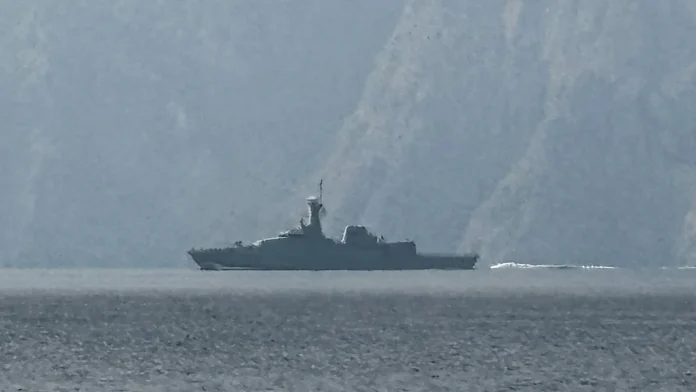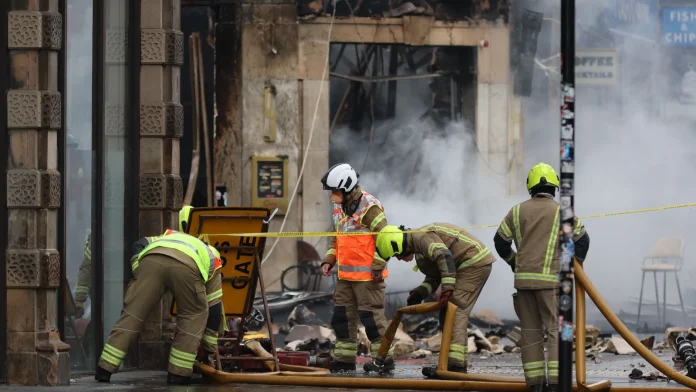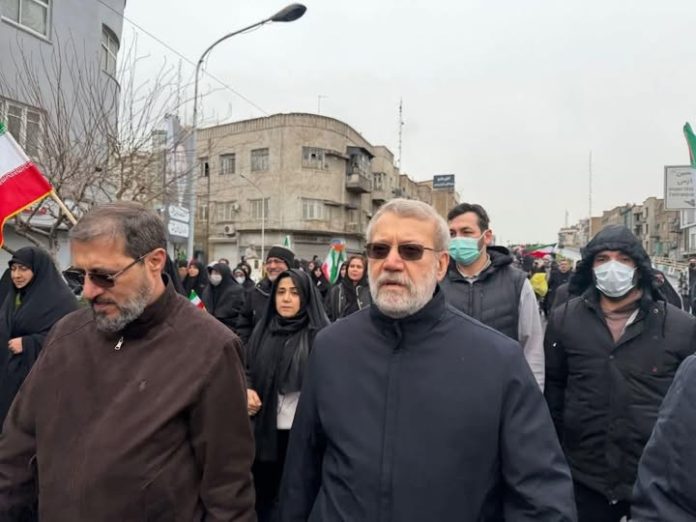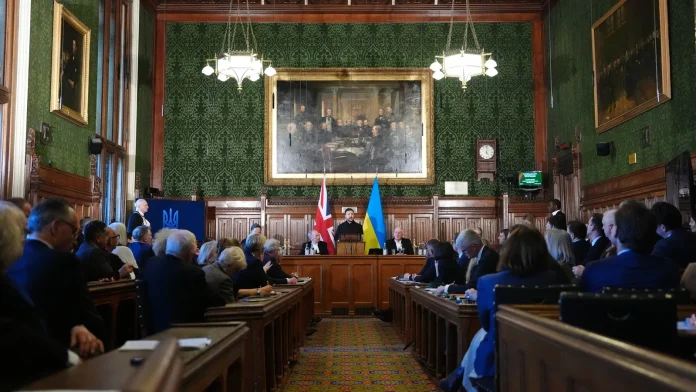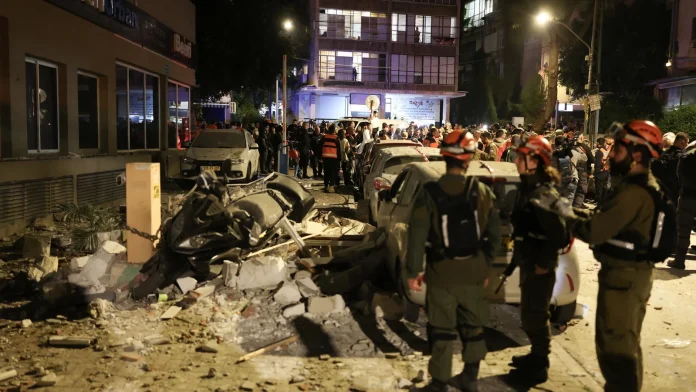
Nov 21(Jowhar)-Ciidanka Hay’adda Sirdoonka iyo Nabadsugidda Qaranka (NISA) oo kaashanaya saaxiibada caalamka ayaa xalay howlgal qorshaysan ka fuliyay deegaanka Kuukaayle oo hoostaga degmada Maxaas ee Gobolka Hiiraan, kaas oo lagu beegsaday goobo ay gabbaad ka dhiganayeen maleeshiyaadka Khawaarijta.
European leaders endorse Trump’s call for Ukraine ceasefire
Across Borders, a Pause—or a Prelude? Europe Backs a Fragile Push to Stop the Guns
There are days when diplomacy sounds like an orchestra tuning up: discordant, hopeful, and full of possibility. This week’s score came as a terse, carefully worded joint statement from Britain, France, Germany, Ukraine and the European Union — a chorus of capitals throwing their weight behind a U.S.-led effort to halt the fighting and open negotiation channels with Russia.
“We strongly support…that the fighting should stop immediately, and that the current line of contact should be the starting point of negotiations,” read the British government’s summary of the statement, which caught the attention of diplomats and citizens alike. It was as much a plea as a directive: stop, talk, and let the map as it is today frame future conversations.
What Was Said — And What Wasn’t
The language of the joint declaration was politically calibrated. Leaders urged a sustained squeeze on Moscow’s economy and its defence industry until Vladimir Putin, they said, was ready to engage in bona fide peace talks.
“We must ramp up the pressure on Russia’s economy and its defence industry, until Putin is ready to make peace,” the statement read. “We are developing measures to use the full value of Russia’s immobilised sovereign assets so that Ukraine has the resources it needs.”
That last line—about immobilised assets—has particular weight. Since the conflict intensified, Western governments and international institutions have frozen or restricted access to significant portions of Russia’s foreign reserves. Officials say one aim now is to channel some of that frozen capital toward reconstruction and humanitarian needs in Ukraine, though legal, logistical and diplomatic hurdles remain.
A Conversation, Not Yet a Meeting
On paper, the next steps sounded simple: meetings between foreign ministers, an opening of direct lines of communication, and then serious talks. In practice, as one senior Russian diplomat told the state news agency, it was “premature to speak about the timing” of any face-to-face.
From Moscow’s side, officials described recent phone contacts as “constructive.” Russian Deputy Foreign Minister Sergei Ryabkov, reflecting on conversations his ministry said took place between his boss and U.S. counterparts, told reporters that Russia was “working on the points discussed” and had not yet set dates for more formal encounters.
Yet the U.S. response, while formally polite, did not mirror the rosy adjective. “The secretary emphasised the importance of upcoming engagements as an opportunity for Moscow and Washington to collaborate on advancing a durable resolution of the war, in line with President Trump’s vision,” said a U.S. State Department deputy spokesperson. He stopped short of describing the talks as constructive, instead framing them as a potential opening.
Reading the Signals
Diplomacy is often a game of signals. To foreign ministries, the difference between “constructive” and “an opportunity” is not semantics—it is a measure of trust. On the streets of Kyiv and in the cafés of Paris and Berlin, ordinary people parsed the wording with anxious hope.
“Every time they say ‘stop’ we breathe for a moment,” said Oksana, a high school teacher in Kyiv who declined to give her full name for privacy. “But if the guns stop and the borders on paper don’t reflect our losses or safety, then our children will still be at risk. We need real guarantees.”
In London, a retired diplomat watching the developments on television sighed. “Statements matter. They commit public will. But statements without timelines or enforcement are like poetry—beautiful but not legally binding,” he said. “The draft here is promising, but we’ve seen promising before.”
Local Scenes: Markets, Memory, and the Human Count
Walk through any Ukrainian market and the arithmetic of conflict becomes intimate. Vendors move between stalls piled with apples, jars of pickled vegetables and bouquets of late-season flowers; each sale is a small defiance. Yet the human toll is measured in lives uprooted and in the quieter statistics of disrupted schooling and shuttered businesses.
UN agencies estimate that well over eight million Ukrainians have fled the country since the initial escalation, and millions more remain internally displaced. Hospitals report shortages of specialist equipment in some regions. Reconstruction needs, long before any peace deal, loom large—building roofs, schools, and hospitals will be an enormous undertaking that Western leaders referenced when they spoke about using immobilised assets to help Ukraine.
Sanctions, Assets, and the New Economics of War
Sanctions have been the financial equivalent of trench warfare: attritional, slow, and designed to produce long-term pain for the Russian economy. Targeted measures have hit banks, defence suppliers, and individual officials, while access to central bank reserves has been restricted in unprecedented ways. The joint statement’s pledge to “use the full value” of frozen sovereign assets signals a political appetite to convert frozen reserves into tangible support for Ukraine—if legal and technical teams can make it happen.
Experts warn that such a conversion is fraught. “There’s a labyrinth of international law, creditor rights and domestic court systems,” said Dr. Lina Andersson, an analyst who studies sanctions regimes. “You can declare political will, but instruments and precedents are limited. There are also concerns about setting a precedent that might later be used against other states.”
What Could Break the Silence—or Deepen It?
The question now is not simply whether talks will happen, but what form they will take. Will Russia accept the current line of contact as a negotiating anchor? Will any temporary ceasefire include guarantees that survive the fragile days after guns fall silent? And critically, will Ukraine’s sovereignty and territorial integrity be preserved in any bargain?
For many Ukrainians, negotiations that start from the status quo are both a pragmatic and a painful proposition. Pragmatic because it could stop the immediate suffering; painful because status quos can ossify into grudges and frozen losses.
“If we are to be brave,” said Anna, a nurse in Kharkiv, “then be brave to demand a peace that restores safety. Not peace that just shifts the weight of fear into another shape.”
Global Ripples
What happens next will echo far from Eastern Europe. Nations watching this conflict—some with fraught relations of their own—will take notes on whether sanctions work, whether frozen assets can be repurposed, and whether a crowded chorus of European capitals can, at times, speak with one voice.
And for citizens around the world, the moral calculus is plain: do we demand swift cessation of violence, potentially accepting an imperfect map, or do we press for longer-term justice at the risk of continued suffering in the short term? There is no easy answer.
Where Do We Go From Here?
Diplomacy is rarely linear. It bends and snaps, again and again, but sometimes it yields. The recent joint statement is a squeeze of the baton, a signal that Europe and the United States want to see movement—economic pressure paired with an offer to negotiate.
Will it be enough to coax a durable peace out of smoke and rubble? Or will it be another false dawn, bright and brief? Only time, and the choices of leaders and citizens on all sides, will tell.
What would you do if you were in the room when the map was being redrawn? How much compromise is worth immediate safety? Think about those questions the next time a headline promises “progress.” The people living through these decisions are asking them every day.
Gudoomiye Mursal iyo xildhibaano la socday oo loo diiday iney u safraan Baydbao iyo xiisad taagan
Nov 21(Jowhar)-Gudoomiyihii hore ee golaha shacabka Maxamed Mursal iyo wafdi xildhibaano ah uu hoggaaminayay ayaa maanta laga hor-istaagay safar ah doonayeen iney ku tagaan magaalada Baydhabo.
Trump oo wacad ku maray inuu cirib tiri doono Xamaas
Nov 21(Jowhar)-Madaxweynaha Maraykanka Donald Trump ayaa sheegay inuu cirib tiri doono kooxda Xamaas haddii ay jebiyaan heshiiska cusub ee la xiriira marinka Qaza.
Andrew Steps Back From Title, Says It’s ‘Right Course of Action’

When a Title No Longer Fits: The Quiet Unraveling of a Royal Role
On a damp afternoon in central London, the golden enamel of a tourist brochure seemed askew in my hands—a small, ordinary image of pomp and permanence that suddenly felt fragile. For decades the British monarchy has offered a steady set of rituals: parades, charities, a tidy roster of dukes and duchesses. But last week a seam came undone, and what was once taken for granted now looks like an act of damage control.
Prince Andrew, the younger brother of King Charles, has stepped away from using his Duke of York title. It was, by all accounts, a quiet abdication of sorts—not of his princely status, which remains intact, but of a public-facing role that the family had cultivated for generations. The move followed intense scrutiny over his association with the late Jeffrey Epstein and a fresh wave of allegations that have reignited a very modern conversation about power, privilege and accountability.
Police Inquiries and a Posthumous Memoir
Just a day after police disclosed that they were examining claims Andrew sought the help of an officer to discredit a woman who accused him of sexual abuse, the prince announced he would no longer use the Duke of York title. The timing of the announcement—days before the publication of a posthumous memoir by Virginia Giuffre, one of Epstein’s most prominent accusers—gave the gesture the feel of pre-emptive withdrawal.
In Nobody’s Girl, obtained by broadcasters ahead of its release, Giuffre describes harrowing fears of being trapped under Epstein’s control and details encounters she alleges involved Andrew. The memoir includes disputed claims about her age when they first met and about meetings in London, New York, and on Epstein’s private island. Giuffre, who reached a civil settlement in 2022 with Andrew, is understood to have died at her farm in Western Australia. Her death—reported as suicide—has added a layer of sorrow and urgency to the unfolding story.
Government Reaction and Royal Responsibility
Across the floor from Buckingham Palace, voices in the British government were measured but unequivocal. Bridget Phillipson, the education minister and a senior member of Parliament, told Sky News that the decision by the royal family and Prince Andrew was “the right course of action.”
“We agree and support the decision that the royal family and Prince Andrew have taken,” she said, adding that questions about revoking his princely title were a matter for the family itself rather than the government. Her words captured the constitutional tightrope Britain faces: the state steers policy, but the monarchy governs tradition.
“There is a separation,” one constitutional scholar I spoke with noted. “The Crown and its household have autonomy over titles and patronages. Politicians can express moral judgments, but stripping a prince of his dignity is ultimately an internal royal calculus.”
The Personal and the Political: How Scandal Reshapes Institutions
Scandals have a persistent way of forcing institutions to reconcile image with reality. For the royal family, which trades in symbolism and trust, each controversy chips away at the currency that makes it influential beyond ceremonial duties. Public confidence in institutions around the world has been in flux for years; Britain is no exception. Polling since 2019 has shown fluctuations in support for the monarchy, especially following episodes that highlight inequality or secrecy.
To some, Andrew’s step back is overdue. “It’s like watching a beloved building finally get boarded up because the roof keeps leaking,” said Hannah Reed, a York resident who has followed royal news since childhood. “It hurts to see, but maybe it’s the only way to prevent more damage.”
To others, the restraint is insufficient. Critics say withdrawing a title is a symbolic gesture that lacks the harder commitments of transparency and accountability. “Titles, patronages, official roles—those are the levers,” argued Dr. Marcus Levine, an expert on public ethics. “Removing them is a start. Making meaningful, structural changes to how the royal household responds to allegations is the real test.”
Shadows of Espionage and Old Friendships
Complicating the narrative is a ruling from a British court last year that suggested one of Andrew’s close business associates was believed by the British government to be a Chinese spy. Andrew said then that he had ceased contact with that businessman. It is a reminder that the private lives of public figures can have national security implications—especially when international friendships intersect with diplomatic sensitivities.
“Few of us live entirely private lives at that scale,” observed Anna Holt, a former diplomat. “The mistakes of a privileged few can morph quickly from personal misjudgment to geopolitical embarrassment.”
Human Stories, Global Questions
Behind the headlines are real people: survivors seeking recognition, family members mourning, staffers whose jobs transform overnight, and communities left to reconcile the image of a figure once celebrated. In Western Australia, where Giuffre lived and where she died, neighbors described a person who had sought refuge and, by some accounts, tried to build a quieter life away from the glare.
“She seemed bookish,” one neighbor said. “You could see she’d been through things. There was this quiet resolve about her that made the news feel so cruel.”
There are wider strands woven into this single story: the global #MeToo movement’s insistence that powerful people be held accountable; the role of media in shaping public empathy; the legal and moral complexities of civil settlements versus criminal accountability. The Epstein case itself—his arrest, conviction in 2008, and death in 2019—has been a catalyst for conversations about trafficking, abuse, and the networks that enable them.
According to the World Health Organization, roughly one in three women globally have experienced intimate partner violence or non-partner sexual violence in their lifetimes. Numbers like that are blunt instruments, but they point to the scale of a problem that is both systemic and deeply personal.
Where Do We Go From Here?
For the royal family, the path forward requires a balance of dignity and accountability. For the public, it means deciding what they expect from figures who occupy ceremonial and moral authority. For survivors and the bereaved, it means seeking truth, justice, and care—difficult, sometimes unmet needs in the wake of trauma.
“This isn’t just about a title,” said Miriam Clarke, a counselor who works with survivors of sexual violence. “It’s about whether our institutions protect the vulnerable or shield the powerful. That question matters to everyone, not just those who follow royal gossip.”
As you read this, ask yourself: what do we want from public life? Do we accept symbolic measures, or do we demand systemic change? And how do societies balance mercy, accountability and the human cost of headlines?
The royal household has been contacted for comment. In the meantime, a title sits unused, a memoir has surfaced whose author is no longer alive to testify, and a country continues to wrestle with the messy intersection of privilege and power. The answers—if they come—will be less about silken sashes and more about the structures we build to keep people safe and institutions honest.
EU countries pledge to stop Russian gas imports by late 2027
Europe’s Quiet Exit from Russia’s Gas: Deadlines, Dissent and a New Energy Map
There is a distinct kind of hush that follows big political shifts — not the hush of silence, but the soft settling of dust after something long in motion finally lands. In a cramped conference room in Luxembourg, Europe’s energy ministers nodded toward a future in which the continent’s dependency on Russian gas will be, in theory, a historical footnote.
Under a plan approved by ministers meeting this week, the European Commission’s blueprint for severing both pipeline and liquefied natural gas (LNG) ties with Russia has cleared a major step. It still needs the European Parliament’s assent, but the message is unmistakable: Brussels wants Russian gas out of Europe in short order, and it has started to set dates and scaffolding to make it happen.
A deadline-laced strategy
Deadlines give politics a pulse. This package comes with several, each calibrated to squeeze Moscow’s revenues while trying to keep European lights on and homes warm.
- New contracts for Russian gas would be banned from 1 January 2026.
- Short-term contracts would be allowed to run only until 17 June next year.
- Existing long-term contracts would be phased out by 1 January 2028.
- The broader ambition is to remove all remaining Russian gas imports by the end of 2027, with an even earlier push by the Commission to exclude LNG from Russia by January 2027.
“This is a crucial step toward energy independence,” said Denmark’s energy minister, Lars Aagaard, whose country currently holds the EU presidency. His words, warm and deliberate, echoed through the hall like a promise. “We have pushed hard to get Russian gas and oil out of Europe; now we need to finish the job.”
Who’s on board — and who’s not
European capitals greeted the decision with a mix of relief and resignation. Diplomats say the move passed with nearly unanimous support — all but Hungary and Slovakia backed it — a reminder that unity can be fragile when national geography and history come into play.
Budapest’s ire was blunt and public. “The real impact of this regulation is that our safe supply of energy in Hungary is going to be killed,” Peter Szijjarto, Hungary’s foreign minister, told reporters after the vote. Hungary insists that being landlocked and tied into certain pipeline routes makes the transition uniquely difficult.
On the streets of Budapest, you can still see the practical contours of that argument. A bakery owner in the XIII district, Márta Kovács, shrugged as she opened her shop early one morning. “We heat with gas; margins are thin. Politicians can speak of independence in Brussels. Here, we count every euro,” she said. Her comment captured an unease that stretches beyond diplomatic cables: policy choices ripple into kitchens, factories and hospital wards.
Why this matters: money, security and climate
It is not just symbolism. Russian gas still made up an estimated 13% of EU imports in 2025, according to the European Commission, representing more than €15 billion in trade. For many member states, that was both a security problem — supply could be used as leverage — and an economic one.
Cutting that 13% out of the equation forces choices: build more interconnectors, expand regasification capacity for LNG from non-Russian suppliers, accelerate renewables, or accept temporary price volatility. Each option carries trade-offs between speed, cost and resilience.
Energy expert Dr. Anika Meier of the European Energy Institute cautioned against romanticizing the transition. “You can set dates on paper,” she told me over an espresso in Luxembourg’s old town. “Execution is complicated. Grid upgrades take time. Storage and diversification require money and political will. And there will be winners and losers — some regions will manage smoother than others.”
Logistics on the ground
The reality of weaning off Russian gas plays out in concrete ways. Ports in northwest Europe have been busier, welcoming tankers of LNG bought from a wider roster of suppliers. Spain and Portugal, with their regas terminals and Atlantic access, have been repositioning as gas hubs. In the Baltic states, new pipelines and interconnectors are being pushed through as a hedge against old dependencies.
Poland, Lithuania and Germany have bolstered infrastructure; small countries with limited options stare at steeper hills. For those nations, the Commission’s proposal contains transitional breathing room — but not indefinitely.
Politics of unanimity and the art of compromise
One political wrinkle underlined the complexity: EU sanctions require unanimity among the 27 states — a high bar. Trade restrictions like those ministers approved only need a qualified majority (a weighted majority of at least 15 countries), which makes the current pathway more feasible politically, if no less contentious diplomatically.
“This is how the EU works in crisis: compromise where possible, push where necessary,” said Jean-Paul Moreau, a former EU trade official. “If unanimity is impossible, you seek the strongest coalition that can move quickly and still carry legitimacy.”
Everyday consequences and local color
Back in the Hungarian suburbs, lifelines are practical. A small steelworks north of the city keeps three shifts running on natural gas. Its manager, István Horváth, worries aloud: “Switching suppliers means new contracts, new logistics. There’s not a single solution that doesn’t cost us more.” His tone was resigned, a pragmatic acceptance that economics will shape politics in the months ahead.
Contrast that with Copenhagen, where the municipal heating company stages open-days explaining district heat systems and insulated homes. “We see this as an opportunity to leap forward,” a city engineer told me. “When the geopolitics change, the ones with planning and public investment win the race.”
What to watch next
There are immediate, watchable milestones. Parliament will weigh in. The Commission’s push to ban LNG imports from Russia by January 2027 could speed up the erosion of Moscow’s energy revenues. Observers will also watch which countries seek derogations or transition support, and how the market responds — whether prices spike, or whether supply chains adapt quietly.
But beyond technicalities there is a larger question: what is Europe becoming as it reconfigures essential lifelines? Is this a pivot toward genuine energy sovereignty, and towards the cleaner, decentralized systems climate scientists say we need? Or will geopolitics simply reroute dependencies to new suppliers halfway across the world?
As the ministers dispersed, there was a consensus about urgency and a clear admission of work to do. “We are not there yet,” Aagaard said — and that sentence, candid and human, may be the most useful of all. It acknowledges complexity without abandoning ambition.
So I ask you, reader: when a continent rewrites its energy script, who gets a seat at the table? The negotiator in Brussels? The small-business owner by the tram line? The engineer planning the next interconnector? The answer will help determine whether Europe’s exit from Russian gas is merely a geopolitical maneuver — or a chance to reimagine an energy future that is cleaner, fairer and more resilient.
Pope Meets Clerical Abuse Survivors in Landmark First Meeting
A Quiet Meeting in the Heart of Power
It was the kind of morning that drips history: sunlight pooling on the cobbles of St. Peter’s Square, the distant drone of tourists and pilgrims, and the hush that comes when a place built for awe meets a story that demands justice. Inside the papal apartments, behind frescoed walls and centuries of ceremony, Pope Leo XIV welcomed four survivors of clerical sexual abuse and two advocates for an hour that those who were there say felt like the start of something tender and dangerous at once.
“He is very warm, he listened,” Gemma Hickey, a Canadian survivor, told me, her voice still holding the shape of the moment. “We came not to accuse the Church as a thing, but to stand with it toward truth, justice and healing.”
Janet Aguti, who traveled from Uganda to be in the room, described leaving the encounter with a fragile but real hope. “It is a big step for us,” she said. “To be seen matters.”
Why This Meeting Resonates
This was not a routine audience. It came in the wake of a scathing report from the Vatican’s own child protection commission accusing senior bishops of failing victims — of not even telling them whether reports were being acted upon, or if negligent bishops faced consequences. That internal critique, rare for its bluntness, landed like thunder, and the meeting with survivors was its human echo.
Consider the stakes: the Roman Catholic Church counts roughly 1.4 billion members across continents, cultures and languages. For decades, revelations of abuse and subsequent cover-ups have fractured trust, drained diocesan coffers, and left communities wrestling with the fallout. In the United States alone, dioceses have paid more than $3 billion in settlements over past decades; globally, the toll — moral, spiritual and financial — is far higher and harder to quantify.
The Vatican’s Own Reckoning
The child protection commission’s findings were unusually direct. “Victims were left in the dark,” a member of the commission said in an internal briefing seen by several participants. “If the institution cannot even tell people it harmed whether corrective steps are being taken, the wounds deepen.”
For survivors, the criticism from within the Vatican provided validation that the abuses were not isolated missteps but symptomatic — of clericalism, of protective hierarchies, of systems that prioritized reputation over victims’ dignity.
What Was Said — And What Was Asked
In the meeting, survivors pressed Pope Leo to do what many in the survivor movement have been demanding for years: a universal, global zero-tolerance policy for clergy credibly accused of sexual abuse.
“Why can’t we make it universal?” Timothy Law, a co-founder of Ending Clergy Abuse, recalled asking. He pointed to the U.S. bishops’ Charter for the Protection of Children and Young People, adopted in 2002 after the Boston revelations, as proof that such policies can exist. “There is precedent. There is urgency,” Law said.
Matthias Katsch, another survivor advocate, was less sanguine about quick fixes. “The time when a pope could say one sentence and everything would be settled is over,” he told me. “Reform will have to be messy, local, persistent.”
Expert Voices and Practical Challenges
A canon lawyer who has worked on safeguarding issues cautioned that a universal zero-tolerance policy raises thorny questions: who defines “credible” in different legal and cultural contexts? How do canonical sanctions interact with civil criminal processes? “Uniform principles are urgently needed,” she said, asking to speak anonymously, “but they must be matched with robust, transparent procedures and independent oversight.”
Across the room sat a human-rights scholar who framed the ask in a broader, global lens. “This isn’t only an ecclesiastical policy question,” he said. “It touches on how international institutions reckon with harm when their authority is transnational.”
Faces and Places: The Human Geography of a Global Problem
There is color and contradiction in these encounters. Gemma’s Canadian bluntness, Janet’s quiet Ugandan dignity, the soft clack of the Swiss Guard’s halberd outside — all layered atop Vatican formality. Survivors posed for a picture in St. Peter’s Square after the meeting, a small human constellation in front of massive stone façades; the photograph has since circulated as a symbol of witness.
Those who meet survivors often speak of the small things that matter: a bishop’s apology that acknowledges names; access to records; pastoral care that centers survivors rather than institution-preservation. “It is the details that become the difference between a ritual and real repair,” said a pastoral counselor who has worked with abuse survivors in Uganda and Europe.
- Key asks voiced by survivors in recent years include: an enforceable global zero-tolerance policy; transparent communication about investigations and sanctions; independent review boards with lay experts; access to diocesan files; and survivor-centered reparations and pastoral care.
Where This Fits In the Global Conversation
Pope Leo XIV — the first U.S.-born pontiff, elected on May 8 to succeed Pope Francis, who died in April — is still acclimating to the scale and complexity of reform, survivors and insiders say. His pastoral experience in Latin America and Africa, and an earlier record of meeting survivors when he served as a bishop in Peru, suggest both empathy and an understanding of messy local realities.
But reform runs into centuries of culture. The scandal is not only about individual crimes; it’s about institutional incentives that have protected perpetrators and minimized victims. That’s why survivors’ demands mirror wider social movements: transparency, accountability, and the dismantling of closed cultures that breed abuse — whether in churches, corporations, or governments.
Questions for the Reader — And for the Church
So what would you ask if you had an hour in that private room? Would you demand names be made public? Independent investigations? New structures of oversight that include survivors at the table?
As the global Church edges toward institutional change, it will need more than policies writ on paper. It will require cultural shift, the slow work of trust-building, and an insistence that victims’ voices guide the process. That is the humane, uncomfortable labor of repair.
“We are not asking for vengeance,” Gemma told me as we wrapped up. “We are asking for the truth, for repair, and for a Church that protects children everywhere.”
Whether this quiet meeting will ripple outward — catalyzing durable change across dioceses and continents — remains to be seen. But the image of survivors who walked into the Apostolic Palace and left with a sense of being heard is a reminder that institutions are ultimately made of people, and when those people speak, things can begin to bend toward justice.
Andrew Steps Away From Title, Calls Decision the Right Course of Action

When a Title Became a Question Mark: Prince Andrew and the Royal Reckoning
There is something almost ritualistic about the hush that falls over the approach to Buckingham Palace when the royal household shifts. The pigeons find new perches, tourists pause mid-selfie, and the tabloids sharpen their pencils. Last week, the familiar hum was punctured by a different kind of sound — the quiet, heavy shuffle of a centuries-old institution making room for a new reality.
Prince Andrew announced he would no longer use the title Duke of York. For many, that bare sentence reads like an administrative change. For others, it felt like an overdue tipping point — a public figure with royal blood stepping back from some symbols of privilege in the wake of renewed, painful allegations.
A difficult choice, ministers say
“We agree and support the decision that the royal family and Prince Andrew have taken,” Bridget Phillipson, the UK education minister, told Sky News, a succinct endorsement that underscored how entwined this moment is with politics as much as protocol. “We believe that’s the right course of action.”
But even as ministers offer qualified backing, they also remind the public that removal of peerages and royal styles is not the job of government. That authority rests with the sovereign — a reminder that Britain’s constitutional monarchy is part ceremony, part legal architecture.
Why this matters: the weight of allegations and the memoir
The announcement came mere days before the publication of a posthumous memoir by Virginia Giuffre, a central figure in the Jeffrey Epstein scandal. In a book reportedly titled Nobody’s Girl, Giuffre is said to describe several alleged encounters with Prince Andrew, dating back to when she was 17. The memoir paints a grim portrait of trafficking, coercion and loss of agency — scenes that sit, uncomfortable and unresolved, in the cultural memory of the last decade.
Giuffre’s accounts were part of a civil case that Prince Andrew settled in 2022. He has consistently denied wrongdoing and remains styled a prince, even as he relinquished the Dukedom. The split between the title he gave up and the title he keeps is emblematic: symbolic retirement, not legal erasure.
What the memoir alleges — and why it reverberates
According to extracts shared with media outlets, Giuffre writes that she feared she might “die a sex slave” under Epstein’s control, and that she had several encounters she claims involved Andrew. The memoir reportedly details meetings in London, New York and at Epstein’s private island. If true — and many details remain contested — such accounts reopen painful questions about power, abuse and the line between privilege and impunity.
Voices on the ground: a country divided
In York, the city that lent the dukedom its name, reactions ranged from weary resignation to sharp moral clarity. “He’s a man who carried the title for decades,” said Sarah Dawson, owner of a small bakery near the Minster, stirring a pot of afternoon tea. “To kids in the street it’s always been part of our scenery. But what matters is truth. Titles can’t hide that.”
At a pub around the corner, an ex-serviceman who once marched on ceremonial duties alongside royal appointees told me, “You grow up with these rituals — the pomp and the parades. But accountability? That’s newer. Whether it reaches the palace windows is another question.” He asked not to be named.
For some members of the public the story is less about one man and more about the institution he represents. “It feels like a test,” said Dr. Elena Márquez, a sociologist who studies elites and public trust. “How the monarchy handles allegations within its own family will reverberate across the world — for republicans and monarchists alike. It’s not just about law; it’s about legitimacy.”
Legal aftermath and lingering questions
There are concrete fragments of the story that are not in dispute: Prince Andrew settled the 2022 civil case with Virginia Giuffre, and in the years following the Epstein scandal he stepped back from public duties, a retreat that began in 2019. Court filings disclosed ties between the prince and other figures whose profiles raised national security questions; a court ruling last year suggested the British government believed one of Andrew’s close business associates to be connected with Chinese intelligence — a revelation that prompted Andrew to say he had cut contact.
Legal experts note that the settling of civil claims is complex. “A settlement is not a legal finding of guilt, but it is also an admission that litigation carried risks one did not wish to take,” said a legal scholar at a London university. “For victims, settlements can be a pragmatic way to secure compensation without a traumatic public trial. For public figures, they can be a way to stop the story — but they don’t always stop the questions.”
Broader themes: power, privilege, and the court of public opinion
Why do these episodes grip a global audience? Partly because they fuse familiar ingredients: wealth, secrecy, and alleged abuse. But they also expose a deeper tension in modern democracies: how do you hold people in extremely privileged positions to account when the machinery of power was often built to protect them?
Consider the #MeToo movement, which shifted public conversation about sexual misconduct into the open. Consider international relations, where personal ties sometimes intersect awkwardly with national interests. Or consider the simple fact that royalty is a global brand: reputational damage is not only a domestic political headache; it’s a global commercial — and cultural — risk.
As one commentator put it, “This isn’t only a British story. It’s a mirror for any society that clings to inherited status while demanding transparency and equal justice.”
What comes next?
There are procedural steps and cultural ones. The palace has been contacted for comment. The government will likely continue to tread carefully; ministers are mindful that unilateral political meddling in royal titles would be constitutionally awkward. The royal family itself, navigating its private griefs and public responsibilities, will make choices about the future of honors and associations. And the public will watch, opine, and, in many cases, decide whether the monarchy’s modern role aligns with contemporary values.
So what should we, as readers and citizens, hold in our hands as this story unfolds? Facts, yes. But also a willingness to ask hard questions about power structures, and to listen to voices that have too often been sidelined. Who is protected by tradition? Who is left without recourse? And how do we balance the dignity of institutions with the imperative of accountability?
There are no easy answers. There are titles and protocols, courts and memoirs, settlements and silence. But there is also a public pulse that grows louder as generations trade deference for scrutiny. The palace gates may look the same, and the ceremonies may go on. Yet every once in a while, a title is returned, and with it the air changes — a little less gilded, and a little more human.
France Concedes Security Failures in Wake of Louvre Theft

When Morning in Paris Turned Slow-Motion: The Day Thieves Walked Into the Louvre
Paris at 9 a.m. should have felt like a postcard: espresso steam, clip-clop of tourists hurrying across the courtyard, and the great glass pyramid reflecting a sky that never looks quite the same twice.
Instead, in a bold, bewildering act that has left historians, politicians and coffee-sipping locals shaking their heads, the world’s most visited museum was stripped of pieces of France’s royal past in less time than it takes to watch a short film.
A Seven-Minute Heist and the Silence After
The raid, investigators say, lasted just seven minutes. That is all the time it took for a small, professional team to park a furniture hoist on a Parisian street, scale the façade to the Apollo Gallery — a room as gilt and breathless as any Versailles salon — and pry open display cases holding jewels once worn by emperors and queens.
By midmorning, the Louvre had closed its doors. By afternoon, 60 investigators were deep into the messy work of piecing together how a place that houses nearly 380,000 objects — a collection that brought roughly 9–10 million visitors a year before the pandemic — could be breached so quickly.
The Treasures Taken
The culture ministry released a compact but devastating inventory of what was gone: nine items from the 19th century, including an emerald-and-diamond necklace Napoleon gave to Empress Marie Louise; a diadem once worn by Empress Eugenie boasting almost 2,000 diamonds; and a necklace belonging to Marie-Amélie, the last queen of France, threaded with eight sapphires and some 631 diamonds.
- Number of stolen items: nine (officially described as eight “priceless” items by culture officials)
- Time of arrival: between roughly 9:30 and 9:40 a.m., shortly after the museum opened
- Alleged planning detail: raid thought to be the work of an organized, experienced group; investigators are exploring foreign links
“They didn’t trail in like caped bandits,” said a guard who asked to remain anonymous. “It was clinical. They came in, did the job, and left like they were late for a train.”
How They Did It: A Furniture Hoist, A Window, and a Crowd
The thieves used a furniture lift — an everyday machine for moving sofas and wardrobes — to gain access to an upper-level window. Cutting equipment was used, display cases were opened, and the jewels were taken in a flash. In their rush, the robbers dropped one item: the crown of Empress Eugenie, which was damaged during the escape.
A short video, apparently filmed on a visitor’s phone, circulated on French media: masked figures, the shimmer of gems, flashes of panic. Museum staff intervened, the ministry said, forcing the robbers to flee and leaving behind some of the gear they used. Small comforts for an institution left with an acute reputational wound.
Why These Pieces Matter
Beyond monetary value, these objects serve as living threads to France’s complicated past — monarchy, revolution, empire, restoration. The Apollo Gallery itself is more than a display case; it is a theater of national memory, its walls and cornices saturated with ceremonies and stories. Losing parts of that narrative feels, to many, like a betrayal of the public trust.
“These are not commodities,” said Alexandre Giquello, president of auction house Drouot Patrimoine. “Even if someone tried to fence them, the pieces are so famous and so altered by the theft they would be nearly impossible to resell on the open market.”
Voices in the Wake: Outrage, Worry, Resolve
France’s justice minister did not mince words. “We have failed,” he told radio listeners, noting that the images of thieves hauling a furniture hoist through central Paris make the country look vulnerable on the world stage. The interior minister called museum security a “major weak spot.”
On the streets near the Louvre, reactions ranged from disbelief to furious political finger-pointing.
“It’s humiliation,” said a boulanger who watches the tourist line form outside the pyramid every day. “We welcome the world here. To think someone could take this from us so easily — it stings.”
“How far will the disintegration of the state go?” wrote a right-wing party leader on social media, while President Macron reassured the public that “everything is being done” to catch the perpetrators and retrieve the spoils.
Experts Weigh In
Security specialists warn that famous, iconic pieces cannot be treated like any other exhibit. “Museums haven’t always prioritized robust layered defenses — physical, technological, human — particularly for items that are unique and globally recognizable,” said Claire Beaumont, a cultural security consultant. “This heist shows how symbolic objects are tempting targets for organized crime networks, which often specialize in breaking provenance and laundering heritage.”
Not an Isolated Problem: A Pattern Emerges
This wasn’t the first museum theft in recent months. In the previous weeks, thieves broke into Paris’s Natural History Museum to steal gold samples; in central France, a museum had two rare ceramic pieces taken — losses valued at millions of euros. Critics say cultural institutions across the country remain softer targets than banks or luxury boutiques, despite the pricelessness of their contents.
There is a global angle here, too. The black market for looted antiquities and artworks is estimated to account for billions of dollars annually, linked to organized crime and sometimes to financing illicit trade networks. Iconic, instantly identifiable items like a royal diadem are difficult to anonymize, yet criminal syndicates are inventive: they break, recut, recast, or simply use such pieces as leverage in shadowy deals.
What Now? Questions and Paths Forward
Who will be held to account? What did surveillance footage show, and how did a hoist become the instrument of national embarrassment? Will the Louvre and other institutions beef up on-site security, or will the cost fall to taxpayers in a time of tight budgets?
“We must think in terms of systems,” says Beaumont. “Better perimeter barriers, reinforced display cases, staff training, more CCTV redundancy, and international policing cooperation. But we must also cultivate public stewardship: when the public feels these places are theirs, vigilance increases.”
There are no quick fixes. But as France stitches together its response, the episode raises broader questions for a world that treasures access to culture while struggling to protect the physical things that embody that heritage.
Final Thought: More Than Jewels — A Test of Values
Ask yourself: what does it mean when objects that helped shape a nation’s story can be snatched away almost casually? Is the Louvre merely a collection of artifacts to be policed, or a public commons that demands resources and reverence? A heap of votes will be cast and policies drafted, but the real test lies in whether France — and the international community that treasures shared history — acts with both urgency and humility.
For now, the Apollo Gallery waits in silence, its empty pedestals a strange kind of monument. The jewels are not simply property; they are pieces of memory, of ceremony, of identity. Bringing them back would be an act of recovery. Keeping them safe, in the future, will be an act of resolve.