

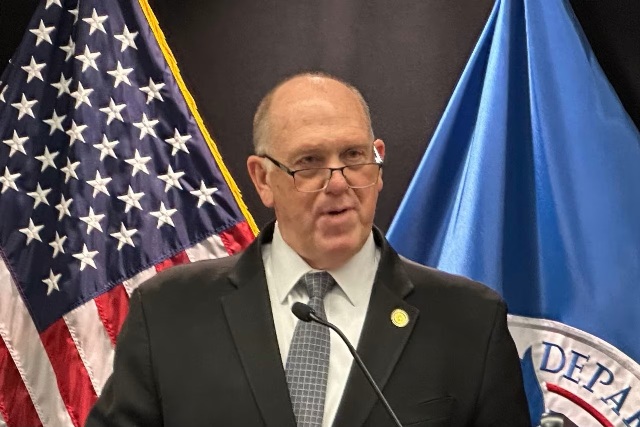
Feb 12(Jowhar)-Madaxa howlgalka ciidamada socdaalka ee ka socda Minnesota , Tom Homan, ayaa sheegay in howlgalkii weynaa ee Minnesota uu dhamaaday.
Xasan Sheekh oo Madaxtooyada ku qaabilay wafdi ka socda Ingiriiska

Feb 12(Jowhar)-Madaxweynaha Jamhuuriyadda Federaalka Soomaaliya Mudane Xasan Sheekh Maxamuud ayaa qaabilay wafdi sare oo ka socday Boqortooyada Ingiriiska oo ay hoggaaminaysay Wasiiru-dowlaha Arrimaha Horumarinta iyo Afrika Marwo Jenny Chapman.
Russia Confirms Nationwide WhatsApp Ban, Blocking Popular Messaging Service

When the green ticks went quiet: WhatsApp blocked in Russia
On a gray morning in central Moscow, the usual symphony of digital life stuttered. Cafés hummed; the tram hissed; people scrolled through feeds. But across a dozen phones at a single long table, the familiar pair of green ticks that confirm a WhatsApp message had been seen did not appear. Conversations paused mid-emoji. “I tried to send my boss the invoice and the message just kept spinning,” said Irina, a freelance photographer, tapping her phone with a frustrated laugh. “It felt like someone had pulled the plug on a small, private world.”
That small private world has been reshaped by a blunt decision from Moscow. The Kremlin has moved to block WhatsApp, citing the app’s alleged failure to obey local law. Kremlin spokesman Dmitry Peskov told reporters that “such a decision was indeed made and implemented” and blamed WhatsApp’s “reluctance to comply with the norms and letter of Russian law.” Officials have simultaneously urged users to adopt Max, a domestic messenger that the government describes as an accessible national alternative.
A nudge—or a shove—toward homegrown apps
For months, Russian authorities have promoted Max as the kind of national platform that fits into the country’s vision of a sovereign internet. The pitch is straightforward: move your conversations to a homegrown service, it is argued, and they will be governed under Russian rules, facilitating moderation and legal oversight. “Max is an accessible alternative, a developing messenger, a national messenger,” Peskov said, framing the shift as a matter of market choice.
But the pitch carries a deeper implication. Max does not provide end-to-end encryption in the same way WhatsApp does—meaning messages are more accessible to the service provider and, by extension, to any state actors with legal or technical pathways into the system. Human rights advocates have described this difference as anything from a privacy downgrade to a mechanism that could enable mass surveillance.
WhatsApp, Meta and the users caught in the middle
WhatsApp, owned by Meta, responded with defiance tinged with concern, saying it believed the Kremlin’s move was meant to force users onto the domestic platform. “We continue to do everything we can to keep users connected,” a company spokesperson said. The platform, which counts roughly two billion users worldwide, is estimated to serve close to 100 million people in Russia—though precise, constantly shifting figures are hard to pin down in the wake of disruptions.
For ordinary people the choice is rarely between principles and convenience; it is often about how to keep working, staying in touch with family abroad, or running a small business that depends on instant communication. “I sell handmade scarves online, and 80 percent of my orders come through WhatsApp chats,” said Yuri, a vendor near the Pushkin Square market. “If people stop getting my messages, I stop getting paid. That’s the real cost.”
Voices from the streets and the servers
Across cities, reactions have been as varied as the people voicing them. In a small co-working space in St. Petersburg, a software engineer named Olga rolled her eyes. “This is predictable,” she said. “We’ve been living with Roskomnadzor’s attention for years. People will use VPNs, mirror apps, or switch to Telegram—anything to keep the flow. But the risk is the slow normalization of platforms that don’t protect private conversations.”
At a university campus outside Kazan, students debated the ethics of switching. “Privacy feels like a luxury,” said Arman, a political science student. “If the price of connectivity is making everything visible to someone else, that changes how we talk to each other.” A human rights lawyer based in Moscow, speaking on background, warned that the move echoes earlier efforts to centralize internet control, from data localization mandates to the 2019 “sovereign internet” laws that empowered authorities to isolate Russian internet traffic.
Tech experts and civil society sound the alarm
Security specialists point to Russia’s existing technical apparatus for lawful interception—known as SORM—which allows authorities to tap communications through court orders and other mechanisms. “Removing end-to-end encryption from widely used channels raises the baseline risk for users,” explained Dr. Marina Petrov, a cybersecurity researcher. “When messaging goes through servers that are accessible under domestic law, the door is open—legally and technically—for broader surveillance.”
International rights groups have framed the block as part of a wider trend: a tightening of civic space under the guise of regulation. “This is not merely a dispute about paperwork or compliance,” said an analyst at a European digital rights NGO. “It’s about governance and control of the public square. When governments steer citizens to domestic platforms with weaker protections, it has chilling effects on free expression.”
Fishing for data in choppy global waters
Look beyond Russia and you see a pattern. Nation-states across the world—from Beijing to Tehran—have pursued a strategy of digital compartmentalization: fragmenting the global internet into national segments governed by local rules. The arguments vary—security, cultural sovereignty, fighting extremism—but the result often converges on the same point: when apps are forced into compliance or replaced by domestic alternatives, privacy erodes and the architecture of surveillance grows.
There are also economic consequences. Small businesses that rely on cross-border communication face operational headaches. Russian expatriates and international companies that depend on encrypted channels for legal or financial confidentiality will need to reassess their risks. For journalists and independent investigators, the stakes are existential: sources, whistleblowers, and vulnerable communities rely on the confidentiality that encrypted messaging provides.
What users can—and do—do
When a favored platform is shuttered, people are resourceful. In cities across Russia, VPN downloads spike. New users flock to Telegram, the messenger that has had a fraught relationship with Russian authorities but remains widely used. Some adopt burner phones and encrypted e-mail. Others simply return to older habits—phone calls, in-person meetings, or communicating through less obvious channels.
- Tools people commonly turn to: VPNs, alternate encrypted messengers, mirror sites.
- Short-term coping strategies: migration to other apps, use of temporary SIM cards, offline coordination.
- Long-term effects: erosion of digital civil liberties; chilling of dissent; shifts in business operations.
Questions for readers—and for democratic societies
So what should we make of this moment? Is it a necessary assertion of national regulatory authority, or a step toward more invasive state control? Can societies strike a balance between lawful oversight and the right to private communication? These are not academic questions. They shape how families coordinate during crises, how journalists protect sources, and how dissidents can safely voice dissent.
As you read this, consider the devices in your pocket. Who controls the servers they ping? Whose laws govern your conversations? And if the global internet fractures into national strands, what will be lost—and what might be won—by that new map?
Final note: a cityscape adapting
Back at the café in Moscow, the patrons adjusted. Some switched SIMs; others queued for printed receipts and old-fashioned phone calls. “We always adapt,” Irina said, smiling with a hint of resignation. “We will find ways to keep telling each other stories—but every change leaves a scar. The question is who notices, and who pays attention, when those scars form.”
Across the world, similar scenes are unfolding wherever people rely on the quiet intimacy of a private message. The blocking of WhatsApp in Russia is not merely a technological act; it is a social one, reframing how a nation converses, trades, and contests its future. And for anyone who cares about the shape of the public square, that is worth watching closely.
Grieving Families Urge Parents: Hold Your Children Close After Shooting
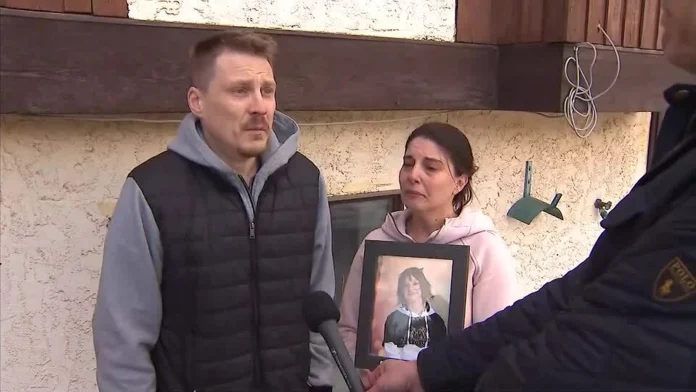
A Small Town Shattered: Remembering the Children Lost in Tumbler Ridge
The mountains around Tumbler Ridge hold secrets the earth has kept for millennia: fossils, ancient tracks, the slow hush of spruce and cedar. On a bright weekday morning this week, those same slopes witnessed a different kind of silence — a silence that spread through a town of roughly a few thousand people like a winter fog.
It began like any other school day. Backpacks were zipped, hugs were given, and parents waved their children onto buses and into classrooms. By afternoon, eight lives had been taken, including five children and a beloved teacher at the local secondary school. Two more bodies — a woman and an 11-year‑old boy — were later found at a nearby residence. The numbers read cold on a page; the reality is a town that will not be the same.
Names and Faces
Among the dead was 12‑year‑old Kylie Smith, a girl her father remembers as “a light in our family.” Lance Younge told me how that morning he saw Kylie off with her brother Ethan, not knowing it would be the last time he would watch his daughter walk away. “She loved art and anime,” he said, his voice cracking under the weight of ordinary memories now forever sacred. “She wanted to go to school in Toronto. She was thriving in high school. She was the last person who ever deserved this.”
Ethan, who survived by hiding in a small utility room, will carry the memory of that morning with him always. Mr. Younge also spoke of a teenager he called “a hero named Maddie,” who performed CPR on Kylie in a desperate bid to save her. “She did everything she could,” he said. “We told Maddie she was brave. We told the kids were brave.”
Abel Mwansa, another parent, described his 12‑year‑old son — also named Abel — as a boy who loved school so much he once cried when his father suggested home schooling. “I raised him to respect his elders, to be strong, to work hard, and to always put a smile on your face,” Mr. Mwansa wrote on social media. “Seeing your child murdered at this age is heartbreaking.”
Community in Mourning
By nightfall, hundreds gathered in the town’s main square, a circle of candles and breath visible in the cold air. People stood shoulder to shoulder beneath the same peaks where children had played soccer, where families had picnicked on summer nights, where grandparents passed down stories about the first miners and the first fossil hunters.
“This is like one big family,” Mayor Darryl Krakowka told the crowd, his voice steady and soft. “If you need a hug, put your hand out. Reach out to your neighbour.”
Kevin Matthews, a resident of more than twenty years, summed up what many felt: “Nearly everyone in this town knows someone who is grieving. The path forward is to be with grieving families — to show up.”
What Happened
Police identified the shooter as 18‑year‑old Jesse Van Rootselaar. Authorities say she killed her mother and stepbrother before attacking her former school. The assailant later died; investigators have said the death appears to be self‑inflicted. As the town waits for forensic details, the focus for many residents has been simple and immediate: hold the community together and honor the children who will never grow up.
Lance Younge pleaded with media and the public to shift the gaze away from the perpetrator. “These kids were lost before they got to become teenagers,” he said. “So let’s put their pictures up and remember them, not this murderer.” His words echoed the growing chorus of families and friends who want memorials, not notoriety, for the person who committed this act.
Beyond One Town: Questions for a Nation
Canada does not experience mass shootings with the regularity of some nations, but when they occur the pain is no less profound. The country’s darkest mass shootings — the 1989 École Polytechnique massacre that claimed 14 women, and the 2020 Nova Scotia rampage that killed 22 people — remain etched in the national memory. Each tragedy forces a familiar, difficult conversation about gun access, mental health systems, and the way communities support one another.
What does safety look like in a town where everyone knows everyone? How do you reconcile the familiarity of a place with the knowledge that violence can arrive at any door? These are not local questions alone — they are questions for every small town and large city where parents send children out the door with hope rather than fear.
Voices from Experts and the Street
“Communities like Tumbler Ridge are resilient, but resilience doesn’t mean invulnerability,” said Dr. Maya Patel, a psychologist who specializes in trauma. “After an event like this, the immediate needs are grief support, clear communication from authorities, and long‑term mental health resources. These towns will need sustained help, not just moments of sympathy.”
At the vigil, an elderly neighbour wrapped a wool blanket around a shivering teen. “You learn to rely on each other,” she said, pulling her jacket tighter against the night. “We share tools, baby‑sit, bring casseroles. Now we share the sorrow.”
Remembering the Small Things
When a child’s life is cut short at 12, what remains are the small, incandescent details: a favourite anime character, a sketchbook half full of drawings, a dream of moving to a city she’d only seen in glossy postcards. These fragments are what families clutch to keep their children alive in memory.
“She was a beautiful soul,” Lance Younge said of Kylie. “She loved art. We just loved her so much.”
In the days to come, Tumbler Ridge will collect flowers and candles and ribbons. There will be fundraisers and casseroles and community meetings. There will be therapy groups and quiet people who cannot find the words. And there will be questions about how to prevent another morning like that — how to make sure that the next generation has schools that are truly safe, and systems that notice when a young person is in distress.
How to Help — A Few Practical Steps
- Reach out to local organizations offering grief counselling; many towns set up central support hubs after tragedies.
- Donate to verified family funds through official community channels rather than unvetted pages.
- Volunteer time or skills — from organizing vigils to offering childcare — can be as valuable as money.
- Press for sustained investment in mental health and school safety, rather than short bursts of attention.
Leaving the Reader with a Question
How will we, as neighbors, voters, colleagues, and citizens, choose to act after the grief settles into new rhythms? Will we let the story fade, or will we insist that the names of Kylie, Abel, and the others be more than headlines — that they be the impetus for change?
In Tumbler Ridge, people are lighting candles and holding tight to one another. They know how to make community out of quiet places. Perhaps the most meaningful tribute we can offer is not a headline that fades but a steady gaze at the work that must follow: supporting survivors, honoring lives cut short, and building systems that keep children — and all of us — safer.
“We will remember them,” Mayor Krakowka said at the vigil. “We will lean on each other. That is how we move forward.”
Madaxweyne Ruto oo Ku Dhawaaqay Dib-u-furista Xadka Mandheera

Feb 12(Jowhar)-Madaxweynaha Kenya, William Ruto, ayaa ku dhawaaqay go’aanno muhiim ah oo lagu xoojinayo nolosha iyo dhaqaalaha bulshada ku dhaqan xadka u dhexeeya Soomaaliya iyo Kenya, isagoo shaaciyay in bisha Abriil dib loo furi doono xadka Mandheera.
Local pastor calls Canada shooting unfathomable and utterly devastating
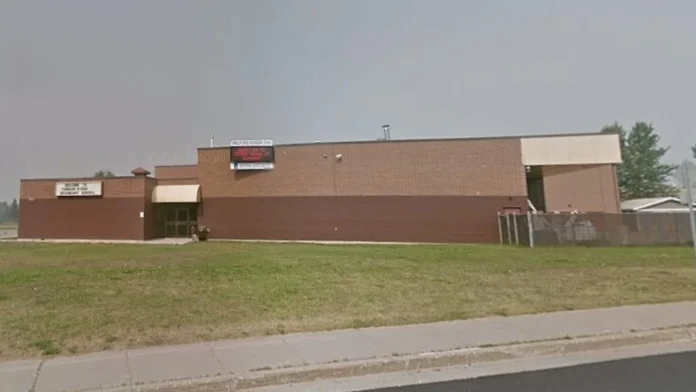
When a Mountain Town Went Quiet: Tumbler Ridge After the Unthinkable
There are towns that live by the rhythm of the seasons—snowmelt in the spring, long summer hikes, the steady hum of a single main street. Tumbler Ridge is one of those towns, carved into the foothills of northeastern British Columbia, where conversations at the post office drift into questions about trail conditions and where the local café knows your order before you finish saying your name.
On an ordinary afternoon, that comfort was shattered. News arrived first as an emergency alert: stay inside, keep doors locked. Minutes stretched into hours. By nightfall the count was heartbreakingly simple and yet impossible to place in the vocabulary of a town so small—nine people were dead, 27 others wounded. Six of the dead had been shot at the high school where many in the community had learned and taught; another died while being taken to hospital. Police later found two more bodies in a nearby residence. Authorities say the suspected shooter took their own life.
“Beyond comprehension”: A pastor’s grief becomes the town’s
“We raised our children in that school. I taught there for eight years,” said George Rowe, the town’s pastor and a face familiar to many. His voice, even over the radio, carried the kind of exhaustion that comes when words don’t match the scale of loss. “It’s a beautiful town. Why this happens… we’ll be waiting for answers.”
Rowe walked the lines between ritual and emergency duty—offering comfort at the recreation centre, sitting with families who’d watched the worst possible fears unfold, fielding donations poured in from across the country. “People will grieve in different ways,” he told a national broadcaster. “Some may never find their footing again. But we will make sure no one falls through the cracks.”
Faces at the centre
At the recreation centre, a volunteer who asked to be called Elena described the scene as both pastoral and surreal. “You could smell the coffee and antiseptic, hear trainers snapping and people whispering names. Someone kept setting out mugs with the names of the missing—like talismans,” she said. “I watched a man trace the edges of a child’s picture with his thumb, the way you would a gravestone.”
Another resident, a high school teacher who had been at the school in previous years, told me she couldn’t shake the image of an empty classroom. “I keep imagining lockers, backpacks, an ordinary day. It’s trivial and it’s the only thing that makes sense,” she said. “We went from baseball games and parent-teacher nights to this. How do you stitch that back together?”
What we know — the facts behind the headlines
- Deaths: Nine people confirmed dead—six at the school, one who died while being transported to hospital, and two discovered at a residence.
- Injuries: 27 people wounded; reports indicate two with serious injuries and 25 with non-life-threatening wounds.
- Perpetrator: Police indicate the suspected shooter appears to have died by suicide at the school.
- Emergency response: The federal-provincial emergency alert system was used to instruct residents to shelter in place while police secured the scene.
Numbers are cold by necessity, yet they are also the scaffolding on which we hang stories: whose names will we learn, who will speak at a memorial, who will keep the tradition of pancake breakfasts alive? For a town of roughly 2,500 people, this level of loss ricochets through every household.
How a community responds: rituals, practicalities, and solidarity
In Tumbler Ridge the response was immediate and intimate. Neighbours checked on neighbours. The local food bank switched from donations to prepared meal deliveries. Volunteers combed through lists to make sure every family impacted had someone with a phone number and a car. “There’s no charted path for this,” said a municipal councillor. “You learn by doing: if someone cries in your grocery line, you bring them tea. If someone needs childcare, you bring it.”
From Vancouver to Ottawa, messages poured in. “We’ve received offers of grief counselling, financial support, and even a temple sending blankets and fragrant prayers,” Rowe said. The country’s small-town solidarity is not merely sentimental; it will be operational—helping pay funeral costs, providing therapy, sustaining families who might otherwise be left adrift.
Emergency alerts and the new geography of fear
We live in an era where a phone can become both a lifeline and a harbinger. The alert that flashed on screens during the Tumbler Ridge incident—part of Canada’s Alert Ready system—saved lives by keeping people indoors while police moved to secure the area. But it also meant hours of frozen uncertainty: do you go to help? Do you huddle in your basement? Do you try to reach loved ones?
“Those messages are a double-edged sword,” said Dr. Amina Sayeed, a trauma psychologist who has worked in rural crisis response. “They can prevent immediate harm but they also amplify a population’s sense of vulnerability. In small towns, where pathways and faces are familiar, the psychological dissonance of someone ‘unknown’ committing a local atrocity is deep.”
Questions that reach beyond town limits
As the community of Tumbler Ridge begins the slow, private work of mourning, larger questions are already taking shape in the public imagination. What drove this person to violence? Could anyone have intervened? What do we owe each other when tragedy flows out of everyday life?
Canada’s recent history includes painful precedents. In 2020, Nova Scotia experienced one of the country’s deadliest mass shootings, which led to national soul-searching about firearms policy, emergency response, and mental health care. Policymakers have since tightened certain regulations; yet, as experts like Dr. Sayeed note, laws are only part of the story. “You can legislate guns, but you also need networks of care, community awareness, and sustained investment in mental health—especially in remote areas,” she said.
What can readers do? A short guide to meaningful action
It’s easy to scroll past tragedy and feel helpless. Real help is practical and sustained. If you want to help communities like Tumbler Ridge, consider:
- Donating to verified local relief funds rather than ad-hoc collections.
- Supporting national mental health organizations that funnel resources to rural areas.
- Advocating for policies that blend safety with community-led prevention work.
- Checking in on your own neighbours—particularly in tight-knit communities—because small acts of care accumulate into lifelines.
Closing: holding a town in mind
Soon there will be memorials; perhaps small gatherings in the high school gym where the community hosts its potlucks, or a vigil lit beneath the blue of the northern sky. There will be lists of names, and stories—how a teacher stayed behind to help, how a neighbour drove someone to safety, how a community that prided itself on the sound of laughter learned the language of grief.
“We will mourn in different ways,” Rowe said, and that phrase—plain and fierce—hung with me. It is an instruction and a promise. If you find your thoughts returning to this town, let them be active. Write to an elected official, support a vetted relief effort, or simply call someone you care about. Grief insists on being attended to. Solitude is the opposite of recovery.
When the trails of Tumbler Ridge open again and the school bell rings, the town will be forever altered. The work of rebuilding will be both deeply local and quietly universal: a small town asking the rest of the country—and the world—to stand with it, not for a moment, but for the long haul.
Axmed Madoobe iyo Sheekh Shariif oo kulan uga socdo magaalada Muqdisho

Feb 12(Jowhar)-Madaxweynihii Todobaad ee Soomaaliya Shariif SHeekh Axmed iyo Madaxweynaha maamulka Jubaland Axmed Madoobe ayaa kulan waxa uu uga socdaa gudaha Airport Hotel, kulankkaasoo saxaafadda dibad joog ay ka tahay.
Inkabadan boqol malyan oo ruux oo maanta doorasho u dareerey
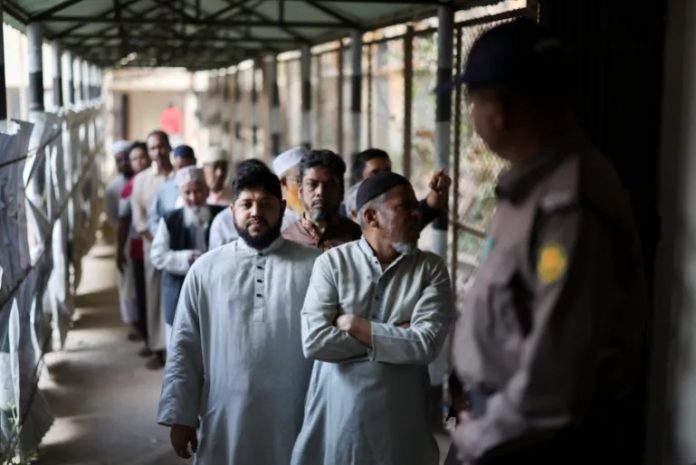
Feb 12(Jowhar)-Shacabka dalka Bangladesh ayaa saaka u dareerey doorasho iyadoo ay xaqu leeyihiin inay codeeyaan dad gaaraya 127 milyan oo qof,kadib markii kacdoon ardaydu hogaaminayeen xilka lagaga tuuray hogaamiyihii muddada dheer Sheekh Hasina bishii Agoosto 2024.
Democrats Say Pam Bondi Hid Jeffrey Epstein Files in Cover-Up
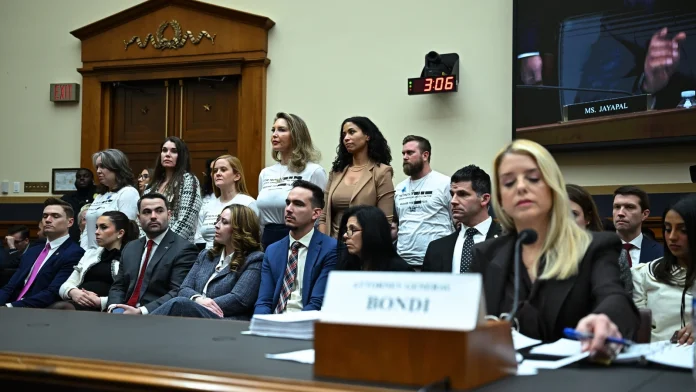
Inside a Fractured Hearing: The Epstein Papers, Pam Bondi, and the Strain on American Justice
The hearing room felt like a courthouse and a confessional all at once: bright lights, hushed cameras, the metallic scrape of chairs as survivors arranged themselves in the public gallery. Outside the Capitol, wind skittered pieces of paper across the plaza. Inside, the air was thick with questions—about secrecy, power, and the slow calculus of accountability.
At the center of it all sat Attorney General Pam Bondi, summoned before the House Judiciary Committee to answer for the Department of Justice’s handling of the so‑called Epstein files—millions of pages that many Americans believed would finally illuminate a sprawling network of abuse. Congressional Democrats accused her of orchestrating a cover‑up and of turning the DOJ into what one lawmaker called “an instrument of revenge” for the White House. Bondi pushed back, insisting the department had done the work required under a tight deadline and that mistakes would be fixed.
A mountain of documents, a narrow window
The numbers are almost numbing: the law that Congress passed in November ordered the DOJ to release six million items—documents, photographs, and videos—relating to Jeffrey Epstein within 30 days. By the time Bondi testified, prosecutors had turned over roughly three million items, according to members of the committee. The FBI has said Epstein had more than 1,000 victims, a toll that makes these records not just paper but the lives of people who say they were preyed upon for years.
“You’re running a massive Epstein cover‑up right out of the Department of Justice,” Representative Jamie Raskin told Bondi, his voice tight with indignation. “You’ve been ordered by subpoena and by Congress to turn over six million documents…but you’ve turned over only three million.”
Bondi’s defense was procedural and weary: she emphasized the thousands of attorney hours spent reviewing millions of pages to redact victims’ identifying details. “If any man’s name was redacted that should not have been, we will, of course, unredact it,” she said. “If a victim’s name was unredacted please bring it to us and we will redact it. We were given 30 days to review and redact and unredact millions of pages of documents. Our error rate is very low.”
Redactions, reputations, and the scent of politics
What enraged Democrats most was not only the pace but the pattern of redactions. The law specifically said names of victims must be protected, while names of associates, alleged abusers, or enablers could not be hidden simply to avoid embarrassment or reputational harm. Yet lawmakers say powerful figures in Epstein’s orbit appear to have been shielded, while some victims’ identities were left exposed.
“Even worse, you shockingly failed to redact many of the victims’ names,” Raskin added, reflecting a chorus of survivors in the room who felt re‑victimized by public exposure. The emotional toll of seeing one’s trauma printed and then parsed in a partisan duel is incalculable—one survivor told me afterwards that hearing fragments of her own life read aloud felt like being made into evidence twice over.
A former federal prosecutor who asked not to be named described what she sees as the consequence: “When selective redactions line up with political lines, people stop seeing the DOJ as a neutral arbiter. That’s corrosive. Justice must be blind or it is just another instrument.”
Faces in the room
There were faces you could not unsee. A woman in a faded sweater clutched a thin folder; her knuckles were white. A brother stood behind her—his presence an original kind of testimony. A group of advocates wore buttons reading “We Deserve Truth,” a small, defiant constellation on a muted sea of business suits. Cameras kept their patient, indifferent vigil.
One survivor in the room—speaking quietly, refusing her name—told me, “We came for answers. We left with a lot more questions. They keep saying ‘we’ll fix it’—but what does fixing look like when you’ve already been exposed?” Her eyes tracked the attorneys as they argued legal minutiae that, to her, meant nothing without an apology that named harms and persons.
Beyond the hearing: prosecutions and power
There is only one person currently imprisoned in connection with Epstein’s trafficking network: Ghislaine Maxwell, convicted in 2021 and serving a 20‑year sentence. Jeffrey Epstein himself died in a New York jail cell in 2019 while awaiting trial—his death set off its own cascade of questions and conspiracy theories. The DOJ’s deputy, Todd Blanche, has since said no further prosecutions related to Epstein are expected, a comment that landed like an anchor in a sea of unease.
Former and current officials also pointed to the political backdrop. President Trump has not been charged in connection with Epstein, but he reportedly fought efforts to make the files public. In one FBI interview contained in the files, Palm Beach’s then‑police chief said Mr. Trump had called in 2006 to say: “Thank goodness you’re stopping him, everyone has known he’s been doing this.” Such snippets do little to calm a public increasingly convinced that wealth and celebrity can buffer people from the full force of the law.
What this hearing says about trust
What we witnessed at the committee was not just a skirmish over documents. It was a reveal of how fragile institutional trust has become—and how quickly questions about process bleed into questions about motive.
Is it possible for a department to be both thorough and impartial when the clock is ticking and politics are loud? Can the victims—some of whom have waited a decade or more—be satisfied by procedural assurances when their names were left exposed?
These are not abstract questions. They matter to survivors seeking closure, to citizens trying to understand whether power still yields privilege, and to a democracy that relies on institutions to be worthy of the public’s faith.
- Epstein died in 2019 while awaiting trial.
- The FBI estimates more than 1,000 victims connected to Epstein.
- Congress ordered the release of six million items; about three million were delivered during the initial production.
- Ghislaine Maxwell was convicted in 2021 and is serving a 20‑year sentence.
Looking ahead
Members of Congress can subpoena more records, pursue contempt referrals, or open fresh investigations. The DOJ can re‑examine its redaction decisions and release corrected files. But these are technical steps—the larger task is rebuilding faith. That begins with clear, transparent explanations, and a reckoning with how power and privilege have shaped legal outcomes.
So here is what I leave you—reader—with: when anger and grief sit together in a room, when survivors come to raise their hands and testify against memory, we’ve got to ask if our institutions are serving truth or image. Are we content with explanations that sound like clerical errors, or do we want a system that looks like fairness to everyone, not just to those who can hire the best lawyers?
It is a strange sort of patriotism, perhaps, to demand that the machinery of justice work the same way for the powerless as it does for the powerful. If nothing else, this hearing made that demand louder. The next chapters—literally in the files, and figuratively in the public debate—will show whether the United States can meet it.
Starmer condemns Ratcliffe’s immigration remarks as ‘offensive’ and inappropriate

When Words Collide with Identity: Jim Ratcliffe, Manchester United and the Politics of Belonging
On a grey Manchester morning you could feel the city shrugging—old chimneys breathing, a tram hissing past, and the familiar rumble of fans threading their way toward Old Trafford. But the chatter this week wasn’t about tactics or transfers. It was about a sentence that landed heavy and smoky, the kind that sets conversations ablaze: “The UK has been colonised by immigrants.”
Those were the words of Sir Jim Ratcliffe, the billionaire founder of Ineos and a minority owner of Manchester United, spoken in a television interview. They ricocheted from living rooms to parliament, from the terraces to social media, and reminded everyone that words from the powerful can reshape public mood as quickly as they reshape businesses.
The remark and an immediate backlash
Prime Minister Keir Starmer did not mince words. Posting on X, he called Ratcliffe’s comment “offensive and wrong,” and insisted that Britain is a “proud, tolerant and diverse country.” Downing Street added a starker line: remarks like these “play into the hands of those who want to divide our country,” and urged Ratcliffe to apologise.
Ratcliffe’s interview also included warnings about public spending and welfare: “You can’t have an economy with nine million people on benefits and huge levels of immigrants coming in,” he said, adding that tackling such issues would require courage and, he implied, unpopular decisions. He went on to praise Reform UK’s Nigel Farage as an “intelligent man” and criticised the prime minister for being “maybe too nice.”
There is a politics to such utterances—part map, part flare—that touches raw nerve lines across Britain: immigration, welfare, national identity, and the anxieties many feel about change. And when those words come from a man who now has influence over one of the country’s most symbolic institutions—Manchester United—the ripples get personal as well as political.
At Old Trafford: anger, confusion and a stubborn love for the club
Outside the stadium, the mood was complex. A season-ticket holder in a soaked red scarf shook his head. “I don’t agree with him,” he said, voice tight. “We’ve got players from all over the world on the team. How can he say that? It feels wrong, and it makes me embarrassed for the club.”
A younger fan, who works in a local restaurant and has watched United since childhood, was angrier for different reasons. “It’s not just the words,” she told me. “It’s the timing. Prices are up, seats are harder to get, and he’s talking about colonisation? It’s like he lives in a different country.”
Fans have been protesting at games for months—some of it directed at the Glazers and the wider ownership model. Since Ratcliffe and Ineos took a minority stake late in 2023 and then assumed control of football operations, decisions about ticket pricing, hospitality packages and access have felt less like management choices and more like identity tests for supporters who see the club as more than a business.
“Old Trafford is a public square as much as it is a stadium,” a long-time steward noted. “When people feel squeezed—by prices, by decisions—they want answers. But this… this is a different kind of answer.”
Context, numbers and the hard facts
Public debate around immigration and welfare can be combustible, and numbers are often wielded as blunt instruments. Ratcliffe cited “nine million people on benefits,” a figure that has circulated in political conversation in recent years. Official counts fluctuate depending on what is included—whether we mean Universal Credit claimants, pensioner benefits, or broader welfare recipients—and small changes in definition can mean millions more or fewer people on a tally.
What’s certain is that migration and welfare are not isolated issues. They intersect with labour markets, housing shortages, and public services stretched thin by demographic shifts and underinvestment. In the context of football, meanwhile, clubs across Europe have become increasingly global brands—players, sponsors and supporters knit into webs that cross borders. Manchester United’s squad, its commercial deals, and its global fanbase make the team a living example of modern transnational life.
Why language from the powerful matters
When an influential billionaire speaks about the country in terms of colonisation, it revives a long and painful history. “Language of colonisation carries weight,” said a university lecturer who studies migration and memory. “It evokes conquest, dispossession, and a history that isn’t reconciled by a single interview. Public figures need to be aware of that context.”
There’s a political angle too. Migration and welfare have been standing-room-only topics for populist politicians across Europe, who point to them as causes for economic strain and cultural change. Ratcliffe’s praise for Nigel Farage and his critique of perceived political softness fit into a broader narrative that prizes tough decisions over consensus-building—an approach that can be popular, but also polarising.
Ownership, responsibility and the global local
Ratcliffe’s position at Manchester United gives his words an extra heft. Football clubs are often more than businesses; they are repositories of local identity, pride and memory. Decisions about ticketing or youth academies can feel existential. Fans have protested not purely because they dislike commercial moves, but because they worry the club is drifting away from the community it represents.
“I live for matchday,” said an old United supporter, stamping his feet against the rain. “This club was built by local people. Seeing it run like a corporation… it hurts. And when the owners make comments like that about the country, it feels like a betrayal.”
There is also the international perspective. Manchester United is watched by millions in Asia, Africa, and the Americas. Owners often have global portfolios; their words travel further than they might intend. In an era where capital crosses borders with ease, rhetoric that casts migration as a threat has the potential to fracture multinational ties and alienate parts of a club’s fanbase around the world.
Questions to linger on
Where does responsibility lie when private owners are public figures? How do we hold those who run cultural institutions to account when their off-field comments affect fans and communities? And finally, how do we talk about immigration and welfare in a way that is honest about challenges but rooted in facts and human empathy?
There are no neat answers. But there is a clear choice about tone. Do we speak in ways that bridge, or in ways that inflame? Do we expect leaders—corporate or political—to weigh history, nuance and the effect of their words, or do we accept that blunt statements are part of the game?
Ratcliffe has been asked to apologise. Many expect him to, if only to quiet an outcry that spans Westminster and the stands. But an apology alone will not reset the conversation. That will require a willingness to listen: to fans, to communities, and to the many people—immigrants among them—who have helped build modern Britain’s economy and culture.
How would you want those conversations to begin? At a kitchen table, a council hall, a stadium meeting, or in national dialogue? The answers will shape not just the future of a football club, but the story of a nation negotiating its identity in a global age.

Trump declares he can end Iran conflict without Beijing’s assistance
Air Force One, a Red Carpet and the Long Shadow of Two Giants
The engines had hardly cooled when the cameras began to hunt for...
Lebanon reports Israeli vehicle strikes kill 12 civilians
In the shadow of Washington: strikes, funerals and fragile diplomacy on Lebanon’s southern shore
On a coastline where lemon trees meet the Mediterranean and cars...
WHO chief: Efforts continue after the hantavirus evacuation
At Sea, Between Fear and Protocol: The MV Hondius and the Quiet Threat of Hantavirus
The image is cinematic: a sleek expedition ship, the MV...

Starmer holds talks with challenger Streeting amid mounting leadership revolt
Downing Street at Dusk: A Party in Turmoil and a Country Holding Its Breath
The lamps along Downing Street threw long, sober pools of light...
Former Zelensky aide rejects corruption accusations as groundless
In the Dock and on the Frontline: Ukraine’s Two Unfinished Stories
The courtroom clock clicked like a metronome over a country that has learned to...