

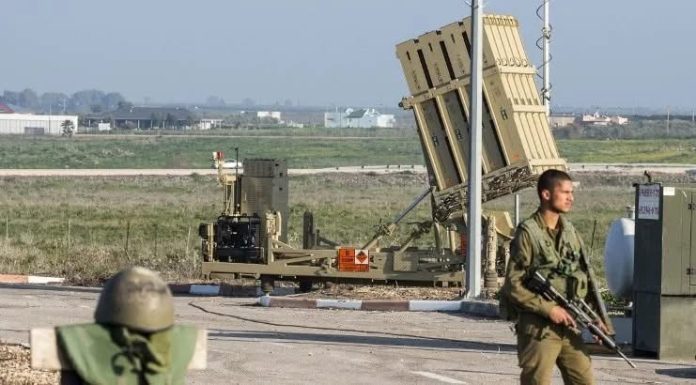
Mar 21(Jowhar)-Warar kasoo baxaya warbaahinta gudaha Israa`iil ayaa sheegaya in askari ka tirsan nidaamka difaaca hawada ee Iron Dome ee Israa’iil la xiray, laguna soo oogay in ay ahaayeen Basaasiin u shaqeynayey dawladda Iran, iyadoo aan faahfaahin badan la bixin.
Maamulka koofurgalbeed iyo mucaaradka oo ka hadlay dagaal ka dhacay duleedka Baydhabo
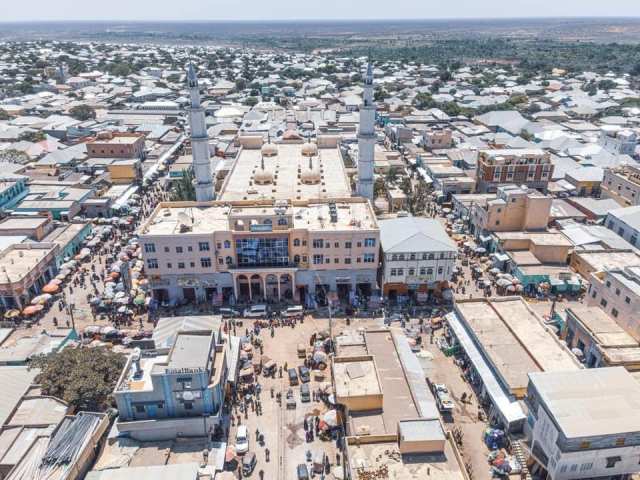
Mar 21 (Jowhar)-Maamulka Koofurgalbeed iyo Mucaaradka ka soo horjeeda ayaa siyaabo kala duwan uga hadlay dagaal xalay ka dhacay duleedka magaalada Baydhabo ee xarunta kumeelgaarka ah ee dowlad goboleedka Koofurgalbeed Soomaaliya.
European court orders Poland to recognize EU same-sex marriages

When a Courtroom Cheers: Poland’s Ruling That Bends Borders for Love
They started to clap before the words had fully settled into the air. A ripple of applause, then a roaring wave. In the austere chamber of Poland’s Supreme Administrative Court, people hugged, wiped away tears, and photographed each other as if to prove the moment had actually happened.
For Jakub Cupriak-Trojan and Mateusz Trojan, who stood at the centre of the case, the sound was years in the making — a small, human victory against a larger, stubborn architecture of law and tradition. The couple were married in Berlin in 2018. When they returned home to Poland, the civil registry flatly refused to enter their marriage into the local records. Poland’s constitution defines marriage as a union between a man and a woman; civil recognition for same-sex couples has been denied, time and again.
On the bench that day, Judge Leszek Kirnaszek offered a hinge, not a hammer. “EU regulations grant every citizen the right to freedom of movement and prohibit discrimination on the grounds of sex and sexual orientation,” he said, interpreting a ruling from the EU’s top court made the previous November. The court’s decision: same-sex marriages conducted in other EU member states must, under certain conditions, be recognised in Poland.
It was a moment that felt both intimate and epochal — a family legalisation disguised as a European summerhouse. “Today we are celebrating a human rights holiday, an incredible decision, very much needed,” said Pawel Knut, one of the couple’s lawyers, as he held up his phone to record messages from supporters outside the courthouse. Around him, longtime activists passed out small paper flags printed with rainbow-coloured EU stars.
What the Ruling Actually Means — and What It Leaves Unanswered
At first blush, the decision reads like a clear map: if you married in another EU country, your marriage can be recognised in Poland. But the court added a caveat that lawyers and activists are still parsing: marriages to be recognised must have been contracted “abroad making use of the freedom of movement and residence.” In plain terms, the judgement appears to apply most directly to couples who lived together in the country where they married — but whether it extends to every same-sex marriage contracted abroad remains unsettled.
That legal wrinkle is crucial. Rights organisations estimate that between 30,000 and 40,000 Polish citizens have tied the knot with same-sex partners overseas — from Berlin to Barcelona, Amsterdam to Lisbon. For many of those couples, recognition affects daily life: inheritance, spousal pensions, parental rights, hospital visitation, tax filings and even the right to family reunification within the EU.
- 30,000–40,000: Estimated number of same-sex marriages by Polish citizens concluded abroad (rights organisations)
- 31%: Share of Poles who said they support same-sex marriage in an Ipsos poll
- 62%: Share of Poles who backed some form of legal recognition for same-sex unions, according to the same poll
“This is not the end of the road, but it is a door finally opening,” said a constitutional law scholar at the University of Warsaw, who asked not to be named for this piece. “The court is signalling compliance with EU law, but it is doing so while trying to thread the needle of Poland’s domestic constitutional language. Expect more litigation, and expect appeals.”
On the Street: Celebration, Skepticism, and the Texture of Everyday Life
The scene outside the courthouse was a collage: elderly couples with small flags, young activists in paint-splattered hoodies, a priest distributing leaflets. “I came to celebrate for my son,” said Anna, 58, a primary-school teacher from Kraków, her voice soft but steady. “He’s living with his partner in Berlin. He called this morning and said, ‘Mum, maybe the state will see us now.’ That’s what brought me here.”
Across the square, Mateusz — one half of the couple at the centre of the case — smiled a slow, stunned smile. “We never sought a headline,” he told me. “We wanted our lives to be simple. To have our children addressed as ‘our kids’ in paperwork, not as awkward exceptions. Today is about paperwork becoming real life.”
Not everyone celebrated. In a corner, an older man in a dark coat shook his head and read from a small pamphlet denouncing the decision as an overreach of EU power into national identity. “This is about tradition,” he said. “About families, schools, what we teach our children.” His voice carried the familiar cadence of Poland’s cultural conversation: Catholicism, sovereignty, and a wariness of Brussels.
Poland at the Crossroads of European Identity
Poland is one of the last European countries where neither same-sex marriage nor civil unions are available nationwide; it shares that status with a handful of nations. The country’s recent history has often placed it at odds with EU institutions over issues ranging from judicial reform to media freedom. LGBT rights have been a particularly sensitive front: “LGBT-free zones” proclaimed by some municipalities a few years ago drew international condemnation and a groundswell of activism.
Yet public opinion has been shifting in nuanced ways. While only about a third of Poles say they would support full marriage equality, a clear majority prefer some form of legal recognition for same-sex couples. That split captures a broader trend across Europe: cultural values evolving at different speeds, institutions adapting unevenly, and courts increasingly acting as the fulcrum where change meets resistance.
“Courts will continue to be the battleground where EU principles of non-discrimination are brought into contact with national constitutions,” said a human-rights lawyer from Warsaw’s LGBT Coalition. “This verdict is one small revolution in administrative form. But revolutions are often administrative at first — they change the names on forms, and then slowly change the names people call each other.”
Beyond Poland: What This Means for Europe
The practical ripple effects are immediate: recognition of marriages for purposes of residence rights, social security entitlements and family law. But the symbolic import is far larger. In a bloc built on the principles of free movement and mutual recognition, the idea that a union celebrated in one country must be treated with respect in another is a test of shared values.
Will conservative governments push back, carving out narrower interpretations of the ruling? Or will the decision nudge other reluctant states toward clearer recognition? Those are questions for future courts and future legislatures. For now, the couples who left the courthouse arm in arm were simply two people taking a small step toward ordinary life.
“We didn’t expect fireworks,” joked Jakub as he held his husband’s hand. “We expected red tape. People often imagine justice as a cold ledger. Today it felt warm.”
So what do you think? When a legal decision changes a bureaucratic box, does it also change belonging? Can the slow architecture of law ever keep pace with the quickening of personal lives?
As Poland — and Europe — wrestle with these questions, the moment in that courthouse will likely be remembered not just for its legal technicalities, but for the ordinary human things it made possible: a partner listed on a hospital form, a pension claimed without argument, a child’s two parents named in official records. These are small, practical victories. They are also, in many ways, everything.
Trump likens U.S. strikes on Iran to Pearl Harbor attack
When History Is Used Like a Punchline: A Washington Meeting That Reverberated Across the Pacific
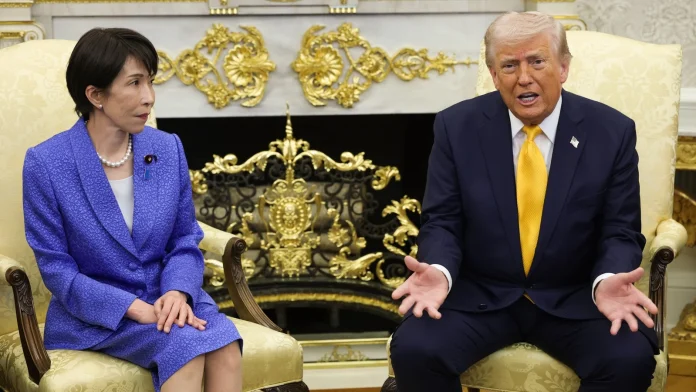
The Oval Office can be a theater. On a late afternoon in Washington, it felt like one: bright sunlight pouring over the Resolute Desk, flags standing stiffly behind two chairs, and a conversation that leapt from diplomacy into the dangerous terrain of historical memory.
At the center of that moment was a one-liner—searing, offhand, and immediately viral. The former US president, defending recent American strikes on Iran, invoked the attack on Pearl Harbor as an emblem of military surprise. “We wanted surprise. Who knows better about surprise than Japan?” he asked, tossing the line across the polished room. “Why didn’t you tell me about Pearl Harbor?”
Beside him sat Japan’s prime minister, Sanae Takaichi. Cameras caught the brief, unmistakable flicker of unease: an involuntary widening of eyes, a stiffening of posture. For a moment, the weight of a century of history seemed to lodge between them.
Why Pearl Harbor Still Hurts
Pearl Harbor is not an abstraction. On December 7, 1941, Japanese planes descended on the US Pacific Fleet moored in Hawaii and changed the map of the 20th century. Official counts list 2,403 Americans killed that day; thousands more were injured. The attack propelled the United States into World War II and led to a brutal Pacific campaign that culminated in the atomic bombings of Hiroshima and Nagasaki in August 1945—attacks that resulted in some of the worst civilian casualties in human history, with estimated deaths in Hiroshima around 140,000 and in Nagasaki roughly 70,000 by the end of 1945.
President Franklin D. Roosevelt called December 7 “a date which will live in infamy.” For many Americans and for many in the Pacific, that phrase still carries a visceral ache—an ache that reverberates in memorial museums, in classroom histories, and in the lives of survivors and their descendants.
From a Joke to a Diplomatic Headache
Words have power, and political rhetoric can reshape relationships in a single paragraph. In Tokyo, the response was a mixture of bemusement, discomfort, and cautious diplomacy—both in the corridors of power and on the sidewalks outside train stations.
“She handled it very carefully,” said one Tokyo commuter, a woman in her 30s who asked not to be named. “If Takaichi had laughed, it would have been seen as disrespectful. If she had scolded him, it would have led to a public spat. No one wins.”
A small shopkeeper near Ueno Station, wiping his hands on an apron, offered a different note. “When you’re carrying history that severe, you don’t see it as a punchline,” he said. “I felt a chill. It’s not funny to remind people of death in that way.”
Not everyone thought the remark was intended to wound. “Maybe it was meant as an absurd little jibe—an attempt to lighten a heavy conversation,” suggested a foreign policy analyst in Tokyo. “But in diplomacy, the margin for casualness is tiny.”
Context Matters: Alliances, Memory, and the Politics of Surprise
Beyond the immediate optics, the incident pulls into focus several broader trends. First, the US-Japan alliance—born from the ashes of war and solidified in the San Francisco system of treaties—remains one of the most consequential partnerships in the Indo-Pacific. Roughly 50,000 US service members are stationed in Japan, and the two countries coordinate closely on security, trade, and regional stability.
Second, Japan carries an unusually potent historical memory of the war. The country’s politics intersect with questions of constitutional pacifism, military normalization, and how to memorialize the past. Speakers in public debates often invoke the trauma of 1945 when arguing about the future of Japan’s defense posture. That context means any foreign official who invokes wartime analogies risks reopening old wounds.
Finally, the moment raises a timeless ethical question: can historical suffering be used as rhetorical shorthand to justify contemporary violence? “Invoking Pearl Harbor in this way flattens complex historical pain into a tool for present politics,” said Dr. Mai Sakamoto, a historian of East Asian memory studies. “It makes the tragedies of the past instrumental to current policy in a way that can alienate as much as it persuades.”
Voices from the Street
On the streets of Tokyo, the reactions were personal and varied—testaments to how living memory and national identity intermix.
- “My grandfather survived the air raids on Osaka,” an elderly woman told me. “He never spoke of it. When I hear leaders use those days like a joke, it disrespects the silence he kept for so long.”
- “I get that leaders like to make points with memorable lines,” said a university student studying international relations. “Still, there’s a responsibility that comes with being in the room. Not every audience receives a quip the same way.”
- “We’re watching Washington with concern,” said an Iranian-Japanese teacher. “When big powers quarrel and talk of ‘surprise’ and strikes, ordinary people worry about escalation.”
What This Moment Reveals About Leadership
There is an old journalistic axiom: context is king. A leader who invokes history without acknowledging its weight risks not only diplomatic friction but also a fraying of trust. In an era when social media amplifies every unscripted moment, offhand lines can become lasting headlines.
Ask yourself: if you were sitting across from a counterpart whose nation had been the target of a devastating attack, how would you frame your defense of current policy? Would you trade clarity for a punchline? Would you prioritize domestic applause or long-term relationship management?
Beyond the Soundbite
Rhetoric aside, the episode invites a larger conversation about how nations remember trauma and how those memories shape foreign policy. It asks whether leaders will treat history as a classroom—to learn from—or as theatre—to be borrowed from for effect.
Diplomacy is, at its best, a series of small acts that build trust: invitations, apologies, quiet reassurances. At its worst, it is one-off theatrical gestures that score in the moment and erode credibility later. The Pearl Harbor remark may have been meant as a jest. For many, it was a reminder that jokes can sting—and that history, once scarred into a people’s consciousness, does not easily accept being repurposed.
Final Thought
Moments like this matter because they reveal how fragile the architecture of international relations is. A single quip, spoken in a room polished by centuries of ceremony, can ripple from Washington to Tokyo to Tehran and back again. It prompts us to ask: in a world still haunted by the worst atrocities of the last century, how should leaders speak so that they heal more than they wound?
Israeli airstrikes target Hezbollah positions in southern Beirut neighborhoods
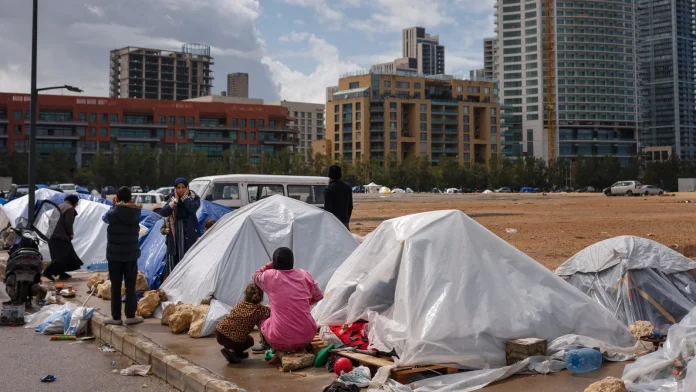
Beirut at Dawn: A City Woken by the Rattle of War
The morning arrived like a complaint—low, unexpected, shaking glass and waking children from sleep. In the first pale light, explosions bloomed across Beirut’s skyline, turning ordinary rooftops into silhouettes of sudden danger. This was not a slow-burn escalation; it was the thunder of strikes that came with warnings and evacuations, and the tremor of a conflict spilling once again into Lebanon’s capital.
Shortly before dawn, Israel announced a series of strikes it said were aimed at Hezbollah targets across Beirut. “We are striking Hezbollah operational sites in the city,” read a brief military statement that rippled through local social feeds and international bulletins. Residents in the southern suburbs—neighborhoods long identified as Hezbollah strongholds—recounted messages from the military telling them to evacuate immediately. Sirens wailed; families gathered whatever they could carry.
Street-Level Fear and Small Acts of Courage
On the narrow streets of the southern suburbs, the scent of jasmine and frying zaatar was cut by the metallic tang of smoke. Shopkeepers shrouded their goods. A woman in a black headscarf, clutching a plastic bag of bread, told me: “We’ve lived through nights like this before. You learn to move fast—your life becomes a practice in small decisions.”
Across the city, neighbors opened doors to those fleeing. “We put mattresses on the floor, boiled water, made tea,” said a volunteer who declined to give her name. “You don’t have time for politics at four in the morning. You just make room.” These are the intimate, human moments that the news photos rarely show: elderly men being helped down stairs, a child given a stuffed toy by a stranger, a mosque’s courtyard transformed into a temporary shelter.
How We Got Here
The violence is part of a broader escalation that has pulled Lebanon into a wider regional conflagration. Hezbollah, the Iran-backed militant group and powerful political force in Lebanon, said earlier in March that it had launched rockets toward Israel, marking a significant intensification of hostilities along the porous northern border. Israel, in turn, has carried out strikes across southern Lebanon and, according to local reports, inserted ground units into the south in recent weeks.
Near the border, in towns like Ghandouriyeh, the toll of the conflict landed with lethal specificity. State media reported that an airstrike hit a house there, killing at least one person and wounding others. Overnight strikes were also reported in Tyre and Naqoura—coastal and border towns that have seen their streets emptied and their economies shuttered by the violence.
The Human Cost—Numbers, Names, and Grief
Numbers can feel abstract until they become faces. Lebanon’s health ministry says that the fighting has killed more than 1,000 people in the country and displaced over a million—an enormous number in a nation of roughly six million people, many of whom were already living with economic hardship and a precarious infrastructure.
“We are seeing entire communities uprooted overnight,” said an aid worker who has been coordinating relief in the Bekaa Valley. “Displacement doesn’t just mean leaving a house. It means losing access to medicine, to livelihoods, to schools.” Global humanitarian agencies warn that winter supplies, medical kits, and clean water are all in rapidly dwindling supply as the humanitarian system strains under sudden demand.
On the Israeli side, the military confirmed the deaths of two soldiers in operations near the southern border. Families in northern towns have become used to the rhythm of sirens, shelters, and the jolt of incoming rockets. “You teach your children to run to the safe room,” said an Israeli mother in a border community. “You never expected your telephone to become the most important thing in your house.”
Voices from the Ground
Not all voices carry equal weight on the international stage, but their words hold the truth of daily life. A schoolteacher from Tyre described waking students to scramble for safety: “They think the school trip is an adventure,” she said, managing a weary laugh. “The adventure is leaving their books and running into the street.”
A Hezbollah spokesman, speaking on local media, described strikes as a response to what the group views as ongoing Israeli aggression. An Israeli official, speaking to international press, framed the operations as necessary to degrade armed capabilities that pose an existential threat. Meanwhile, a Beirut-based doctor said simply: “We patch wounds regardless of politics. That’s the only way we keep our humanity.”
Diplomacy on the Edge
Amid the smoke and rubble, diplomats are trying to glue together pauses in the fighting. A U.S. diplomat in Beirut voiced support for a Lebanese president’s initiative to explore a truce, telling reporters that “matters are rarely solved without talking.” Yet the diplomat added a caveat: “I don’t see Israel stopping its strikes right now.” The dynamic is as fragile as it is urgent—on offer is conversation, but the ground reality remains a barrage of rockets and bombs.
Regional powers have eyes on this conflict, each weighing options and consequences. For countries already juggling economic crises, refugee flows, and sectarian tensions, the fear is that a local flare-up could widen into a proxy battleground with broader repercussions across the Middle East.
Why This Matters Beyond the Region
Why should a reader in Accra, São Paulo, or Seoul care about Beirut tonight? Because this is part of a global pattern: urban warfare, the politicization of militias, and the erosion of civilian protections. It is also about the making and unmaking of communities—people displaced within their own country, small businesses destroyed, children’s schooling interrupted, and long-term trauma inflicted on a generation.
Think of it this way: conflicts that begin in one place ripple outward—fueling migration, driving up global energy prices, reshaping alliances, and compelling international institutions to act. The choices made in diplomatic back rooms today will affect migration routes, humanitarian budgets, and the shape of regional stability for years to come.
What Comes Next—and What We Can Do
The near-term future is foggy. Ceasefire proposals will be floated; international mediators will try to broker pauses; and military planners will jockey for advantage. But beyond the geopolitics are practical calls to action:
- Humanitarian access must be guaranteed, so displaced families can receive food, water, and medical care.
- Communication channels should remain open for ceasefire talks to avoid further civilian casualties.
- Regional and international actors must prioritize de-escalation to prevent the spillover of violence.
For readers thinking, “What can I do?” consider supporting reputable humanitarian organizations that are operating in Lebanon and neighboring areas, pressuring elected officials for diplomatic engagement, and staying informed through reliable, on-the-ground reporting.
Closing Thoughts
Beirut is many things at once: a city of poets and grocers, of sea and stubborn cedar, a place where coffee is a ritual and grief is shared. In times of war, those small rituals become acts of resistance—neighbors sharing space, doctors tending without question, families handing over the keys to their apartments to strangers in need.
As night falls and the city counts its losses and its blessings, one question remains urgent: can the world move from reactive headlines to sustained, thoughtful action that saves lives and rebuilds trust? It is a question that demands not only policy answers, but human ones. Who, at the end of the day, will carry these communities forward?
Hogaamiyaha Sare ee Iran oo ku Dhawaaqay in Cadawga laga Adkaaday
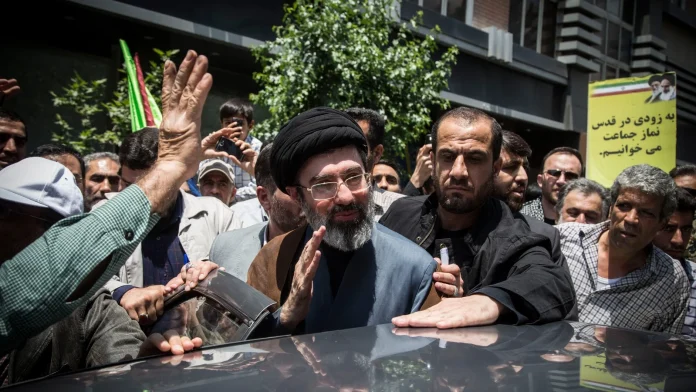
Mar 20 (Jowhar)- Shalay, Hogaamiyaha Sare ee Iiraan, Khamenei, ayaa ku dhawaaqay in cadowga Jamhuuriyadda Islaamiga ah laga Adkaaday. Isagoo la hadlayay dad badan oo taageerayaal ah oo ku sugan Tehran, Khamenei ayaa ku ammaanay dadka Iran adkaysigooda iyo sida ay uga go’an tahay inay difaacaan qarankooda.
How European Governments Are Addressing Surging Fuel Costs
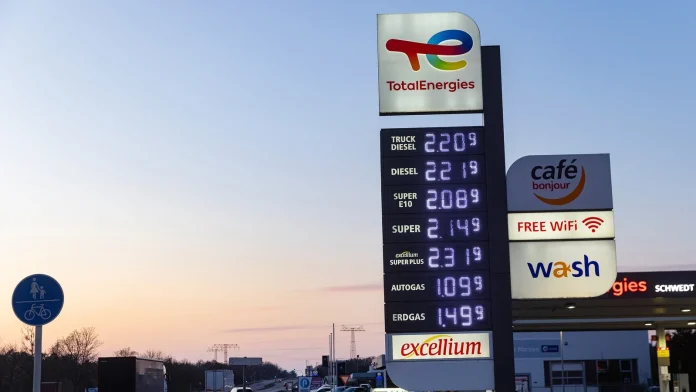
At the pumps, on the stove, in the ballot box: how Europe is answering a sudden spike in fuel costs
Drive through any city in Europe this week and you feel it: the small, stubborn flicker of outrage as people pull up to the pumps and see numbers that don’t sit right. Sit in a kitchen and listen to someone turning down the thermostat and you hear the same worry. Energy is intimate—it’s the heat in our homes and the fuel in the van that brings groceries to the market—and when prices climb, the ripple reaches every household and small business.
What began as a regional flare-up has widened into an economic pain that is now forcing governments to make choices: patch the hole in the short term, or accelerate a painful, expensive transition toward cleaner, more secure energy. The recent unrest in and around Iran has pushed oil and gas markets higher, and Europe’s response has been a patchwork of caps, targeted support, and market tweaks—each shaped by domestic politics, geography, and energy mixes.
A map of responses: from emergency cheques to daily price rules
Across the continent, governments have been scrambling. Some have opened the public purse for vulnerable households, others have capped retail fuel prices, and a few have taken unorthodox, politically charged steps. Below, a tour of what’s happening on the ground.
United Kingdom — targeted relief and a ticking clock
In London, the new government moved first with a package aimed squarely at the most exposed. “We will protect the most vulnerable while we steward long-term reform,” said a senior minister when announcing a £53 million fund to help low-income households, especially in rural areas that still rely heavily on heating oil.
The funds are being parcelled out by region: Northern Ireland will receive the largest per-capita share—roughly £17 million—because many homes there use oil-fired boilers, while England, Scotland and Wales receive the remainder. Energy bills have also been capped through June, a measure designed to prevent a sudden spike for those on standard tariffs.
At a petrol station in County Antrim, a dairy farmer named Sarah told me, “You can’t switch a 20-year oil tank overnight. This money helps, but I still worry about next winter.” Her voice carried the uneasy calculation of rural households who face higher delivery costs and fewer alternatives to liquid fuels.
Hungary — hard caps and political theatre
Budapest has chosen a blunt instrument: hard price ceilings at the pump. Petrol and diesel have been capped at fixed forint rates, a move that buys short-term relief but creates distortions when local prices diverge from global markets.
“This is about immediate relief and national stability,” said a government spokesperson, while opposition figures accused the administration of playing electoral games ahead of a tight national contest. Political timing matters: when voters feel the pinch at the pump, short-term measures can translate into long-term political consequences.
Greece — profit limits and the rhetoric of fairness
Athens rolled out a three-month limit on fuel station profit margins and even extended rules to supermarkets, threatening fines up to €5 million if margins exceed last year’s averages. “Profits are legitimate, profiteering is not,” said a minister during the announcement—a statement that resonated with shopkeepers and consumers alike.
At a seaside kafeneion, an elderly man sipping espresso said, “They must stop those who take advantage. But the law must be enforced.” This captures a broader tension: regulating prices can ease household stress, but enforcement is always the test.
France — private sector steps in while government watches its budget
Paris, balancing budgetary pressure with political heat, has been cautious. The government says it lacks the fiscal room for a new broad “price shield.” Yet private energy companies have acted: one major firm announced voluntary retail caps on petrol and diesel in response to market volatility, and authorities have pledged spot checks—500 service stations will be inspected to ensure posted prices match what drivers actually pay.
A delivery driver in Marseille shrugged, “It helps to see companies step up. But what if they change their mind next month?” The unease is real: temporary caps by companies can be reversed once market signals normalize.
Germany — rules about timing and talk of windfall taxes
Berlin has taken an unusual route: restricting how often petrol stations can change prices. From April, stations may only increase pump prices once per day, and must do so at a fixed noon update. Violations could mean fines up to €100,000. Lawmakers are also discussing a windfall tax on super-profits in the oil sector—part of a wider push to capture urgent revenue without slicing household support too thin.
“These rules are about transparency and fairness,” said a consumer advocate. “When prices jump three or four times a day, consumers can’t make informed choices.”
Portugal — renewables as a cushion
Lisbon quietly points to a more structural buffer: its electricity system is less gas-dependent than many of its neighbours. The government approved a mechanism to cap retail electricity prices if the market jumps beyond defined thresholds (a 70% rise or costs above €180 per megawatt-hour). Given recent wholesale prices, that threshold feels distant—retail electricity has been trading far below the trigger point.
Remarkably, nearly eight out of ten megawatt-hours consumed in Portugal earlier this year came from renewables, according to official tallies. In a small coastal village, a fisherman named João said, “Our wind farms aren’t just turbines; they’re an insurance policy.” Whether that insurance can scale beyond Portugal is the big question.
Spain — delaying the budget and buying time
Madrid is keeping its cards close. The government has delayed its fiscal plans to focus on emergency measures to shield households and businesses. “We will adjust the budget to reflect the new reality,” said a senior official. Delaying is itself a policy: it buys time to design targeted help rather than slipping into blunt, expensive measures.
What do these measures reveal about the future of energy policy?
There is a clear lesson in the variety of responses: proximity to the problem (rural vs urban dependency), political calendars, and the composition of national electricity mixes all shape policy. Countries with deep social safety nets or significant renewables have more elbow room; those facing elections or with heavy oil dependence feel pressured into dramatic price controls.
But beyond short-term relief lies a tougher conversation about long-term resilience. Does Europe double down on subsidies and caps, or does it invest massively in insulation, heat pumps, public transport and renewables so households are less exposed to volatile fossil fuel markets? Both paths cost money; one buys time, the other buys immunity.
Consider this: every euro spent today on petrol subsidies is a euro not invested in insulating homes, which would reduce future energy bills permanently. Is it better to save a family from a single winter’s shock or to remove the shock entirely for years to come?
Practical policy tools governments are using now
- Targeted cash assistance for vulnerable households and rural residents
- Temporary caps on retail fuel prices or profit margins
- Rules on price transparency and frequency of price changes
- Regulatory checks and fines to limit profiteering
- Explorations of windfall taxes to fund relief measures
- Conditional or trigger-based electricity price caps tied to wholesale market moves
Final stop: what this means for you
When you next pull up to a pump or glance at your energy bill, remember that these numbers are not just economic—they are political and social. They reflect decisions about fairness, about whose pain gets prioritized, and about how fast societies move from crisis management to long-term resilience.
So I leave you with a question: would you rather see governments spend now to ease immediate suffering, or spend more boldly to make fuel poverty a problem of the past? Your answer depends on how you weigh today’s pain against tomorrow’s security—and how much faith you have in politicians to turn temporary measures into lasting change.
Tell me: which energy policy feels fairer, and which feels wiser? Share your story—your neighborhood’s pump prices, your heating choices, the small adjustments you’re making. These are the details that shape policy that actually works for people, not just for balance sheets.
Dagaal xooggan oo ka dhacay duleedka magaalada Baydhabo
Mar 20 (Jowhar)-Wararka ka imanaya magaalada Baydhabo ee xarunta kumeelgaarka ah ee Maamulka Koofurgalbeed Soomaaliya ayaa sheegaya in dagaal xooggan uu ka dhacay duleedka magaalada Baydhabo iyadoo dagaalkuna uu u dhexeeyo ciidamo taabacsan maamulka Laftagareen Iyo ciidamo ka soo horjeeda.
Iran’s Supreme Leader Declares Enemy Has Been Defeated
Smoke over the city: a morning in Tehran that will not be forgotten
They say the city wakes slowly — Persian tea, the clatter of samovars, the steady hum of minibuses threading through narrow streets — but on the day the sky turned hard and metallic over Tehran, the usual rhythms were shattered in a few jagged minutes.
In a cramped bakery off Shariati Avenue, where the scent of hot sangak and cardamom hangs in the air, a woman named Leila wrapped her hands around a paper cup and stared at a television bolted to the wall. “I have sold bread through sanctions, through blackouts, through cold winters,” she told me, voice low. “But when the sirens went, it felt like the past caught up with us all at once.”
Whether you are an investor in London watching commodities screens, a student in New Delhi checking the headlines between lectures, or an aunt in Sydney calling relatives to make sure they are safe, the images that followed are the kind that lodge under your skin: anti-aircraft flashes over a capital, neighborhoods carpeted in siren-wail light, and a leader’s defiant words broadcast to households across the nation.
A leader’s message, a city’s fear
Late in the afternoon, Iran’s supreme leader addressed the nation, a rare televised appearance that seemed to bind together grief, pride and a sharp note of triumph. “The enemy has been defeated,” his words rang out — a phrase heavy with history and significance.
To some that declaration was balm. “We have endured a century of interference,” said Mohammad, a retired schoolteacher in northern Tehran. “When I heard that line, I felt something tighten and then loosen — like breath after being underwater.”
To others the speech was a warning, a signal that the conflict was not limited to military strikes but entwined with identity, memory and politics. “Defeat in this language is not just about loss of weapons or territory,” an Iranian journalist explained. “It is a way of framing resilience — and it’s meant to remind people who their leaders are and what they must defend.”
The strikes and their wider meaning
According to officials and witnesses, the recent attacks — which reportedly struck infrastructure in and around Tehran — represented a new phase in a long-running confrontation. For decades the region has seen proxy battles, cyber operations, and shadow campaigns. But strikes that touch a capital are different: they force everyday citizens to register a conflict that many had previously perceived as remote.
“This is a strategic shock,” said a military analyst who asked to speak off the record. “Striking a capital is intended to change perceptions of vulnerability. It is signaling — to Tehran’s government, to allies, and to rivals — that certain lines are being redrawn.”
Globally, markets reacted. Energy traders and analysts quickly pointed to the potential consequences for supplies and prices. Iran sits atop one of the world’s most significant natural gas reserves — a vital resource not only for domestic electricity and industry but also for regional energy markets. Any sustained damage to pipelines or processing facilities could ripple beyond the immediate theater, tightening supplies and driving up costs for households and businesses worldwide.
Energy at stake
Iran is home to some of the world’s largest proven natural gas reserves and has long been a major supplier for the region. Even a short disruption can have outsized effects on economies already jittery about inflation, supply chains, and geopolitical risk.
“People often forget that conflicts over territory are also conflicts over energy,” said an economist specializing in Middle Eastern energy. “When infrastructure is targeted, it’s not just a military objective; it’s a lever that affects everything from heating bills in distant apartments to shipping and investment decisions in global markets.”
Voices from the street: fear, resolve, and everyday life
Walking through the bazaars of Tehran the next morning, the city felt oddly both normal and raw. Shopkeepers swept dust from rugs once heaped with prayer mats. A mother coaxed a toddler away from a display of miniature flags. Conversations moved between practicalities — “Is the bakery open?” “Can we get petrol?” — and existential questions.
An Iranian nurse working long shifts at a central hospital described the scene in blunt terms. “We treat burns and panic first. Political speeches don’t heal a child’s wounds,” she said. “People want water, medicine, and a sense that they won’t be made to pay for decisions they had no hand in.”
Still, there were moments of tenderness. In one alley, a group of neighbors shared samosas and tea after alert sirens had subsided, their laughter fragile, a kind of resistance. “You keep making tea, you keep talking, you keep living,” a young man said. “That’s how we fight too.”
International reactions and the fragile choreography of restraint
Beyond Tehran’s borders, the incident prompted an outpouring of diplomatic concern. Ambassadors and foreign ministers issued calls for calm, urging all parties to avoid escalation. A growing chorus of analysts warned that spirals of retaliation — strikes followed by counterstrikes — could draw in regional and extra-regional powers, with consequences that would be difficult to contain.
“The calculus for escalation is complex,” a policy researcher observed. “Every actor balances domestic politics, military capability, and international opinion. But what looks like deterrence to one side can look like provocation to another. The risk is cumulative: miscalculation at one point begets countermeasures at another.”
There were also calls to consider humanitarian consequences. Humanitarian organizations and local volunteers scrambled to assess needs and deliver aid, from temporary shelters to medical supplies. The images that often get lost in high-level diplomacy — a grandmother wrapped in a blanket in a school gym, a volunteer carrying bottled water down a stairwell — returned to the foreground.
Why this matters to you — and to the world
Conflict in one part of the world rarely stays neatly contained. Energy markets flex, refugee flows shift, insurance premiums rise, and political leaders everywhere must answer hard questions about alliances and priorities. For ordinary people, the stakes are both immediate and intimate: safety, livelihood, and the right to live without fear.
Ask yourself: when distant events reach our living rooms via screens and feeds, how do we respond? With headlines and outrage? With donations and organization? With careful curiosity that refuses to reduce people to statistics?
Where do we go from here?
The path forward will depend on the choices of leaders, the resilience of institutions, and the everyday acts of solidarity that stitch communities together. De-escalation will require concessions, credible guarantees, and honest conversations — across borders, within societies, and among those powerful enough to shape outcomes.
Back in Tehran, the bakery on Shariati Avenue reopened the next morning. Leila stood behind the counter, hands dusted with flour. “We keep baking,” she said simply. “Maybe that sounds small under the smoke of war. But it is not. Life is always the first and last resistance.”
As readers far and wide, we must decide how closely we watch, how loudly we call for restraint, and how urgently we support the fragile work of peace. The city with the fresh bread and the singed rooftop is asking for more than our headlines — it is asking for our understanding, our patience, and our humanity.
Adams hails decisive end to High Court damages claim
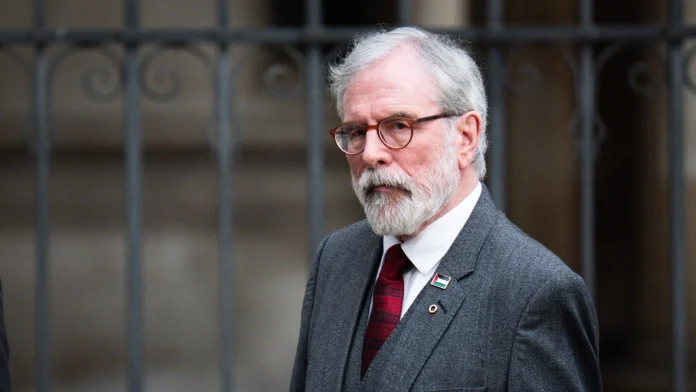
The Day the Courtroom Fell Quiet: Gerry Adams and a Civil Claim That Ended Abruptly
There are mornings in London when the air itself seems to hold its breath. On one of those mornings, the High Court on the Strand hosted a drama that had been building for decades — a legal confrontation that was always as much about memory as it was about law.
After two weeks of testimony, paperwork and headline-grabbing claims, the civil damages action against Gerry Adams — the long-time Sinn Féin leader who has long been entwined with the story of modern Ireland — was discontinued. The case, brought by three survivors of Provisional IRA bombings on the British mainland, was dismissed on the final day of the trial with “no order as to costs.” The plaintiffs, John Clark, Jonathan Ganesh and Barry Laycock, had sought the symbolic sum of £1 each, arguing Mr Adams had been a leading figure in the Provisional IRA on the dates of the attacks.
A charge in civil garb
The courtroom had been presented as a place where history might finally be sifted into adjudicated truths. Barristers said they would assemble a “jigsaw” of witnesses and documents to show that Mr Adams was “directly responsible for and complicit in those decisions” to detonate bombs in 1973 and 1996. If legal arguments were woven with dramatic intent, they were met by an almost equally dramatic defence: Mr Adams sat in the witness box for two days, stating, in plain terms, his denial.
“I had no involvement whatsoever,” he told the court. “I categorically rejected all of the claims being made.” He said he attended the trial “out of respect” for the victims and to defend himself “against the smears and false accusations being levelled against me.” He repeated a line he has long held close: that he supported the legitimacy of republicanism and a peaceful, democratic route to Irish unity — the route now embodied in the Good Friday Agreement.
Then, as the wheels of litigation churned toward their appointed end, something shifted. Late developments related to whether the claim amounted to an “abuse of process” unfolded overnight. The plaintiffs’ lead counsel, Anne Studd KC, returned to the bench and announced the claim would be discontinued. Mr Justice Swift accepted the parties’ agreed order. In other words: the hearing stopped, the judgment did not proceed, and neither side was ordered to pay the other’s costs.
Faces in a crowded room: victims, politicians and public memory
For anyone who has lived through the Troubles, the reverberations of such court battles are never purely juridical. They are personal. They are painfully human.
The three claimants each carry with them the scars of bombings that reached beyond Northern Ireland to the heart of Britain — the Old Bailey blast of 1973, the Docklands and the Manchester Arndale attacks of 1996. They came to court to seek symbolic vindication. “We wanted the truth,” one legal source close to the claimants said privately. “We wanted names linked to actions.” Whether the courtroom was the right venue for that search has been fiercely contested.
Sinn Féin’s leader, Mary Lou McDonald, condemned the civil action as a “charade” and framed its collapse as proof of a wider political misstep. “I think this was really a broader attempt by the British establishment to put Irish Republicanism in the dock, and their attempts failed,” she said, in a statement overflowing with political resonance. “Gerry went to London to defend his standing and his reputation… the case has collapsed, and that speaks for itself.”
Across Belfast and Dublin, reactions varied like the shades of a stained-glass window. In a north Belfast pub where the television had been turned to the trial, the proprietor, a woman named Mairead who has seen more than her share of headlines in her lifetime, said: “People want closure. But we also want to move on. It is not enough to have a court stop a story in mid-sentence.” Her voice carried the weary patience of someone who remembers curfews and bomb scares as part of daily life.
Legal minds weigh in
Legal commentators were sharper in tone. Edward Craven KC, counsel for Mr Adams, argued the case rested on “high-level assertions, unsupported by detail” and that the claim should be dismissed as an abuse of court process or for being brought too late. The notion that courts might be used as a stage for “public inquiry-style” proceedings — searches for historical truth rather than adjudications of civil liability — was central to the defence.
“Courts are designed to resolve disputes now; they are not a substitute for comprehensive historical inquiry,” said Dr. Fiona O’Reilly, a legal scholar specialising in transitional justice (University affiliation withheld). “When decades have passed, memories fade, documents are lost, and questions of fairness arise. That’s part of why judicial systems have doctrines like abuse of process and why other mechanisms — truth commissions, public inquiries — are sometimes better suited to these questions.”
What this means for truth, memory and reconciliation
Beyond the procedural mechanics lies a broader cultural question: how does a society confront the violence of its past without reopening raw wounds — and without allowing history to ossify into a set of immutable accusations?
The Troubles claimed more than 3,500 lives across Northern Ireland and beyond between the late 1960s and the Good Friday Agreement in 1998. Thousands more were injured. The Good Friday Agreement itself was a seismic pivot toward peace, creating political avenues for conversations that had previously been fought over with guns and bombs. Yet the appetite for historical reckoning has not been sated.
For victims and survivors, formal apologies, inquiries and courts are not interchangeable. “I don’t want a headline, I want answers,” said a Manchester woman who lost a brother in 1996 and watched the trial from the public gallery. “If the law can’t give me answers, who will?”
For politicians, the trial’s end comes as a reminder that the past is never quite done with the present. For the Irish government and British institutions, the task of reconciliation keeps asking awkward, open-ended questions about responsibility, reparations and recognition.
- Fact: The Good Friday Agreement was signed in 1998 and is the cornerstone for the Northern Ireland peace process.
- Fact: Over 3,500 people were killed during the Troubles, with thousands more injured and displaced.
- Fact: Civil claims can be used to seek symbolic damages, but courts must balance the pursuit of truth with principles of fairness and the limits of judicial process.
So where do we go from here?
The discontinuation of this particular case does not—cannot—close the story its protagonists brought to the bar. The plaintiffs’ longing for answers remains. The accused’s insistence on his innocence remains. The public’s hunger for a coherent national narrative remains.
What it perhaps underscores is the need for layered approaches to justice: legal avenues, yes, but also truth-telling forums, archival projects, community dialogue and memorialisation that can hold multiple, sometimes painful truths at once.
As you read this, consider: how does a society honour victims while allowing for political and social reconciliation? Can the same institutions provide both? And if not, who should? The answers are not tidy, and they will not be fast. They will, however, be essential for any nation that wants to remember without being chained to its worst days.
Outside the High Court, the pavements of London were busy with the small, ordinary acts of life — commuters, coffee vendors, tourists unbothered by history for the moment. Inside, the court had closed a chapter without writing its epilogue. History, as ever, will keep turning its pages; the work of reading them with care has only just begun.
Red Heat Alerts Issued as UK Schools Shut During Extreme Temperatures
Britain is staring down a potentially historic heat surge as rare red warnings take hold, prompting school closures and blunt advice for people to...
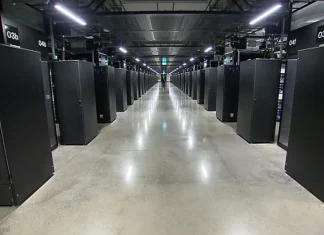
Mayors from London to Melbourne to sign new data centre agreement
City halls are moving to rein in the booming data-centre industry, as dozens of mayors prepare to unite behind a new global agreement aimed...
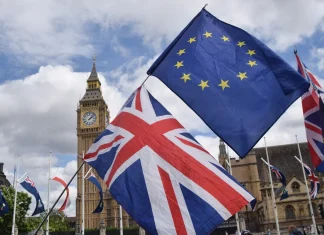
Labour and Reform clash as Brexit marks its 10-year anniversary
Ten years after the Brexit vote reshaped British politics, the anniversary has opened a fresh front line at Westminster: Labour is warning that Nigel...
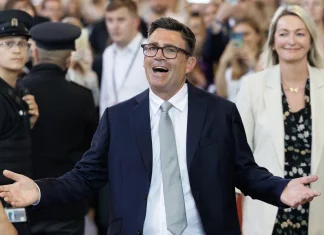
Starmer vows seamless transition following talks with Andy Burnham
Keir Starmer has begun handing over the reins in earnest, sitting down face to face with Andy Burnham as he promised a “smooth transition”...
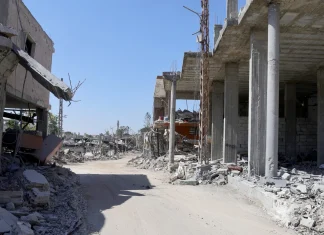
Hezbollah calls for a clear deadline for Israel to withdraw from Lebanon
With south Lebanon still on edge after a brief quiet, Hezbollah leader Naim Qassem is pressing for Israel to commit to a clear timetable...