Tuesday, January 13, 2026
Home Blog Page 127

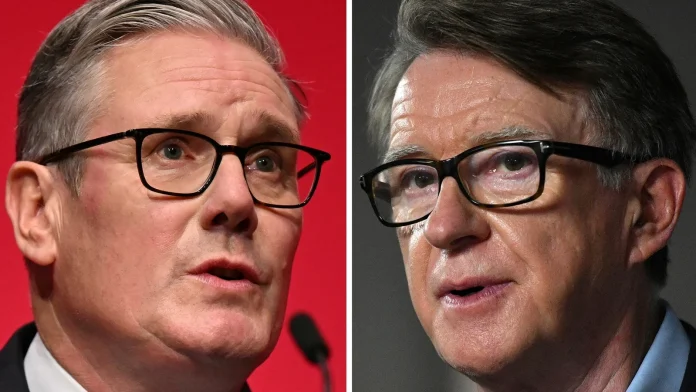
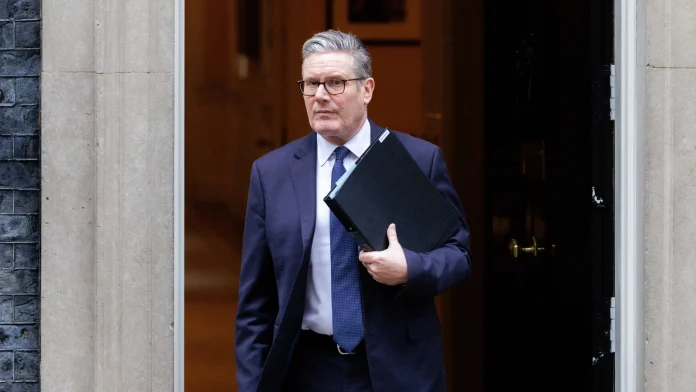
Starmer to outline proposals for UK national digital ID card rollout

Starmer to reveal plans for UK digital ID card scheme
Keir Starmer said that Digital ID will make UK borders more secure

A phone in your pocket, a card for your life: Britain’s digital ID debate arrives

Picture this: a commuter on a rain-slicked platform in Manchester, thumb hovering over a phone screen. Across town a nursery manager scans an app to confirm a parent’s identity. In a few years, that phone could be the thing that determines whether someone gets a job, rents a flat, or claims a benefit.

This is the image Downing Street is trying to sell. The government’s proposal for a mandatory digital identity system — quietly nicknamed “Brit‑Card” in political corridors — would allow people to prove their right to live and work in the UK through an app on their smartphone. It’s being framed as a modern tool to tighten borders, speed up everyday transactions and bring public services into the 21st century. But the plan has also touched nerves: about privacy, Northern Ireland’s special status, and whether technology can solve problems rooted in politics and economics.

What the proposal would do

The sketch on the table is simple. Citizens and lawful residents would be able to download a verified ID that proves who they are and whether they can work in the UK. Employers and landlords could check that ID against a central database. Over time the government says the same app could be used to access benefits, citizen services, or even a child’s childcare records — much like a digital wallet or contactless bank card.

  • Availability: Government aims for rollout to eligible people by the end of the current Parliament in 2029.
  • Use cases: Right-to-work checks, access to benefits, and other public services.
  • Portability: IDs would live on a smartphone app rather than as a physical card you must carry.
  • Legal framework: The scheme would require new legislation and public consultation before implementation.

“An enormous opportunity” — and a political lifeline

Behind the marketing lines is a political reality. Immigration is a dominant concern for many voters, and governments of every stripe have felt the pressure to act — particularly after the surge in channel crossings and record-high net migration figures. Officials argue a digital ID will make it harder for people to be employed illegally and will give the state more control over who can access work and services.

“This is about giving ordinary people confidence that the system is secure, that our borders are controlled, and that illegal work is harder to find,” said a senior government official in the Department for Digital, Culture, Media and Sport, speaking on condition of anonymity.

There is precedent for governments using digital ID to streamline administration. Estonia’s e‑ID, for instance, is often held up as a model of how digital identity can underpin e‑voting, tax returns and healthcare access. India’s Aadhaar program has enrolled more than a billion people and is widely cited as the largest biometric ID project ever undertaken — with huge efficiency gains but also a trail of privacy controversies.

Voices of the street: curiosity, scepticism, fear

Not everyone in the cafes and council estates of Britain sees a digital ID as purely progressive. “If it makes getting a job easier, fine,” said Marta Ruiz, who runs a corner shop in Birmingham. “But what happens if your phone dies or your data gets hacked? What about older people who don’t have smartphones?”

For many community organisers, the worry is less theoretical. “Marginalised groups already face barriers when dealing with bureaucracy,” noted Jamal Khan, director of a London refugee support charity. “If you link access to work and welfare to a single digital token, you risk creating new exclusion for the most vulnerable.”

Security and surveillance: where are the lines?

Cybersecurity experts are divided between cautious optimism and alarm. “Secure digital IDs can reduce fraud and speed up services,” said Dr. Asha Kumar, a researcher in digital identity at a UK university. “But centralising records about who can live and work in the country creates a concentrated target for malicious actors. The design choices — encryption, decentralisation, audit trails — will determine whether this becomes a benefit or a liability.”

It’s not just cybercrime either. Civil liberties groups warn of mission creep: once a database exists, what stops it from being used for wider surveillance or cross-referenced in ways that were never transparent at the outset?

Northern Ireland: the Good Friday Agreement question

The scheme has also reignited fragile questions about Northern Ireland’s constitutional and practical arrangements. Leaders in Stormont and parties with Irish nationalist mandates have warned that a UK‑wide mandatory identity system could interfere with the rights of people who hold Irish citizenship under the Good Friday Agreement.

“This proposal raises real and serious concerns about citizens’ rights in the North,” said a senior Stormont official. “Any move that potentially undermines the unique arrangements on the island would meet robust opposition.”

Local parties and civil rights campaigners are calling for the plan to be subject to rigorous consultation and for protections to be built in from the start.

Practical questions that people actually care about

Beyond political slogans, ordinary decisions will shape how this feels on the ground. Who pays for development? How will the system support older or digitally excluded citizens? Will employers bear compliance costs? And crucially: what happens to people who don’t have smartphones or can’t pass verification checks?

Polling consistently shows migration and border control near the top of the public’s priorities — but polls also show mixed faith in technological fixes. Nigel Farage’s party and other critics argue that those already willing to flout immigration laws will find ways around digital checks, continuing to work cash-in-hand. “You can’t tech your way out of a political problem,” one Labour councillor told me in Leeds.

Where next? A crossroads of technology and values

In the coming months the government plans consultations and draft legislation that will determine whether this digital ID becomes law. That process will be a test: can policymakers balance security, convenience and civil liberties — or will they sacrifice one for the others?

As a citizen, what would you want your state to hold about you digitally? Do you trust institutions to hold that data safely? Would you accept an app in exchange for quicker access to services? These aren’t just policy questions; they’re moral ones, too.

The conversation about Britain’s digital identity is, at heart, a debate about what kind of society we want to become: one that leans on technology to manage everyday life with efficiency, or one that treats personal data as a sensitive, carefully guarded public good. The answers will shape not just policy, but daily life — down to the swipe of a thumb on a rainy platform.

Government to consider 100% tariff on imported branded pharmaceuticals

Trump claims negative media coverage of him 'illegal'

A tariff tremor that reaches the lab bench: America’s 100% pharma levy and what it means for the rest of us

When the announcement landed late into the night — blunt, absolute, and stamped with a clear deadline — markets sighed and supply-chain managers stayed up. Beginning 1 October, any branded or patented pharmaceutical shipped to the United States could face a 100% tariff unless the manufacturer is already breaking ground on a production facility on American soil or has one under construction.

It is the kind of policy move that reads like a headline and reverberates like an earthquake. Suddenly, decisions made in boardrooms and planning committees hundreds of miles away can cascade into hospital pharmacies, export docks, and the pockets of patients across the globe. For Ireland, the European Union, and exporters everywhere, the question is no longer theoretical: how do you move medicine — and a multinational manufacturing strategy — across borders when a government insists “made here or pay double”?

The announcement and the rule

The measure was presented as an industrial rebalance: branded, patented drugs face a 100% tariff if their makers have not “broken ground or are under construction” on US soil. The administration framed it as a national-security and jobs policy, an extreme iteration of the “reshoring” push that has animated trade rhetoric in recent years.

Officials say the charge targets not generics and basic intermediates but those high-value, protected medicines whose intellectual property carries strong economic weight. It is a sharp escalation from August’s 15% tariff ceiling on many EU pharmaceutical exports — an agreement Brussels called an “insurance policy” to prevent even higher levies on European companies.

Where Europe stands

Brussels has pointed to the EU–US joint language issued in late August to underline that EU pharma exports are protected by a 15% cap. “This cap was the immediate reassurance we needed,” an EU trade official told me quietly, declining to be named. “But the new announcement forces us to test the limits of that commitment — and to see how exemptions will be interpreted in practice.”

For Ireland, the stakes are concrete. Last year, Ireland accounted for €33 billion of an approximately €120 billion worth of pharmaceuticals exported from the EU to the United States — almost a third of the bloc’s shipments. To hear factories and distribution centres suddenly become bargaining chips felt raw for a country whose economic story has been intertwined with pharma investment for decades.

Voices from the ground: the people who will feel it

Walk through the industrial parks outside Dublin or Cork and you’ll find white-collar engineers rubbing shoulders with night-shift operators in reflective vests — the people who assemble vials, monitor clean rooms, and troubleshoot blenders. “We worry about jobs,” said Siobhán Murphy, a technician at a manufacturing site in County Cork. “If our plant is suddenly less attractive financially because of tariffs, the company might rethink expansion plans. It’s small things — overtime, training budgets — that end up cut first.”

Across the Atlantic, an independent pharmacist in Ohio, Mark Delgado, explained the patient-side anxiety. “People don’t think about where their medicines are made until there’s a problem,” he said. “If prices spike, someone’s heart medicine gets rationed. We don’t want to be in a position where a tariff is the reason a prescription fills slow or costs twice as much.”

Industry groups were swift and vocal. “Tariffs on medicines create the worst of all worlds — they increase costs, disrupt supply chains, and make it harder for patients to get lifesaving treatments,” said Nathalie Moll, director-general of the European Federation of Pharmaceutical Industries and Associations. “Medicine shouldn’t be collateral in trade disputes.”

Economics in motion: what a 100% tariff actually does

A 100% tariff is not just a tax; it’s a decision accelerator. In some cases, companies will accelerate planned investments in US facilities to avoid the levy. In others, they might re-route production, delay launches, or rethink global supply strategies. The cost calculus is brutal: doubling the price of a patented drug at point of import would either crater market share or force manufacturers to swallow losses or raise prices — and patients and payers inevitably feel that squeeze.

Tariffs also reshape logistics. Imagine a container full of vials rerouted from a transatlantic ship to a longer, more expensive supply chain because a tariff makes direct export untenable. Or consider the regulatory cost of setting up a new production facility in the US — from Environmental Protection Agency permits to Food and Drug Administration approvals — a process that can take years and cost hundreds of millions of euros or dollars.

The human, clinical cost

Global health experts warn that trade measures can have downstream effects on drug availability. “For medicines that are produced in concentrated geographies, a disruption in trade or a sudden change in economics can lead to shortages,” said Dr. Amina Rahman, a public health policy researcher. “We are not just talking about luxury therapeutics. Many lifesaving drugs, especially complex biologics, rely on intricate, stretched-out supply chains.”

Politics, precedent and global fallout

This move is the sharpest turn since last year’s wave of “reciprocal” tariffs that targeted virtually every major trading partner. It places intellectual property and location of manufacturing at the heart of trade policy, and it invites questions about precedent: if a country can demand factories be built on its soil or tax imports into oblivion, what does that do to international laws and institutions designed to reduce trade barriers?

Legal scholars point to Section 232 — the national-security statute often cited for such measures. “Section 232 has been used before to justify protections, but its application to pharmaceuticals raises novel questions,” said Professor David Hörst, an international trade law expert. “Countries might challenge the move at the WTO or pursue diplomatic remedies, but litigation is slow and remedies uncertain.”

What happens next — for companies, governments, and patients

For exporters, there’s a tight timeline and a menu of imperfect choices: accelerate construction and accept massive capital costs; re-route or re-label products; lean on trade agreements for relief; or lobby for exemptions. Governments will need to parse the exemptions mentioned in the announcement and coordinate responses. The Irish government said it will study the ramifications alongside EU partners, emphasizing the 15% cap negotiated in August.

For patients and frontline healthcare workers, the request is simple: plan for uncertainty. “Hospitals will have to review contracts, stockpile crucial drugs where feasible, and communicate transparently with patients,” said Dr. Rahman. “But stockpiling is not a long-term solution; it’s a bandage on a structural problem.”

Questions to carry forward

As you read this, consider: should access to medicine be subject to geopolitical leverage? Is the future of pharmaceutical security built on national plants or tangled global supply chains? And who bears the cost when trade policy turns into public-health policy?

Trade measures like this are not merely about economics; they are about priorities. They force us to ask whether nations will pursue short-term industrial gains at the risk of higher prices, fractured trade norms, and potential shortages — or whether a different path is possible, one that protects domestic industry without threatening patient access worldwide.

Whatever the outcome, one fact is clear: a policy announced in a late-night briefing has the power to change the rhythm of laboratory work, the calculus of CEOs, the decisions of regulators, and ultimately, the course of patient care. That is why, in airports and pharmacies, boardrooms and backrooms, people will be watching what happens between now and 1 October — and beyond.

Soomaaliya oo ka qeybgashay Shirkii 6-aad ee Agaasimeyaasha Maaliyadda Cimilada Afrika

Sep 26(Jowhar)-Waxaa magaalada Kampala ee dalka Uganda Lagu soo gabagabeeyay shir muhiim ah oo ku saabsan Isbeddelka Cimilada Maaliyadda iyo sida Afrika uga faa’iidaysan karto.

Multiple killed as Israeli strikes hit Houthi targets in Yemen

Several dead in Israeli strikes on Houthis in Yemen
The IDF has said it targeted military sites in Sanaa following Houthi drone strikes on Israel

Sanaa in Smoke: A City Wakes to the Sound of Bombs

At dawn, the whitewashed mud-brick skyline of Yemen’s capital looked, for a moment, like any other morning in a city that has learned to wear resilience like a second skin—minarets cut against the pale light, tomatoes piled at the market, the scent of freshly roasted coffee. Then the ground shuddered and smoke curled into the sky.

By evening, Houthi authorities said nine people were dead and 174 wounded after what they described as Israeli strikes on several sites across rebel-held Sanaa. Pictures circulating on social media showed streets littered with concrete and twisted metal, people on rooftops scanning the horizon, and whole facades blown out like paper.

“We ran into the courtyard and lay on the stones,” said a neighbor who asked to be called Ali. “The sound was like thunder. I haven’t slept since the war started—how do you sleep through this?”

What Happened — And What Was Struck

Explosions were heard across three parts of the city, according to local reports, and Houthi-run media said a detention facility, a power station and several residential neighborhoods were among the sites hit. The Houthis’ health ministry updated the casualty figures on social media, while their Al-Masirah channel described damage to low-rise buildings with shattered windows.

An anonymous Houthi security official told the channel that one of the targeted locations was linked to the movement’s security services. “They hit where we keep people,” the official said. “Families are frightened. The children are asking why this keeps happening.”

Israel’s military, for its part, said it struck what it called Houthi “terror targets” including command centres, intelligence sites and storage for drones and other weaponry. A military statement warned of further offensive operations “in the near future.” Shortly after the strikes, sirens wailed in central Israel as the military reported intercepting a missile launched from Yemen.

Where This Comes From: A Ripple from Gaza

The exchange is part of a widening shadow war that has spread since the Gaza conflict began in 2023. The Iran-aligned Houthi movement says it has launched missiles and drones against Israel in solidarity with Palestinians, and has attacked vessels it considers linked to Israel in the Red Sea and nearby waters.

In recent months, those attacks have increasingly drawn Israel into targeting infrastructure inside Yemen—ports, a power plant, the international airport in Sanaa—and into operations that have killed scores of people, according to Houthi tallies. Earlier this month, Houthi authorities said 46 people were killed in Israeli strikes. In August, Israel carried out a targeted killing of a senior Houthi official, a move that reverberated through the capital.

Voices from Sanaa: Not All Heroes, Not All Villains

On the ground, the lines between militant and civilian blur. “We have fighters here, yes,” said Fatima, a vegetable seller whose stall sits near one of the damaged streets. “But we also have families. My neighbor’s son was taken a year ago. You cannot tell me when a bomb falls who it is for.”

A doctor at a local hospital, speaking quietly because of security concerns, described a harrowing scramble: “We received dozens of wounded—shrapnel, burns, trauma. Our supplies are never enough. We mimic triage like it’s a routine when it shouldn’t be anyone’s routine.”

Across the region, reactions vary. An Israeli security analyst in Tel Aviv told me, “The Houthis have become a new variable in the region’s security architecture. They have rockets and drones pointing toward Israel; that changes risk calculations for Israeli planners.” A maritime expert in London warned that the fighting is not limited to skies over Sanaa and Eilat; attacks in the Red Sea have already disrupted trade routes and increased insurance premiums for shipping firms, compelling some to reroute and a few to delay voyages.

Numbers That Matter

  • Casualties reported in Sanaa: at least 9 killed, 174 wounded (Houthi authorities).
  • Wounded in Eilat after a Houthi-claimed drone strike: 22, including two in serious condition.
  • Earlier strikes in the month: Houthi authorities reported 46 killed in previous Israeli strikes.
  • Humanitarian backdrop: years of conflict have left a large portion of Yemen’s population in need of outside assistance; the country remains one of the world’s most severe humanitarian crises.

What This Means for Ordinary People — And for Global Politics

For Sanaa residents, the conflict is immediate and domestic. Food prices rise when power stations and supply routes are hit; health clinics strain to handle surges of wounded; families fear each night. For the international community, the skirmishes are a marker of how local wars have become entangled in a wider geopolitical theatre.

“This is a proxy conflict,” said a regional affairs scholar. “The Houthis have their own grievances and agendas, but their alignment—political, military, and rhetorical—with Tehran means that every Houthi action reverberates further. For Israel, preventing a new front near vital sea lanes is a strategic imperative.”

Consider the Red Sea shipping lanes: a third of the world’s container traffic transits that region in peacetime. When attacks rise, shipowners and insurers adjust—and those costs ripple down to consumers and manufacturers worldwide. A flare-up in Yemen, therefore, is not just a local tragedy; it’s a shock to global trade and to fragile diplomatic balances.

Questions This Conflict Forces Us to Ask

What does it mean for a city to be both a symbol and a battleground? How do ordinary people sleep when the drumbeat of war is constant? When a movement defines itself as acting in solidarity with a distant cause, does that justify turning your streets into battlegrounds?

We can also ask: are short-term military strikes effective at degrading a group’s capabilities, or do they deepen grievances and fuel recruitment? History suggests both outcomes are possible; much depends on follow-up—and on whether diplomatic channels remain open.

What Comes Next?

Israeli officials have warned of a “severe response,” and the Houthi leadership continues to broadcast defiant rhetoric. For now, Sanaa’s residents brace themselves. Shops close earlier. Districts empty as people seek shelter. Aid groups, already stretched thin, must plan for fresh surges of need.

“We want to live,” Fatima said. “Is that so much to ask?”

For readers far from the conflict: imagine a marketplace you love, a street you know, punctured by sudden violence—and then imagine the invisible knots that tie that place to your life, through oil, trade, and the politics of distant capitals. The ripples of Sanaa’s latest strikes will travel far—through economies, through foreign policy, and, most tragically, through families who may never be whole again.

Will diplomacy find room amid the explosions? Can regional actors cool the flames before another community wakes to smoke? These are questions with answers that will shape not only Yemen’s future, but the fragile architecture of peace in an already volatile region.

Somaliland oo xabsiga dhigtay Taliyihii Guutada 18-aad ee Ciidanka Gorgor

Sep 26(Jowhar)-Warar laga helayo magaalada Wajaale ayaa sheegaya in Taliyihii guutada 18-aad ee ciidanka Gorgor, Gaashaanle Dhexe Xasan Ciraaqi, ay ciidamada Somaliland xabsiga u taxaabeen xilli uu ku sugnaa magaaladaas.

Mucaaradka oo dowladda ka dalbaday iney sugto amniga shacabka ka qeyb galaya banaanbaxa beri dhacayo

Sep 26(Jowhar)-Madasha Mucaaradka ayaa dowladda weydiistay in si buuxda loo sugo ammaanka shacabka ka qeybgalaya dibadbaxyada nabadeed ee lagu wado in Sabtida, 27-ka September 2025, lagu qabto magaalada Muqdisho.

Danish airport halts operations again after reported drone sighting

Danish airport closes again after reported drone sighting
Aalborg airport, located in northern Denmark, was initially shut down for several hours, and closed again for about an hour from late last night into early this morning

A quiet Danish morning pierced by something the size of a hummingbird — and the anxiety of an entire continent

It began, as these unnerving episodes often do, with a small shadow and a loud ripple. Travelers at Aalborg Airport were idling over coffee and stale sandwiches when overhead, like a bee that would not leave, a drone crossed the runway lights. Flights were halted. The usual airport hum — announcements, rolling suitcases, the soft click of Danish conversations — fell into an uneasy silence. For a few hours, a modern Scandinavian morning felt suddenly fragile.

By the time the last delayed plane pushed back, this was no longer an isolated blip. Reports came in from Esbjerg, Sønderborg and Skrydstrup air base: similar craft seen drifting, circling, leaving as mysteriously as they arrived. Copenhagen’s international hub had already been shut earlier in the week after a sighting there. The pattern read like a map of nerves.

The language officials use: hybrid, systematic, professional

“Over recent days, Denmark has been the victim of hybrid attacks,” Prime Minister Mette Frederiksen told the nation in a video address, invoking a term that bundles propaganda, cyber intrusions and now, it seems, aerial prowlers. “There is one main country that poses a threat to Europe’s security, and it is Russia,” she added, a blunt line intended to draw attention and urgency.

State investigators, however, are being careful: at a press briefing Thomas Ahrenkiel, head of Denmark’s military intelligence, said his service had not yet identified who was behind the incursions. “We can’t currently say who is directing these flights,” he said. Still, other voices in Denmark’s security establishment were less equivocal. Finn Borch, an intelligence chief, warned plainly that “the risk of Russian sabotage in Denmark is high.”

Denmark’s Justice Minister Peter Hummelgaard framed the episodes in human terms: “The aim is to spread fear, create division and frighten us,” he told reporters, as officials promised new capabilities to “detect” and “neutralise” such drones.

Official denials, official alarms

Moscow was swift to push back. The Russian embassy in Copenhagen published a social media post describing the whole episode as “a staged provocation,” flatly rejecting any involvement. The contradiction could not be clearer: one side sees a rehearsed escalation; the other sees an attempt to cast blame.

On the ground: voices, weathered and raw

I spoke to people who had been at the airports. “At first we thought it was a small private drone,” said Maria Jensen, a schoolteacher stuck in Aalborg overnight. “Then the announcements came. People were worried more about the unknown than about missing their morning trains.”

Bjorn Kristiansen, a fisherman from Esbjerg who watched a tiny machine cross the grey North Sea horizon, shrugged and scanned the sky like he was searching for a gull. “You get used to big ships, you don’t get used to invisible threats,” he said, rubbing his weathered hands. “It’s strange to feel watched where you have always been safe.”

At Skrydstrup, a NATO-capable air base in southern Jutland, base workers described an eerie, bureaucratic choreography — lights bip-bipping, alarms tested, flights rerouted. “You cannot shoot first and ask questions later,” one base technician said under condition of anonymity. “But it changes how you check the horizon for the rest of your career.”

A pattern emerges across the Baltic and beyond

The Danish alerts did not occur in a vacuum. Norway experienced a similar episode earlier this week, and several eastern European members of the EU reported incursions into Polish and Romanian skies. Estonian airspace was violated by Russian fighter jets not long ago — incidents that have intensified since Moscow’s full-scale invasion of Ukraine in 2022.

Analysts say the proliferation of relatively cheap unmanned aerial systems — from hobbyist quadcopters to sophisticated long-range drones — has redefined the front lines of modern conflict. “Drones are the great equalizer in this sense,” said Dr. Elena Markovic, a security analyst focused on hybrid threats. “They force states to think beyond traditional air defence. Detection, jurisdiction and response are all messy when the devices are small and operators are opaque.”

Across Europe, officials are framing these incursions as more than sporadic nuisance; they are the edges of a new posture of persistent pressure. Denmark has been invited to join talks — largely with EU countries along the eastern flank — about building a “wall” of anti-drone defences: networks of radar, jamming systems and interception capabilities intended to detect and degrade such threats before they become crises.

How big is the threat?

  • Four airports and one air base in Denmark reported sightings this week.
  • Copenhagen’s international airport was closed earlier in the week after a separate sighting.
  • Similar incidents have been reported in Norway, Poland and Romania; Estonia experienced airspace violations by fighter jets.

These are not battlefields in the classical sense. Yet they are staging grounds where fear, politics and technology collide.

What this means for ordinary life

Denmark’s population of around 5.9 million is used to a kind of civic calm. Bicycle lanes, orderly queues and the cultural shorthand of hygge typically define the national mood. But the drone sights have poked a hole in that social fabric, reminding citizens that security is no longer just about borders and battalions but about invisible permeabilities.

“Small places feel exposed now,” said Sara Holm, a café owner near the Aalborg terminal. “When planes pause, tourism pauses. When people ask if they’re safe, you can’t say something that makes them believe without evidence.”

The ripple effects are practical: delayed flights, frayed schedules, an escalation in defence procurement budgets. Denmark’s Defence Minister Troels Lund Poulsen said the operations looked “the work of a professional actor,” noting the synchronised nature of flights across multiple locations “at virtually the same time.” He argued that while the flights posed “no direct military threat,” they still required a measured response.

What comes next — and what should worry us

Denmark is weighing whether to invoke NATO’s Article 4, a mechanism that allows any member state to call for urgent consultations if it feels its territorial integrity, political independence or security are threatened. If activated, the measure could draw the alliance into a diplomatic — and potentially deterrent — posture.

But beyond the NATO summons and EU defensive talks, there is a larger public question: how much of everyday life are we willing to insulate from these new, often ambiguous threats? How do societies balance vigilance and normalcy without surrendering to perpetual fear?

“We cannot design our cities around worst-case scenarios,” Dr. Markovic warned. “But we must design systems that detect and inform, that limit disruptions and keep civic life going. That takes investment, international cooperation, and a sober conversation about what resilience looks like in the 21st century.”

An open-ended ending — and a question for you

As the EU prepares to convene in Copenhagen next week and leaders trade statements and denials, the people who make the morning commute and pour the coffee are left to reconcile the ordinary with the extraordinary. A quiet airport, a bright runway, a drone that may never be found — these are the small entry points of a larger, unsettling trend.

So I’ll leave you with this: when does vigilance start to shade into a new kind of everyday anxiety? And how much of our public life are we prepared to harden against threats we may never fully identify? The answers will shape more than defence budgets. They will shape how we live beneath the skies we once took for granted.

Ongoing settlements disrupt Palestinian communities, fueling instability and hardship

Palestinian communities steadily disrupted by settlements
Ma'ale Adumim is a pristine and affluent settlement

On a Hill Between Two Futures: Life, Land and the Specter of E1

The morning air tastes of diesel and citrus. Somewhere below the ribbon of road that runs from Jerusalem to the east, a child rides a bicycle past a strip mall, the hum of air-conditioning units undercutting the distant bleat of a goat. Drive a few minutes further and the scene fractures: concrete gives way to tents and battered trailers, palm trees to thorny scrub, shiny SUVs to flocks of sheep grazing among terraces that have fed families for generations.

I was standing on that dividing line recently—between Ma’ale Adumim, the tidy Israeli suburb built on hillsides, and the sparse Bedouin encampments that punctuate the landscape of the West Bank. Up close, the political language hollowed out into sharp human details: a child’s sneaker in the dust, barbed wire glinting in the sun, a simple metal placard warning of imminent demolition. That placard, a bureaucratic footnote to a colossal plan called E1, is what might decide the future of a land and the fate of a two-state solution that has teetered for decades.

What is E1, and why does it matter?

E1 is not a highway or a park; it is a plan to expand Ma’ale Adumim westward into roughly 12 square kilometres of hills and valleys that sit between the Israeli municipality and East Jerusalem. To planners, it’s a continuity project—connecting communities. To many Palestinians and international observers, it’s a wedge that would sever East Jerusalem from the rest of the West Bank, making the possibility of a contiguous Palestinian state increasingly remote.

“This isn’t about construction permits,” said Laila Mansour, a community organiser from the nearby town of Abu Dis. “It’s about geography being weaponised to rewrite the map.”

Ma’ale Adumim prides itself on palm-lined boulevards and a modern shopping centre. Founded in the 1970s, its population swelled to around 50,000 residents who say their city simply needs space to breathe. Walk its streets, and you find family restaurants, synagogues and playgrounds—comforts that make the place feel like suburbia anywhere.

Walk east from the municipal boundary, though, and the rhythm changes. Tents—some permanent, some makeshift—dot the slopes. Crop terraces show the faint scars of familiar hands. These are communities that have lived here for generations, but their legal status is precarious. A Bedouin farmer I met, Attalah, who has grazed his animals on these hills for as long as he can remember, showed me a notice: 60 days to vacate or face demolition, and if the state demolishes your home, you pay the bill.

“They say the land is theirs,” Attalah told me with a wry, exhausted smile. “They call their maps master plans. For us, it is our life. How do you demolish a dream?”

Voices across the divide

On the tidy side of the divide, Miriam Levy, a Ma’ale Adumim resident and mother of three, put it bluntly. “We want a safe place to live. People keep saying ‘two states’ like it’s the only future, but what about our children’s future? We were given this land; we built here.”

Across the political spectrum, experts warn that such development would have consequences far beyond the horizon. “If E1 proceeds, it will create a physical barrier that undermines any meaningful territorial contiguity for a Palestinian state,” said Dr. Rana Abu-Saleh, a political geographer who has tracked settlements for two decades. “Planners and politicians may call it urban growth, but urban planning is being used as a tool of strategy—one that has long-term demographic and diplomatic effects.”

International law and global opinion add another layer to the debate. The United Nations and most countries regard Israeli settlements in occupied territories as a violation of the Fourth Geneva Convention, a point Israel disputes. Successive American administrations have historically pushed back against E1; even those that have warmed to settlement expansion have rarely greenlighted a formalisation of E1’s footprint. That tug-of-war between Washington and Jerusalem is part of why the project has lingered in plans and permits for decades.

The human ledger: people, numbers, consequences

Numbers help, but they can never replace the faces I met. Still, they matter: hundreds of thousands of Israeli settlers live beyond Israel’s pre-1967 lines, and Ma’ale Adumim alone is a mid-sized city now. On the other side are Palestinian towns and Bedouin encampments whose residents often lack formal recognition and whose futures are directly shaped by planning decisions thousands of kilometres away.

“Imagine a necklace; now imagine someone cuts the thread in the middle,” said Omar Haddad, a Palestinian urban planner who has modelled territorial outcomes for decades. “That is what E1 represents. It would not only reduce land available for Palestinians; it would prevent East Jerusalem from serving as the capital of a sovereign state.”

For families like Attalah’s, the consequences are immediate: loss of grazing land, threatened home demolitions, the social disintegration that follows displacement. For politicians, the consequences are long-term and strategic: a shift in facts on the ground that hardens positions and narrows diplomatic options.

Why should the world care?

Because this patch of hills is one small part of a global story about borders, identity and the politics of space. Around the world, urban planning is increasingly political—used to segregate, to absorb, to erase. The stakes in E1 are not just local; they are emblematic of how modern conflicts are fought not only with tanks and votes, but with roads, permits and the slow accretion of buildings.

What does justice look like when the law, the map and daily life all point in different directions? Who gets to write the future of a place where histories and claims collide? And as global citizens, do we have a responsibility to respond when a city plan may foreclose the human rights of another people?

These are not rhetorical exercises. They are questions families wake up to here every morning.

Where do we go from here?

Netanyahu’s recent comments denying the inevitability of a Palestinian state have sharpened the debate. For critics, E1 is a concrete step toward a single polity that integrates the occupied territories in ways that make Palestinian sovereignty impossible. For proponents, it is justified urban growth. For the many in between, it is a reminder of how fragile prospects for peace have become.

“I want my grandchildren to have a place to plant olive trees,” Attalah said at our last meeting. “If those trees are gone, what story will we tell them about our land?”

As you scroll past images on your screen, consider this: borders are often decided not in battlefields but in council chambers and construction plans. The contour lines on a map become contours of someone’s life. What do we owe to the people who live on those lines? And how do we keep politics from flattening entire futures into lines on a paper map?

There are no simple answers. But listening helps. And if you find yourself moved, consider telling the story you’ve just read—share it, ask questions of your leaders, and ask the hard question: in a world that prizes borders and belonging, who counts as belonging?

Nicolas Sarkozy’s Descent: From Presidential Palace to Prison Cell

Nicolas Sarkozy: From palace to prison
Former French president Nicolas Sarkozy has been sentenced to five years in prison after conspiring with Libya over illegal campaign financing

A president’s twilight: from the Elysée’s lights to the clank of a cell door

There are images that linger: a 52-year-old Nicolas Sarkozy bursting through the doors of the Élysée Palace in 2007, sleeves rolled up, hair flattened by the flashbulbs, promising to shake up a sleepy, complacent France. There are other images that now crowd in — a courtroom, the coppery hush of a verdict read aloud, and the hard, iron fact of a five-year jail sentence that threatens to turn a gilded political life into a cautionary museum piece.

“I will assume my responsibilities,” Sarkozy told reporters after the ruling. “If they absolutely want me to sleep in prison, I will sleep in prison but with my head held high.” He insisted he was innocent, calling the decision “an injustice” and saying hatred toward him “definitely has no limits.” Those words — defiant, theatrical — felt true to character. For better and worse, Sarkozy has never done small dramas.

The sentence and what it means

On paper the case is straightforward: a five-year sentence for criminal conspiracy tied to alleged attempts to secure campaign funding from Libya’s then-leader Muammar Gaddafi for Sarkozy’s 2007 run. Prosecutors have one month to notify him when he must report to jail. He has pledged to appeal, but the immediate legal reality is stark — this is the first time a French president of the Fifth Republic faces an enforced custodial sentence.

“We are witnessing a legal and symbolic turning point for France,” said Claire Lambert, a Paris-based legal scholar. “Accountability for heads of state is rare in democracies. This case resonates for institutional reasons as much as for the specifics of the alleged corruption.”

Sarkozy, 70, is no stranger to courtroom lights. He came into the legal crosshairs after leaving office, and while previous convictions saw him avoid the confines of prison, this ruling removes ambiguity. The notion that a former occupant of the Élysée — the office where France’s presidents have mapped policy and destiny for decades — might soon be led through metal doors is jolting to many.

How France sees it

Walk through a Paris marché or a provincial boulangerie and you’ll hear the split in voices that has defined Sarkozy’s career. “He gave us energy when we needed stability,” a supporter in Neuilly-sur-Seine, the conservative enclave where Sarkozy once rose to local prominence, told me. “He worked at a breakneck pace. Maybe he crossed lines. But he loved France.”

Across a café table in a suburb outside Lyon, a teacher said simply: “Power becomes irresistible. We should not be surprised when institutions reassert themselves.”

The man behind the headlines

Born on January 28, 1955, to a Hungarian immigrant father, Sarkozy was not the archetypal French grande école product. He earned a law degree and carved his path without the École nationale d’administration (ENA) pedigree that supplies so many French elites. That outsider energy — the need to prove — fueled both policy and persona.

He made headlines domestically for a muscular posture on immigration, security, and national identity, and internationally for a brand of hands-on, sometimes theatrical diplomacy. His early White House-like insistence on action and speed endeared him to corporates and critics alike, while the 2008 global financial crisis cooked the laurels off his presidency.

“He loved being modern, modern in a hurry,” remembered an adviser who worked with him during the 2007 campaign. “Sometimes that was genius. Sometimes that was reckless.”

His presidency ended in a bruising defeat in 2012 to François Hollande — France’s first sitting president to be denied re-election since 1981. He walked out with historically low approval ratings and a famous vow: “You won’t hear about me anymore.” The vow lasted about as long as most campaign promises. He rematerialized on the national stage, married singer and model Carla Bruni, and flirted with comebacks — only to be sidelined again in internal party contests.

From political high-wire to legal labyrinth

Sarkozy’s legal battles have been a cascade. The new sentence crowns an unusual litany of legal woes: convicted in multiple cases, stripped of France’s highest honour, and now facing what could be the nation’s most consequential punitive step for a former head of state in recent memory.

“It’s important to separate political theatre from the rule of law,” said Étienne Rousseau, a criminal law professor in Toulouse. “This conviction follows years of painstaking investigation. Whether you see it as justice or revenge depends on your prior. But the courts have been steady in their course.”

Historically, the only French head of state to end up imprisoned on a large scale was Marshal Philippe Pétain after World War II — but Pétain’s case involved collaboration with Nazi Germany and occupies its own dark, complex corner of French memory. Comparing the two is fraught, yet the symbolic resonance is unavoidable.

Local color: Tripoli, the farm show, and the stubborn human details

Some moments encapsulate the man more than legal briefs ever could. There’s the infamous outburst at the 2008 agriculture fair — “Get lost, dumbass” — uttered to a farmer who declined a handshake. There are photographs of a cosmopolitan president dining with Muammar Gaddafi in Tripoli in 2007, flashes of a world eager for new alliances. He was a cyclist, a football fan, a politician who liked to be seen moving.

Outside the courthouse, a middle-aged woman who worked the stalls in a rue market said, “He always seemed like someone in a hurry. Sometimes I admired him. Sometimes I feared he would break things trying to fix them.”

Bigger questions: accountability, celebrity and the erosion of trust

Why does this matter beyond a French legal curiosity? Because it sits at the crossroads of several global trends: the fall of populist celebrity leaders, heightened expectations for institutional accountability, and a growing cynicism about the permeability between wealth, power and democratic life.

In an era where social media amplifies scandal and state institutions are simultaneously under siege and empowered to correct course, the Sarkozy case forces a larger civic conversation: To what extent can, or should, democracies punish their fallen leaders? And do such prosecutions purify the polity or deepen partisan divides?

“This is not just about one man,” said Marianne Duval, a political scientist. “It’s about how societies reckon with power’s excesses. Democracies either have rules that apply to all, or they are not democracies in the full sense. That is the yardstick people will use.”

What comes next?

Procedurally, the clock now begins: prosecutors have a month to tell Sarkozy when he must report. His lawyers will appeal. The right, where he still commands loyalists, will howl about bias and political persecution. The left will point to vindication. The country will divide, as it so often does.

Beyond legal filings, there’s a human element that lands in any story about a life in public. A man who once strode the halls of power, whose image was plastered on billboards and magazine covers, now confronts a quieter endgame. He will either spend nights in a cell or spend years fighting through appeals. Either path remakes a public figure’s myth.

And for the rest of us — the readers, the voters, the citizens living the messy, everyday work of democracy — the Sarkozy moment invites a question: Do we want leaders who move fast and break norms, or leaders who move slowly and respect them? The answer may shape politics for decades to come.

United Nations launches formal investigation into Trump’s alleged ‘sabotage’ claims

UN launches probe over Trump 'sabotage' claims
The escalator in the UN headquarter's stopped working as Donald Trump and his wife, Melania, got on it

A Stutter on the World Stage: When an Escalator, a Teleprompter and a Sound System Became a Diplomatic Mystery

The United Nations building sits like a small, multicolored city on the East River—flags snapping in the wind, booths humming with interpreters, and a perpetual tide of diplomats who move between meetings like tides between islands. So when technology hiccups inside this glass-and-marble organism, it feels less prosaic than portentous: a public performance falters and suddenly the world’s attention fixates on how and why.

That is exactly what happened during a recent visit by the president of the United States. Video that spread across social platforms captured the brief, jarring moment an escalator beneath the president and first lady gave a lurch and stopped. They stepped off and climbed the remaining steps, smiling at first. But the smile hardened after—once a teleprompter faltered as the president opened his address and later the room’s sound mix left pockets of the chamber struggling to hear. What might have been shrugged off as a string of embarrassments became, in his telling, “triple sabotage.”

Moments that turn into a narrative

“This wasn’t a coincidence,” the president wrote, accusing the UN of something more sinister and calling for arrests. “They ought to be ashamed of themselves,” he added, demanding an immediate probe. The post, shared on his preferred platform, rippled across newsrooms and feeds like a thrown stone.

Within hours the UN responded. Stéphane Dujarric, spokesman for Secretary-General António Guterres, told reporters that Mr. Guterres had ordered “a thorough investigation” and that the United Nations would cooperate “in full transparency” with any relevant U.S. inquiries. The answer was calm, procedural—precisely the sort of thing that aims to defuse rather than inflame. But once the narrative of sabotage took hold, it was difficult to soothe.

How three small failures exposed bigger anxieties

There is a peculiar vulnerability in moments of high ceremonial choreography. A single wire, a tram of translation cables, a misaligned button—any small technical failure becomes amplified by significance the moment cameras are rolling and political stakes are high.

A UN note to reporters suggested a prosaic origin for the escalator halt: a videographer from the visiting delegation, filming ahead of the couple, inadvertently tripped a switch. “It was an accident,” a UN official told journalists on background, echoing the spokesman’s public statement. Others in the hall described the escalator’s sudden stop as a loud, mechanical hiccup that left people startled and smiling nervously.

Teleprompters, of course, are controlled by the speaker’s team. A UN spokesperson reiterated that, noting the White House operates the devices used by visiting dignitaries. “Technical teams were engaged immediately,” the spokesperson added, in language designed to reassure. And the sound system, which is optimized to feed simultaneous translation into earpieces for delegates in six UN languages—Arabic, Chinese, English, French, Russian and Spanish—was not rigged to silence the room deliberately, a UN official said. Rather, the mix did not evenly reach every corner.

Voices from the hall

Not everyone accepted a neat explanation. “When you are a country that often sees the world through a prism of slights and strategic gestures, a failure like this is not just a technical issue,” said Laila Rahman, a veteran diplomat from South Asia who has attended UN General Debates for two decades. “People will read it as intention. That’s the dangerous part.”

“I work the booth,” a young interpreter named Marco told me after the speech, hands still buzzing from adrenaline. “One minute you are feeding a translation to 50 sets of headphones, the next you are scrambling because the incoming signal eats itself. We fix what we can—fast. But everyone sees the face of the speaker and not the faces in the booths. It’s theatre, and every theater has its behind-the-scenes chaos.”

A retired protection specialist who asked not to be named offered a perspective on perception. “Secret Service and equivalent teams are trained to question anomalies,” he said. “But in past years we’ve seen equipment mistakes and human slips. Triple troubles in a single visit are rare, but that’s why an investigation is sensible—to calm nerves and document facts.”

Why this small drama matters beyond the immediacy

On the face of it, an escalator, a teleprompter and a patchy soundboard may seem inconsequential next to the litany of global crises discussed at UN headquarters—climate change, migration, war and pandemics. Yet these little disruptions touch something civic and primal: the expectation that institutions can deliver a competent stage for global conversation.

Consider the symbolism. The UN General Assembly hall, with its curved desks and sanctuary-like rows, is designed to make the world listen. Nearly 200 countries funnel their messages through the same microphone system, relying on a web of technicians, interpreters and ushers. When that web frays, even for a short while, trust is nudged.

We live in a time when small technical failures can be weaponized into grand conspiracies—when a grainy clip becomes “proof” in partisan arenas. In that light, procedural transparency is not mere bureaucracy; it is an antidote. “If institutions are opaque, rumors fill the vacuum,” said Dr. Maria Chen, a communications scholar who studies misinformation. “The simplest remedy is openness and speed: explain what happened, show the checks, publish the report.”

Local flavor, global glare

Outside the UN compound, New York hummed on as it always does. A doorman at a Midtown hotel shrugged when asked about the kerfuffle. “You see presidents and popes; sometimes the escalator acts up—right after breakfast,” he said with a half-laugh. At a nearby halal cart, a vendor rolled his eyes—”These international people get so dramatic,”—but then admitted he watched some of the coverage on his phone during a lull.

Even the flags that line the UN Plaza seemed to flutter with a kind of bemused indifference, as if to say the institution is larger than one visit, one glitch, one infuriated post. And yet, those same flags—symbols of sovereign presence—are reminders that the UN’s credibility depends not on spectacle but on the steady, mundane work of consensus.

Questions to carry forward

So what now? An investigation will sift through camera logs, system diagnostics and witness statements. The UN has pledged cooperation; U.S. security services are said to be looking into the debacle as well. Regardless of outcome, several questions remain useful for readers everywhere to keep in mind:

  • How do public institutions balance ceremony with the messy realities of technology?
  • When does suspicion become a political tool rather than a call for facts?
  • How can transparency be improved so that technical failures do not become conspiratorial tinder?

Moments like these are a reminder that the machinery of diplomacy is human-made and human-fraught. For a few minutes at the UN, an escalator, a teleprompter and a set of headphones did what all human errors do: they exposed nerves and invited interpretation.

What they did not do—yet—was provide a full answer. That will come, in the form of a report, a statement, or perhaps in the quiet that follows an embarrassed apology. Until then, we watch, we question, and we remember that the world’s stage, however grand, is managed by people, cables and the occasional misstep.

Day of reckoning coming for Minnesota, says Trump

Trump warns Minnesota faces an impending day of reckoning

0
When a City Grieves: How One Killing Brought Federal Agents, Lawsuits and a Global Call for Answers On a January evening that should have been...
BBC to take steps to dismiss Trump's defamation lawsuit

BBC launches bid to get Trump’s defamation lawsuit dismissed

0
When a BBC Clip Becomes a $10 Billion Storm: A Global Moment for Journalism and the Courts Late one damp evening in London, the hum...
Denmark, Greenland officials to meet Vance, Rubio in US

Denmark, Greenland delegations to hold talks with Senators Vance and Rubio in U.S.

0
Under the Midnight Sun: Why Greenland Has Suddenly Become the World’s Most Contested Island On a wind-whipped street in Nuuk, a woman in a brightly...
'Fantastic recognition' - President congratulates Buckley

President Congratulates Buckley on Remarkable Recognition, Hails Achievement

0
When Killarney Applauded in Los Angeles: Jessie Buckley’s Golden Globe and the Quiet Power of “Hamnet” It was barely daylight in Killarney when the cheers...
Minnesota sues Trump administration over ICE operations

Minnesota Files Lawsuit Against Trump Administration Over ICE Operations

0
A City in Vigil, a State in Court: Minneapolis After a Death that Changed Everything The wind that evening carried the smell of melted wax...