


Apr 30(Jowhar)Faahfaahin dheeraad ah ayaa kasoo baxaysa wada hadaladii shalay dhexmaray wakiilada caalamiga ah, gaar ahaana afarta saameynta leh & golaha Mustaqbalka Soomaaliya iyadoo fogaan aragana ay uga qeybgaleen madaxda Jubbaland iyo Puntland.
Saudi Arabia to withdraw financial backing from LIV Golf tour

A New Chapter for LIV Golf: Behind the Curtain as the Kingdom Rewrites the Playbook
There is a peculiar hush in the practice green these days—an almost cinematic pause before the next scene. The whisper is not about swing mechanics or wind direction. It is about money, power, and what happens when a flashy, globally televised experiment in sport loses the firm hand that launched it.
LIV Golf, the breakaway circuit that precipitated a tectonic shift in professional golf when it arrived in 2022, is quietly preparing to reinvent itself. Sources close to the operation tell me the Public Investment Fund of Saudi Arabia (PIF), which has been the circuit’s primary backer and has poured more than $5 billion into the venture, plans to end its cash support after the 2026 season. The league intends to lay out a strategic plan this week that could include new board members, leadership changes and a campaign to attract fresh, long-term financial partners.
What this means on the turf
For players, caddies and staffers, the news landed like a weather warning: clear skies now, uncertain forecast afterward. “We were told that the PIF’s direct investment will conclude at the end of 2026,” said one league staffer who asked not to be named. “That doesn’t mean the lights go out tomorrow. It means the board is having adult conversations about sustainability.”
Bryson DeChambeau, one of the circuit’s most high-profile signings, has publicly reaffirmed his allegiance. “As long as LIV is here, I would figure out a way for it to make sense,” he said in an interview published last week—words that underscore both personal faith and professional calculus. Not every star has echoed that certainty. In recent months, LIV has seen prominent departures: Brooks Koepka has returned to the PGA Tour under a limited program, and Patrick Reed has signaled a comeback to PGA competition for 2027.
New Orleans on pause, autumn on the table
Locally the ripple effects are already being felt. A LIV Golf event scheduled for June in New Orleans has been postponed by state officials; organizers are now exploring an autumn date. For a city that trades in hospitality and pageantry—where jazz spills into the streets from the French Quarter and hotel receipts rise with major sporting events—this uncertainty is not trivial.
“We’d started planning months ago,” said Camille Boudreaux, a hotel manager in the Warehouse District. “It’s not just rooms. It’s restaurants, transport, temporary hires. An event like that becomes part of the city’s rhythm. To have it postponed sends a shiver through the local economy.”
Between reputation and revenue: the politics of big-money sport
LIV’s story is never just about birdies and eagles. From its inception, the league has been tangled in questions about soft power and what critics call “sportswashing”—the use of sport to polish a nation’s global image. The Saudi government denies accusations of human rights abuses, and yet external voices have been persistent.
“There’s an argument people make that money can’t buy credibility,” said Dr. Amelia Hart, a sports governance scholar at a leading university. “But what sovereign wealth funds do is buy access—access to fans, broadcast markets, and narratives. When that money changes direction, the access points must be renegotiated.”
That renegotiation is precisely what LIV’s leadership is facing: how to keep the team-based format and the spectacle that lured top players while attracting partners who are less shadowed by geopolitical controversy. According to sources, the circuit is already in “constructive discussions” with potential global investors and remains committed to its team golf model—a format that upended individual-centric traditions and injected franchise-style drama into a centuries-old sport.
Why it matters beyond the scorecard
What happens to LIV matters for three intertwined reasons.
- It affects the livelihoods of dozens of players, hundreds of support staff, and local economies that benefit from its events.
- It tests the resilience of a new sports model: team golf backed by massive capital infusions, shifting the axis from individual prize purses to franchise valuation and brand-building.
- It is a case study in how sovereign money reshapes global sports—and how those flows can ebb as quickly as they arrive.
“We’re watching a tectonic moment in sports finance,” said Marcus Lin, a sports investment analyst in London. “If PIF steps back, it doesn’t necessarily mean the collapse of the model. But it does force a painful reckoning: who believes in monied disruption enough to join now?”
Choices and consequences
Inside LIV, conversations are said to range from the pragmatic to the existential. Some executives favor a gradual transition to diversified ownership—seeking consortiums of regional investors, private-equity partners and perhaps media firms. Others argue for a more radical pivot toward a hybrid model: reduced dependency on single-state money, coupled with stronger commercial deals and a renewed emphasis on fan engagement and grassroots outreach.
“We want LIV to be more than a bumper sticker on geopolitics,” one unnamed board member told me. “We need to prove that team golf can be commercially viable and culturally resonant without being tethered to one deep pocket.”
There are cultural ropes to untangle, too. The spectacle that LIV brought—glossy team branding, shorter tournament formats, and entertainment-driven presentation—has forced the traditional tour to reconsider how it packages the sport for younger, streaming-first audiences. That creative energy is real; the financial scaffolding is what is changing.
Questions for the future
What happens if new investors step in? What if no one does? Will players demand contractual guarantees or flock back to more established circuits? And perhaps the most pressing: can professional golf decouple competition from geopolitics in an age when capital is often a country’s long arm?
As you read this, consider where your attention lies. Do you watch for the purity of the game, the drama of rivalries, or the hinterland of money and meaning that now moves a modern sporting event? The answer says as much about our times as any leaderboard.
Final putt
LIV Golf’s next move will likely be announced this week. Whether it finds new patrons, refashions its governance, or simply recalibrates its ambitions, the story unfolding is more than a business pivot. It’s a test of whether a sports product born from deep-pocketed disruption can mature into something durable, accepted and—perhaps most importantly—profitable for a broader ecosystem.
“We’ve been building toward sustainability from day one,” a senior executive inside the league told me. “Now we have to prove it.”
And the rest of the golf world will be watching: the fans in the stands, the commentators on TV, the city planners in New Orleans, and the dozens of players weighing loyalty against livelihood. This is sport as theater, economics and geopolitics all at once. The final curtain hasn’t dropped—but the next act is coming into view.
Mamdani Calls on Charles to Give Back India’s Diamond
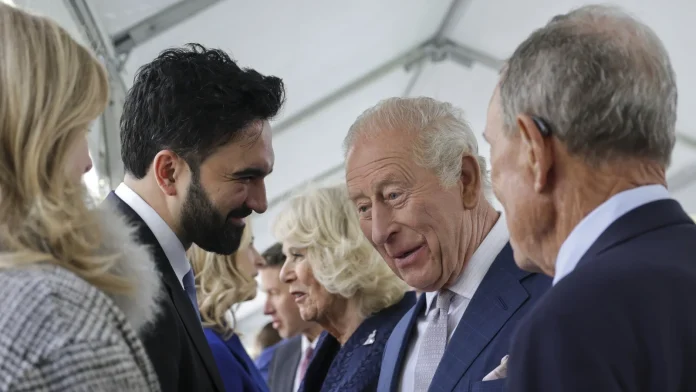
A Diamond in the Mouth of Memory: A King, a Mayor, and a Question of Return
The plaza at the 9/11 Memorial hummed with the quiet of remembrance — the low echo of footsteps on stone, the soft wind that knifed across the bronze names, and a small cluster of cameras following an unhurried procession. On a cool, clear morning, King Charles placed a bouquet where the twin towers once split the skyline. It was a moment full of ritual, solemnity and the oddly intimate choreography of state visits: flowers, bow, a brief exchange, then the slow walk away.
Hours earlier, New York City Mayor Zohran Mamdani had given a different kind of statement. “If I were to speak to the king separately from that, I would probably encourage him to return the Koh-i-Noor Diamond,” he said at a press conference. The mayor, who is Indian American and who grew up with stories of partition and migration, delivered the line with the kind of blunt humanity local politics is famous for: a simple, moral nudge tossed into a larger geopolitical conversation.
What the Koh-i-Noor Carries: History, Loss, and Symbol
The Koh-i-Noor is not merely a glittering stone. It is a 105-carat heirloom of centuries: passed through the hands of Mughal emperors, Persian shahs, Afghan emirs and Sikh maharajas, before arriving in Britain after the annexation of the Punjab in 1849. For India, its existence in the Crown Jewels is a living wound — a physical emblem of an era in which power was expressed in dispossession.
“It isn’t about a jewel,” a man who runs a bookstore in Jackson Heights told me, speaking on the fly between customers. “It’s about stories stolen from our grandparents. It’s about what it means to be seen again.” He paused, then laughed softly. “And, frankly, my grandmother still brags she once saw a picture of it in her history book. She wants it back more than she wants anything else.”
India’s claims have been consistent: the diamond was taken following British conquest, presented to Queen Victoria in 1850, and has remained in Britain ever since. The British government’s position has generally been that the stone was acquired legally under the treaties and laws of the time, and Buckingham Palace declined to comment on Mayor Mamdani’s remark.
A Meeting of Two Histories
Later the same day, the king and Mayor Mamdani crossed paths at the memorial. Their conversation, brief and private, drew attention because of the proximity of two worlds: a royal figure long associated with the legacy of empire, and an elected official of Indian descent, representing a city whose streets are woven with immigrant stories.
Mamdani’s office did not respond when asked whether the mayor had raised the diamond directly in that exchange. But the very suggestion — voiced publicly, in the shadow of a national site of grief — underscores how colonial relics still move through contemporary politics. They are not merely artifacts in glass cases; they are markers of value, pride and historical grievance.
Voices From the Diaspora: Memory, Identity, and the Push for Repatriation
In neighborhoods across New York where chai kettles steam on stoops and posters for Bollywood films hang in shop windows, the issue of the Koh-i-Noor ripples through conversation. “My mother used to tell us stories about the jewels of the maharajas,” said Asha Patel, who runs a sari shop near the Bay Terrace station. “When she saw the Koh-i-Noor on TV, she would always say, ‘Why did they take it away?’ For people my age, it’s personal — we grew up with the feeling that something was taken that shouldn’t have been.”
Such sentiments are playing out globally, in a world that is increasingly uncomfortable with the idea that imperial powers casually extracted cultural treasures while leaving broken institutions behind. The debates are not limited to one stone: they are part of a broader movement that has put spotlight on cases like the Parthenon Marbles and the Benin Bronzes, and has pushed major museums and governments to re-evaluate what restitution could look like.
Experts Weigh In
“Repatriation is as much about restoring dignity as it is about returning objects,” said a historian of modern empires, speaking for this piece. “When a country asks for an object back, it’s often about identity, narrative, and correcting an imbalance in the historical record, not just reclaiming a valuable item.”
Legal scholars, meanwhile, warn of the complexity. Many artifacts were transferred under the laws of the time; others were bought and sold. Determining rightful ownership after centuries, layered transactions and shifting borders is a painstaking process. Yet law and ethics need not be the same thing: public sentiment, diplomatic pressure, and changing museum policies have already nudged some institutions toward cooperative solutions.
Beyond the Jewel: What Repatriation Could Mean
Ask yourself: what does it mean to return something that survived conquest because it was small enough to carry? How do you weigh the significance of a single object against the long shadow of imperial violence? These are not academic questions for the people whose grandparents lived the history in full. They are real dilemmas that tug at civic pride, national identity and local memory.
For many Indians, the Koh-i-Noor is described in the language of national heritage. In New Delhi, calls for its return are common from politicians and civil society groups alike. “It’s a valued piece of art with strong roots in our nation’s history,” one Indian official said in the past. In the courts of public opinion, such appeals resonate not only across borders but across generations — a bridge between the private grief of dispossession and the public demand for restorative justice.
Small Acts, Big Ripples
Repatriation cases often begin with a single, principled request and widen into broader discussions: about school curricula, about who tells whose history, and about how museums might transform into spaces of shared stewardship rather than static repositories. Where might that lead? Perhaps to joint exhibitions, loans for long-term displays in the places where the objects originated, or collaborative conservation projects that respect provenance and context.
For Mayor Mamdani, the remark was a reminder that local leaders can press global questions into the public sphere. For King Charles, whose lineage intersects with empire’s legacy, the visit is another moment in which symbolic gestures may matter as much as protocol. For the Indian diaspora in New York, it was a small victory: a mayor willing to name what many have felt for decades.
Leaving the Stone and Picking Up the Conversation
At the edge of the memorial, a young woman paused to frame a photograph. “It’s been in Britain for nearly two centuries,” she said, smiling at the absurdity of the modern world where a diamond could be the ledger of an empire. “Why wouldn’t we ask for it back?”
There will be legal entanglements and diplomatic hedges, and there will be those who argue that artifacts in major museums can educate global audiences in ways that local displays cannot. But perhaps the most important thing to watch is the conversation itself: how a single remark by a city mayor, made in the shadow of a national tragedy, can reopen a dialogue about history, ownership and healing.
What would justice look like in a world trying to reckon with the leftover goods of empire? Returning a diamond won’t erase a painful past, but it could be one small way of admitting it ever happened. And sometimes, a small admission is the first honest step toward repair.
Isimada Dhaqanka oo maanta bilaabaya iney kala dhex galaan dhinacyada isku haya siyaasada dalka

Apr 30(Jowhar) Qaar kamid ah Isimadda dhaqanka ee Beelaha Soomaalida ayaa maanta bilaabaya isku day ay ku dhexgalayaan dhinacyada siyaasadda ee isku haya hanaanka doorashooyinka dalka, waxaana kulamada u horeeya oo ay dhexdooda yeelayaan ay ku faaqi doonaan sida ay suuragal u tahay in dhexdhexadin ay sameyn karaan.
Trump Weighs Cutting U.S. Troop Presence in Germany
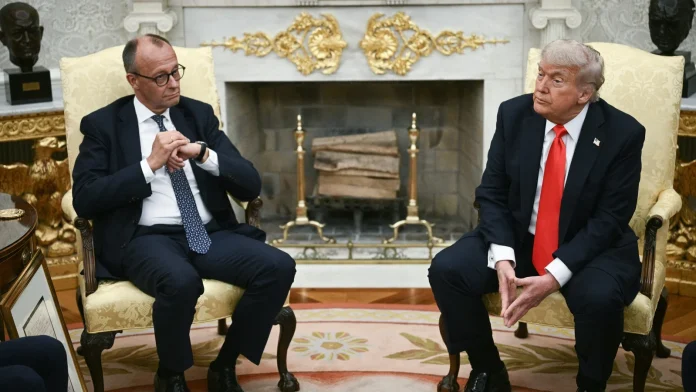
When the Map Shifts: What a Possible US Drawdown from Germany Means — and Who’s Watching
On a rain-soft morning in a Berlin neighborhood where the scent of fresh bread mixes with the metallic tang of tram lines, conversation turns quickly to one topic: the American military footprint. At a small table in a café near the Tiergarten, a retired technician from a nearby NATO logistics depot stirs his coffee and says, “We woke up to a message, not a telegram.”
It’s an apt way to describe the way policy now travels: quick, loud, and sometimes only a few lines long. President Donald Trump posted on Truth Social that “The United States is studying and reviewing the possible reduction of Troops in Germany, with a determination to be made over the next short period of time.” That sentence — terse, public, immediate — rippled through diplomatic corridors from Washington to Berlin to Brussels.
Numbers that Tell a Story
Numbers have a way of grounding political theater. According to the US Defense Manpower Data Center, the United States had just over 68,000 active-duty troops permanently stationed across Europe in December 2025. Of those, roughly 36,400 were based in Germany — a figure that echoes a different era, but in a quieter key.
Where those figures sit against history is stark: in 1985, at the height of the Cold War, the US had about 250,000 troops in West Germany. The scale of America’s presence then was monumental, almost a physical line in the sand against the Soviet Union. Today’s presence is smaller, but no less symbolic.
What’s at stake in plain terms
- US troops in Europe (Dec 2025): ~68,000
- US troops in Germany (Dec 2025): ~36,400
- US troops in Germany (1985): ~250,000
Pulling those forces, even partly, would not be an abstract budgetary decision. It would reverberate from family bases in Kaiserslautern, to military logistics hubs like Ramstein Air Base, to alliance politics in Brussels. It would tilt the map of American reach.
Diplomacy, Disagreement, and a New German Posture
The announcement didn’t arrive in isolation. Over the past weeks, a public spat has surfaced between Mr. Trump and German Chancellor Friedrich Merz over the hostilities in Iran — a reminder that alliances are not immune to personal and policy frictions. Mr. Trump dismissed Mr. Merz’s comments about Iran, saying the chancellor “didn’t know what he was talking about,” while Mr. Merz later insisted relations were fine despite the row.
Against that background, Germany has been quietly, deliberately rewriting its military script. Last week Berlin published a defense document signaling its intent to become Europe’s leading conventional force — the most significant German strategic pivot outside NATO since World War Two. General Carsten Breuer, Germany’s top general, traveled to Washington to brief US officials on those plans. He told reporters that Defence Undersecretary Elbridge Colby showed “great appreciation” for the document and Germany’s financial commitments.
Mr. Colby, posting on X, framed it bluntly: “President Trump has rightly laid out that Europe must step up, and NATO must no longer be a paper tiger. Germany is now taking the leading role in this. After years of disarmament, Berlin is stepping up.”
Voices at Ground Level
Not all reactions have been measured or strategic; many are human and immediate. “My grandson sleeps under a poster of a C-130,” says Anna Müller, whose family rents out rooms near a US base. “If the Americans leave, it’s not just shops that will close — it’s a network of friendships.”
At a mess hall on a base in southern Germany, a sergeant — speaking on condition of anonymity — shrugged and said, “We’re service members first. Politics comes and goes. But you can’t separate the mission from the people who do the mission.”
Observers in Washington offer another layer. Jeff Rathke, a former US diplomat and now president of the American-German Institute at Johns Hopkins University, put the matter bluntly: “US forces in Europe are not a charitable contribution to ungrateful Europeans – they are an instrument of America’s global military reach.”
Why this matters beyond flags and parades
Think about logistics and rapid response. Bases in Germany are key nodes for American operations in Africa, the Middle East, and eastern Europe. A reduction would alter timelines for reinforcements, complicate NATO exercises, and force allies to fill gaps not only with money but with doctrine and readiness.
And there’s the optics: when a superpower scales back a permanent presence, it gives rise to narratives — about retreat, realignment, or retrenchment. Those narratives then shape policy choices in capitals hundreds or thousands of miles away.
Who Gains, Who Decides?
If Washington decides to pull back, the immediate question is whether Europe — and Germany in particular — can absorb the strategic and economic cost. Berlin’s new defense strategy signals willingness. Yet rearmament is expensive and politically fraught in a country that has, for decades, viewed military power with caution.
“We want to be a pillar, not a shadow,” said a senior German defense official in Brussels, declining to be named because talks were ongoing. “But pillars must be built, and that takes time.”
Economically, communities around bases would face job losses and shrinking local economies. Strategically, NATO would be forced to reckon with a more distributed and less American-centric defense posture. For allies in Eastern Europe, worried about Russia’s ambitions, a smaller US footprint in Germany could mean heightened anxiety.
Big Questions for a Small World
What does sovereignty mean in an era when security is both local and global? Can Europe sustain a credible conventional force without decades of US basing? How do human stories — families, workers, enlisted personnel — factor into decisions often framed as geopolitical chess?
These aren’t hypothetical. They are real choices with real consequences for people who live and work around bases, for families whose breadwinners deploy, and for allied capitals balancing defense budgets and public sentiment.
Three quick realities to keep in mind
- Any withdrawal would require logistical planning measured in months or years, not days.
- Germany’s defense ambitions are growing, but they are being built against a backdrop of domestic debate and fiscal constraints.
- US forward presence in Europe serves both defensive and expeditionary purposes — removing it shifts those strategic calculations.
Closing: The Human Geometry of Strategy
Back at the café, the retired depot technician scans the news and laughs softly. “We have coffee from the same place since 1989,” he says. “Things change. Friends leave and new friends come. But we learn to find the constants — good bread, good conversation.”
Policy is often written in capitals and posted online in blunt sentences. But at its core, it ripples through lived lives: through kids going to school on base, through shopkeepers whose livelihoods depend on steady paychecks, through soldiers and diplomats who build the scaffolding of alliances. When a map shifts — even a little — we should ask not only where the lines move, but who the movement leaves in its wake.
So here’s the question for you, the reader: if a great power redraws its military footprint, how should communities, allies, and leaders respond — with caution, courage, or something in between? The answer will be shaped as much by budgets and battalions as by the quiet decisions people make over coffee in city squares and living rooms across the Atlantic.
Washington shooting suspect snapped selfie moments before the attack
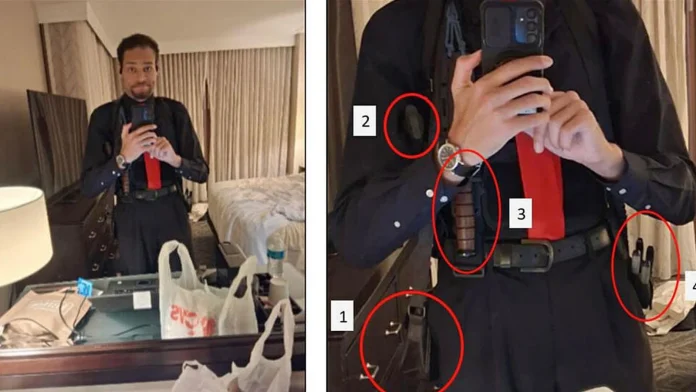
Midnight at the Washington Hilton: A Selfie, a Shot, and a Country on Edge
The noise at the Washington Hilton on that late spring evening was the kind of polite hum you expect at a political gala — clinking glasses, the rustle of cocktail dresses, laughter threaded with small talk. A ballroom downstairs hosted a media dinner attended by former president Donald Trump and other senior figures. Upstairs, behind a closed door on one of the hotel’s quiet corridors, a man dressed in black took a photograph of himself in the mirror.
That image — a cellphone selfie of a 31-year-old identified by prosecutors as Cole Allen, in a dark shirt, red tie, with a shoulder holster and a knife visible at his side — would become one of the most chilling details in the federal court filings that followed. In the minutes after that photo, according to investigators, he descended from his room, burst through a line of hotel security and fired a pump-action shotgun toward the staircase leading down to the ballroom. Chaos erupted. Shots were exchanged. No one was killed.
A surreal sequence of events
The moment feels cinematic and yet utterly real. One hotel staffer who asked not to be named remembers the night differently: “I heard a boom and then people screaming. For a second I thought it was a kitchen accident or a dropped tray. Then we saw the security guards wrestling a man on the carpet.”
Prosecutors say Mr. Allen traveled to Washington by train — a scenic itinerary that took him through Chicago and the amber hills of Pennsylvania. On his phone, he is said to have paused to admire the landscape, writing that the woods looked like “vast fairy lands” with trickling creeks. That small line in a court filing complicates the caricature of a one-note villain; it is domestic, almost pastoral, and yet it sits alongside documentation of carefully planned violence.
“The courthouse papers show a person who was methodical about preparation,” said Dr. Lina Estrada, a criminologist who studies politically motivated violence. “He appears to have researched locations and security, assembled weapons, and even prepared explanations for why he was doing it. That combination — planning plus political grievance — is the dangerous mix.”
How it unfolded: a brief timeline
- Shortly before 8:30pm, Mr. Allen left his room at the Washington Hilton, carrying a shotgun, a handgun, knives and ammunition, according to prosecutors.
- He passed through a set of metal detectors and moved toward the ballroom entrance, where Mr. Trump and guests were gathered.
- Shots were fired in the stairwell area; Secret Service agents returned fire. Mr. Allen fell and was restrained after a chaotic scuffle with security guards.
- No guests, staff, or senior officials were killed. Mr. Allen sustained a minor knee injury and was taken into custody.
From manifestos to mirror selfies
According to the government’s detention filing, Mr. Allen scheduled emails to friends and family before he left his room, messages that included a manifesto listing members of the Trump administration as targets. The filing described his intent as an attack of “unfathomable malice” and urged the court to keep him detained pending trial.
“The political nature of the defendant’s crimes,” the prosecutors wrote, “counsels in favor of detention because the defendant’s motivation exists so long as he disagrees with the government.”
Mr. Allen’s story resists easy labels. Friends from his California town described him as highly educated and thoughtful — a community college teacher with an interest in literature and long-distance travel. Neighbors said he loved rail journeys and would often come home with folded maps and stories about the places he’d seen. “He would tell you about a sunrise over the plains like he was reading poetry,” said Maya Johnson, who grew up two streets away. “It makes all of this harder to understand.”
The broader pattern of political violence
Attempts on political leaders are not a new chapter in American history. Since the 19th century, the country has seen presidents assassinated, others critically wounded, and several plots foiled. What is shifting is an accelerating tempo of threats that move from online grievance to real-world action.
Experts point to a mix of factors: easy access to firearms, radicalized online communities, and a political climate in which personal animosity is often framed as moral duty. “We’re seeing the friction between grievance narratives and real-world violence become more combustible,” said Prof. Martin Kline, an expert in political radicalization. “When someone believes their actions are justified by a political cause, they effectively erase the boundary that keeps most people from committing violence.”
At a national level, gun deaths have hovered in the tens of thousands annually in recent years, with homicides and suicides comprising the bulk. Meanwhile, law enforcement agencies report a rise in ideologically driven threats; the calculus of risk has shifted for those responsible for protecting public figures.
Security at a crossroads
Hotel staff and guests now grapple with the unsettling realization that a bustling downtown hotel — a place meant for conferences and reunions — can become ground zero for national security concerns. “We’re trained to handle tricky guests and spilled drink situations, not a shooter on the stairs,” a long-time bellman said. “Everything changed that night.”
Secret Service protocols are under intense scrutiny. How did an armed man make it so far inside a hotel during a high-profile event? How do you balance hospitality with protection? The agency has yet to release a detailed after-action report, but officials noted quickly that the response prevented a bloodier outcome.
What do we do with this unease?
Take a moment to imagine being inside that ballroom — a roomful of people laughing hours earlier now thinking about life’s fragility. The spectacle of politics has real human consequences when rhetoric crosses a threshold into action.
What should we ask of our leaders, our tech platforms, our communities? How do we cultivate a public square that allows fierce disagreement without inviting violence? And how do we care for the individuals — the hotel workers, the guests, the first responders — who carry the aftermath of these moments?
“We can’t only respond after the fact,” Dr. Estrada said. “Prevention means addressing the social and psychological pathways that lead someone from grievance to attack. That’s community support, mental health resources, and, yes, better interventions at the crossroads where people radicalize.”
Closing the distance
The image of a man in a hotel mirror, adjusting his tie, is now part of a larger, troubling mosaic: a country that must reckon with the ways political fury travels, the fragility of public spaces, and the human stories tangled in headline fodder. For the staff at the Washington Hilton, for the diners who walked away stunned, for the teachers and farmers and commuters who followed the story on their phones — the episode is a reminder that safety is not an abstract policy debate but a fragile daily reality.
We will hear more details as prosecutions move forward. For now, the question that remains is less about the image of a man who aimed a gun and more about the social conditions that made it possible. How do we rebuild a civic culture in which the mirror reflects not plans for violence but the possibility of conversation?
Video: Trump vows U.S. will declassify UFO files soon
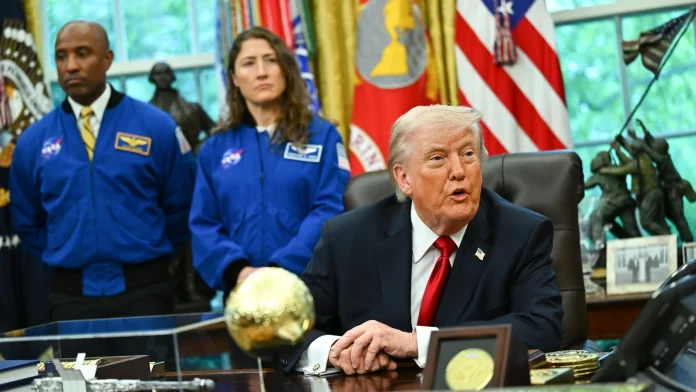
Behind the Curtain: The White House, Artemis II, and a New Push to Unveil the Unknown
Under the cavernous portraits and chandeliers of the East Room, a scene unfolded that felt part ceremonial, part confession. Four astronauts—Victor Glover, Reid Wiseman, Christina Koch and Canada’s Jeremy Hansen—stood in their flight-blue suits, the tired, triumphant faces of people who had just shepherded humanity farther into the dark than any had before. Across from them, the President spoke in clipped, eager sentences about two things Americans have long watched with equal parts curiosity and skepticism: the Moon and what might be in the sky between here and there.
“We’re going to be releasing as much as we can in the near future,” he said, promising to open government files on unidentified aerial phenomena. “We’re going to be releasing a lot of things… that we haven’t,” he added, voice rising with the sort of theatrical certainty that makes headlines and late-night jokes in equal measure.
What was said—and why it matters
On its face, it was another installment in a larger drama. But the comments matter precisely because of context: they came after a presidential directive in February asking federal agencies to begin freeing up records related to UFOs—now commonly labeled UAPs (unidentified aerial phenomena)—and after an internal review that, the President said, had turned up “interesting” documents. In a country where secrecy and spectacle meet at the crossroads of national security and public curiosity, an administration signaling a move toward disclosure is news that ripples far beyond a single press room.
“Transparency here isn’t just theatrics,” said Dr. Elena Moreno, a former DoD analyst who now researches UAP policy at a Washington think tank. “It’s a test of institutional confidence. When governments choose to share, they’re asking citizens to trust the way they weigh risk and explanation.”
Artemis II: A human milestone with cosmic symbolism
The timing of the Oval Office conversation wasn’t accidental. The Artemis II crew had just completed a mission that read like the prologue to a new space age: a 1,117,515-kilometer journey—two orbits around Earth and a trajectory that carried their capsule around the Moon’s far side, coming within roughly 6,400 kilometers of the lunar surface. It was, officials stressed, a test flight. Yet to millions watching worldwide it felt like a promise—the opening chords of a program that aims to touch lunar regolith again by about 2028.
“We showed what humans can do when we blend audacity with engineering,” Reid Wiseman told reporters, still carrying the mild fatigue that follows long-duration missions. “But with the spotlight comes questions—about what’s up there that we thought we knew, and what we still don’t.”
The public hunger for answers
Ask almost anyone on the street corner—near the National Mall or along Florida’s Space Coast—and you’ll hear a similar sentiment: curiosity tempered by impatience. Tourists in Cape Canaveral, where families still flock for rocket launches like pilgrimages to a modern cathedral, speak of kids who demand to know whether we are alone. In a D.C. coffee shop, a barista with a sleeve of NASA patches told me she’d seen an uptick in customers wanting to discuss UAPs since the Artemis splashdown.
Polls back up the anecdotal evidence: across multiple surveys in recent years, roughly half of Americans say they are at least open to the idea that we have been visited by unexplained phenomena, and a majority want fuller government disclosure. Whether that means leaked alien artifacts or long-dormant aviation reports, the public’s appetite for clarity is clear.
Not just spectacle: the policy and security dimensions
UAPs aren’t merely fodder for conspiracy forums and late-night TV. For the Defense Department and intelligence community, unexplained aerial incidents have direct implications for sovereignty and safety. In 2021, the Office of the Director of National Intelligence reported 144 UAP incidents from 2004 to 2021 that defied conventional explanation—most of them observed in restricted flight spaces and by trained observers.
“Whether these are technological artifacts from other nations, sensor errors, or something else entirely, they could represent operational risks,” said Maj. Gen. Angela Bates, retired, who advises on airspace security. “For military planners, unknown equals threat—there is no such thing as a benign unknown when you’re responsible for an aircraft carrier strike group at sea.”
Since 2022 the Pentagon formed the All-domain Anomaly Resolution Office (AARO) to investigate UAPs across air, sea, space and cyber domains. The office has gathered thousands of reports—from pilots, sensors and satellites—though many remain unresolved. Officials say declassifying records is a process fraught with competing mandates: protecting sources and methods, safeguarding national security, and honoring transparency obligations to the public and Congress.
Culture, myth and the space-age imagination
Whether you grew up watching The X-Files or listening to late-night radio tales of Roswell, the stories we tell about the skies reveal as much about ourselves as about the cosmos. In an increasingly globalized, data-saturated world, UFOs function as a Rorschach test for trust. Do you believe your institutions? Do you want to believe in something beyond the banalities of daily life? Do you mistrust the slow creep of bureaucratic explanations?
“These narratives have always filled cultural voids,” said Mira Okafor, a cultural historian at Columbia University. “During times of rapid technological change—like now, as private companies routinize spaceflight—the urge to translate complex phenomena into story is only intensified.”
What might be released—and what to watch for
Officials have promised an initial tranche of records soon. What could that include? Flight logs, radar tracks, declassified video footage and test reports; perhaps even testimony from pilots and air-traffic controllers. Some documents will likely confirm mundane explanations—misidentified weather balloons, sensor artifacts, or foreign aircraft—while others could remain stubbornly ambiguous.
Here’s what to look for:
- Declassified incident reports with radar and sensor corroboration
- Contextual analysis from agencies like NASA, DoD, or intelligence partners
- Policy memos indicating how findings will influence air and space safety measures
We’re still asking the big questions
What does disclosure mean in a world where information is both weapon and balm? Does the slow trickle of declassified files satisfy a public primeval longing for certainty—or will it simply seed new stories? The questions are both scientific and civic.
“If the government opens the file cabinet, we will learn more about our sensors—and about our limits,” Dr. Moreno said. “But the outcome may not be neat. Transparency can lead to more questions than answers, and that’s a healthy place to be in science.”
As Artemis II’s crew head back into their lives—schools, family dinners, the small rituals that keep people human—the country watches. The Moon mission offered evidence: we can push farther. The promise of disclosure offers something else: a chance to test whether institutions can move from secrecy to dialogue. Which would you prefer—mystery kept in basements, or a slow, sometimes messy, unveiling in the light?
One thing seems certain: whether you’re looking up at the Moon or at a blurry dot on a radar screen, these are not just stories about craft and cosmic questions. They’re stories about who gets to know, who decides what the public can see, and what we imagine together as we reach into the dark.
Former Jimi Hendrix band members lose High Court bid for rights
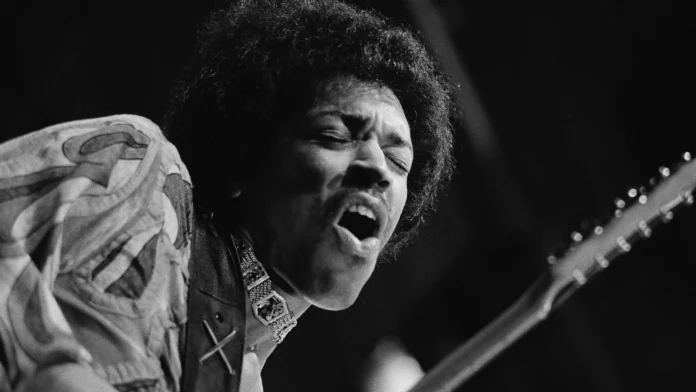
A High Court Ruling and the Long Echo of a 1960s Guitar Riff
On a grey morning in London’s legal quarter, where the hum of traffic mixes with the rustle of legal briefs, the soundscape of the city was briefly reclaimed by something else: the memory of a guitar that changed rock & roll. That memory, powerful as a Hendrix solo, was at the heart of a High Court dispute that has now closed its final chapter. Judges, lawyers and the relatives of musicians stood where law and legacy collided—and the court has sided with Sony.
What the dispute was about
At the center of the case were about 40 studio recordings made by The Jimi Hendrix Experience in the late 1960s, a brief but incandescent period in popular music. Companies representing the estates of the band’s bassist, Noel Redding, and drummer, Mitch Mitchell, argued they were owed a stake in the copyrights and performers’ rights for those recordings. Redding and Mitchell, who joined Jimi Hendrix in 1966 to form a trio that would change the sound of rock, both died decades ago—Redding in 2003 and Mitchell in 2008—and their estates contend the men were excluded from the financial benefits that followed.
This was not simply a claim for unpaid royalties. The estates sought a legal declaration of ownership shares in the rights to the recordings and an inquiry into what payments might have been due. It’s a story of music industry paperwork, old agreements, and the brave new world of streaming where songs keep earning long after the original players are gone.
The court’s decision
Mr Justice Edwin Johnson dismissed the estates’ claims in a detailed judgment running some 140 pages. The judge found the recording agreement struck in the 1960s between producers and the band to be “clear and unequivocal” in assigning worldwide copyright in the recordings to the producers. He also concluded that earlier releases signed by Redding and Mitchell—documents in which they acknowledged settlement of claims—prevented the estates from bringing their case now.
In short: the court refused to rewrite a contract made at a different moment in history. As the judge acknowledged in his ruling, the digital future of music—downloads and streaming—was not on anyone’s radar when that 1966 agreement was signed. Yet the legal obligation, he said, is to construe the contract the way it was written, not the way modern sensibilities might wish it to have been.
Why this matters today
Ask a teenager today how they hear music, and they’ll likely say “streaming.” The economics of recorded music have shifted dramatically: streaming now accounts for roughly two-thirds of global recorded music revenue, and the ways income is distributed have become a hot political and cultural issue. Catalogues from the 1960s still earn money—often substantial amounts—decades after the last amp was turned off in a studio.
So when estates argue they were deprived of fair reward for performances captured in the studio, it taps into broader debates about artist rights, archival revenue and how to treat work created before the internet remade the industry. The Hendrix case raises a question: should contracts made in an analog era be reinterpreted to reflect a digital world?
Voices from the fringes: fans, lawyers, and insiders
Outside the Rolls Building, a small knot of fans and observers watched the procession of barristers and court staff. “It feels like the record company won’t let anything go,” said Marco, a retired session musician who’d come to have a look. “But contracts were the law then. You have to wonder whether those who performed were told the whole story.”
For music industry experts, the ruling was less sensational than it was predictable. “Courts respect the sanctity of written agreements,” said Harriet Cole, a UK-based music lawyer who was not involved in the case. “If the contract assigns rights to the producer and the artists signed releases, it’s very difficult to unwind that now. What may be unjust is not necessarily unlawful.”
And for the estates’ side, there were real human narratives at stake. “Noel and Mitch were young, in the whirlwind. They made cultural history but didn’t benefit proportionally from the afterlife of those recordings,” said a spokesperson for the Redding and Mitchell estates during the trial. “They were excluded early on and died in relative poverty while the catalogue remained lucrative.”
Chains of title, legacy, and the music business
The corporate defendant, Sony Music Entertainment UK, told the court it had operated within its rights and denied any infringement. Representatives of Experience Hendrix, the company that manages Jimi Hendrix’s estate, welcomed the judgment, saying it clarified the “chain of title” for the recordings and allowed them to continue making the music available worldwide.
“While technological developments have reshaped the industry, clear agreements must be honoured,” a spokesperson for the label said in a statement after the judgment—words that echo through record company boardrooms and estates alike. Janie Hendrix, who oversees Experience Hendrix, offered warm memories of Redding and Mitchell and stressed a commitment to “honouring and supporting the musicians who were part of Jimi Hendrix’s history.”
How common is this kind of dispute?
Not rare. From Bob Dylan to Paul McCartney to modern stars re-recording their catalogues, disputes over rights and ownership are a throughline in music business history. The 1960s were a wild time for contracts: artists often signed away long-term rights for a shot at stardom. In the digital era, those bargains are being examined under new light—but courts have been cautious about altering clear contractual terms retroactively.
A final chord: law, justice, and the afterlife of art
There’s a melancholy to this decision that goes beyond legal precedent. It raises uncomfortable questions about how we value creativity and who benefits from it over time. Should the terms struck in an era of vinyl and reel-to-reel be allowed to determine how wealth from streaming is allocated decades later? Or does changing the law risk creating uncertainty about commercial agreements?
If you listen closely to a Hendrix track, you hear more than a guitar riff—there’s the sound of collaborators, of friendships and tensions, of young artists making choices in a tumultuous era. The High Court has turned a page on one chapter of that story. But the broader questions remain: about fairness, about legacy, about how we as a society share the rewards of art across generations.
What do you think? Should the law protect historical contracts at all costs, or is there room for reinterpretation when the world around those contracts has changed beyond recognition?
Sweden moves to fine social media platforms over ‘murder’ ads
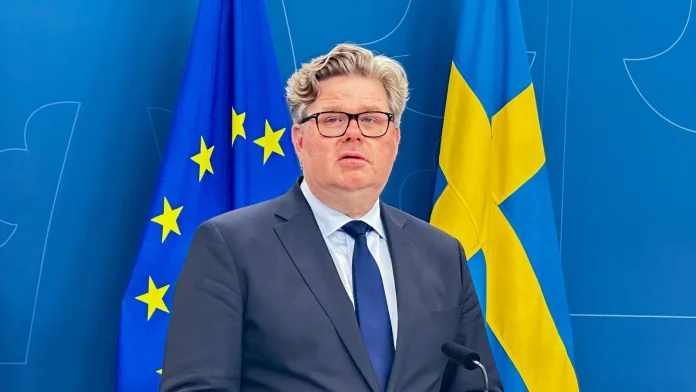
A childhood curtained by phones: Sweden’s bid to force social media to rip down ‘murder adverts’
On a luminous summer evening in Södermalm, a man carrying a paper bag of cinnamon buns might stop and ask the usual questions—about work, weather, football. He will not expect to be told that a teenager three suburbs over has been offered money to kill a stranger and posted about it on TikTok.
Yet that is the blunt reality Swedish politicians say they are confronting: short, transactional recruitment pitches—“jobs” for hire—appearing on social platforms and aimed at children who cannot be prosecuted under Sweden’s current criminal-responsibility rules.
What the government is proposing
The administration in Stockholm has drafted a law that would require social media companies to remove posts that solicit murder or other violent acts within an hour of being reported, or face fines up to five million kronor (roughly €460,000).
Here’s what the plan would do, in plain language:
- Mandate that platforms remove “murder adverts”—public offers to buy violence—rapidly, setting a one-hour removal window after notice.
- Set financial penalties for non-compliance, creating a direct economic incentive for tech firms to monitor and moderate dangerous content.
- Complement earlier proposals to lower the age of criminal responsibility from 15 to 13 for the most serious offences—aimed at curbing the growing practice of recruiting minors.
From whisper networks to public marketplaces of violence
There’s a new language to organized crime in Sweden: short clips, disappearing messages, encrypted group chats and open feeds. “What used to be a whispered arrangement at the back of a bar has moved into the palm of a child,” said Lena Holmberg, a youth social worker who has spent a decade in the suburbs of Malmö. “They’re not just watching crime—they’re being offered it like a gig.”
Police and prosecutors here have for years reported a growing number of shootings and bombings linked to gang conflicts over drugs and territory. In recent years those clashes have become more public and, painfully, more youth-staffed. Young people—sometimes as young as 13 or 14—are being recruited for roles that expose them to harm while insulating older organisers from prosecution.
“The economics of it are straightforward,” explained Dr. Martin Ek, a criminologist at Lund University. “If you can hire a minor who cannot be prosecuted, you reduce the legal risk. It’s a market adaptation—an ugly example of ‘crime as a service.’”
Why the age of responsibility matters
Sweden has long been known for a progressive social model—social support, strong child welfare systems and a criminal justice philosophy that postpones full culpability until 15. That principle has been a bedrock of Swedish policy for decades. But the argument that it creates a legal loophole for organised crime has gained political traction.
“We will be the first in the European Union to target organised crime’s recruitment of children and youths with this kind of legislation,” a government official told reporters, framing the move as both protective and pioneering.
Critics counter that lowering the age or harshly penalising platforms won’t fix underlying social fractures: exclusion, concentrated poverty, poor educational outcomes and a lack of meaningful youth employment. “You can fine a social network, but if a 14‑year‑old has no job, no safe place to be in the afternoon, and sees money on a screen, a fine won’t change that calculus,” said Ingrid Sjöberg, director of a Stockholm-based NGO working with at-risk youths.
Platforms under the spotlight
Social media companies argue that they already remove violent content under their community standards and that policing every platform globally is a monumental technical and legal challenge. Yet platforms are increasingly the battleground of public safety debates worldwide: from disinformation to extremist recruitment, the responsibility of tech firms is no longer only about speech, but about lives.
“There is a difference between a spontaneous post and a call to commit murder for money,” said Tomas Berg, a policy analyst who has advised European regulators on platform governance. “The problem with an hourly takedown rule is operational: platforms will need faster detection, better human review, and in many cases a different legal framework to act prospectively rather than only reactively.”
Sweden’s one-hour threshold is not symbolic. It forces platforms to build or buy systems that can triage reports in real time—which, proponents hope, will snuff out offers before they translate into violence.
Real people, urgent dilemmas
At a playground in Rosengård, where children race scooters under a canopy of chestnut trees, Fatima, a mother of three, keeps one eye on her youngest and another on her phone. “My eldest started getting messages from someone who didn’t live near us,” she said. “They offered him money to ‘do a job.’ He was scared, then he was curious. He’s just a boy. What can a mother do?”
Her voice caught on the last question. In communities where trust in authorities is low, social services thin, and the economy is tight, recruitment is both a criminal tactic and a grotesque exploitation of vulnerability.
Wider questions: policy, technology and social justice
The Swedish proposal is a flashpoint in larger global debates. How much should governments lean on private companies to manage public safety? When does protecting children cross into criminalising them? Can law enforcement, schools and social services coordinate to offer meaningful alternatives to the alluring but deadly “gigs” offered by gangs?
Those questions are not unique to Sweden. Across Europe and beyond, policymakers grapple with platforms that can be used to organise everything from concerts to assassination plots. The blunt instrument of fines and quick takedowns may be necessary, but alone it is unlikely to be sufficient.
“We need a layered response,” Dr. Ek said. “Better moderation on platforms is essential. But so is outreach: youth centres open after school, job programs, mentoring. Otherwise we just move the problem from an online advert to an offline reality.”
What happens next
The proposed law will face parliamentary debate, legal scrutiny, and fierce lobbying from tech companies as well as civil society. It is also unfolding against a charged political backdrop: the current government is a minority coalition supported by a far-right party that has pushed hard on crime and immigration in the run-up to a general election on 13 September.
Supporters call the plan decisive and protective. Opponents warn of unintended harms—driving recruitment deeper underground, or nudging social media companies toward overly broad censorship to avoid fines. Meanwhile, families in the suburbs watch, weigh their options, and try to keep children safe in a world where danger glows on a screen.
Will laws change the streets?
Here is the question every parent, policymaker and platform executive should ask: do we want a bandage or a cure? One-hour takedowns and multi-million-krona fines may put pressure on global tech firms. A lower age of responsibility might remove a legal loophole. But without community investment—schools, jobs, safe public spaces—those legal measures risk being a palliative rather than a remedy.
As the Swedish summer slides into an early evening, the laughter of children in playgrounds reminds us of what’s at stake. Can we imagine a future where those same children grow up offered apprenticeships instead of assassination contracts? Where phones are for friendship and learning, not the marketplace of violence?
That possibility rests not only on law, but on whether communities, companies and governments are willing to invest in a young generation who deserve more than a dark gig economy of crime. What do you think—are swift takedowns and fines the right lever, or do we need something deeper? Share your thoughts; the answers will shape more than policy, they will shape lives.
Taliyayaasha sirdoonka dalalka bulshada bariga afrika oo muqdisho ku kulmay

Apr 29(Jowhar)-Taliyaha Ciidanka Xoogga Dalka Soomaaliyeed S/Guuto Ibraahim Maxamed Maxamuud ayaa si rasmi ah u daahfuray shirka Taliyayaasha Talisyada Sirdoonka ee wadamada ku mideysan Ururka Bulshada Bariga Afrika (EAC), kaas oo socon doona 29–30 Abriil 2026.

American children’s book author sentenced to prison for poisoning her husband
Behind the Headlines: A Quiet Suburb, a Loud Verdict
There are neighborhoods in Salt Lake County where snow-capped mountains frame tidy lawns and the scent...
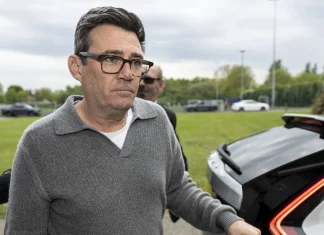
Burnham seeks parliamentary comeback, opening door to challenge Starmer
A northern town holds its breath
On a damp morning in Makerfield, where the terraced houses sit shoulder to shoulder and the chip shops open...
No EU nominee has yet agreed to run for UN food agency head
The race for the next head of the United Nations' food agency, the Food and Agriculture Organization (FAO), is heating up as candidates from...

Streeting steps down; Burnham considers running in by-election
Note to readers: what follows is a creative, reimagined dispatch inspired by the headline "Streeting resigns, Burnham eyes bye-election." It is written as a...
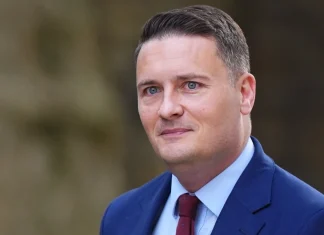
Streeting resigns from UK government to mount bid against Starmer
A sudden crack in Labour’s façade: Wes Streeting walks, Westminster braces
On a gray morning that felt like an indictment, Westminster woke to news that...