Saturday, February 7, 2026
Home Blog Page 21

Israel tears down UNRWA compounds in East Jerusalem

Israel demolishes UNRWA buildings in east Jerusalem
Bulldozers razed several large buildings and other smaller structures inside the UNRWA compound

Bulldozers at Dawn: What the Demolition of a UN Compound in East Jerusalem Really Means

At first light, the rumble was not just of metal on stone but of an idea being pulverized: the fragile promise that international institutions and the rules that protect them still matter in a city where politics and history collide on every corner.

Early one morning this week, Israeli forces moved into the United Nations Relief and Works Agency (UNRWA) compound in East Jerusalem. Bulldozers, flanked by soldiers, tore into the shells of buildings where dozens of agency staff once worked, ripping through offices, storerooms and the institutional memory of an organization that has been a lifeline for Palestinians since 1949.

“This is an unprecedented attack against UNRWA and its premises,” Jonathan Fowler, a UNRWA spokesperson, told reporters, standing near the compound’s rubble. “It constitutes a serious violation of international law and the privileges and immunities of the United Nations.”

What happened — and why it matters

The site had stood largely empty since last year, after Israeli authorities ordered UNRWA to vacate all its premises and stop its operations inside Israel. Tensions escalated after accusations from Israeli officials that some UNRWA staff had ties to Hamas — accusations the agency has acknowledged in part by dismissing some employees, while insisting much of the evidence has not been made public.

In October 2024, Israel’s parliament passed a law banning UNRWA from operating in the country and forbidding officials from contacting the agency. This week’s demolition followed a seizure of the site and, according to Israeli authorities, was carried out lawfully; the foreign ministry said the compound “does not enjoy any immunity” and that the action was consistent with “both Israeli and international law.”

Itamar Ben-Gvir, Israel’s far-right national security minister, posted video from the compound as a bulldozer began its work: “This is a historic day, it’s a holiday,” he said, a line that landed like a provocation in a neighborhood still raw from conflict and displacement.

Voices from the rubble

On the sidewalk opposite the compound, shopkeepers and residents gathered, cups of strong coffee steaming in their hands. “We used to see the teachers, the social workers, people carrying boxes,” said Mariam Abu Khalil, a former UNRWA teacher who lives nearby. “They were part of the neighborhood. They helped our children and now the place is dust.”

Hakam Shahwan, who served as chief of staff at UNRWA’s East Jerusalem headquarters until the order to vacate, watched the demolition by video. “The destruction today is another message to the world that Israel is the only country that can demolish international law and get away with it,” he told me, his voice a mix of exhaustion and anger.

But not everyone shared Shahwan’s framing. “There are serious security concerns,” said an Israeli municipal official who asked not to be named. “We have to protect citizens.” This was echoed in the foreign ministry statement emphasizing legality and municipal claims that the agency had failed to pay property taxes.

Why a compound in East Jerusalem is more than just property

UNRWA’s footprint in the occupied Palestinian territories has been substantial: since its founding in 1949, the agency has provided schooling, healthcare, social services and emergency shelter to generations of Palestinian refugees. Today it serves millions — registered refugee figures have hovered around several million — and operates hundreds of schools and clinics across Gaza, the West Bank, Lebanon, Jordan and Syria.

To many Palestinians, the compound in East Jerusalem was a physical reminder that an international system existed to provide some continuity amid statelessness, occupation and recurring wars. To Israeli authorities, it had become, in their words, a security liability and a symbol of alleged bias.

The legal status of East Jerusalem itself is knotty: most countries and the United Nations regard it as occupied territory; Israel asserts sovereignty over the whole city. That unresolved dispute hangs over everything that happens there — including whose laws apply, who gets taxed, and who can claim protection for their premises.

Destruction and disinformation

Beyond the immediate physical loss — buildings, files, storage rooms rumored to hold aid supplies for Gaza and the West Bank — there is the damage to trust. UNRWA officials say they have been the target of a “sustained disinformation campaign,” an erosion of credibility that complicates aid delivery at a time when humanitarian needs are enormous.

“The effect is cumulative,” said Dr. Lena Haddad, an international law scholar who studies humanitarian actors in conflict zones. “When you undermine the perceived neutrality of an agency that runs schools and clinics, you make every aid worker and every child more vulnerable.”

On the ground in Gaza and the West Bank, that vulnerability translates into fewer safe spaces for education, less reliable health care and greater strain on families already coping with bereavement and displacement. The attacks of October 7, 2023 — which Israeli authorities say killed approximately 1,200 Israelis — and the subsequent Israeli military campaign — which Gaza authorities report has resulted in tens of thousands of Palestinian deaths — have strained the region to breaking point. Whether exact casualty figures are debated, the human cost is undeniable.

Small details, loud signals

Neighbors I spoke with pointed to smaller losses that have a big emotional weight: the wall where UNRWA teachers pinned student art; the storeroom where winter coats were kept for children who could not afford them; a makeshift garden where a volunteer would plant basil and mint for community events.

“It was never just paperwork,” said Samir Odeh, a retired nurse who used to volunteer at UNRWA’s clinics. “Those rooms belonged to mothers bringing babies, to students studying for exams, to elders getting vaccinations. They are part of our story.”

Questions this demolition raises for the wider world

What happens when the protections accorded to international organizations are eroded? How do communities survive when the institutions they lean on are swept away — legally or otherwise? And what does this moment tell us about the future of humanitarian work inside prolonged conflicts?

These are not abstract queries. They touch questions of international law, the politicization of aid, and the hard ethics of operating in places where lines between civilian and combatant, charity and politics, are deliberately blurred.

“When an organization like UNRWA is delegitimized,” Dr. Haddad said, “it becomes easier to justify extraordinary remedies. The more these moves are normalized, the more space opens for actors to bypass norms that were designed to limit violence.”

Looking ahead

For now, the compound lies exposed to the sky. The neighborhood carries on — children still run with soccer balls through alleys, cafés still serve cardamom tea — raw normalcy reshaped by the day’s events.

UNRWA has vowed to continue its mission where it can. Israeli officials have defended the demolition as lawful. And local residents, who have seen countless chapters of loss and resilience, are left to fill the silence with memory and question.

As you read this from across oceans and time zones, ask yourself: what should the international community do when the very institutions meant to mitigate suffering are themselves targeted? And what role should citizens, journalists and policymakers play to make sure that a place like this — small but significant — is not simply erased from the map of accountability?

Watch: Year-in-review of Trump’s first year back in the White House

Watch: A rewind of Trump's first year back in office

One Year In: The America of Trump 2.0 — A Walk Through a Changed City and a Changed World

On a cold January morning, the flags along Pennsylvania Avenue snapped like dry pages. The security perimeter felt wider, the blank-faced cameras more numerous. A year into his second term, President Donald Trump has remade parts of Washington the way a sculptor chips at marble—decisive, public, and unapologetic.

Walk down to the corner where tourists once posed for the obligatory White House selfie and you’ll find a different rhythm. The coffee shop windows carry the same smudges, but the conversations are sharper. “You can feel the shift,” says Maria Alvarez, 48, who has run a bakery near Lafayette Square for two decades. “Some people stand up straighter. Others keep their heads down. Either way, fewer people linger.”

What Changed—and What It Feels Like

If you try to map the past year in neat bullet points, the list is long: a steady expansion of executive authorities, high-stakes negotiations with long-standing allies, and policy gambits that landed like sudden gusts—toppling expectations, rearranging alliances.

“We made a conscious decision to use every tool available,” a senior administration official told me, asking not to be named. “The presidency is meant to be strong in a world that is getting harsher. We accepted the trade-offs.” The tone is pragmatic, sometimes almost clinical. The consequences are not.

For ordinary people, those “tools” meant different things. In a rust-belt town outside Cleveland, factory foreman Jamal Reed described a landscape of wins and losses. “We got more contracts, more chatter about bringing plants back,” he said. “But contractors are different now. It’s louder, more competitive, and not all of it has trickled down.”

Power in Practice

Over the past year, the administration leaned on executive orders, emergency authorities, and regulatory retooling to push through priorities quickly. Supporters praise the speed: where Congress moves like a glacier, executive action moves like a river. Critics see an erosion of checks and balances, a trimming of institutional thickness that once buffered rapid swings in policy.

“There’s a real constitutional tension here,” said Dr. Laila Singh, a constitutional scholar at a major university. “When the executive branch grows bolder and Congress is quieter, the balance of power tilts. That’s not inherently illegal, but it tests our norms.”

Foreign Policy: Recalibration, Realignment, Ripples

On the global stage, U.S. diplomacy under Trump 2.0 looks less like a steady postwar orchestra and more like a jazz ensemble where the lead improvises. Allies have been pushed to renegotiate roles and terms; adversaries have tested seams. Trade deals were revisited, military commitments reassessed, and rhetoric oscillated between confrontational and transactional.

A European ambassador I spoke with described the atmosphere as “strategic impatience”—a sense that long-standing security assurances require new proofs. “It’s made capitals across the Atlantic take inventory,” she said. “Not because they want to leave a partnership, but because they need to know where the floor is.”

That vagueness has consequences. Businesses that rely on predictable supply chains wrestle with new tariffs and shifting standards. Humanitarian groups watching refugee movements and aid corridors find planning complicated by sudden policy changes. Meanwhile, diplomats in multilateral forums have had to recalibrate how they build consensus, sometimes forming smaller, regional coalitions in place of broader pacts.

Stories on the Ground

In a strip of Seoul’s foreign quarter, a veteran trader named Min-woo shook his head at the talk of tariffs. “We’re used to surprises,” he said. “That doesn’t mean it’s easy. You adapt, but the cost is time and trust.”

Back in the American heartland, a Somali restaurant owner in Minneapolis, Hodan Abdullahi, voiced a different concern. “My customers worry about flights, about visiting family. Policy is not just headlines—it’s heartbeats and weddings and funerals.”

Numbers, Narratives, and the Middle Ground

Polls, when they are taken, show a country still split. A year in, approval numbers hovered around familiar fault lines—solid backing in some regions, palpable unease in others. Economists point to mixed signals: job growth in certain sectors, persistent concerns about housing and healthcare costs in others. Markets, which love predictability, have been on a seesaw.

“Markets respond to policy certainty,” said Priya Menon, an economist who studies supply chains and labor markets. “When administrations pivot quickly, that creates winners and losers. The winners adjust—they invest. The losers are often the least able to absorb the shock.”

This unevenness matters. It’s why rallies draw tens of thousands and town halls draw tense town centers. It’s why small business owners measure success in weeks and years, not frankly in political terms. It’s why young people, newly eligible voters, watch closely—uncertain whether to ride an ideological wave or build a steady ladder.

Local Color: Rituals, Resistance, Resilience

Politics touches culture. In Washington, restaurants have renamed dishes; in Texas, high school football fields have become stages for community conversations; in coastal towns, clean-energy festivals compete with traditional fishing fairs. These small rituals are where policy lands in the flesh.

“My grandfather used to say, ‘You can tell a nation’s mood from its music,'” quipped Marcus O’Neill, a jazz pianist in New Orleans. “Right now, the music has more stops—more silences—than it used to.”

At a suburban town hall last summer, a teacher held up a crumpled stack of constituent letters. “We didn’t think the letters would mean much,” she said. “But the principal kept them on his desk. Someone there listens.”

Questions for the Reader—and for a Nation

What does a presidency that moves fast mean for a democracy that is built on slowness? How does a nation balance the need for decisive leadership with the need for stable institutions that survive changing administrations?

These are not merely Washington questions. They are conversations in kitchens, union halls, and places of worship across the country. They are debates about identity, security, economy, and the kind of country people want to pass on.

Looking Ahead

A year in is a long time and a short time. It’s enough to see patterns and too brief to declare final outcomes. What we can say with some certainty is that American and global politics are in a period of energetic redefinition.

“The only certainty is uncertainty,” said an international relations expert. “But uncertainty drives creativity as much as it drives fear.”

So where do you stand in the middle of that churn? Do you feel protected by speed and strength, or unsettled by the erosion of slow, consensus-building processes? How do communities adapt when the rules of engagement change overnight?

One year after the inauguration, those questions remain open. The answers will come in policy, in ballots, and in the quieter acts of daily life—neighbors helping neighbors, organizers building local coalitions, activists filing lawsuits, teachers teaching civics, and citizens voting. In the end, democracy is not only the sum of big decisions; it is the collection of smaller ones made every day.

Australia Enacts Stricter Firearms Laws Following Bondi Attack

Australia passes tougher gun laws in wake of Bondi attack
The 14 December attack at Bondi Beach killed 15 people who were celebrating at a Jewish festival

On Bondi’s Sand, a Country Rewrites Its Rules

The surf still rolled in over Bondi’s honeyed sand as if nothing had happened, but the shoreline felt different — raw with memory, flecked with candles, and stitched with conversations that would not settle into easy answers.

On a warm evening in December, a Hanukkah gathering at Sydney’s most famous beach became the point at which private grief and public urgency collided. Fifteen people were killed; a city and nation were shaken awake. In the weeks that followed, lawmakers in Canberra moved with unusual speed, voting through a package of laws designed to do two things at once: clamp down on hate, and take dangerous guns out of circulation.

“We’re taking action on both — tackling anti‑Semitism, tackling hate, and getting dangerous guns off our streets,” Prime Minister Anthony Albanese told parliament, summing up a response that many called necessary, and some called rushed.

What changed: the law on the books

The reforms come in two strands: tougher hate‑speech provisions and tougher firearms controls. Parliament debated the bills separately, but the logic was the same — that weapons and words can feed one another until violence becomes inevitable.

The new hate‑speech law raises penalties for those who incite violence, spread radicalising material, or recruit followers — particularly where adults target children or where religious leaders use platforms to push extremist doctrine. It creates a legal framework to list and proscribe organisations judged to be hate groups, and it arms border officials with clearer grounds to deny or cancel visas where authorities suspect individuals of espousing racial or religious hatred.

On guns, Canberra has announced a national buyback scheme, tighter import controls, and a beefing up of background checks. Intelligence agencies will have a formal role in assessments for firearm permits, an intervention planners say could have prevented earlier tragedies.

Official figures provided by the government were stark and difficult to ignore: roughly 4.1 million firearms are now estimated to be in Australian hands — a higher total than in 1996, the year of the Port Arthur massacre that prompted the nation’s most famous gun reforms and buyback. Back then, 35 people were killed. The memory of that reform — and its political aftertaste — loomed large in debates this month.

Inside the debate: urgency and caution

Not everyone is at ease with the speed of change. Senator Larissa Waters, leader of the Greens in the Senate, warned that some provisions could have “massive unintended consequences,” arguing that protections should be extended to groups targeted for sexual orientation or disability, and that the laws must not hollow out free expression in the name of safety.

Security experts, community leaders and ordinary Australians offered a chorus of concern and resolve. “We need laws that reach the radicalisers who whisper into the ears of the vulnerable,” said Dr. Priya Raman, a counter‑extremism scholar based in Sydney. “But we must also be very precise. Overbroad definitions will play into the hands of those who want to claim persecution when they are in fact promoting violence.”

From a cafe near the beach, Rachel Cohen, who belongs to Bondi’s small Jewish community, said simply: “We laughed and lit menorah candles on the sand here. Now every flame feels like a small iron rule in a larger reckoning. Laws won’t bring them back, but they might mean we don’t have to bury our young again.”

Questions about intelligence, and what went wrong

Compounding public grief are hard questions about whether police, security and border agencies could — or should — have acted sooner. The younger suspect in the attack, 24‑year‑old Naveed Akram, was reportedly flagged by intelligence services as far back as 2019. Authorities decided he posed no imminent threat at the time; he remains in custody and is charged with terrorism and multiple murders.

“These are the most painful post‑incident conversations,” said a former senior police officer who asked not to be named. “You have tens of thousands of leads, limited resources. But when a flagged person resurfaces in this way, every failure feels personal.”

There are structural questions, too: how intelligence is shared across state and federal lines, how social media surveillance tools are used, and how mental health and community outreach intersect with security work. The new laws aim to weld better cooperation across those lines — but repair is not the same as restoration.

On the sand: an everyday ritual becomes memorial

Walk along Bondi now and you see the ordinary woven into the extraordinary. Lifeguards patrol as ever; surfers paddle beyond the breakers. Yet at the northern end, near the rocks, people still leave flowers and small stacks of candles. A menorah set into the sand looks timeworn. Strangers stand quietly around it, trading stories about the dead: which songs they loved, which children they kept at arm’s length at parties, which were generous with their time. Grief here is granular—one dish, one joke, one lost voice.

“We used to have little festivals, fish and chips and a few candles,” said Ahmed, a shopkeeper whose stall sells sunglasses and toasted sandwiches. “Now every Hanukkah will be different. Our kids ask: is it safe? You don’t want to promise them certainty when you feel fragile yourself.”

Wider currents: what this moment tells the world

This is not merely an Australian tale. Many democracies are grappling with the uneasy partnership between hate speech and easy access to arms, with online ecosystems that radicalise quickly, and with fractured social cohesion where some communities feel less protected than others.

Across Europe and North America, antisemitic incidents recorded by community monitors have surged in recent years, driven by a mix of geopolitical tensions, conspiracy narratives, and the amplification power of social platforms. The Bondi attack is both a local wound and a symptom of a global shift: communities worldwide are asking how to protect pluralism without suffocating legitimate dissent.

Ask yourself: when a society chooses security, what does it pay for in freedom? When it chooses freedom, what risks does it accept? There is no single answer; the policy choices Australia has just made are an experiment in balance, and its consequences will be studied far beyond the continent.

What comes next

Implementation will be the test. Laws on paper feel potent — but their power depends on careful, accountable enforcement: who gets listed as a prohibited group, how intelligence assessments are weighed in firearms approvals, and how communities are supported to heal without feeling wrapped in state surveillance.

“Legislation is a start,” says Dr. Raman, “but you also need investment: community outreach, mental health services, education programs that teach media literacy and empathy. The other half of prevention isn’t more police; it’s more civic strength.”

For now, Bondi’s people keep gathering at the water’s edge. They light candles that sputter in the sea breeze, exchange recipes for latkes, compare notes on the children’s schools. They ask questions out loud, in the way only towns in mourning can do: Who will hold us? Who will listen? Who will remember the names of those taken?

Australia has voted for new laws. The country has also accepted that laws alone cannot rebuild trust or soothe the small, intimate losses of a community on the sand. The work ahead is legislative, yes — but also human, patient, and slow. It will require watching, hearing, and, most of all, staying.

Rescuers recover bodies from Karachi mall after devastating fire

Firefighters recover remains from Karachi mall
Rescue workers search amid the debris at the Karachi mall using excavators

When a Mall Became a Furnace: The Night Karachi Lost Part of Itself

There are images that clamp onto the mind: a sky bruised orange, shop signs sagging like wounded teeth, a rain of molten metal pattering onto the street. That was Karachi on Saturday night — the historic heart of this vast, humming city lit not by neon but by a blaze that consumed Gul Plaza, a multi-storey market the size of a football field and home to roughly 1,200 small businesses.

The blaze and the long, hot rescue

The first emergency call came at 10:38pm local time. By the time the fire crew arrived, flames had already leapt up the façade and into floors above, turning corridors into tunnels of smoke. Firefighters wrestled with the inferno for more than 24 hours; only after they cooled and shored up the remains did cranes begin pulling down what was left — not just to salvage evidence, but because the building threatened to collapse.

Officials say at least 21 people are dead and dozens remain missing; rescue teams were still recovering bodies today, placing human remains into sacks for DNA testing. Mohammed Ameen, coordinating operations for the Edhi emergency services in the chaos of the site, said simply, “We’re finding what the fire leaves us. We’re finding pieces that must be matched to names.”

Hundreds — relatives, vendors, neighbours — circled the rubble, watching as teams cleared twisted metal, boiled-off air-conditioning units, and charred shop fronts. “I can’t describe it,” said Yasmeen Bano, a shopowner whose fabric stall had stood for 20 years. “Twenty years of work, gone in one night. We have nothing left.”

Faces of loss and fury

Among the missing are entire family groups. Qasir Khan told reporters his wife, daughter‑in‑law and her mother had gone shopping at Gul Plaza on Saturday evening and never returned. “The bodies will come out in pieces from here. No one will be able to recognise them,” he said, his voice a combination of fear and accusation: “They could have saved a lot of people.”

Grief lived side-by-side with anger. When Karachi’s mayor, Murtaza Wahab, visited the scene, the crowd chanted anti-government slogans, demanding answers about response times and safety enforcement. “They could have been here sooner,” a woman shouted. “My sister phoned and said they would be home in 15 minutes. That was the last we heard.” The woman, Kosar Bano, said six of her relatives had gone to shop for a wedding; now the family waits for what the forensics will reveal.

What went wrong: smoke, wiring, and cramped corridors

Firefighters at the scene described how Gul Plaza’s lack of ventilation turned corridors into smoke-traps. Thick, toxic fumes filled stairwells and choked rescue efforts; the heat made every minute feel like an hour. Provincial police chief Javed Alam Odho suggested an electrical fault may have triggered the fire, but Sindh’s chief minister, Murad Ali Shah, cautioned that the exact cause was still under investigation. “I’m admitting that there are faults. I can’t say whose fault this is. An inquiry will be conducted and heads will roll,” he said — a promise that has become ritual after urban tragedies.

Structural hazards multiplied the danger: stacked merchandise, narrow aisles, and blocked emergency exits—conditions common across many older markets where safety regulation is, at best, inconsistently enforced. A firefighter on rotation, wiping sweat from his brow, said, “You can train all you want, but when every corridor is full of goods it becomes a coffin.”

Rescue, recovery, and the small army of volunteers

Right alongside official crews were volunteers – charity ambulance teams, neighbors with flashlights, and the well-known Edhi volunteers who move through Karachi’s tragedies with practiced calm. “We carried people out, we comforted families, and now we help find the names,” said Ameen of Edhi. “This is what Karachi does — we hold each other when it hurts.”

Medical services reported about 80 injured, with some already released. Recovery teams, exhausted from heat and smoke, paused often to drink water and steady themselves. Forensic teams face the grim task of identification: many bodies must be matched through DNA, a process that may take weeks and will demand both patience and dignity.

Echoes of a darker history

This is not the first time Karachi has watched a fire consume livelihoods. The city’s largest blaze in recent memory tore through an industrial site in 2012, killing more than 260 people; a court later concluded that disaster involved arson. Fires in dense urban centers expose a recurring tension: the informal economy that makes cities like Karachi vibrantly alive also makes them dangerously flammable.

Karachi today is a metropolis of roughly 16 million people — a mosaic of languages, trades, and neighborhoods built partly out of necessity and partly out of entrepreneurial grit. Markets like Gul Plaza are microcosms of that economy: clothing vendors shoulder the city’s sartorial needs; electronic shops rewire countless homes; tailors, seamstresses and couriers weave livelihoods that feed families across the country.

What must change?

Stories like this force hard questions: How do we protect lives and livelihoods in crowded cities? How do we ensure that building codes don’t become suggestions? How do emergency services get the resources and infrastructure they need to respond before a fire becomes a catastrophe?

  • Stricter, enforced building inspections focused on emergency exits, electrical safety and ventilation;
  • Mandatory fire suppression systems and accessible escape routes for multi‑storey markets;
  • Training programs for shopkeepers and market managers in evacuation and fire prevention;
  • Investment in city firefighting capacity — faster dispatch, better equipment, and more hydrants in dense commercial zones.

Dr. Amina Nasir, a fire-safety engineer who has studied urban markets in South Asia, told me, “Regulation without enforcement is like a textbook in a locked room. You can have all the codes, but if there’s no follow-through, people pay with their lives.”

Holding the scene, holding each other

In the coming days, families will gather around makeshift lists of the missing, the tired will sleep in shifts at entrance gates, and forensic technicians will try to reconstruct identities from fragments. There will be official investigations, promises, and perhaps a report that draws lines of blame. There will also be ordinary acts of care: neighbors bringing hot tea, shopkeepers pooling money to feed the rescue teams, volunteers staying past exhaustion to sort through papers and photos.

As you read this from wherever you are — a city of glass towers or a town with one central market — consider the fragile architecture that connects people to their livelihoods. What would you do to protect a marketplace in your neighborhood? What systems would you demand be in place so a single spark cannot erase decades of work?

For the families outside Gul Plaza tonight, the questions are more immediate: which hands will be found? Which names will be called? For a city that survives on the work of millions, the answers will shape how Karachi rebuilds — not only brick by brick, but in the laws and practices that decide whether a market is safe or a trap.

And so the city waits — for bodies to be named, for investigations to begin, and for a quieter kind of reckoning: the one that decides whether an avoidable tragedy truly becomes a turning point.

Mucaaradka oo kudhawaaqay iney qaadayan tillaabooyin kadhan ah madaxweyne Xasan

Jan 20(Jowhar)-Xoghayaha Madasha Samata-bixinta, Dr. Mohamed Aadan Koofi, ayaa sheegay in Golaha Mustaqbalka Soomaaliyeed uu maalmahan guda gelayo dood iyo falanqeyn ku saabsan xaaladda guud ee dalka, ilaalinta midnimada qaranka iyo wadajirka dhuleed ee Soomaaliya.

Iran Orders Protesters Allegedly Involved in “Riots” to Surrender

Iran warns protesters who joined 'riots' to surrender
A woman lays flowers for the victims of executions in Iran at a commemoration in Paris, France.

Under Smoke and Silence: Tehran’s Ultimatum and a Nation at a Crossroads

On a chilly evening in Tehran, smoke still clings to the skeleton of a once-bustling storefront. Charred glass crunches underfoot, and the scent of burnt paper hangs in the air like a question the city has not yet answered.

From behind a bank of studio lights, Iran’s national police chief delivered a blunt message: surrender within three days or face the full force of the law. It was an ultimatum broadcast into an atmosphere already heavy with fear — an attempt to close a chapter many fear is only beginning.

The immediate order — and its human echo

“If you were deceived into the unrest, come forward and you will be treated with leniency,” the police chief said on state television. It was meant to sound compassionate, a shepherd’s call to stragglers. To others it sounded like a door quietly closing.

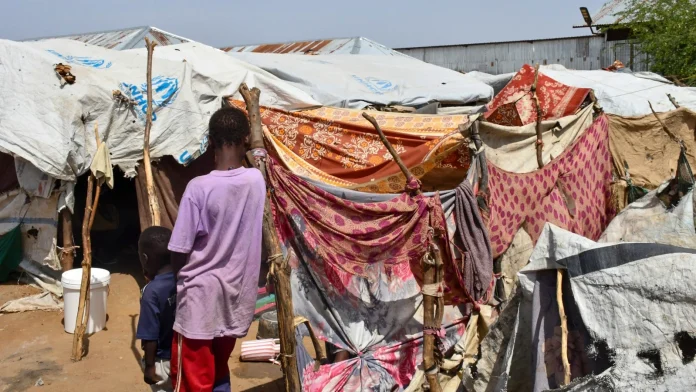
On the ground, the response is messy and raw. “My nephew went out to protest because he couldn’t afford university fees,” said Farideh, a florist near the Grand Bazaar, her hands stained with the day’s work. “I don’t know if he came home. The phone doesn’t ring. It’s like the city has been muted.”

Telecommunications have flickered and gone dark during these weeks of unrest, a blackout that complicates efforts to tally the wounded and missing. Human-rights groups say the toll is staggering; they accuse security forces of responding with deadly force. The precise scale of the bloodshed remains blurred in the shutdown of networks and the fog of conflicting claims.

Promises of economic relief — coupled with punishment

In a rare show of unified messaging, Iran’s executive, legislative and judicial leaders issued a joint statement pledging to “work around the clock” to address livelihoods and economic grievances that helped ignite the protests.

President Masoud Pezeshkian, parliamentary speaker Mohammad Bagher Ghalibaf and judiciary chief Gholamhossein Mohseni Ejei said they would meet the country’s economic “needs,” but also vowed to “decisively punish” what they characterized as terrorist acts and foreign-instigated chaos.

“We will not tolerate acts that aim to destabilize our nation,” one government source told an Iranian news agency. “But we also understand people’s pain. These issues must be resolved.” Whether that balance can be struck in practice remains unclear.

What sparked this winter of discontent?

These demonstrations did not emerge from nowhere. Years of rising prices, unemployment among young people, and the squeeze of international sanctions have left many Iranians juggling livelihoods and dignity. A generation that once imagined a different future now finds itself counting banknotes and rationing hope.

“It’s not about politics for many of us,” said Saeed, a 27-year-old rideshare driver. “It’s about whether I can pay rent next month. When that becomes constant, people step out. They have nothing left to lose.”

Execution as a specter: UN voices alarm

The scenes in Tehran arrive against a sobering backdrop on the global stage: the United Nations human-rights office has warned that some states are using the death penalty in ways that amount to state intimidation. Volker Türk, the UN High Commissioner for Human Rights, expressed deep concern over a recent spike in executions in several countries.

According to the UN rights office, the Islamic Republic reportedly executed roughly 1,500 people in the latest reporting year, and a large share of these executions were linked to drug-related offenses. The office said this trend dovetails with a broader, troubling rise in capital punishment in a handful of countries even as the global arc bends toward abolition.

  • UN figures highlighted that nearly half of reported executions in Iran were connected to drug-related charges.
  • The rights office also flagged patterns of secrecy around executions in multiple states, complicating efforts to verify figures.
  • Similar trends were noted in several countries where drug offenses constituted a disproportionate share of death sentences.

“The scale and pace of executions suggest a systematic use of capital punishment as a tool of state intimidation,” Mr. Türk said in a statement that reverberated through rights networks and diplomatic backchannels.

Why this matters beyond borders

This is not simply an internal security matter. The tension between state survival and popular grievance echoes across the globe. Governments facing socio-economic upheaval have a narrow set of choices: listen and reform, or clamp down and risk escalating cycles of violence.

Consider the information blackout. In the modern era, cutting off internet and mobile access is a blunt instrument to control narratives. But it also leaves families blind and journalists without a path to verify claims — a vacuum that breeds rumor, grief and rage in equal measure.

Faces behind the headlines

Walk a few blocks from the glass towers to a neighborhood where tea steams in tiny glasses and old men still play backgammon at the corner café. These are not the actors in official broadcasts. They are neighbours whose lives have been interrupted.

“They told us to be calm,” says Hassan, a retired teacher. “But how do you be calm when your granddaughter cannot find work? When the price of bread goes up and the pensions do not?” His eyes are steady. “We need more than words from Tehran’s podiums.”

In an alley, a young woman named Laleh ties her hair back and laughs hollowly. “People said the protests were hijacked by outsiders,” she told me. “But our demands were not written by foreign hands. They were written by empty cupboards.”

Questions for the reader

When a state frames dissent as foreign manipulation, what does that do to the space for legitimate grievance? When governments answer economic pain with threats of capital punishment, what does that say about the social contract?

And for those of us watching from afar: when do we speak up, and how do we listen without simplifying a profound and painful complexity into a single narrative?

What comes next—and why it matters

The immediate future is fraught. The ultimatum invites people to choose between surrender and flight; state promises to address living conditions must be weighed against an arsenal of punitive tools. At its heart, this story is about authority and its limits — about whether a government can rebuild trust after a rupture that has burned buildings and, possibly, lives.

There are no tidy endings here. Political change rarely arrives cleanly. It arrives in the careful weaving of new bargains, in reparations, in reforms that are felt in the day-to-day — in wages, schools, and the ability to speak without fear.

For now, Tehran smolders under a silence that is not peace. Families wait. Journalists wait. The world watches — and wonders whether mercy, reform, and justice can outlast the rhetoric of repression.

What would you do if faced with the choice between silence and stepping into danger for the chance of a better life? How do societies hold both the weary and the defiant without breaking? These are not questions with easy answers. But they are questions that matter.

Isimada Dhaqan Beelaha Daarood Oo go’aano culus soo saaray

Jan 20(Jowhar)-Bayaan ay soo saareen Isimada Dhaqan Beelaha Daarood oo uu ugu horeeyo Boqorka Beelaha Daarood Boqor Burhaan Boqor Muuse ayaa lagu diiday aqoonsiga Somaliland ee Israel lagu taageeray in Israel dalka laga cayriyo.

Trump warns of 200% tariff on French wines and Champagne

Trump threatens 200% tariff on French wines, champagne
Donald Trump said he thought that EU leaders would not 'push back too much' on his attempts to buy Greenland

When Champagne Meets Geopolitics: Bottles, Boards, and the Price of Provocation

On a cold morning in the Marne valley, the sunlight caught the shoulders of stacked Champagne bottles like rows of tiny sunlit domes. In the cellar of a family-run house outside Épernay, the vintner poured a sample and sighed: “We age slowly, not to be used as bargaining chips.”

This humble scene — a quiet ritual older than the country that now surrounds it — suddenly found itself in the crosshairs of high-stakes diplomacy. In a single, explosive turn of phrase, a US leader suggested slapping a 200% tariff on French wines and Champagne to spur a reluctant president into joining an unconventional “Board of Peace.” The notion is as theatrical as it sounds: bottles as leverage, bubbles as bargaining power.

From Cellar to Cabinet: The Unlikely Weaponization of Wine

Tariffs are supposed to live in the world of economics: technical, complex, and dull. But a threat to tax French wine at two times its value turned trade policy into theater, reminding the world how entwined culture and commerce really are.

“It’s absurd,” said a winemaker who asked not to be named. “My harvest feeds 15 families here. It’s not an instrument for diplomacy. If they go ahead, restaurants will stop ordering our bottles, and small producers will be crushed.”

The proposed levy — extraordinary by any measure — would do more than squeeze importers. It would strike at a product that is practically shorthand for French identity abroad: Champagne. It would hit restaurateurs, sommeliers, and consumers who associate certain moments in life with that effervescent pop.

Trade experts point out the simple arithmetic: a tariff of 200% on a bottle sold at import price would make French wine prohibitively expensive in many markets, likely collapsing sales almost overnight. For small maisons and family estates already operating on thin margins, the shock could be fatal.

Enter the “Board of Peace”: An Odd Invitation

The tariff threat arrives alongside another unusual diplomatic gambit: an invitation to world leaders to join a newly proposed “Board of Peace,” billed as a group that would tackle global conflicts. The draft charter seen by reporters reportedly asks members to contribute substantial funds — a billion dollars in cash if a country wishes to remain a member beyond three years.

It is, in many ways, a novel idea — private actors and coalitions have influenced diplomacy before — but critics warn it could undermine established institutions, notably the United Nations. “You can’t replace decades of multilateral frameworks with a club where the price of entry is essentially wealth,” said an international relations analyst in Brussels.

The invitation list, per reports, was broad — and surprisingly inclusive. Even Russia was named as a potential member. “He’s been invited,” one US official said of Vladimir Putin — a revelation that raised eyebrows from Tokyo to Tallinn.

Greenland: A Strategic Island, Not for Sale

If champagne wines seemed an odd bargaining chip, the fate of Greenland is the cloak-and-dagger chapter of this unfolding tale. With an area larger than India and a population of roughly 56,000, Greenland is sparsely populated but geopolitically dense: ice, minerals, shipping routes, and a Cold War legacy including the US Thule Air Base.

“This isn’t just about land. It’s about strategic control of the Arctic,” noted a Copenhagen-based security scholar. “Whoever asks to buy Greenland misunderstands modern sovereignty and underestimates the cultural ties of the Greenlandic people.”

On the ground, reactions are visceral. “He speaks of buying our home like it’s a summer cottage,” said a Greenlandic fisherman in Nuuk. “We are not a market.”

The US president’s insistence — that Denmark “cannot protect” Greenland and that negotiations might be raised at forums like Davos — has spurred unease across Europe. Over the weekend, talk of tariffs expanded to include not only France but several EU members, along with Norway and the UK, inflaming transatlantic relations.

Europe Pushes Back — Calmly, Strategically

European leaders have answered with measured firmness. An Irish official preparing for talks with senior commissioners warned of cascading consequences if such tariff threats materialize. “We are at a moment where short-term brinksmanship can turn into long-term economic pain,” the official said. “Europe needs calm heads and dialogue.”

Indeed, the EU and the US together account for an enormous slice of global trade — more than $1 trillion in goods and services flows between them annually — and disruptions could echo around the world. Even a limited set of tariffs can reverberate through supply chains, freight markets, and the hospitality industry.

European Commission officials have repeatedly emphasized that they prefer cooperation over conflict. A decade ago, diplomats negotiated mechanisms precisely to prevent unilateral escalation. Yet when politics moves faster than institutions, the safety nets can fray.

What Would This Mean, Practically?

  • French wine houses would face immediate loss of market access in the US, one of the world’s largest wine-consuming countries.
  • Restaurants and retailers that rely on French imports would see price spikes, inventory disruptions, and likely menu changes.
  • Diplomatic trust between the US and European partners could suffer, complicating cooperation on everything from climate to security.

“This is less about bottles and more about using trade as a blunt instrument for political ends,” said an economist in New York. “Once you set that precedent, the entire edifice of predictable rules that underpins global commerce is at risk.”

Beyond Tariffs: The Bigger Questions

So what do we make of this moment? It is tempting to chuckle at the image of Champagne as collateral damage in a geopolitical negotiation. But the consequences are real: livelihoods, long-standing partnerships, and the painstaking work of diplomacy could all be collateral in a transactional approach to foreign policy.

Ask yourself: should cultural goods ever be used as tools of statecraft? Do sovereign peoples and territories become negotiable when power shifts? And what happens to multilateral institutions when new, club-like forums offer a cash-for-membership route to influence?

These are not hypothetical queries. They’re immediate, practical dilemmas that affect farmers in the Marne, fishers in Greenland, and policymakers in Brussels alike.

Looking Ahead

For now, cooler heads are urging dialogue. European commissioners and finance ministers have scheduled talks; an Irish delegation will press for de-escalation; and in cellars across France, vintners wait with bated breath, corks intact.

“We’ll keep making wine,” the vintner in Épernay said, smiling ruefully as he set a bottle down. “It’s what we do. But we hope the world remembers that not everything valuable can be reduced to a price tag.”

Across oceans and ice, across dining rooms and diplomatic corridors, the episode is a reminder that global politics is not only about territory and treaties — it’s also about culture, identity, and the fragile economy of trust. In the end, perhaps the most human question is this: do we want our relationships managed like a balance sheet, or nurtured like a vineyard?

Trump oo faafiyey Sawir buuq Dhaliyey oo Khariidadda Mareykanka

Jan 20(Jowhar)-Madaxweynaha Mareykanka Donald Trump ayaa bartiisa bulshada ee Truth Social ku baahiyey sawir uu wax ka beddelay khariidadda Mareykanka, kaas oo muujinaya in dalalka Canada, Greenland, Venezuela iyo Cuba ay ka mid yihiin gobollada hoos yimaada dhulka Mareykanka.

China’s Birth Rate Hits Record Low, Intensifying Demographic Concerns

China's birth rate falls to lowest on record
Births in China fell by 1.62 million in 2025, a drop of 17% year-on-year, figures show

A Quieting Nursery: China’s Demographic Crossroads

On a gray morning in a Beijing neighborhood where the scooters have grown fewer and the playground shrinks with the seasons, a toddler’s laughter breaks the silence like an unexpected chord. Yet such sounds are becoming rarer across China—so rare, in fact, that official figures released this year read like a wake-up call for a nation that once engineered its population down and now frets about it falling.

“When I take my son to the park, sometimes we are the only family there,” said Li Mei, 32, a primary-school teacher who lives in an apartment that once housed three generations. “It feels strange—beautiful, in a way—but also like we are walking a path alone.” Her voice flattened slightly when she added, “And the care for my parents—two households—feels like a constant balancing act.”

Numbers that Refuse to Sleep

The National Bureau of Statistics reported a sharp, unsettling drop last year: just 7.92 million births, a crude birth rate of 5.63 per thousand people—the lowest since record keeping began in 1949.

At the same time China recorded 11.31 million deaths, a mortality rate of 8.04 per thousand, producing a net population decline of 3.39 million people and a population contraction of 2.41 per thousand. Births dropped by 1.62 million year-on-year—a 17% plunge that stretches the country’s population fall into a fourth consecutive year.

These are not abstract numbers. Behind them is the lived reality of an ageing society, younger people delaying or forgoing marriage, and a generation that grew up as an only child suddenly responsible for children and four grandparents—the so-called “4-2-1” family structure that has become shorthand for the social strain.

Stories from the Front Lines: Why Couples Hesitate

“We want to travel, save, maybe own a home,” said Zhang Wei, 29, who works in logistics and lives in Chengdu. “But when I think about the cost of nurseries, private tutoring for the gaokao, and the pressure at work, I think, ‘Maybe later.’ Later becomes never.”

His complaint is echoed across cities and provinces. Young people point to a constellation of disincentives: sky-high housing prices in metropolises, intense competition for education, and workplace cultures that reward presenteeism over parenting—summed up in the notorious “996” rhythm: 9 am to 9 pm, six days a week.

Unemployment among young people has also surged. In August, the jobless rate for those aged 16 to 24 reached 18.9%—a staggering figure that turns the prospect of parenthood from a joyful decision into an economic gamble.

Women, Work and the Weight of Choice

For many women, the calculus is particularly fraught. “I’m not against children,” said Sun Xia, 35, who works in tech. “But I see female colleagues sidelined after maternity leave, pay stagnating, promotions slipping away. We’re asked to choose between a career and the family—so many opt for the former.”

That choice is shaped by structural realities: insufficient childcare capacity in urban cores, cultural expectations about mothers’ caregiving roles, and the fear that having children will derail hard-won professional gains. When the state offers a subsidy, it can feel like a bandage on a deep wound.

Policy Turns and Public Pushback

Responding to a decade-long slide in fertility, Beijing has rolled out a patchwork of measures designed to nudge family formation: a nationwide childcare subsidy launched on 1 January offering roughly $500 annually per child under three, waivers for public kindergarten fees, and, controversially, the reinstatement of a 13% value-added tax on contraception, including condoms.

Officials have cast these moves as a pragmatic response to a demographic emergency. “Our policies are aimed at easing the cost burdens on families and supporting balanced population development,” one official told reporters, preferring the anonymity that often accompanies sensitive discourses.

But the response from young people has been cool. “A few hundred dollars helps fill a gas tank, not a daycare slot,” a young mother in Guangzhou said. “We need more than allowances. We need paid parental leave, flexible hours, and jobs that don’t eat your life.”

Is Money Enough?

The sums involved are meaningful but modest against the backdrop of rising living costs. Consider this: childcare subsidies of about $500 per child alleviate day-to-day expenses but do little to alter structural disincentives—like housing markets that favor single-income households, or workplace norms that penalize caregiving.

And while China’s economy grew an official 5% in 2025, that headline masks a weaker domestic demand; exports buoyed growth as household consumption lagged. The World Bank placed China among the top 10 countries with the lowest birth rates in 2023, just after Japan, underscoring that this is not an isolated crisis but part of a broader shift in how modern societies reproduce themselves.

Beyond Borders: The Global Echo of an Ageing Giant

China’s demographic turn matters far beyond its borders. A shrinking labor force can dampen global demand, reshape international supply chains, and influence migration patterns. The United Nations has even suggested that China’s population might fall from around 1.4 billion today to roughly 800 million by 2100—an unfathomable recalibration of human geography if it were to come to pass.

How will an ageing China affect global pensions, capital flows, and the geopolitics of care? What happens to the small towns and industrial regions that once fed booming coastal cities? These are not academic questions but strategic ones, carrying implications for economies and families worldwide.

What Might Help: A Broader Imagination

Policymakers can—and likely will—do more. But to move the needle, measures need to be systemic rather than symbolic. Experts recommend a mix of investments and cultural change:

  • Expanded, affordable childcare across urban and rural areas so parents can return to work with confidence;
  • Legal protections and incentives for flexible work and paid parental leave that prevent career penalties for caregivers;
  • Housing policies that make family formation feasible for middle-income households;
  • Efforts to normalize men’s participation in caregiving to rebalance domestic labor and career opportunities for women.

“Demography is destiny, but destiny is shaped by policy,” said a demographer at a Beijing university. “If China wants to turn this around, it has to think beyond one-off cash transfers. It needs institutions—schools, workplaces, neighborhoods—that make raising children a shared civic project.”

Lives Between the Lines

Back in the park, Li Mei watches her son chase pigeons. She thinks about the future not in grand national terms, but in smaller, sharper ways: the neighborhood doctor, the nearest kindergarten, the chance her child will have cousins at all.

“We are not just numbers,” she said. “We are families who want meaning, joy, and security. If the country wants more babies, it must make it easier to be a parent without losing yourself.”

So ask yourself: what would it take where you live to make parenthood feel like an invitation rather than a risk? How do we build societies where raising children is supported rather than subsidized only in name? China’s numbers are dramatic, but the questions they surface are universal—and they demand imagination, policy courage, and a willingness to change everyday structures so that future laughter fills the parks once again.

Irish students collaborate on plans for post-war Kharkiv

Irish students unite to plan Kharkiv’s post-war recovery

0
A Room of Drafts, a Link to Lviv, and a City Waiting to Be Reimagined On a gray Warsaw morning, the workshop room at the...
EU accuses TikTok of creating 'addictive design'

EU regulators say TikTok designed its app to be addictive

0
Night Scrolls and Midnight Feeds: Europe Takes Aim at TikTok’s “Addictive Design” It is 2 a.m. in a quiet Cork suburb when a mother hears...
Trump says he plans to speak to Iran amid rising tensions

White House pulls racist Trump post, attributes it to staff error

0
A Clip, a Catcall, and an Old Wound: When a Presidential Post Becomes a Mirror On a humid morning, as the global scroll woke to...
Japan to restart world's biggest nuclear plant

Japan plans restart of the world’s largest nuclear power plant

0
Kashiwazaki-Kariwa’s Second Act: Japan’s Giant Reactor Prepares to Wake The wind off the Sea of Japan carries salt and a stubborn cold that bites through...
Iran and US begin crucial nuclear talks in Oman

Iran and U.S. Kick Off Pivotal Nuclear Talks in Oman

0
In Muscat’s Quiet Heat, the World Holds Its Breath Muscat in February wears a calm that can be misleading. The sun pours gold over whitewashed...