Monday, December 22, 2025
Home Blog Page 52

U.S. Grants Hungary Temporary Exemption From Russian Oil Sanctions

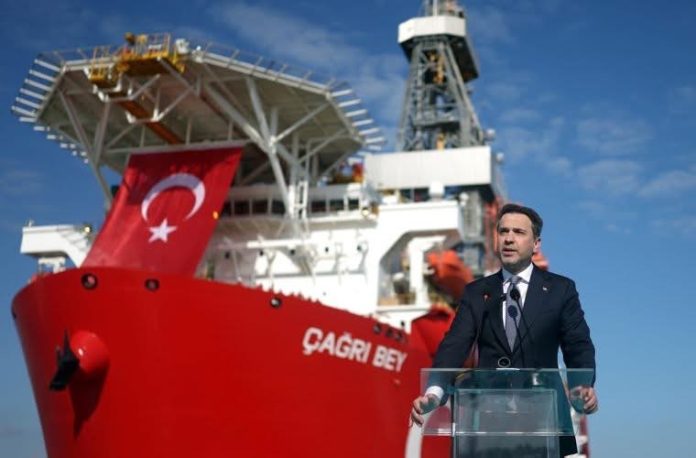
US gives Hungary exemption from Russian oil sanctions
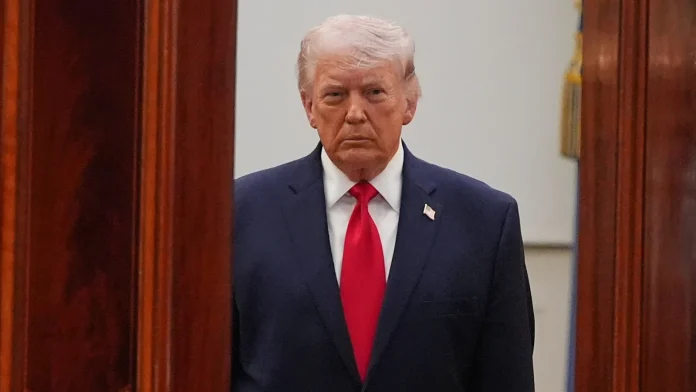
Hungarian Prime Minister Viktor Orbán met the US President Donald Trump in the White House

A Year’s Reprieve — and a Nation Caught Between Pipelines and Principles

On a brisk morning in Washington, two men who have shaped headlines across continents leaned over a table and made a deal that rippled all the way to the cobbled streets of Budapest. The United States quietly granted Hungary a one-year exemption from sanctions tied to purchases of Russian oil and gas — a pause that, for many Hungarians, feels less like diplomacy and more like a lifeline.

“We had to spell out what would happen if our furnaces went cold,” Viktor Orbán reportedly told President Donald Trump during their meeting. The Hungarian prime minister, who has become a familiar figure in the high-stakes choreography of European politics, argued that Hungary’s energy reality cannot be cured by declarations alone. “For ordinary people, these are not political abstractions,” he added, according to aides present.

Why the exemption matters

The exemption stems from a broader US move last month to sanction Russian oil giants Lukoil and Rosneft as part of pressure on Moscow over the war in Ukraine — and with it, a new policy that threatened penalties for entities that continued to buy from those companies. Hungary’s appeal to Washington was straightforward: it relies on Russian energy in ways that most Western European countries do not.

International Monetary Fund data show Hungary imported 74% of its gas and 86% of its oil from Russia in 2024. Those numbers aren’t academic; they are the pulse points of factories, hospitals, public transport and home heating. An IMF assessment warned that an EU-wide cutoff of Russian natural gas could shave more than 4% off Hungary’s GDP through lost industrial output — a staggering figure for a nation of roughly 9.6 million people.

“Imagine the baker in Kecskemét who wakes up at 3 a.m.,” said Eszter Kovács, a manager at a mid-sized food processing plant south of Budapest. “If energy gets more expensive or turns off, the dough won’t rise. It’s not about geopolitics in the sense most talk about — it’s about ovens, hospitals, and keeping the tram moving in winter.”

Money, LNG and the apparent trade

As part of the reprieve, the White House administration said Hungary committed to buying US liquefied natural gas (LNG) under contracts valued at about $600 million. That pact was presented as a stepping stone toward diversified supplies — and as a diplomatic currency for Washington to show it is reshaping energy relationships through market deals rather than simply diktat.

“Energy diplomacy looks increasingly like commodity diplomacy,” said Dana Rowland, an analyst of transatlantic energy ties. “What we’re seeing is the United States using its export capacity not just to profit, but to rewire alliances. The $600 million in LNG is meaningful, but it’s also a fraction of what Hungary would need to displace its Russian dependence entirely.”

Local voices: fear, pragmatism, and the scent of goulash

Walk through a Budapest market and you’ll smell paprika and simmering goulash. People there speak about politics like they speak about weather: inevitably personal, sometimes resigned, occasionally defiant. A tram conductor, János, put it bluntly: “We don’t have a port. We can’t just flip a switch and start offloading tankers. We have pipelines. That’s history and geography.”

Orbán himself leaned into that geography in private remarks to President Trump, noting Hungary’s lack of sea access and ports as a physical barrier to shifting quickly to different suppliers. “You can’t reroute the Danube to the Black Sea,” joked one diplomatic aide, with a rueful shrug.

Yet the decision to seek an exemption also sharpens divisions with Brussels. Hungary has resisted EU plans to phase out Russian gas and LNG imports by the end of 2027, and in recent years has accumulated friction with fellow EU members over migration policy and rule-of-law issues. The EU’s top court fined Hungary €200 million last year for border measures — a daily €1 million penalty remains in force until the country changes course.

A balancing act on more than energy

“This is about more than tankers and pipelines,” said Marta DeAngelis, a Brussels-based European policy expert. “It’s a test of European cohesion. Can an EU that preaches solidarity and shared burdens tolerate exceptions when member states cite vital national interests? The answer will shape the bloc’s ability to act in future crises.”

Hungary’s economy complicates the decision: S&P Global has flagged the country as one of Europe’s most energy-intensive economies, with refineries tailored to Russian Urals crude. While supplies from Azerbaijan and Qatar could replace some Russian gas, those alternatives are neither immediate nor cost-free. A sudden switch would expose Hungary to fiscal and external vulnerabilities.

The wider geopolitical echo

The meeting at the White House was never just about a single pipeline; it was the latest move in a chess game where energy, alliances, and public opinion are all pieces to be maneuvered. President Trump used the moment to press a broader point about Europe’s long-standing ties to Russian energy, asking aloud, “What’s that all about?” — a rhetorical question that landed like a challenge in many European capitals.

Trump also publicly praised Orbán’s immigration stance and even signaled support for his political prospects. “He’s been right on immigration,” the president said, adding that Hungary is being “led properly,” and that Orbán would be “very successful in his upcoming election.” The Hungarian prime minister, who will face voters in 2026, is a politician practiced at turning foreign praise into domestic momentum.

When the conversation shifted back to the war in Ukraine, the mood grew sober. Trump has said he planned to meet Russia’s Vladimir Putin in Budapest last month, but that plan stalled after Moscow rejected a ceasefire proposal. “They just don’t want to stop yet,” Trump observed. Orbán offered a sliver of hope: “A miracle can happen.”

What does this mean for Europe (and for you)?

For citizens across the continent, the question is nails-raw simple: will policies prioritize national survival or collective pressure? And for readers far from Central Europe, there are broader lessons: energy security and geopolitical strategy are increasingly entwined; dependencies carved out in one era can become vulnerabilities in the next.

Is it fair for one country to be carved out of a continent-wide sanction regime because of geography and industrial design? Who bears the cost of transition — the state, the consumer, or the market?

  • Hungary’s 2024 energy dependence: 74% of gas and 86% of oil from Russia (IMF).
  • Estimated LNG purchase commitment from the US: ~$600 million.
  • EU legal penalties: €200 million fine plus €1 million per day until compliance.
  • EU planned phase-out of Russian gas and LNG by end of 2027 (European Commission proposals).

Looking ahead

One year. A reprieve. A temporary patch sewn into a garment that will need mending for the long haul. Policymakers in Brussels, Budapest and Washington will watch whether that patch holds, frays, or sparks a broader rethink of energy, security and solidarity.

For Hungarians like Eszter and János, the immediate hopes are practical: keep the lights on, keep the tram warm, keep the bakery ovens working. For European leaders, the calculus is strategic: maintain pressure on Moscow without leaving members exposed to economic shock. For the rest of us, it’s a reminder of how intimately global politics can touch a kitchen table — and how fragile the ties that bind nations together can be when energy and survival are at stake.

So, what side of the ledger do you think is heavier: principle or pragmatism? And what would you do if the heat in your home depended on a pipeline laid by history? Think of that next time you turn up the thermostat.

Faransiiska oo muwaadiniintiisa ugu baaqay inay degdeg uga baxaan dalka Mali

Nov 08(Jowhar)-Dowladda Faransiiska ayaa ku baaqday in muwaadiniinteeda si degdeg ah uga baxaan dalka Mali, kadib markii ay soo ifbaxday cabsi xooggan oo laga qabo in dalkaasi ay gacanta ku dhigaan kooxo xiriir la leh Al-Qaacida.

Hamas Announces It Will Transfer Another Gaza Hostage’s Remains

Hamas says to hand over another Gaza hostage body
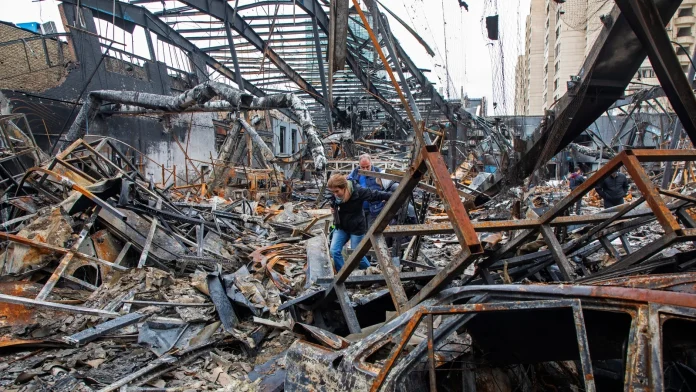
The rubble of destroyed buildings in Khan Younis, Gaza

In Khan Younis, a Quiet Handover and the Heavy Work of Memory

Night fell over Khan Younis like a soft, exhausted blanket — the call to prayer threaded through streets that no longer felt like streets. In a statement on Telegram late one evening, the armed wing of Hamas announced it had recovered a body found beneath the rubble and would hand it over under the terms of the fragile truce. The announcement landed like a sudden, small thing in a city that has learned to measure grief in fragments.

“We found him under a collapsed apartment block,” said a volunteer who came to the scene, his voice steady but raw. “There is a ritual to bringing someone home—even like this. We wrapped the body carefully, said a prayer, and waited for the Red Cross to arrive.” He asked that his name not be used. Around him, neighbors stood in the half-light, clutching thermoses of mint tea, watching the slow choreography of recovery.

The handover underscores how personal loss and geopolitics have become braided together in Gaza. When the ceasefire that took effect on 10 October began, Hamas was holding 48 hostages — 20 alive and 28 deceased. So far, militants and mediators have returned 22 of the bodies: 19 identified as Israeli, one Thai national, one Nepali and one Tanzanian. The surviving captives have been released. Still, for families waiting for closure, every recovered body is a small, agonizing relief.

Why returning bodies has been so fraught

Across phone lines and through intermediaries, the stories circle back to rubble — to the way entire houses, neighborhoods and burial grounds were buried beneath the shelling. “We are searching in places where bodies are under two or three floors of concrete,” a rescue worker said. “We need heavy equipment and forensic teams. We need time.” Palestinian groups have repeatedly asked mediators and the International Committee of the Red Cross for equipment and personnel to carry out careful recoveries, saying the process cannot be rushed without risking mistakes.

Israel has accused Hamas of delaying the return of remains. Hamas counters that much of the difficulty is practical — bodies are beneath collapsed buildings, under makeshift field burials, sometimes unrecognizable — and that they are dependent on neutral actors and machinery to do the work. The standoff over remains is a grim reminder that even after ceasefires, the physical aftermath of combat stretches on for months, years, and sometimes generations.

Rubble, Remnants, and the Landscape of Loss

Flyover images of neighborhoods like Tel al-Hawa and Sheikh Radwan look like a jigsaw puzzle whose pieces have been ground down to powder. In Tel al-Hawa, where palm trees once threw loitering shade over cafes, rows of buildings present only facades now, like teeth knocked out of a jaw. Children — when they are seen playing among the stones — do so with an unnatural solemnity, as if they understand the sanctity of what lies beneath.

“My grandmother used to sit on that balcony and dry tomatoes on a tray,” said Rana, a 28-year-old schoolteacher from Gaza City, pointing to a pile of twisted metal where a balcony had been. “You can smell tomatoes even in the dust. When I close my eyes I can see her.” Her voice is at once intimate and public, the private loss folded into the public ruin.

A global hand to steady the wreckage? Negotiations at the UN

While families in Gaza keep vigil, diplomats in New York have moved to translate a fragile ceasefire into a blueprint for what comes next. The United States has circulated a draft resolution at the United Nations Security Council that would authorize a two-year mandate for a transitional governance board and an international stabilisation force — a multinational security presence to shore up fragile peace and oversee demilitarisation.

The draft text envisions an International Stabilization Force (ISF) with broad authority — including “the use of all necessary measures” to protect civilians and humanitarian operations, secure border zones with Israel and Egypt, and assist a newly trained and vetted Palestinian police service. It would also empower the ISF to prevent the rebuilding of military infrastructure and to work toward the “permanent decommissioning of weapons from non-state armed groups.”

Sources close to the talks put the likely size of the ISF at roughly 20,000 troops. Washington has said it will not send its own soldiers into Gaza, but it has been in talks with Indonesia, the United Arab Emirates, Egypt, Qatar, Turkey and Azerbaijan about potential contributions. Several of those countries reportedly prefer the cover of a UN mandate for their deployments; the Security Council requires at least nine votes in favor and no veto from any of the five permanent members — Russia, China, France, Britain or the United States.

“This is not just a technical vote,” said a UN diplomat who asked to remain unnamed. “It is a test of whether the Security Council can move from statements into action. Time is short. People on the ground need stability now, not after months of foot-dragging.” The diplomat sighed. “The challenge is political: who will serve, at what risk, and under whose rules of engagement?”

What “demilitarisation” would actually mean

For planners, demilitarising Gaza is as much a logistical feat as a political one. The draft resolution suggests demolition of offensive military infrastructure, persistent weapons decommissioning and vetting a national police force — a process that demands forensic expertise, legal frameworks and long-term investment in civil institutions.

“Demilitarisation on paper is one thing. Making it durable is another,” said an independent security analyst based in Beirut. “You can collect weapons, but unless you address the political drivers — poverty, governance gaps, cycles of retaliation — disarmament risks being superficial.” He cautioned that successful interventions in other conflicts have hinged on economic rebuilding, social reconciliation and inclusive governance, not only on the size of the occupying force.

Local fears, international calculations

On the ground, opinions diverge. Some Palestinians in Gaza welcomed the idea of international troops as a potential shield against renewed violence. “If someone can keep the fighters apart and get ambulances through, we will take it,” said Omar, a taxi driver who lost his sister in the fighting. Others fear foreign boots on the ground as an affront to sovereignty, or are suspicious of the motives of potential troop contributors.

Israel, too, has conditions. Jerusalem reportedly rejects the idea of Turkish forces in Gaza, and any international mission will have to negotiate red lines with Israeli security officials if it is to patrol borders or dismantle militant capabilities. Hamas has not accepted demilitarisation in the past — and its agreement now would mark a sea change.

  • Hostage figures at ceasefire start: 48 (20 alive, 28 deceased)
  • Bodies returned so far: 22 (19 Israeli, 1 Thai, 1 Nepali, 1 Tanzanian)
  • Proposed size of International Stabilization Force: ~20,000 troops
  • UN Security Council adoption threshold: at least 9 votes, no veto from permanent members

Beyond the headlines: what this moment asks of us

There is a particular human economy to waiting. Families exhale when a body is returned; they tremble when it is delayed. What will peace look like when it must be built out of the bones of shattered neighborhoods and the lives of those who returned? Can an international force keep the peace without becoming a permanent presence, and who decides when it goes?

As this fragile moment unfolds, ask yourself: when a city has been hollowed out, what does the job of rebuilding require — security, yes, but also memory, justice, food, schools, and the slow work of reconnection? The diplomats in New York are negotiating paragraphs. In Khan Younis, people are negotiating memory and mourning. Both processes matter.

One volunteer folded a small blanket onto a stretcher and said, with surprising steadiness: “We put people to sleep the way our parents taught us. That is how we honor them. The rest is for the politicians to invent.” Whether politicians will listen, and whether the world will provide the resources and resolve to match the language of peace with the mechanics of healing, remains the question that will shape this territory for years to come.

Elon Musk Sets Bold Goal: Become the World’s First Trillionaire

The first trillionaire? New goal for Elon Musk
Elon Musk could receive Tesla stock worth around one trillion dollars if he hits certain performance targets (File photo)

A Vote in Austin, a Billionaire’s Gambit — and the Future the World Is Betting On

On a sunbaked spring morning in Austin, Texas, a crowd gathered in an auditorium that smelled faintly of coffee and new leather car seats. They had come to vote, to cheer, to jeer, and to decide whether one man’s vision would be paid for — in stock, in faith, in the promise of a future most of us have only glimpsed in our phones.

When the tall screens finally flashed the numbers, more than three quarters of those voting had approved a compensation plan that, if its loftiest goals are met, would bestow upon Elon Musk roughly $1 trillion in newly issued Tesla shares — about €865 billion. The headline feels almost mythic: the world’s richest man, on a path to becoming potentially the first trillionaire in recorded history. But the story behind the digits is messy, human, and riddled with questions about leadership, risk and the road we’re all hurtling down together.

The terms of the wager

The package is not a simple cheque. It is a gauntlet. To unlock the full bounty, Mr. Musk must meet a sweeping set of operational and market milestones over the next decade. They include ramping Tesla’s market valuation to nearly six times its present level and delivering 20 million electric vehicles in ten years — a figure that would more than double the company’s lifetime vehicle output to date. He must also field one million of the humanoid robots he has often hyped — his so-called “robot army” — from a current base of zero.

Shareholders were told the plan contains intermediate tranches: partial rewards that vest if certain thresholds are passed, meaning Mr. Musk could add billions to his net worth as he crosses each milestone, even without reaching the full trillion mark.

Voices from the room — and beyond

“There’s a sense of reinvention in the air,” said Maria Delgado, a long-time Tesla shareholder who travelled from San Antonio. “I’ve seen impossible made possible before. I want someone steering the ship who thinks like an inventor, not an accountant.”

Not everyone shared her optimism. “He already has hundreds of billions tied up in this company,” said Samir Patel, a retired teacher and small investor. “To suggest Tesla can’t survive without paying a trillion feels more like mythology than governance.”

Institutional opposition was loud and organized. CalPERS, America’s largest public pension fund, and Norway’s sovereign wealth fund publicly voiced their objections. Two influential proxy advisers — Institutional Shareholder Services (ISS) and Glass Lewis — urged investors to reject the plan, with ISS going so far as to call out the package’s “excessive” nature.

“This is not about whether Mr. Musk is brilliant,” said Anne Foster, a corporate governance expert. “It’s about checks and balances. When compensation is so large and conditions are so ambitious, you have to ask whether the board is truly independent and whether long-term shareholders’ interests are being protected.”

Why the vote matters beyond a billionaire’s balance sheet

The Musk vote is a prism, refracting a host of modern anxieties. At its center sits a tension between awe and accountability: the desire for visionary leadership to solve grand challenges and the fear that concentration of power and wealth stifles democracy and responsible corporate stewardship.

Supporters argue that tough-to-reach incentives are exactly what a company needs when it aims to become a global AI and robotics leader. “This AI chapter needs someone to stitch together software, hardware, energy, and transport,” said Dan Ives, an analyst at Wedbush Securities. “If anyone can do it, Musk has a track record of doing the improbable.”

Detractors paint a different picture: a leader increasingly distracted by politics, social media controversies and high-stakes brinkmanship, whose stewardship has coincided with declining sales in key markets. European data presented to shareholders showed a steep fall in sales in some countries — Germany’s market, for example, reportedly plunged about 50% in a recent month — underscoring how competitive and volatile the auto market has become.

Numbers that anchor the spectacle

Even stripped of hyperbole, the figures are staggering. Forbes estimates Mr. Musk’s personal fortune at roughly $493 billion. Historically, John D. Rockefeller’s peak wealth, adjusted to today’s dollars, is the benchmark — about $630 billion, according to Guinness World Records. The Musk compensation plan, if fully realized, would eclipse both.

Yet the mechanics of unlocking the wealth are brutally difficult: selling 20 million cars in a decade would require a massive global supply chain, new factories, and sustained consumer demand — even as legacy automakers and nimble startups flood the market with more affordable EVs. Building and commercializing humanoid robots at scale adds another layer of technological and regulatory uncertainty.

Local color: Texas, Tesla, and the theatre of commerce

Austin, with its barbecue joints, live music and tech startups, felt like a fitting stage. Outside the meeting hall a street vendor sold tacos and folks swapped stories about how their first Tesla changed their commute. Inside, a Tesla engineer joked about missing the office pinging noise now that software teams are remote. The scene was part scientist’s symposium, part pop-concert frenzy — and part shareholder’s nightmare.

“You could smell the tension,” said Theo Nguyen, a local journalist. “People were simultaneously proud and uneasy — they wanted to believe in a heroic narrative, but there was also a sense of ‘what are we actually approving here?’”

What this tells us about power, progress and possibility

This vote forces a broader question: what do we want from our companies in an age of rapid technological change? Are we comfortable betting society’s future — jobs, privacy, transportation, even the nascent relationship between humans and machines — on a single figure, however brilliant?

There are also practical considerations: executive incentives have ballooned in recent decades, often outpacing wages for rank-and-file workers. Critics argue such packages exacerbate inequality and misalign corporate priorities. Proponents counter that game-changing innovation sometimes demands outsized rewards to attract and retain the rare talents who can cross disciplinary chasms.

So where does that leave the rest of us? If Mr. Musk delivers even part of his promise — more electric vehicles on the road, scaled autonomous systems, or useful humanoid robots — the environmental and economic consequences could be profound. If he doesn’t, the spectacle will remain a cautionary tale about hubris, governance failure, and the mythology of the infallible founder.

What are we willing to underwrite?

As readers, investors, employees and citizens, we should ask ourselves: who benefits, and who bears the risk? Are we comfortable conflating celebrity with stewardship? And as technology reshapes labor and leisure, are we prepared with social safety nets and regulatory guardrails?

The answer matters. Because the stakes are not just the balance sheet of one man or one company. They are the climate trajectory of our planet, the nature of work in our towns and cities, and the architecture of power in our democracies.

In Austin, when the gavel fell, the majority said yes. The future, as ever, remains to be built — and debated — by all of us.

EU tightens visa restrictions for Russian nationals amid Ukraine conflict

EU restricts visas for Russian nationals over Ukraine war
Russia nationals will have to apply for a new visa each time they plan to travel to the EU

When the Schengen stamp no longer guarantees return

On a windy morning in Kyiv, a wreath leans against a makeshift memorial, names handwritten on folded paper, a child’s drawing tucked behind a bullet-riddled plaque. Nearby, volunteers pass hot tea to soldiers with bandaged hands. The scene is intimate, raw and stubbornly human—yet it now sits inside a wider, colder story about borders, trust and the changing rules of travel in Europe.

Brussels has quietly, then decisively, redrawn one more line. The European Union announced it will largely end the practice of issuing multi-entry visas to Russian citizens. In plain terms: a Russian tourist, student or businessperson will generally need a fresh visa each time they plan to cross into the EU. Exceptions will be made—for example, for independent journalists and human-rights defenders—but for most people the old rhythm of stamping a passport and enjoying repeated trips through Schengen is being interrupted.

“Starting a war and expecting to move freely in Europe is hard to justify,” EU foreign affairs chief Kaja Kallas wrote on X, underscoring the political logic behind the move.

Why now? The uneasy language of hybrid threats

The decision didn’t come from a vacuum. Officials in Brussels speak of a rise in what they call “hybrid warfare”: a messy mix of cyberattacks, disinformation, airspace incursions and unexplained drone sightings that have rattled capitals from the Baltics to the Balkans. European security agencies describe a landscape in which physical borders are no longer the sole lines of defense.

“We’ve seen incidents that are hard to explain away as accidents,” said an EU diplomat who asked not to be named. “When you combine that with the larger geopolitical picture, it alters how we view who should get open access to the bloc.”

Numbers help translate anxiety into policy. Before Russia’s full-scale invasion of Ukraine in 2022, EU countries issued over four million visas to Russian nationals. By 2023 that figure had plunged to roughly 500,000. Yet diplomats say approvals were starting to creep back upward this year—precisely the trend the new rules aim to arrest.

Who will feel the pinch?

The immediate impacts are not just statistical. Tour operators in Barcelona and small B&B owners in Florence have long relied on Russian visitors during peak seasons. France, Spain and Italy—tourist magnets—were among the countries issuing most of the visas that remain.

“We’re seeing bookings canceled, and people asking whether their grandmother will be able to come for New Year,” said Luis Martín, who runs a family hostel in Barcelona’s Gothic Quarter. “It’s not only about numbers. These are relationships, memories, people who love our cities. The new rules will make travel more bureaucratic and more uncertain.”

In Kyiv, reactions are more mixed. “Security first,” says Anna Shevchenko, who coordinates a volunteer kitchen near the front. “We have seen what happens when security is ignored. But there are also Russians who oppose the war and who are suffering from what their government is doing. It’s complicated.”

From visas to visible defence: Europe’s longer stare

Visa policy is only the outward ripple of a deeper shift underway in European defence thinking. In interview after interview, military planners and diplomats have sketched out a Europe intent on being less dependent—operationally and industrially—on the United States while remaining a steadfast transatlantic partner.

General Seán Clancy, chair of the EU’s military committee, has argued publicly for positioning military trainers in Ukraine after hostilities wind down. The EU’s Military Assistance Mission in support of Ukraine (EUMAMUkraine) has already trained more than 80,000 Ukrainian soldiers outside the country. Clancy says hosting trainers inside Ukraine would be “optimal” to build a force that could credibly deter future aggression.

“Europe can provide a high degree of that level of training,” Gen. Clancy told reporters. “Will some of that be in Ukraine? I think that is optimal.”

The logic is twofold. First, well-trained, capable Ukrainian forces are the best immediate guarantee against renewed threats to Kyiv. Second, the exercise teaches European militaries how to sustain operations, integrate equipment and deepen interoperable capabilities—skills Brussels wants to see ready by 2030 as part of its Defence Readiness Roadmap.

Yet Clancy—former chief of staff of Ireland’s Defence Forces—was careful to underscore that the transatlantic bond remains vital. “We will still rely on U.S. systems: Patriot missiles, F-35 aircraft. That hardware has decades of service left. But we must build our own capacity too,” he said.

Local color: the human geography of security policy

In practice, these policies ripple through villages and cafés as much as through ministries. At a small mechanic’s shop on the outskirts of Lviv, a television plays footage of European diplomats while customers sip kvass. “If training remains in Europe, at least our young men get skills without being on the front line,” says Mykola, the owner. “If trainers come here later, it will be a sign that we are rebuilding and that the world trusts us.”

Across the EU, in border towns and airline counters, the new rules will mean added paperwork and discretion. For independent journalists and human-rights defenders—explicitly named in the EU announcement—there is a narrow but important exemption. Still, many NGOs say that extra layers of bureaucracy will make emergency and investigative travel harder, particularly for freelancers who operate with slim budgets.

Practical effects—who benefits, who pays

  • Security agencies gain a tighter ability to review entrants and track movement.
  • Tourism-dependent businesses face shorter booking windows and uncertainty.
  • Journalists and defenders retain access but may face proof-of-purpose requirements.

Questions that linger

As readers, as travelers, as citizens of an interconnected world, we should ask: how do we balance safety with openness? When does a policy meant to protect the majority end up penalizing those already at risk—the dissident, the vulnerable migrant, the bilingual student studying abroad?

“There are no easy answers,” says Dr. Eleni Markou, a security analyst at a European think tank. “The EU is trying to thread a needle—deterring malign activity without collapsing the channels for dialogue and dissent that can actually be stabilizing in the long run.”

The visa change is an emblem of a broader reality: Europe is learning to live with prolonged, low-intensity confrontation on its periphery. It is updating legal instruments, reallocating training missions and recalibrating alliances. And it is doing so in a political atmosphere shaped by public fatigue, political opportunism and the very human cost of conflict.

What comes next?

What happens after the ink dries on this policy will depend on both events and perceptions. If drone incidents and airspace alarms continue, further restrictions are likely. If ceasefire talks advance, Brussels may have to balance security measures with the diplomatic imperative to help ordinary people heal and move freely again.

For now, passports will feel heavier. For some travelers, a Schengen stamp will no longer be a ticket to return, but a permission that must be earned each time. For Europe, the policy is a small, bureaucratic lever in a much larger effort to recalibrate power, responsibility and trust in a post-2022 world.

And for the people gathered around that memorial in Kyiv—volunteers passing tea, a soldier reading a child’s drawing—the policy is both symbolic and practical: a reminder that war changes not only the map of front lines, but the map of everyday life. Will this make Europe safer, or simply more closed? The answer will unfold in embassies and cafes, in training grounds and courtrooms, and in the hearts of the people who have already paid the price.

Watch: Researchers uncover communal web sheltering over 110,000 spiders

Watch: Web home to more than 110,000 spiders discovered

Underneath the Border: A Vast Spider Metropolis Hums in the Dark

On a damp afternoon in 2022, a handful of spelunkers and scientists squeezed through a waist-high fissure in a cave that straddles the Greek-Albanian border. They expected the usual subterranean palette—silence, dripping calcite, an occasional bat startled into motion. What greeted them instead felt like stepping into a living cathedral: a lacework canopy stretched over an arena more than 100 square metres in size, shimmering faintly in headlamp beams.

“It was instantaneous awe,” one of the explorers later told me. “For a moment I thought fog had frozen in place. Then a small spider dropped down and I realized the fog was woven.”

The Find: A Spider Supercity

In a paper published last month, researchers described what may be the largest spider web ever recorded—a sprawling communal network that the team estimates houses around 110,000 spiders. The structure fills a wide chamber the team calls Sulfur Cave, named for the faint mineral tang in the air and the yellow-streaked rocks that catch the light.

The web is not a single species’ art project. Instead, it’s a shared city, occupied by two genetically distinct cave-dwelling spiders. Each appears to be a close cousin to surface species, but the cave populations show unique genetic signatures—evidence of long isolation and adaptation to life belowground.

“We almost never see spiders doing this,” said one of the lead authors. “Most spiders are fiercely solitary. For a colony to form on this scale is extraordinary.”

Why Here? The Abundance That Makes Sociality Possible

Biologists think the secret is food. The cave is thick with midges—tiny flies that breed in the cave’s organic pockets—and they fall into the web in relentless numbers. A plentiful, reliable food source can tip the balance for species that ordinarily compete into a cooperative arrangement: more prey means less need to fight over territory, and the benefits of shared silk and communal web upkeep outweigh the costs.

“In a cave ecosystem, energy is everything,” an ecologist on the team said. “When a pulse of insects arrives, a spider colony can capitalize on it in ways individual spiders cannot. The web becomes a communal pantry and a defensive perimeter.”

Two Species, One Home: Evolution in the Dark

Genetic analysis showed that both species living in Sulfur Cave are distinct from their surface counterparts—small, dark-clad cousins that likely colonized the cave generations ago. Over time, isolated from sunlight and the seasons above, these populations appear to have diverged enough to be considered unique cave-adapted lineages.

This pattern—surface relatives invading caves and evolving new traits—is seen in cave life around the world. Eyes may shrink, pigment fades, and behavior shifts to suit the cave’s steady climate. But the social turn in Sulfur Cave adds a surprising chapter.

“Cave life is often about extremes: scarcity, stability, isolation,” said an independent arachnologist following the work. “We know social behavior in spiders is rare; to find it emerging in such a place hints at the creative solutions life takes when pushed into niches.”

What This Tells Us About Hidden Biodiversity

Discoveries like Sulfur Cave are small jolts of humility. We live on a planet whose subterranean and understudied habitats still harbor whole ecologies invisible to most of us. Scientists estimate that a large fraction of invertebrate diversity remains undescribed—especially in caves, where species are isolated and often highly localized.

“Every cave is a world,” a team member said. “You can’t assume what you’ll find until you go in. These systems are fragile and unique; they hold lessons about evolution, cooperation, and how species respond to resource-rich and resource-poor environments.”

Local Voices and the Human Side of Discovery

Locals in the border region have long known the cave as an oddity—an unusual cold mouth in the hillside where livestock sometimes find shelter and older people recall a peculiar shimmering rock. But few expected it to be a global scientific headline.

“My grandfather used to say the cave hummed like a beehive,” said a woman who grew up in a nearby village. “We thought it was just wind. Now scientists come with lights and machines and tell us there are tens of thousands of spiders. It feels like the place has been hiding a secret.”

Broader Implications: Conservation, Curiosity, and Caution

As word spreads, the cave raises thorny questions: should it be opened to tourism? How to protect delicate cave communities from foot traffic, pollution, or well-meaning collectors? And what ethical responsibilities do researchers carry when revealing sensitive ecosystems to a curious world?

“Caves are both fragile and finite,” the conservation coordinator for the research team warned. “Even a single flashlight-guided visit can introduce fungi, bacteria, and oils that alter cave microclimates. This is not just about protecting spiders; it’s about safeguarding an entire subterranean network of life.”

  • Scale: The web spans more than 100 square metres—larger than many studio apartments and roughly the size of a tennis court.
  • Population: Researchers estimate roughly 110,000 spiders inhabit the communal web.
  • Discovery timeline: Initially found in 2022; described in a scientific paper published last month.
  • Ecological note: Two genetically distinct cave-adapted spider lineages share the structure, feeding primarily on abundant midges.

Looking Up from Below: Questions for the Reader

What would you feel stepping into a cavern threaded with a hundred thousand spiders? Curiosity? Revulsion? Wonder? We live in a moment when the most ordinary places—our backyards, city parks, and the hollows beneath hills—still surprise us.

In a world increasingly lit by satellites and scanners, the cave reminds us of the deep value of boots-on-rock exploration, patient genetic analysis, and local knowledge. It also pushes us to ask how we steward the living mysteries we uncover: do we broadcast them for global acclaim, or protect them with quiet discretion?

Final Threads

Walking back out into daylight, the research team carried samples, data logs, and the memory of a cathedral woven by tiny architects. They left the web largely intact, a decision as much ethical as scientific: some stories are best observed without being plundered.

“We’ve been given a glimpse of another world,” said one scientist. “Our job now is to learn, to document, and to ensure Sulfur Cave remains a refuge—for spiders, for midges, and for the questions that keep us going into the dark.”

What hidden ecosystems sit just beneath your feet? How will we balance curiosity and care as exploration continues? The Sulfur Cave web is not just a record-setting oddity; it’s a reminder that nature’s most ambitious constructions are sometimes stitched in the quietest places.

Several sickened after suspicious package opened at US military base

Several ill after 'suspicious' package opened at US base
Joint Base Andrews confirmed in a statement that parts of the Maryland site were evacuated after the 'suspicious' package was opened (File image)

Smoke, Sirens and A Tremor Near the Capital: Inside the Joint Base Andrews Alarm

On an overcast afternoon not far from the glass-and-concrete arteries of Washington, D.C., an ordinary parcel turned a quiet corner of Maryland into a place of urgent scrutiny and hushed questions.

At Joint Base Andrews — the airfield with a reputation as the gateway for the nation’s most sensitive flights — parts of the installation were evacuated after personnel opened what officials called a “suspicious” package. First responders poured in, buildings went silent, and for a few anxious hours the routines of a base that ferries presidents, diplomats and top officials gave way to a singular, unsettling focus: what was inside?

The package, the response and the initial findings

“As a precaution, the building and the connecting building were evacuated,” said Capt. Maria Alvarez, a base spokesperson who described the swift mobilization of Joint Base Andrews’ emergency teams. “Our first responders assessed the scene and determined there were no immediate threats. The Office of Special Investigations is now handling the inquiry.”

Internal accounts reported to news outlets said several people experienced symptoms after the package was opened — nausea and lightheadedness — and received medical attention before being released. “They were treated on-site and transported if necessary,” a military statement relayed by media added. “There is no evidence at this time of a widespread hazard.”

Yet details trickled out with a worrisome specificity. Unnamed sources cited by broadcasters described an “unknown” white powder found within the parcel alongside what was characterized as political propaganda. Analysts in hazmat suits collected samples; gloves and evidence bags traced a narrative that mixed potential public-health concern with political signaling.

Voices from the scene

“You could feel the nerves,” said Linda Moore, who lives in a row of modest brick townhouses a ten-minute drive from the base. “I saw the white vans and thought, ‘Is this anthrax again?’ You grow up in this country and, after 2001, you learn there are certain things that make people stop in their tracks.”

Retired Air Force pilot Mark Reynolds, who still drops by the base exchange for coffee, observed, “This place moves in rhythms — the sound of engines, the quick salute. When that rhythm breaks, you remember how exposed the infrastructure is. It’s unnerving.” He glanced toward the ramp where, just days earlier according to public flight logs, an Air Force One arrival had been recorded.

“From a responder’s standpoint, every suspicious package is the same kind of puzzle until lab results tell us otherwise,” said a hazmat team leader who asked not to be named. “Most are false alarms, but procedure has to be airtight.”

Why it matters: Joint Base Andrews in plain terms

Joint Base Andrews (often shortened to Andrews) sits in Prince George’s County, Maryland, and hosts the U.S. Air Force’s 89th Airlift Wing — the outfit that provides presidential airlift support. Simply put, this is a place where national security logistics meet everyday service work: maintenance crews repaint the tarmac one minute; the next, the base is prepping for the president’s aircraft.

That proximity to the presidency complicates any security incident. “When something happens at Andrews, it raises immediate questions about continuity of government operations and the safety of high-profile missions,” noted Lt. Col. James Carter, an investigator with the Air Force Office of Special Investigations. “We treat every potential threat with the highest level of scrutiny.”

From white powder scares to the larger pattern

Incidents involving suspicious powders are not new to the United States. The 2001 anthrax letters remain a forensic and emotional landmark, and since then, every unexpected dusting of white material sets off protocols. The U.S. Postal Service processes more than 100 billion pieces of mail annually; among that surging volume, the vast majority of suspicious-package reports end up with benign findings — from flour and talcum powder to ordinary dust — but the procedures are necessary because the stakes can be catastrophic.

“Most white-powder scares turn out harmless,” said Dr. Elaine Turner, an infectious-disease specialist at a university hospital near Baltimore. “But the social cost is high: fear, interruption of services, and strained emergency resources. And in times of political tension, these incidents often come wrapped in performative messaging.”

Indeed, the reported presence of political printed inserts in the package has stirred debate about the interplay between protest, intimidation and the weaponization of fear. “It’s a tactic that’s meant to jar people and draw attention,” said Sarah Houghton, a political sociologist who studies how partisan rhetoric migrates into public space. “Whether intended as a prank or provocation, it tests institutional resilience.”

Local color: life where the base meets the town

Outside the fence, the town hums with a certain military cadence: baristas at the corner shop nod to uniformed personnel, school buses chart routes past gate entrances, and veterans swap stories beneath weathered flags. “We’re used to the occasional delay when there’s an airlift or security drill,” said Priya Desai, who runs a small deli near the base gate. “But today people were whispering. People are scared, sure — but they’re also stoic. The base is part of our fabric.”

At the gas station across the avenue, a bulletin board displayed flyers for community blood drives, a robotics competition at a local high school, and, pinned between them, a typed notice: “Expect delays at Andrews. Follow official updates.” It was a small, human signal that life continues while institutions flex their protective muscles.

Questions to sit with — and the wider implications

What do we do when everyday objects become symbols of threat? How do communities balance vigilance and normalcy? The Andrews incident underscores a larger global trend: the erosion of public confidence when civic spaces become theaters for anxiety. Around the world, from transport hubs to government buildings, security procedures have tightened in response to a patchwork of threats — physical, biological, digital — and each alarm tests both the technical systems and the social fabric behind them.

“Preparedness is not only about equipment,” Dr. Turner said. “It’s about communication. Clear information calms better than silence. The response here appears to have followed protocol, but the public will judge effectiveness by how transparently and quickly authorities share outcomes.”

For now, watch and wait

Investigators have taken over, samples are en route to labs, and the base — functioning as both a community of service and a hub of national logistics — is returning to its routines. The people who live near Andrews are resuming grocery runs and school pickups; the teams inside are cataloguing evidence and filing reports.

And the rest of us? We watch, briefly unsettled, and ask: how prepared are our institutions to absorb the jolts of modern life; how resilient are our communities in the face of gestures meant to unsettle? How do we hold fast to openness while guarding against those who would weaponize everyday objects for political theater?

Keep your eyes on official briefings and public health advisories. In the meantime, if you live or work near sensitive facilities, consider the small, practical steps that make a difference: watch for official communications, follow evacuation instructions, and give responders the space to do their work.

“It’s not about fear,” Linda Moore said as she watched a convoy of marked vehicles peel away. “It’s about being ready, and then going back to living. That’s the only way you stay human.”

Waaiirka Caafimaadka oo xilkii ka qaaday Agaasimaha Isbitaal Banaadir

Nov 07(Jowhar)-Wasiirka Caafimaadka XFS Dr. Cali Xaaji Aadan ayaa xilkii ka qaaday Agaasimaha Isbitaalka Hooyada & Dhallaanka ee Banaadir,wuxuuna Cabdirisaaq Shariif Cali u𝐮 u 𝐦𝐚𝐠𝐚𝐜𝐚𝐚𝐛𝐚𝐲 𝐀𝐠𝐚𝐚𝐬𝐢𝐦𝐚𝐡𝐚 𝐆𝐮𝐮𝐝 𝐞𝐞 𝐢𝐬𝐛𝐢𝐭𝐚𝐚𝐥𝐤𝐚 𝐇𝐨𝐨𝐲𝐚𝐝𝐚 & 𝐃𝐡𝐚𝐥𝐥𝐚𝐚𝐧𝐤𝐚 𝐞𝐞 𝐁𝐚𝐧𝐚𝐚𝐝𝐢𝐫.

Arrintan ayaa salka ku heyso dhacdadii xalay baraha bulshada qabsatay ee Haweeneyda kuhor umushay banaanka Isbitaalka kadib markii ay gurmad ka weysay Isbitaalka.

Waxaa sidoo kale isbedel maamul lagu samayn doonaa qaybo ka mid ah isbitaalka, iyadoo shaqada laga joojinayo shaqaalihii shaqaynayay habeenkii ay dhacdadu dhacday.

Wasiirka ayaa Agaasimaha cusub faray inuu waajibaadkiisa u guto si ay ku jirto masuuliyad, hufnaan, daryeel bukaan iyo isla-xisaabtan, isaga oo u rajeeyay guul iyo horumar, si hooyooyinka iyo carruurta Soomaaliyeed ay u helaan adeeg caafimaad oo degdeg ah oo bani’aadannimo ku dhisan.

Ciidamadda EU oo gaaray goobta ay burcad-badeeda Soomaalida ku heysatay markabka Hellas Aphrodite

Nov 07(Jowhar)-Wararka naga soo gaaraya Badda Cas ayaa sheegaya in burcaddii shalay gacanta ku dhigtay markabka Hellas Aphrodite ay maanta si buuxda uga deggeen markabka, iyada oo aan la soo sheegin wax khasaare nafeed ah oo gaaray shaqaalihii saarnaa.

Tesla shareholders greenlight massive $1 trillion pay package for Elon Musk

Tesla shareholders approve $1tn pay package for Elon Musk
Under the new package, Elon Musk could be given as much as $1tn in stock but will have to make some payments back to Tesla (file image)

A Billionaire’s Bet: Inside the Night Tesla Voted to Back Elon Musk’s $1 Trillion Vision

The ballroom in Austin felt less like a corporate meeting than a rock concert. Lights swept the ceiling, cameras bobbed among rows of shareholders, and a small troupe of dancing robots shimmied their servo-limbs to a beat that felt deliberately, defiantly futuristic.

By the time the applause settled, more than three-quarters of those entitled to vote had given a thumbs-up to a plan that reads like science fiction written into corporate law: a pay-and-incentives package for Elon Musk that, under its most generous accounting, could balloon toward a trillion dollars over the next decade.

“We are launching more than a product roadmap,” Mr. Musk told the crowd. “We are launching a series of bets on the next industrial revolution.” His voice was equal parts salesman and prophet; the dancing robots at his side gave the moment a carnival sheen.

Numbers That Make You Pause

The headline figures are dizzying. The plan lays out as much as $878 billion in Tesla stock that Musk could claim if a long list of ambitious milestones are hit over ten years — and, by some calculations in the package’s fine print, the ultimate payoff could be pushed close to $1 trillion once adjustments are taken into account.

Tesla’s own valuation entered the meeting as a critical piece of the puzzle. At roughly $1.5 trillion, the company would need to climb to $2 trillion and beyond multiple times over for the payment tranches to trigger — ultimately requiring a market cap of about $8.5 trillion if the most extreme targets are to be met. Milestones written into the plan include delivering 20 million vehicles, operating one million robotaxis, selling one million humanoid robots, and amassing up to $400 billion in core profit.

Investors responded with a modest bump in after-hours trading, shares edging up around 1% as the news registered on Wall Street.

Why Shareholders Said Yes — and Why Some Said No

More than 75% of votes cast supported the package, according to Tesla officials at the annual meeting; directors were reelected and a controversial move to allow the company to invest in Mr. Musk’s AI startup, xAI, passed — although with a notable number of abstentions.

“It’s a classic founder narrative: give the visionary long-term skin in the game and hope the tailwinds and execution follow,” said Dr. Laura Kim, a corporate governance scholar who has watched CEO compensation fights for years. “But the scale here is unprecedented. The alignment is extreme — and so is the risk.”

Opposition was real and visible. Norway’s sovereign wealth fund, proxy advisory firms such as Glass Lewis and Institutional Shareholder Services, and some large institutional holders voiced concerns that the package could dilute shareholder value, centralize power, and put too much faith in future, uncertain breakthroughs.

“We’re not just voting on compensation,” said Henrik Olsen, a representative for a Scandinavian pension fund. “We’re voting on corporate governance and the future of a public company that touches so many lives.”

Local Color: Austin, Robots, and the Showmanship of Modern Capitalism

Austin itself added flavor to the proceedings. Between sessions, investors stepped outside into the brisk Texas evening where food trucks served brisket and salsas, and conversations ran from battery chemistry to barbecue. “They staged it like South by Southwest,” joked Maria Alvarez, who works in downtown real estate and attended the meeting out of curiosity. “Half the crowd was there for the spectacle.”

The dancing robots were more than props; they were a visual shorthand for Tesla’s wider ambitions — cars that drive themselves, fleets of robotaxis rolling through cities, humanoid machines that might someday work alongside people. For some, the image was thrilling; for others, it was unnerving.

Conflict of Interest and xAI

One of the more delicate strands of the vote involved Tesla’s potential investment in xAI, Mr. Musk’s separate AI venture. While many see the strategic sense — Tesla needs cutting-edge AI to push toward full autonomy — the optics raised eyebrows.

“There’s an obvious synergy here: a company that builds the vehicles furnishing the data, and an AI shop that can turn that data into autonomy,” said Marcus Reid, an analyst who follows the auto-tech convergence. “But when the chairman and CEO stands to benefit on both sides, governance questions follow.”

Indeed, a number of shareholders abstained on that vote, signaling unease even among those who ultimately supported the broader compensation package.

What This Says About Power, Incentives, and the Future of Big Tech

Beyond the numbers and the spectacle, the vote speaks to a bigger cultural and economic moment. The way companies compensate founders and CEOs has become a proxy fight about the future — who gets to build it, and who pays the price if it fails.

“This is a story about concentrated leadership in an era when a single person can shape a trillion-dollar company’s trajectory,” said Samira Patel, an economist who studies inequality and firm structure. “It dovetails with broader debates about capitalism, accountability, and the role of public markets in funding audacious private ambitions.”

There are practical implications too. The package ties massive payouts to equally massive achievement thresholds: the company must significantly scale production, commercialize robotaxis, and build a humanoid robot business that sells a million units. Those are not merely technical challenges; they are logistical, regulatory, and social.

Milestones Built into the Deal

  • Deliver 20 million vehicles annually
  • Operate one million robotaxis
  • Sell one million humanoid robots
  • Generate up to $400 billion in core profit

Each item on that list reads like a country-sized industrial project. Each raises questions about supply chains, labor markets, regulation, urban design, and public safety.

So What Should You Think?

As a reader, you might react with exhilaration, skepticism, or a mixture of both.

Do we cheer a plan that plants a founder squarely in the driver’s seat, banking on a singular vision? Or do we worry that the concentration of power this vote cements could create accountability blind spots, especially as Musk splits time among rockets, social platforms, and policy debates?

“The market is a voting machine, yes—but it’s also a thermometer of longer-term faith,” said Dr. Kim. “Investors voted for a vision. Now the hard part begins: turning rhetoric into deliverables while staying transparent and fair to all shareholders.”

Final Thoughts From Austin

As the meeting adjourned and the last robot gave a little bow, the crowd spilled back into the Texas night — some buzzing with the thrill of possibility, others quietly tallying the risks. The package passed. The headlines were made. But the real test will come in the years when vehicles flood highways, when automated fleets are deployed, when humanoid machines maybe start appearing in factories and homes.

Will the ambitious targets materialize? Will the markets reward the risk? And what will it mean for workers, competitors, regulators, and the rest of us who will live in the world these technologies reshape?

Consider this your invitation to pay attention. After all, when a public company votes to bet a fortune on the future, the future becomes, in part, our shared experiment.

Sudan drone attack on Darfur market kills 10: rescuers

Drone strike on Darfur market in Sudan kills 10, rescuers report

0
Smoke over the stalls: a market, a drone and a country fraying at the edges When I arrived in Malha by imagination and inquiry —...
Nigeria secures release of 100 kidnapped children

Nigeria’s security forces free abducted students in rescue operation

0
They Came Back: A Quiet Night of Long Roads, Loud Hugs and a Country Reckoning The midnight air outside Papiri tasted of dust and diesel...

Shelter Afrique Development Bank Gets New Board Leadership

0
Nairobi, Kenya – 18 December 2025: Shelter Afrique Development Bank (ShafDB), the Pan-African Multilateral Development Bank (MDB) dedicated to promoting and financing housing, urban...
Takeaways from latest release of Jeffrey Epstein files

Newly released Jeffrey Epstein files: top takeaways and revelations

0
A file cabinet opened, but the light is still dim When the Department of Justice slid a fresh tranche of documents about Jeffrey Epstein across...
Memorial event held at Bondi Beach one week after attack

Community Gathers at Bondi Beach for One-Week Memorial After Attack

0
Bondi’s Silence: A Beach Town Remembers After a Hanukkah Night of Violence On a humid evening a week after a seaside Hanukkah celebration turned catastrophic,...