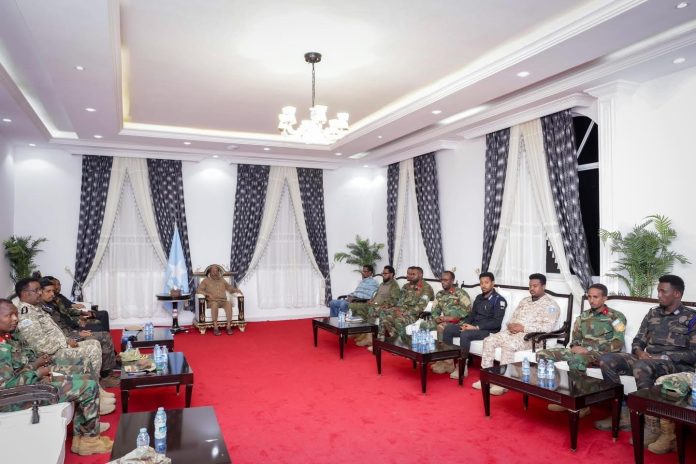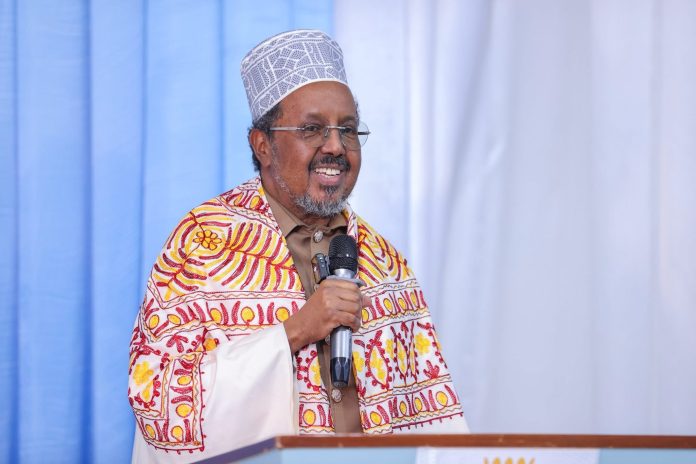
Nov 11(Jowhar)-Madaxweynaha JFS Mudane Xasan Sheekh Maxamuud iyo dhiggiisa Aljeeriya Cabdulmajiid Tabbuun ayaa goobjoog ka ahaa heshiisyo ay kala saxiixdeen Wasiiradda Wasaaradaha Arrimaha Dibadda.
Typhoon prompts mass evacuations across Taiwan; fatalities climb
When the Mountains Spill: Typhoon Fung-wong and the Quiet Violence of Rain
There is a particular hush that comes after a storm has passed: a velvet quiet punctuated by the distant whine of a chainsaw, the metallic clank of a backhoe, and the murmur of people reconciling with what the wind and water have taken. That hush has settled over villages in the Philippines and towns along Taiwan’s eastern coast in the wake of Typhoon Fung-wong — a storm that arrived angry, fast, and astonishingly wet.
On the battered island of Catanduanes, where coconut palms once lined roads like sentries, the first responders dug through ankle-deep mud, shovels flashing in the weary light. “We woke up to the sound of the mountains moving,” said one farmer, rubbing at his hands. “You can’t fight a landslide with hands alone.”
Human cost and the slow arithmetic of recovery
Philippine authorities now tally 18 confirmed deaths from Fung-wong — most of them the victims of landslides high in the Cordillera mountain chain — with two people missing and dozens injured. The storm displaced some 1.4 million people across the archipelago, turning low-slung dwellings into islands and filling village plazas with temporary shelters and the plastic flutter of tarpaulins.
“The greatest challenge for us right now is the restoration of lifelines — road clearing, restoration of power and communication lines — but we are working on it,” said Rafaelito Alejandro, deputy administrator of the national civil defence, speaking from a briefing. His tone was bureaucratic but exhausted; the tasks he described are the kind that measure months of slow, patient work in every disaster zone.
In the north, the Cagayan basin — one of the Philippines’ largest river systems — betrayed the people who live along its banks. A flash flood in nearby Apayao swelled the Chico River and then the Cagayan itself. Tuguegarao, a city of roughly 170,000 people about 30 kilometres from the river’s overflow, was left half-buried in water. More than 5,000 residents were evacuated before the worst of it, but many returned to soggy streets and ruined rice paddies.
Taiwan braces, evacuates, and waits
Across the Luzon Strait, Taiwan readied itself. Officials issued a land warning and moved 3,337 people out of harm’s way in four counties and cities, including Guangfu — the same town where flooding killed 18 people in Hualien just last September.
President Lai Ching-te took to social media with advice that was plain and stark: do not go into the mountains, stay away from the coast, and avoid beaches and other dangerous locations. Schools and government offices were closed in Hualien and neighbouring Yilan counties. In towns where the northeast monsoon met Fung-wong’s outer bands, meters of rainfall were forecast — up to 400 millimetres (nearly 16 inches) in 24 hours in some places.
Despite the alarm, Taiwan’s tech heartland remained largely unscathed: the northern city of Hsinchu — home to TSMC, the world’s largest contract chipmaker — was not in the storm’s direct path. But that very fact underscores a global unease: in our interconnected world, a typhoon in one ocean basin can have supply-chain reverberations elsewhere, even as it decimates communities in another.
The mechanics of disaster — and what’s changing
Rescuers in the Philippines have been using backhoes and chainsaws to claw through mud and tree trunks, freeing villages that were cut off when slopes let go. In coastal towns like Tuao in Cagayan province, the image that lingers is of residents carrying what they can: a child, a chest of clothes, a small radio. One woman I spoke with in a temporary shelter said, “We brought only what fit in our arms. The rest was for the sea.”
Scientists say storms like Fung-wong are not acting in a vacuum. Warmer oceans and a thicker, moister atmosphere — signatures of human-driven climate change — are making tropical cyclones more prone to rapid intensification and heavier rainfall. The Intergovernmental Panel on Climate Change and regional studies have warned that while the total number of tropical cyclones may not dramatically increase, the proportion of the most intense storms and the volume of rain they carry are on the rise.
“We’re seeing a higher frequency of sudden strength changes in storms,” said Dr. Mei-Ling Chen, a climate scientist at National Taiwan University. “When sea-surface temperatures are above normal, storms can feed like a wildfire on petrol — and the immediate consequence is more water dumped where people live.”
Local color, local pain
Traveling from Tuguegarao to the foothills, the landscape changes: terraced rice paddies, banana groves slumped under rain, and corrugated roofs patched with tarpaulin. The smell is of wet earth and diesel. On the ferry to Catanduanes, fishermen mopped decks and checked nets, their faces lined by salt and wind. “We fish when the sea calms,” one deckhand told me. “We cannot fish if the boats are gone.”
In small barangays — Philippine villages where community life is woven tight — the old women who organize the local kitchens became instant coordinators of charity, doling out bowls of rice, cups of coffee, and the kind of steady encouragement that does not make headlines but keeps people upright.
What recovery will look like — and why it matters to all of us
Officials warn that even “early recovery” will take weeks. On Catanduanes, broken water systems could take up to 20 days to fix; power and communication outages will complicate logistics and slow the arrival of outside aid. The arithmetic of rebuilding — roads, schools, irrigation channels — is heavy on time and money.
But there is another arithmetic here, one that adds up community memory, indigenous knowledge, and adaptation. In the Cordilleras, decades of terrace farming and local warning signs saved lives where modern infrastructure failed. In Taiwan, early evacuation orders and a relatively robust disaster-response apparatus will limit loss of life if people heed the calls to stay safe.
So what does this mean for a global audience watching satellite images and scrolling through news feeds? It means that climate vulnerability is neither abstract nor distant. It shows how the accumulation of heat in the world’s oceans translates into immediate human consequences: landslides in the Philippines, flooded towns in Taiwan, lost livelihoods, and months of recovery.
It also asks hard questions about investment priorities. Are we putting enough into resilient infrastructure in the places that need it most? Are international aid and local governance aligned to move faster, not just in the chaotic hours after a storm, but in the slow work of making communities more flood- and storm-resistant?
“We will rebuild,” said a barangay captain in a makeshift shelter, folding his hands as if to steady himself. “It is the only thing we know how to do.”
As Fung-wong pushes back out to sea and the rescue crews keep searching for missing people, the aftermath will be a test of patience, solidarity, and political will. Will richer countries and tech-dependent economies recognize that the safety of their supply chains, and the lives of fishermen and farmers, are bound together in one climate-stressed world?
When the last tarp is replaced and the roads are swept clean, the real work begins: redesigning coasts, bolstering mountain slope management, investing in early-warning networks, and listening to the people who know the land by touch and memory. Until then, the chainsaws will hum, the backhoes will dig, and communities will, as they always have, carry one another through the rain.
Madaxweyne Xasan oo dhiggiisa Aljeeriya kula kulmay Qasriga Almuradiya
Nov 11(Jowhar)-Madaxweynaha Jamhuuriyadda Federaalka Soomaaliya Mudane Xasan Sheekh Maxamuud oo maalintii Labaad booqasho rasmi ah ku jooga dalka Aljeeriya.
Lula urges end to climate denialism as COP30 gets underway
Under the Canopy: COP30 Begins in Belém as the World Argues Over the Future
Belém is heat and humidity and the scent of grilled fish rising from the markets. It is a city where the rainforest breathes just beyond the last row of concrete, where mornings begin with chorus frogs and evenings with sudden tropical downpours that turn the streets glossy and reflective. It is here, on the edge of the Amazon, that the global climate debate has been dropped like a stone into a still pond—sending out concentric ripples of urgency, anger, hope and, yes, stubborn denial.
The UN climate summit, COP30, opened in this sultry northern Brazilian city with a colorful Indigenous ceremony—feathered headdresses, ceremonial songs, hands pressed together in traditional greeting—followed by a speech that landed like thunder from President Luiz Inácio Lula da Silva. He did not mince words. “The Amazon is not a backdrop for speeches; it is the heart of the climate crisis and the lungs of the world,” he said, calling out those who dismiss science and discredit institutions. The message was as much theatrical as it was political: this summit would be both a showcase and a battleground.
Absence, Presence, Contradiction
Yet the circus and the seriousness exist side by side with a striking absence. The United States—the world’s largest oil producer and still the second-largest emitter of greenhouse gases—arrived without a full federal delegation at the ministerial level. Instead, governors, mayors and state officials have flown in to fill some of the gaps. California’s governor, Gavin Newsom, was among those taking the podium, saying, “You cannot write the story of the climate era without us—subnational governments are showing what is possible.” He pledged cross-border partnerships and investments in clean energy technology, a reminder that climate action is multilayered if not always coordinated.
That partial absence matters. COPs are where fragile agreements are forged; where finance for adaptation is hammered out; where legal language is debated until midnight. When a heavyweight nation is not present at the top table, it changes negotiation dynamics and raises questions about political will. “We don’t need theatrical attendance, we need commitments,” said Dr. Amina Kante, a climate policy researcher from Senegal. “Presence without policy is symbolic. Policy without presence is maybe worse.”
The Science Cannot Be Negotiated
Inside the cavernous conference halls—where translators’ booths glow red, where negotiators huddle around laptops and coffee-stained documents—the science feels immediate and unambiguous. The UN’s top climate scientists have warned that a temporary crossing of the 1.5°C threshold is now likely, a milestone that previously seemed avoidable only with deep and immediate emissions cuts. That warning is not apocalyptic poetry; it is a straightforward reading of trends. Sea levels are rising, hurricanes and storms are gaining intensity, and communities that have contributed least to the problem are already paying the costs.
“Small island states are not asking for dramatic language for the sake of drama,” said Maina Vakafua Talia, speaking for Tuvalu in impassioned tones. “This is survival language. If we stumble at 1.5°C, many of our islands may become uninhabitable within decades. We need action, not platitudes.”
Numbers That Haunt
Organizers report just over 42,000 delegates—scientists, politicians, campaigners and journalists—packed into Belém for two weeks. That is fewer than some recent COPs; the reason seems plain. Sky-high accommodation prices and limited hotel rooms in the city have kept many would-be participants away. For a negotiation that requires face-to-face bargaining, that shortage is not merely inconvenient; it’s an impediment to equitable participation.
Meanwhile, market shifts are threading an unlikely optimism through some corridors. Renewables have surged in capacity across the globe and, in recent reporting, overtook coal in electricity generation—a milestone industry analysts had long viewed as improbable so quickly. “The market is moving,” Simon Stiell, the UN climate chief, said. “Technology, investor appetite and policy incentives are aligning, and that is a hopeful thing.”
Where Money Meets Morality
But the conference quickly returns to the knottier business of money. How do rich countries finance adaptation in poorer ones? Who pays for loss and damage when storms wipe out livelihoods? These are not academic questions for delegations from Malawi, Bangladesh, or the Pacific islands; they’re existential. “Our 44 countries did not light this fire, but we are bearing its heat,” said Evans Njewa, chair of the Least Developed Countries bloc. “We expect reparative finance, not moral speeches.”
At the same time, oil-rich states continue to wield significant power. Fossil fuel producers have traditionally resisted explicit language on phasing out oil and gas. A tentative breakthrough at COP28 nudged the global conversation toward a “transition away from fossil fuels” for the first time, but the phrase remains porous—open to interpretation, and therefore vulnerable to backpedaling.
The Human Texture
Walk the perimeter of the conference and you will find more than negotiators. There’s a woman from the riverside quarters selling açaí bowls who pauses to ask what the talks will mean for her flooded neighborhood. There’s a youth activist from Manaus, chanting outside the venue: “We are the forest, we must be heard.” An elder leader from an Indigenous group quietly tells a reporter that protecting the Amazon isn’t only about carbon math; it’s about the stories and medicines that will vanish if the trees go.
“They speak of carbon, but who speaks of our rivers?” she says, with a look that marries weariness and defiance. “We have sat with this forest for generations.”
So What Now?
Belém will be wet—both from the sky and from heated debate. Negotiators will work long into the nights, sometimes with the steady percussion of tropical rain acting like a metronome. The outcome will likely be a patchwork: some progress, some compromise, and, inevitably, some unresolved tensions that will carry forward to the next summit.
But for a moment, for two weeks, the world’s attention is focused where it can do the most good: on a place that literally helps breathe for the planet. The stakes are intimate and global at once. How will we balance national interests against collective survival? How will markets, law, technology and morality align to reduce the worst harms of warming?
What do you, reading this from a city far from Belém, think should happen next? Is it realistic to expect a global consensus when geopolitics pulls in so many directions, or is local action—cities, states, communities—where real change will be born? The rainforest would probably answer simply: act now, with respect for those who live closest to the land.
Belém will wet its streets. Diplomats will file out exhausted and hopeful. And the forest will wait, patient as ever but not indefinitely. The question for us is whether that waiting will be rewarded with the decisive action the planet needs—or whether we will leave another summit with eloquence but insufficient consequence.
Soomaaliya iyo Jarmalka oo ka wada hadlay Afar Qodob
Nov 11(Jowhar)-Ra’iisul Wasaaraha Xukuumadda Jamhuuriyadda Federaalka Soomaaliya, Mudane Xamsa Cabdi Barre, ayaa xafiiskiisa ku qaabilay Danjiraha Jamhuuriyadda Jarmalka u fadhiya Soomaaliya, Sebastian Groth.
Philippine typhoon kills five, displaces over one million residents
A nation swept by water: Typhoon Fung-wong’s merciless trail
By the time the storm moved on, the Philippines looked like a watercolor left in the rain: colors blurred, edges gone. Whole villages — rows of tin roofs, banana groves, and narrow dirt alleys — lay submerged. Power lines sagged like tired vines. For millions, the day after felt less like recovery and more like the quiet before another reckoning.
Typhoon Fung-wong carved a path across nearly the entire archipelago, slamming into the eastern coast as a “super typhoon” and leaving behind a scoreboard of suffering: at least five lives lost, more than a million people displaced, and more than 1.4 million evacuated at the storm’s peak. It arrived only days after Typhoon Kalmaegi battered central islands, a grim double blow that has stretched rescue teams, charities, and the patience of communities almost beyond breaking.
From Tuguegarao’s inundated streets to Catanduanes’ roaring seas
In the far north, in Cagayan province, the Chico River finally gave way after relentless rains. “We received reports around six in the morning… that some people were already on their roofs,” said Rueli Rapsing, the provincial rescue chief, describing frantic early-morning calls to evacuation centers. He and his team managed to pull many to safety, but video verified by news agencies showed some families still clinging to rooftops, waiting for boats that were hours away.
Mark Lamer, 24, from Tuao town in Cagayan, spoke with the bluntness of someone who has watched the horizon change overnight: “We didn’t think the water would reach us. It had never risen this high previously. This is the strongest typhoon I have ever experienced.” His town, and nearby Tuguegarao — recorded as being underwater after the Cagayan River overflowed — illustrate how quickly normalcy can be taken from a place.
Further south, Catanduanes island took a battering from the ocean itself. “The waves started roaring around 7:00 am. When the waves hit the seawall, it felt like the ground was shaking,” said Edson Casarino, 33, describing a scene where streets turned into rivers and saltwater surged into homes. In Bicol, tractors that usually plow rice paddies sat half-submerged; coconut trees, which often define the silhouette of the region, bent under the wind’s force.
Loss in quiet corners
Not all the casualties were dramatic, public scenes. Sometimes the dead were a family that slept through an advancing mudslide. Civil defense officer Alvin Ayson said five-year-old twins were killed as their home was swept away in the night, and an elderly man died scarcely an hour later in a separate landslide. These are the quieter horrors: rain-saturated soil, a hillside surrendering, and a household wiped out while the rest of the world watches footage of flooding on its screen.
Evacuations, interrupted lives, and the slow work of cleaning up
More than 5,000 people in some areas were evacuated before rivers reached critical levels; in Tuguegarao, tens of thousands fled as the Cagayan river rose at reported rates of about 0.3 meters per hour. Schools and government offices shut their doors across Luzon, including in Manila, where residents woke to sopping streets and a familiar, exhausted communal effort to mop, sweep, and salvage what can be salvaged.
“You learn to move fast here,” said a volunteer with a local disaster relief crew who asked not to be named. “But speed only gets you so far against this kind of water. We need boats, dry provisions, medicine. We need more hands and more time to coordinate.” Aid convoys, local NGOs, and the military have been working in tandem, but logistics are a nightmare when roads are broken and bridges washed away.
What the numbers tell us — and what they don’t
Statistics are blunt instruments but they do map part of the story: more than 1 million displaced, 1.4 million evacuated, rainfall forecasts for Taiwan of up to 350 millimeters in 24 hours as Fung-wong heads north, and the wretched tally of human loss from a sequence of storms that has already killed hundreds in previous weeks. President Ferdinand Marcos has extended a “state of national calamity” declared during the onslaught of Typhoon Kalmaegi to a full year — a signal that recovery won’t be quick.
Yet numbers can’t tell you the small, human details: the woman in Tuguegarao who refused to leave without her pet carabao, the fish vendor in Samar watching years of nets and plywood huts washed away for the second straight storm season, the schoolteacher in Catanduanes who is now running classes out of a makeshift tent while the classroom waits under a foot of mud.
Climate change: a hand in every storm
Scientists have been clear: a warming planet reshapes storms. Warmer oceans feed typhoons with more energy; a warmer atmosphere can hold roughly 7% more moisture for every degree Celsius of warming, bringing heavier downpours. Global average temperature has risen about 1.1–1.2°C above pre-industrial levels, which is already changing the character of tropical cyclones. Higher sea levels — roughly 20 centimeters globally since the late 19th century — mean storm surges start from a higher base, pushing the waterline deeper into homes and fields.
“We are not seeing simply more storms; we are seeing different storms,” said a climate scientist who has worked with evacuation planning in Southeast Asia. “They intensify faster and dump more rain over smaller areas, which increases flooding risk. That shifts what communities need from disaster response — earlier warnings, stronger infrastructure, and a rethink of where and how people live.”
Local resilience and the long shadow of inequality
The Philippines has a long language of weather: alarm bells, bells for harvest, boats hauling in early, and people reading the sky as both warning and guide. But resilience is uneven. Island communities with concrete seawalls and reinforced houses fare better than inland barrios living in makeshift housing on steep slopes; fisherfolk with insurance are not the norm; many whose livelihoods depend on daily wages have nowhere to go but back to work — or to debt.
“After the water goes, it’s not just the house you rebuild. It’s the rice field, the livelihood, the kids’ schooling,” said an elder from a small barangay. “When the storms come one after the other, you can’t keep borrowing hope.”
Looking up: what comes next?
How do we hold both the immediate pain and the bigger picture? How do nations prepare for weather that is becoming more unpredictable? There are clear strands of action: investment in resilient infrastructure, better early-warning systems, planned relocation out of the most dangerous floodplains, and financial safety nets for the vulnerable. But there is also a need for global cooperation — for wealthy nations to expedite climate finance and for multilateral bodies to help island states build durable defences.
For now, Filipinos sweep, salvage, and comfort. They tap into community networks that have sustained them through storms for generations. They queue for relief packs, share motorboats, and sleep in school gymnasiums by the hundreds. And when the rain clears, they will measure loss, mourn, and start the slow labor of rebuilding — again.
Ask yourself: if ordinary lives can be overturned overnight by water and wind, what are we doing today to protect them tomorrow? What will it take to make sure a village’s roof is the only thing drenched, and not the whole story of a family’s life?
In the meantime, the Philippines — a country whose coastlines and communities are as beautiful as they are vulnerable — braces for the next chapter, hopeful that the lessons of this storm will guide both immediate relief and long-term change.
Qarax dhimasho sababay oo ka dhacay caasimadda Pakistan ee Islamabad
Nov 11(Jowhar)-Ugu yaraan lix qof ayaa ku dhintay, halka tiro kale ay ku dhaawacmeen qarax xooggan oo ka dhacay bannaanka dhismaha maxkamad ku taalla magaalada Islamabad, sida ay xaqiijiyeen booliska Pakistan.
U.S. Senate Advances Legislation to End Federal Government Shutdown
The Long Pause: Capitol Haggling, Empty Desks and the Sound of a Country Waiting
There is a peculiar hush that settles over Washington when politics becomes logistics. It is audible in airport terminals where screens blink delays in cold blue, and in federal office buildings where rows of cubicles sit dark and dusted with a week’s worth of unanswered emails. For 40 days, that hush has been the soundtrack of a federal government operating on chips and trust, and yesterday it frayed into motion: the US Senate moved a procedural step to reopen the government, advancing a stopgap plan that could lull the shutdown into history — or prolong the uncertainty by days.
The vote was clinical — a 60‑40 margin, just enough to beat a filibuster — but the atmosphere on Capitol Hill was anything but. Lawmakers talked past one another in tense hallways while aides typed furiously. Outside, parents checked school lunch balances, farmers tallied SNAP-dependent customers, and travelers flipped calendars to see if Thanksgiving would remain a family promise. “It looks like we’re getting very close to the shutdown ending,” President Trump told reporters at the White House before the vote, a line that landed like a tentative promise.
A Fragile Truce on the Hill
The bill that crossed the Senate threshold is not a panacea. It is a patch: it would fund the government through January 30 and bundle three full-year appropriations bills into the deal. It would put a temporary lid on the White House’s effort to pare down the federal workforce and prohibit agencies from firing employees until that date. It would guarantee back pay for furloughed workers, including military members, Border Patrol agents, and air-traffic controllers.
Behind the scenes, negotiators such as Senators Maggie Hassan and Jeanne Shaheen of New Hampshire, and Maine’s independent Angus King, stitched the measure together with a handful of Democrats who broke ranks with their leadership. “For over a month, I’ve made clear that my priorities are to both reopen government and extend the ACA enhanced premium tax credits. This is our best path toward accomplishing both of these goals,” Senator Shaheen posted on X, framing the move as both pragmatic and principled.
Not everyone cheered. Senate Minority Leader Chuck Schumer voted against the plan, and Representative Ro Khanna — a progressive voice within the Democratic caucus — fired off a blunt rebuke on X: “Senator Schumer is no longer effective and should be replaced,” a stark reminder that intra‑party tensions can be as combustible as cross‑aisle gridlock.
What’s in the bill?
- Funding through January 30 to reopen federal operations.
- Three full-year appropriations bills included in the package.
- Prohibition on federal agency firings until January 30.
- Back pay guarantees for furloughed federal employees, military, air-traffic controllers and others.
- A promise of a December vote on extending Affordable Care Act premium subsidies, per the negotiating agreement.
On the Tarmac: Travel Snarls and Human Stories
Outside of committees and roll calls, the shutdown’s disruptions have a face. Airports became a weather map of American inconvenience: by yesterday evening more than 2,700 cancellations and nearly 10,000 delays were logged by FlightAware. New York area hubs — LaGuardia, Newark Liberty — Chicago O’Hare, and Atlanta’s Hartsfield‑Jackson felt the brunt.
At LaGuardia, where more than half of outbound flights were delayed on some days this week, weary travelers clustered near food carts and power outlets. “I booked my tickets in June,” said Mariela Santos, a mother of two, rubbing her coffee. “We were supposed to land in Orlando for a family Thanksgiving. Now I’m watching my kids’ school permission slips wondering if the flights will even run.”
Transport Secretary Sean Duffy warned of mounting air travel chaos if the closure persisted, and the White House’s economic adviser Kevin Hassett said on CBS’s “Face the Nation” that prolonged disruption could push US economic growth into negative territory for the fourth quarter, particularly if holiday travel falters. The stakes are not just sentimental: delayed flights cascade through supply chains, business travel and tourism revenue, and the cost in hours — and money — ripples outward.
Health Care at the Heart of the Fight
At the core of the negotiations lay the Affordable Care Act’s premium tax credits — subsidies that have swelled marketplace enrollment to about 24 million people since their expansion in 2021. Republicans, including President Trump, cast those payments as a windfall to insurers and have proposed replacing them with direct payments to individuals, an idea the President pushed on his Truth Social platform. “I stand ready to work with both Parties to solve this problem once the Government is open,” he wrote.
Democrats have called the subsidies a lifeline for millions who would otherwise face steep premium increases. Health analysts estimate the end of those pandemic‑era credits could more than double the average monthly premiums for 2026 plans for some shoppers — an outcome that would reverberate across middle‑class budgets just as households plan holiday travel and winter expenses.
“If the credits lapse, you will see a chaotic reordering of choices,” said a health policy analyst at a Washington think tank who asked not to be named. “People will either pay much more for the same plans, or they’ll drop coverage entirely. Neither outcome is good for continuity of care or long‑term cost control.”
Federal Workers: The Invisible Frontline
The human ledger is stark. Federal records show roughly 2.2 million civilians worked for the federal government at the start of this administration’s second term. Some estimates used by administration officials suggested that as many as 300,000 of those employees could be gone by year’s end due to attrition and downsizing plans.
For many furloughed workers, back pay is small consolation for the anxiety of missed mortgages and overdue medical bills. “Back pay is important,” said a federal employee at the National Park Service who requested anonymity. “But what I can’t get back is the lost momentum — repairs not made, kids’ activities skipped because I had to take odd jobs just to put food on the table.”
Union leaders hailed the bill’s temporary protections against forced separations. The ban on firings until January 30 appears aimed at halting an administration drive to shrink federal ranks — at least for the moment.
Where Do We Go From Here?
The Senate’s advance is only one box ticked. The House must sign off on any amended bill and send it to the President, who could sign or veto. That process could take several days; it could also be a crucible for more bargaining. Meanwhile, the ACA open enrollment window runs through January 15 — a sliver of time that gives lawmakers a breathing room to act on health credits for the coming year.
As Washington inches toward an answer, ordinary Americans are left to balance calendars, pocketbooks and patience. Will the vote relieve travelers’ anxieties in time for Thanksgiving? Will families who rely on SNAP — the program that helps more than 42 million people buy groceries — breathe easier now that the package reportedly restores its funding? Will long‑term policy disputes about the role of government in health and workforce policy find calmer waters?
These are not only questions for politicians. They are questions for a public learning the cost of governance by stalemate. When the corridors of power finally reopen, will anything have changed — in policy, in trust, or in the lived experience of the millions who felt the shutdown like a shuttered door on their everyday life?
For now, the country waits — in terminals and kitchens, in union halls and parks — listening for the sound of lights clicking back on. If the Senate’s step forward becomes law, the first order of business will be to turn repair into resilience. The next order, perhaps the harder one, will be to ask why it took 40 days for that repair to begin.
Safiirka Soomaaliya ee dalka Congo oo laga guddoomey Waraaqihiisa Aqoonsiga
Nov 11(Jowhar)-Safiirka JFS ee dalka Congo Mudane Ilyaas Cali Xasan, ayaa si rasmi ah uga guddoomay Waraaqihiisa Aqoonsiga Madaxweynaha DRC, Mudane Félix Antoine Tshisekedi Tshilombo, munaasabad ka dhacday Qasriga Qaranka ee Kinshasa.
Canada stripped of measles elimination status amid growing outbreak

A Country’s Quiet Reversal: How Canada Lost Its Measles-Free Badge
On a damp spring morning in a Winnipeg neonatal ward, the hum of monitors is punctured by the quiet grief of parents who had thought such tragedies belonged to history books. Two newborns — their small lives measured in days — succumbed to a virus that was declared vanquished from Canadian soil nearly three decades ago. The disease: measles. The tally: 5,138 confirmed cases so far in 2025, a number that has jolted public health officials and ordinary Canadians alike.
Canada’s status as a measles-free nation — a badge earned in 1998 and nurtured by high childhood vaccination rates — has been stripped away, the Pan American Health Organization (PAHO) announced after determining that the same measles strain had been transmitted locally for more than a year. The technical definition is stark and simple: to be considered measles-free, a country must show no local transmission of the same strain for 12 continuous months, backed by trustworthy surveillance. Canada failed that test.
Where things went wrong
The chain of transmission that unravelled this status began quietly in October 2024 in eastern Canada. What was initially dismissed as an anomalous cluster smoldered into something far larger. Over months, the virus threaded its way through gaps in immunity — pockets of under-vaccinated communities, social networks where hesitancy meets isolation, and places where access to healthcare is inconsistent.
“We are watching a preventable disease exploit social fractures,” says Dr. Lila Kapoor, an infectious disease epidemiologist. “Measles isn’t choosy. It follows human patterns — gatherings, travel, family chains. And when immunity dips in any corner, the whole population becomes vulnerable.”
Provincial epicentres emerged. Ontario and Alberta shouldered the lion’s share of the cases. Alberta’s health office, speaking cautiously, reported a dramatic recent turn: cases are down more than 90% from their peak, and only two active cases have been reported in recent weeks. Vaccination uptake in Alberta has climbed, officials say — roughly 50% higher since March compared with the same period a year earlier — a signal that fear and outreach can move people toward protection.
The human stories behind the numbers
Numbers are an essential ledger of an outbreak, but they don’t capture the ragged edges of loss. “We thought we were safe because we live in Canada,” says Maya Thompson, a public health nurse who has spent long nights tracing contacts and consoling parents. “Then you deliver a baby whose mother refused vaccination while pregnant because of fear online, and suddenly you’re not talking theory anymore.”
Jacob, a father who asked that his full name not be used, remembers the frantic calls and the hospital corridor conversations. “My nephew was fine in November,” he says. “By January he had a rash and then a fever. It spread through a small community event. People were angry, confused—some blamed each other. It felt like the fabric holding our neighbourhood together was being pulled thread by thread.”
Within this tapestry are specific communities where lower vaccination rates contributed to sustained chains of transmission. Certain groups of Mennonite Christians, as public reporting has described, have sizeable populations who decline vaccination on religious grounds. Yet it’s important to remember nuance: Mennonite communities are diverse — many accept vaccines and actively engage with public health initiatives. The outbreak exposed the harm done when segments of any community remain disconnected from vaccination efforts.
Why measles is so unforgiving
Measles is one of the most contagious pathogens known to humans. It spreads through respiratory droplets when an infected person coughs, sneezes, or even breathes. A single infected person can infect 12 to 18 others in susceptible populations. The disease begins with fever and cold-like symptoms and progresses to a telltale rash, but complications can be devastating: pneumonia, brain inflammation, and death — particularly among infants and the immunocompromised.
“We sometimes forget that vaccines are less about individual convenience and more about a shared insurance policy,” says Dr. Marco Estevez, a pediatrician in Toronto. “When that policy unravels, the most vulnerable — newborns, elderly, those who cannot be vaccinated — pay the highest price.”
What officials are doing
In the wake of PAHO’s determination, provincial health ministers have been convening to discuss coordinated responses. Public officials are talking about more than mass vaccination campaigns; they’re talking about trust-building, community engagement, and nuanced strategies to reach populations that are skeptical or difficult to access.
Planned measures include:
- Targeted outreach and mobile clinics in under-vaccinated communities.
- Collaborations with trusted local leaders and religious institutions to share credible information.
- Enhanced surveillance and rapid response teams to isolate and contain new clusters.
- Public education campaigns to counter misinformation spread online.
“Punitive measures alone won’t close these gaps,” cautions Dr. Kapoor. “We need listening, humility, and persistent local partnerships.”
Beyond Canada: a global pattern
Canada’s loss of elimination status is not an isolated event. Across the Americas this year, countries have grappled with resurgent measles. The United States and Mexico reported thousands of cases and several deaths; the Americas region only reclaimed measles-free status in 2024 after a tough battle to stop an outbreak in Brazil. International mobility, declining vaccination rates among children in some wealthy countries, and the wildfire of misinformation online have created a tinderbox.
There are deadlines and inflection points elsewhere: U.S. health authorities, for example, have deadlines to demonstrate that ongoing cases are not linked to earlier outbreaks. The global health community watches these timelines because the loss of elimination in one country can ripple outward in an interconnected world.
What this moment asks of us
So where do we go from here? This outbreak is, at its heart, a question about civic solidarity: what responsibilities do we owe one another in a shared public health landscape? It’s also a test of public institutions — can they rebuild trust when skepticism runs high? Can public health messages be reframed not as mandates but as community protection?
“I don’t want fear to be the driver,” says Thompson, the nurse. “I want honest conversations. I want parents to come in and be heard. They’re more likely to vaccinate if they feel respected, not shamed.”
Ask yourself: when was the last time you checked your immunization records? When did you last speak with someone whose choices differ from yours and try to understand why? These small acts ripple outward, and in a season when a single unvaccinated gathering can fracture decades of progress, that ripple matters.
Closing thoughts
Measles won’t bow to rhetoric. It responds to immunity. Canada’s reversal is a sobering reminder that victories in public health are not permanent; they require constant stewardship. The scenes in hospital wards and community centers across Canada are both heartbreaking and instructive. They call us to rebuild bridges — between policymakers and communities, between science and lived experience, and, perhaps most importantly, between neighbors.
If there is a silver lining, it’s that behaviour can change quickly when people see the stakes. Alberta’s surge in vaccinations and the steep decline in active cases show what can happen when outreach is responsive and sustained. The question now is whether the rest of the country, and the world, will act with the same urgency before more lives are lost.