Beyond the Smoke: When War Crosses a Border and the World Watches
For the second night in a row, the skyline above Kabul and Kandahar was rent by light that did not belong to sunset: tracer flashes, missile trails, and the orange bloom of fires. Ambulance sirens weaved through neighborhoods, mingling with the soft, insistent cry of the muezzin — a soundtrack that has become unbearably familiar in this part of the world.
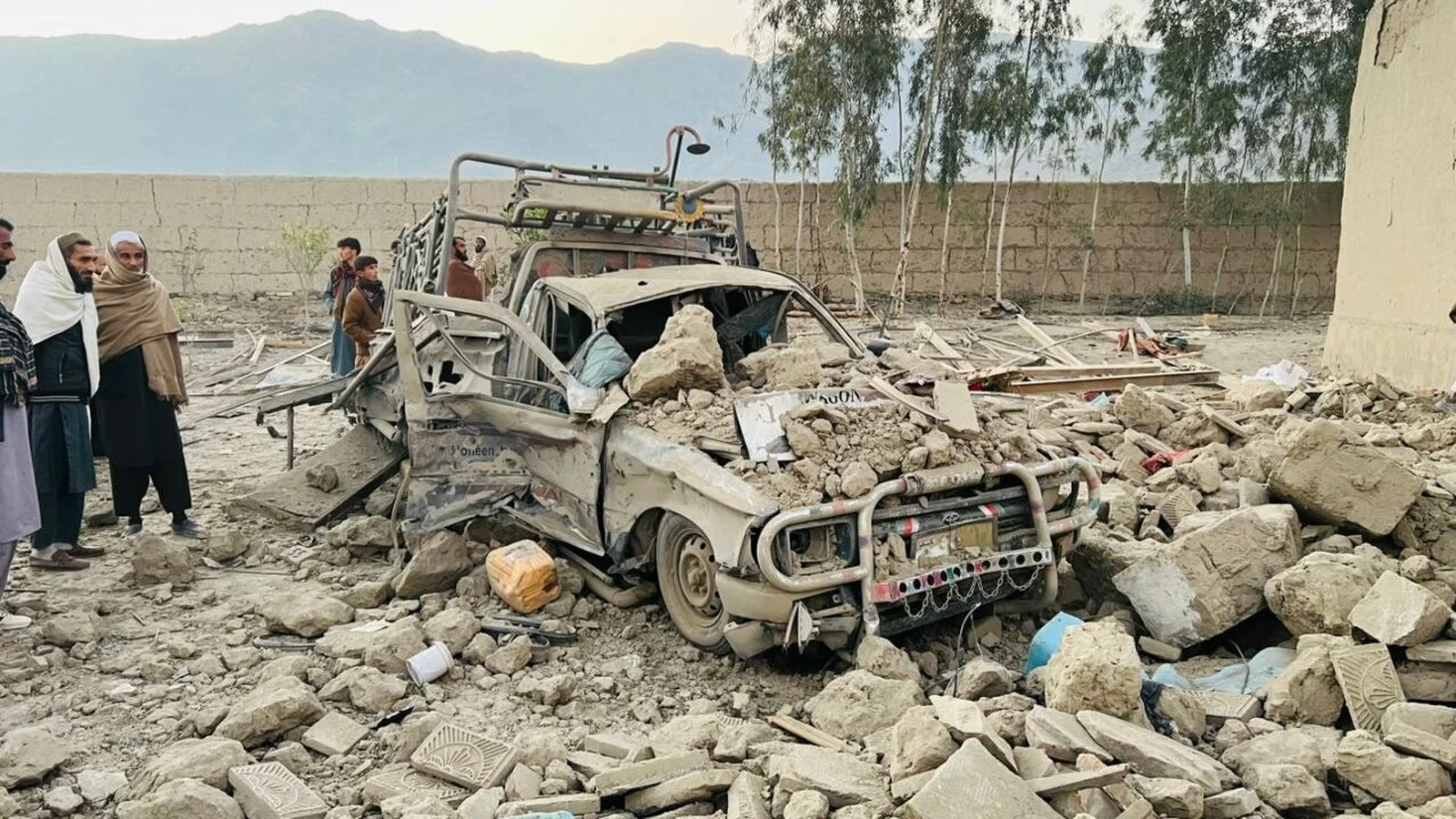
What began as a cycle of tit-for-tat attacks along a long, porous frontier has now leaped a boundary of rhetoric and into what Pakistani leaders have bluntly called “open war.” Jets and missiles, Pakistan says, struck military facilities inside Afghanistan — not merely the militant camps Islamabad has long blamed on groups sheltered across the border. For Afghanistan’s ruling authorities, the strikes were a brazen assault on their soil. For ordinary people on both sides, the result is the same: fear, displacement and questions with no easy answers.
Night of fire over Kabul and Kandahar
Witnesses in Kabul described a city waking to the rumble of explosions and the sting of smoke. “We were eating dinner,” said a shopkeeper near the old city, his face still marked by ash. “Then the sky lit up. My children were terrified. I have seen war before, but nothing like this — the sound was different, closer.”
Pakistani officials said the strikes targeted 22 military sites and took out scores of fighters. Islamabad’s military spokesman told reporters the operation was an “effective, immediate and brutal response” after what he described as repeated attacks into Pakistani territory. The Taliban’s own spokesmen answered with counterclaims: dozens of Pakistani soldiers killed, posts seized, and drone strikes launched into Pakistan. Independent verification is difficult when both sides offer sharply different casualty figures — a now-familiar pattern that feeds an information war as damaging as the kinetic one.
Voices from the ground
At a crowded hospital in Kandahar, a nurse described the chaos in quiet, measured terms. “People brought in men, boys, even a child with burns,” she said. “You try to patch hands and lives at the same time. We have few medicines and too many explosions.”
Across the border in Balochistan province, near the town of Chaman, Pakistani soldiers stood guard at checkpoints as anxious families were taken to temporary holding centres. “We cannot sleep,” said a woman who had been taken into a government facility after security operations. “We have lived with the border for generations. Now our men are being called to fight the men next door.”
Experts watching from capitals and think tanks express deep concern. “This is not a skirmish,” said a regional analyst in Islamabad, asking not to be named for security reasons. “It risks becoming a protracted conflict along a frontier that is nearly 2,600 kilometres long. That is not a line you fix with a quick strike.”
Claims, counters, and the fog of war
Both sides have offered casualties that the other disputes. Pakistan’s military put the Afghan side’s losses in the hundreds, while the Taliban offered lower figures and its own tally of Pakistani soldiers killed. The United Nations and independent agencies urge caution: in modern conflicts, numbers on the ground — especially early on — are often inflated for strategic effect.
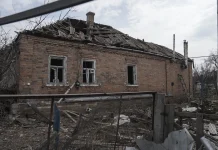
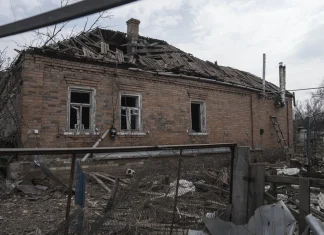
What is indisputable is the human toll beyond the numbers. Hospitals report civilian injuries. Markets that once thrummed with trade fall silent. Families who once crossed the border for weddings, work, or to visit relatives now face closed crossings and detention; reports say hundreds of Afghan nationals have been taken to holding centres for possible deportation.
Regional alarm and fragile diplomacy
The reverberations have been immediate. Beijing and Moscow, already juggling broader strategic relationships in the region, have moved to press both sides towards restraint. Turkey, Saudi Arabia and Qatar — all of which have acted as mediators before — also appear to be engaging quietly to prevent escalation. Iran, which shares borders with both states, offered mediation too, even as Tehran navigates its own fraught relationship with the United States.
Diplomacy matters because this is not merely a bilateral spat. A sustained conflict along the Pakistan–Afghanistan frontier threatens refugee flows at a time when millions in the region already live precariously. It has implications for counterterrorism, for trade corridors criss-crossing Central and South Asia, and for global efforts to stabilize Afghanistan after the chaotic withdrawals and realignments of the past decade.
Why this matters to the world
Consider three facts that put this flare-up in perspective:
- Porous border: The Pakistan-Afghanistan border stretches roughly 2,600 km and is braided with informal crossings used by traders, pastoralists and families for generations.
- Nuclear-armed neighbours: Pakistan is one of the world’s nuclear-armed states; any prolonged military confrontation between nuclear-armed neighbours raises stakes well beyond the battlefield.
- Fragile populations: Both countries host millions who are vulnerable — internally displaced people, refugees, and communities dependent on cross-border trade and seasonal labour.
When neighbours with asymmetrical capabilities clash, the simple arithmetic of power obscures messy realities. Pakistan’s military strength is substantial on paper; yet past decades have shown that guerrilla tactics, local knowledge and complex tribal geographies can blunt conventional advantages. “You cannot bomb a border into submission,” another analyst said. “You can only break it, and then you have to live with the pieces.”
Local color: markets, memories and survival
In Kandahar’s old bazaar, vendors sweep dust from sacks of dried apricots and pistachios as they eye the emptying streets. The sound of a stove being tended in a nearby teahouse is a small, stubborn act of normality. “War is like the weather here,” an elder at the teahouse remarked. “It comes and you try to carry on.”
Generations of Pashtun families straddle both sides of the Durand Line — an arbitrary colonial boundary that locals often treat as porous and, in many places, meaningless. Marriage ties, grazing rights, and seasonal markets bind communities in ways that official maps do not reflect. When shells replace conversation, those ties fray.
What comes next?
Diplomacy will likely intensify; international mediators will knock on doors and press for de-escalation. But the reality on the ground is harsher: trust is scarce, and any ceasefire will be fragile. If a long campaign unfolds, expect cross-border displacement, a new wave of humanitarian needs and increased pressure on neighbouring states to pick sides or mediate effectively.
So ask yourself: how do you measure the cost of a conflict that lives at the margins of global headlines but at the centre of millions of lives? What responsibility do distant capitals hold when they seek influence but not the mess of reconstruction and reconciliation?
For now, smoke rises over ancient minarets, ambulances hurry through streets once safe for children to play, and families count the missing and the dead. The world’s response — whether a chorus of mediation, aid and sober diplomacy or a parade of rhetoric — will shape what happens next. In the streets of Kabul and Kandahar, and the dusty border crossings between them, people will be waiting to see whether the guns give way to talks, or whether a new chapter of conflict begins.