A Year That Began with Hope and Ended with an Empty Chair
On a cold, star-scraped Christmas Eve in 2024, a hush fell over St Peter’s Square as Pope Francis pushed open the Holy Door of St Peter’s Basilica. Lanterns shook in the wind. Pilgrims craned their necks. The act was meant to be an invitation — a year of renewal, a Jubilee of Hope, a collective exhale for a Church hungry for mercy, repair and service.
There is an old Roman saying that faith looks best in the street: in the faces of people clustered on cobbled alleys, clutching candles, trading the busyness of life for a moment of intersection with the sacred. That night, a young volunteer from Lima, her scarf knotted to ward off the cold, told me, “We came for hope. Not as a poster, but as something we can hold.”
When the Shepherd Fell Ill
Hope, it turned out, would be tested early in the Jubilee year. In February, Pope Francis — who had become, for many, the image of a softer papacy — was admitted to Rome’s Gemelli Hospital with pneumonia. The medical bulletins were clinical. The chatter in cafés and sacristies was not.
Five weeks later, he came back to a Vatican that seemed both relieved and fragile. Hospital staff described at times how “touch and go” his condition had been. Doctors urged a long convalescence; an 88‑year‑old pontiff was advised to rest for months. He rested briefly, but never for long.
His last public engagement was emblematic: Easter Sunday, 25 April, St Peter’s Square heavy with pilgrims. Frail but steady, he mounted the popemobile and delivered the Urbi et Orbi blessing. He made a slow loop among the crowd — a final, intimate gesture to people who had followed his emphasis on outreach to the poor and the marginalised.
That evening, he clasped the hand of his nurse, Massimiliano Strappetti, and thanked him for seeing him to the square. At dawn the next day, a sudden illness came like a winter storm. Vatican officials later said he did not suffer long. “It was quick,” a nurse told local reporters; “he had a moment to say goodbye.”
The World Paused
When the Holy Father died on Easter Monday, the symbolism was impossible to ignore. A Jubilee intended to celebrate life and renewal had, in its early months, been bookended by mourning.
Condolences poured in from capitals and parish houses alike. Religious leaders praised a pope who had made the poor and the planet central themes of his pontificate. In Dublin, President Michael D. Higgins — a frequent interlocutor on issues from global hunger to climate justice — described the late pontiff’s “warmth and humility,” words echoed by hundreds who filed past the modest wooden casket placed in St Peter’s Basilica.
Among the sea of mourners were pilgrims from Ireland, Philippines, Brazil, and parts beyond. A Dublin grandmother, pushing a pram, said simply, “He made us feel small mistakes were still forgiven.” Around 250,000 people paid respects, many leaving handwritten notes between the slats of the coffin — a raw, communal liturgy of grief.
Diplomacy in a Basilica
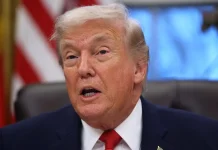
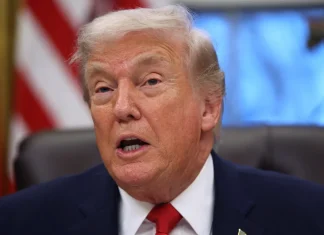
Even funerals are sites of geopolitics. Photos of two world leaders — the U.S. president and the Ukrainian president — deep in conversation inside the Basilica split the news cycle. For a moment, beneath mosaics that have watched centuries, the world’s aches converged: war, asylum, hunger, power. “It was a meeting of two histories,” said a veteran Vatican diplomat. “Places of mourning often become stages for the living to make new claims.”
From Mourning to the Sistine Ceiling: The Conclave
The College of Cardinals retired behind conclave doors against a backdrop of turbulent expectations. Under Francis, cardinals from the Global South and pastoral shepherds had won prominence, and many expected that the next leader would extend that embrace.
Still, few predicted the outcome when, after a swift and unexpectedly decisive two-day ballot, an Augustinian American cardinal emerged as Pope Leo XIV. The election of Cardinal Robert Prevost — a man who had worked extensively in pastoral and diplomatic posts — was a surprise that also felt like a bridge: continuity in spirit, fresh leadership in style.
“The cardinals were looking for calm,” said Fr Paul Finnerty, rector of the Irish College in Rome, who had known the new pope for years. “Someone who could walk gently but speak clearly.”
The Voice of Pope Leo XIV
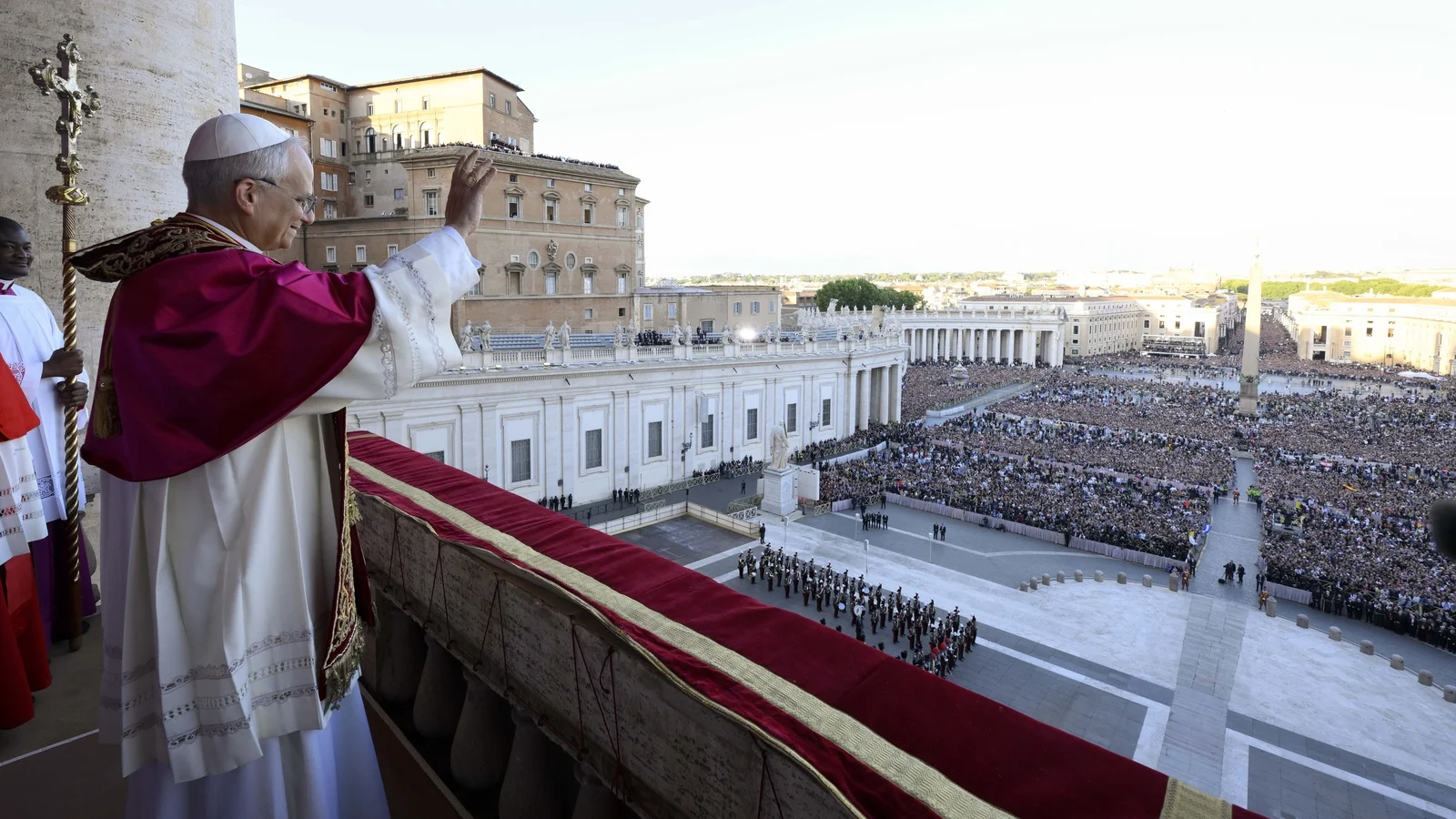
Pope Leo XIV’s first words, offered from the balcony to St Peter’s Square, were plain: “Peace be with you all.” The phrase landed like a benediction in a world that seems hungrier for concord than ever.
He has been described as measured, diplomatic and pastoral — a man who prefers conversation to confrontation. Early in his tenure he authorised the publication of a Vatican commission report on women deacons that concluded historical and theological grounds did not yet support ordination. That decision drew both weary sighs and calls for renewed study. “Not a flat refusal,” one cleric said; “more a challenge to keep looking.”
On hot-button social questions, he has been cautious. Asked about inclusion of LGBTQ+ people in the Church, he signalled fidelity to existing teaching while urging pastoral sensitivity. On migration — a topic that animated one of his earliest public statements as pope — he acknowledged states’ rights to control borders but urged humane treatment for people in detention, calling for systems that uphold dignity.
Appointments, a New Tone
Pope Leo’s episcopal appointments have been telling. In the United States, he named Bishop Aldon Ronald Hicks — a Latin America‑seasoned American — as Archbishop of New York, signalling pastoral credentials for a traditionally influential seat. In England and Wales, Bishop Richard Moth’s appointment to Westminster suggested a focus on stability and outreach.
Back in August, the beatification of Carlo Acutis, a 15‑year‑old who died of leukemia in 2006, drew surprising numbers of young people to the Vatican — a visible reminder that the Church’s future may well be shaped by a new generation. A late‑2024 Bible Society/YouGov poll of 13,146 adults even reported that among churchgoers aged 18–34, Catholics now outnumber Anglicans — a demographic shift that should give bishops and parishes much to consider.
Bridges East and West
Pope Leo’s first international journey to Turkey and Lebanon emphasized reunion and dialogue. Visiting sites linked to the Council of Nicaea and sitting at tables with Orthodox counterparts, he cast his pontificate as an effort to mend ancient rifts — East and West, altar and table.
Closer to home, a historic shared prayer with Anglican leaders and King Charles and Queen Camilla signalled a willingness to lean into ecumenism. In the press, it was easy to read these gestures as diplomatic theatre — but for many on the ground they felt like small, steady acts of reconciliation.
What Comes Next?
Pope Leo XIV has published his first apostolic exhortation, Dilexi te — a document started by his predecessor and finished under his hand. It asks the Church to keep its eyes on the poor and the marginalised; it was received warmly by charities such as the St Vincent de Paul Society. Yet the road ahead is long.
Important anniversaries loom: Catholic Emancipation’s bicentenary in 2029, a global commemoration of two millennia since the death and resurrection of Christ in 2033, and in Ireland, a 1,500‑year mark of Christianity’s arrival in 2032. Could the new pope come to Ireland then? Archbishop Eamon Martin’s office says an invitation remains open.
So here is my question to you: in an era of climate anxiety, migration crises and deep cultural divides, what do you want from a global Church? Do you want a steady bureaucrat, a prophetic voice, or a pastor who sits on the street and listens? Pope Leo XIV’s early months suggest he aspires to be a bridge-builder. Time will tell whether bridges hold when storms come.
For now, in the cafés of Rome and in parish halls from Buenos Aires to Belfast, people are still trading stories about that last blessing, that wooden coffin, that balcony blessing. They are still asking how a worldwide community of 1.3 billion Catholics — diverse, disputed, devout — will find pathways to mercy in a fractious world. The Jubilee of Hope began as a door thrown open. The real work, as always, is walking through it.