On the Edge of Donbas: A Quiet That Never Settles
There is a peculiar hush that has settled over parts of eastern Ukraine — not the peaceful kind, but the brittle silence that follows a distant explosion. In Donbas, towns are stitched together by concrete, steelworks and memory. Their people move like ghosts through grocery aisles that used to hum, past apartment blocks that hang on like stubborn punctuation marks against the horizon. You can feel the history in the air: the coal dust of an industrial past, the smell of black bread cooling on a windowsill, the radio news counting the day’s losses and the day’s small mercies.
“We joke that winter is more honest than war — at least it shows everything,” says a volunteer who ferries medicines between checkpoints. “But we have been living in a winter of the soul for years now.”
Putin’s Ultimatum and the Map of Control
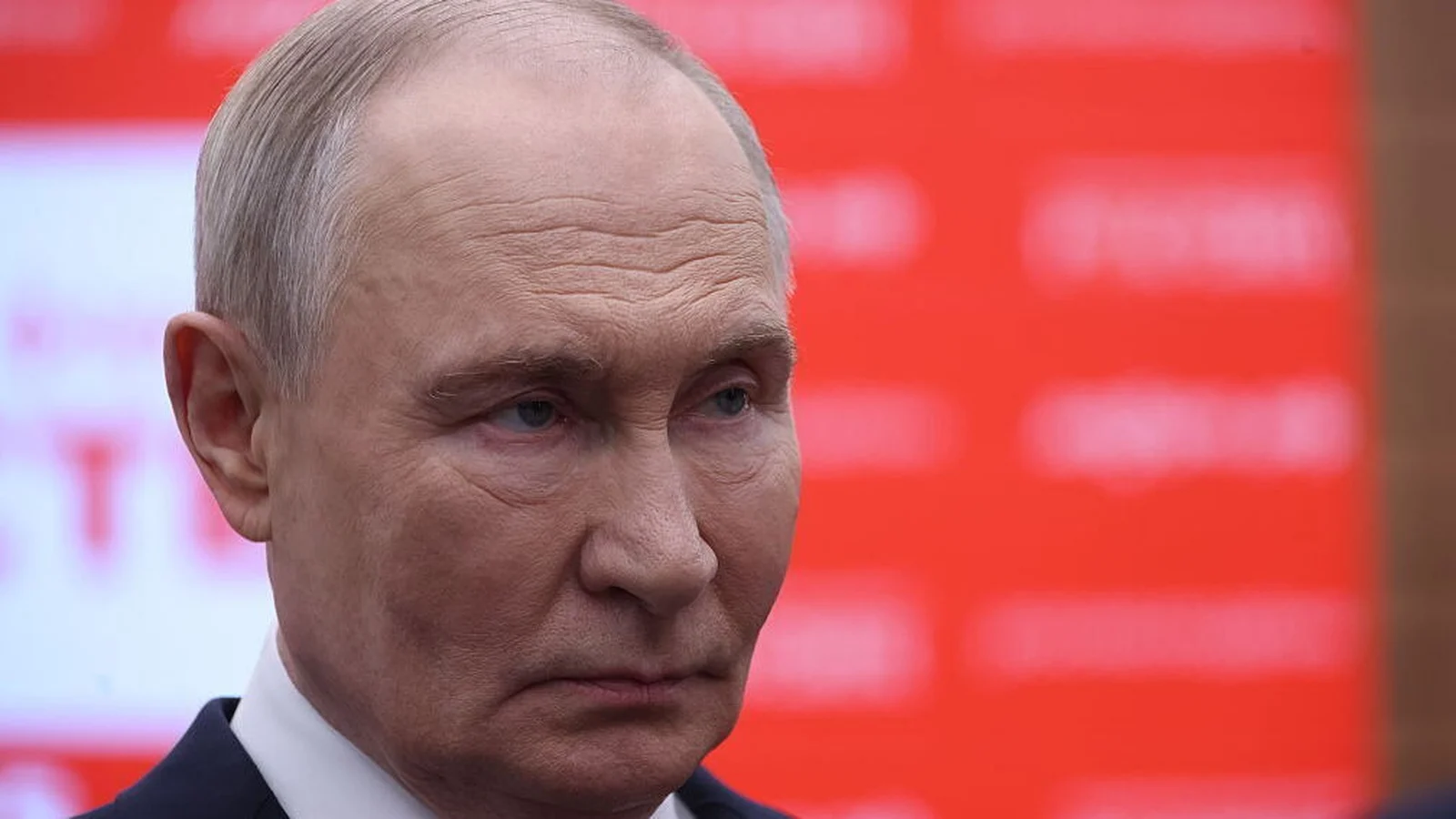
In a recent interview, Russian President Vladimir Putin laid down a stark choice: either Russia will seize the entirety of the Donbas by force, or Ukrainian troops must withdraw. “Either we liberate these territories by force of arms, or Ukrainian troops leave these territories,” he told India Today — words broadcast back across the region like a renewed order to soldiers and commanders.
Putin’s declaration did not emerge from nowhere. For the past decade, since 2014, the Donetsk and Luhansk regions have been the epicenter of simmering and then full-blown conflict. In February 2022 the simmer became inferno when Russian forces launched a large-scale invasion of Ukraine. Today, Moscow controls roughly 19.2% of Ukrainian territory — including Crimea (annexed in 2014), all of Luhansk, more than 80% of Donetsk, about 75% of Kherson and Zaporizhzhia, and strips of other regions. Only about 5,000 square kilometers of Donetsk remain under Kyiv’s control.
These numbers are more than statistics. They are towns and schools and hospital wards. They are the route maps of families who have had to decide whether to stay, flee, or try to carve normalcy out of bombardment.
Voices From the Ground
“When the sirens go off, we don’t run like in the movies,” a schoolteacher from Sloviansk told me over a thermos of tea. “We take the children to the basement, count to ten, and tell stories. It’s how we keep the future from breaking.”
At a makeshift humanitarian hub, a volunteer doctor — who asked only to be called Oksana — described treating crush injuries from shelling and the mounting mental toll. “The physical wounds can heal,” she said. “It’s the nights full of tremors that scar you.”
Diplomacy in the Shadow of Guns
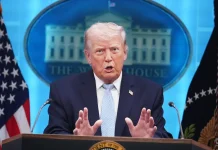
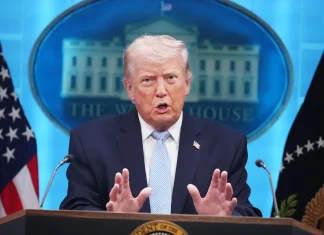
Diplomacy has, at times, been equally brittle. In recent weeks, an American delegation led by Steve Witkoff and Jared Kushner met with President Putin in the Kremlin. The talks produced no breakthrough, with the Kremlin saying large parts of the U.S. plan were unacceptable. U.S. President Donald Trump later told reporters that Putin “would like to end the war” — a reflection of the small optimism that lights hope in diplomatic corridors even when the battlefield tells a different story.
U.S. envoys were expected to debrief Ukraine’s chief negotiator, Rustem Umerov, in Florida — a reminder of how any potential resolution must thread a needle between Moscow’s demands and Kyiv’s resolve.
“There is a window of opportunity,” Ukrainian President Volodymyr Zelensky said in a televised address, “but it must be accompanied by pressure on Russia.”
On the Table — and Off
So what is being discussed? Public reports suggest Russia is demanding control over the entire Donbas, along with international, if informal, recognition of its gains. Western allies are scared of arrangements that seem to reward conquest. European capitals are scrambling to harmonize positions: NATO announced purchases of hundreds of millions of dollars in weapons for Ukraine, while Brussels debated a “reparations loan” — a plan to use Russian state assets frozen across the EU to support Kyiv’s reconstruction. Belgium, the chief custodian of much of those assets, has raised legal concerns; Germany’s chancellor urged shared risk-bearing.
“Any deal that asks Ukraine to cede territory will be a bitter pill,” said an analyst in London. “It would set a dangerous precedent about the power of force over law.”
Children, Camps, and the Crime of Displacement
Beyond geopolitics, there are stories that cut to the heart of why the war has become a moral litmus test for the international community. Kyiv alleges that Russia has abducted nearly 20,000 children from occupied territories since 2022 and shipped some of them to re-education sites — not only within Russia and Belarus but reportedly as far as North Korea. Ukrainian human-rights officials say a network of 165 camps operates across the region, a chilling bureaucratic architecture for forced assimilation.
“We once found a set of drawings a child had made — rockets, soldiers, and a little house,” a lawyer who documents family separations recalled. “The little house was full of tears.”
These actions have already drawn grave international attention: the International Criminal Court issued arrest warrants in 2023 related to the alleged deportation and transfer of Ukrainian children.
Frontline Realities and the Cost of ‘Progress’
On the ground, Russian advances have gained momentum in recent weeks, Russian officials say, citing battlefield successes that they argue strengthen Moscow’s negotiating hand. Kyiv, however, rejects the logic of conceding territory as a price for peace. Fighting remains fierce in pockets like Pokrovsk, where claims of capture are countered by Ukrainian units who report ongoing urban combat.
“You can claim a map,” one Ukrainian officer said over encrypted radio, “but you cannot claim a people’s memory.”
Why This Matters to the World
This conflict, for all its local specificity, sits at the intersection of global anxieties about borders, sovereignty and the resilience of the post–World War II order. If force becomes an efficient path to redrawing maps, what does that mean for smaller states watching, nervous in their peripheries? The Donbas fight is also a test of alliance politics: can NATO and the EU synchronize support in a way that preserves both Ukraine’s sovereignty and a meaningful negotiating posture?
For ordinary people, these geopolitics are not abstractions. They determine whether a child can return to school, whether a hospital receives diagnostic equipment, whether a family can sleep without the fear of evacuation orders at dawn.
What Comes Next?
There are no easy answers. Diplomats will continue to shuttle between capitals and front lines, and armies will measure terrain by the cold calculus of artillery and supply lines. But the human ledger keeps adding up: displaced families, abducted children, and towns like slow-motion ruins that still host laughter in basements and stubborn cups of tea.
So I ask you, reader: when the world debates maps in conference rooms, who will tell the stories of those who live on the margins of those lines? Whose pain gets counted, and whose does not? The Donbas is more than a symbol — it is lives, histories and futures. And whatever the outcome, the question remains: can any peace that comes without justice ever truly be lasting?
As the sun sets over those scarred fields, someone in Donbas will light a candle for someone lost and keep a watch on the road. That small, human act — stubborn, ordinary, almost sacred — is the true measure of resilience in a war that has tried, again and again, to break people’s capacity to hope.