When Quiet Holidays Turned to Mud: A Night at Mount Maunganui That No One Will Forget
The sun had barely cracked the horizon over Mount Maunganui when the town woke to an image that would haunt it for weeks: caravans and campervans half-swallowed by a slick, brown wall of earth; the tidy lines of a holiday park turned into a chaos of twisted metal, bedding, bicycles, and toothbrushes poking out of the mud.
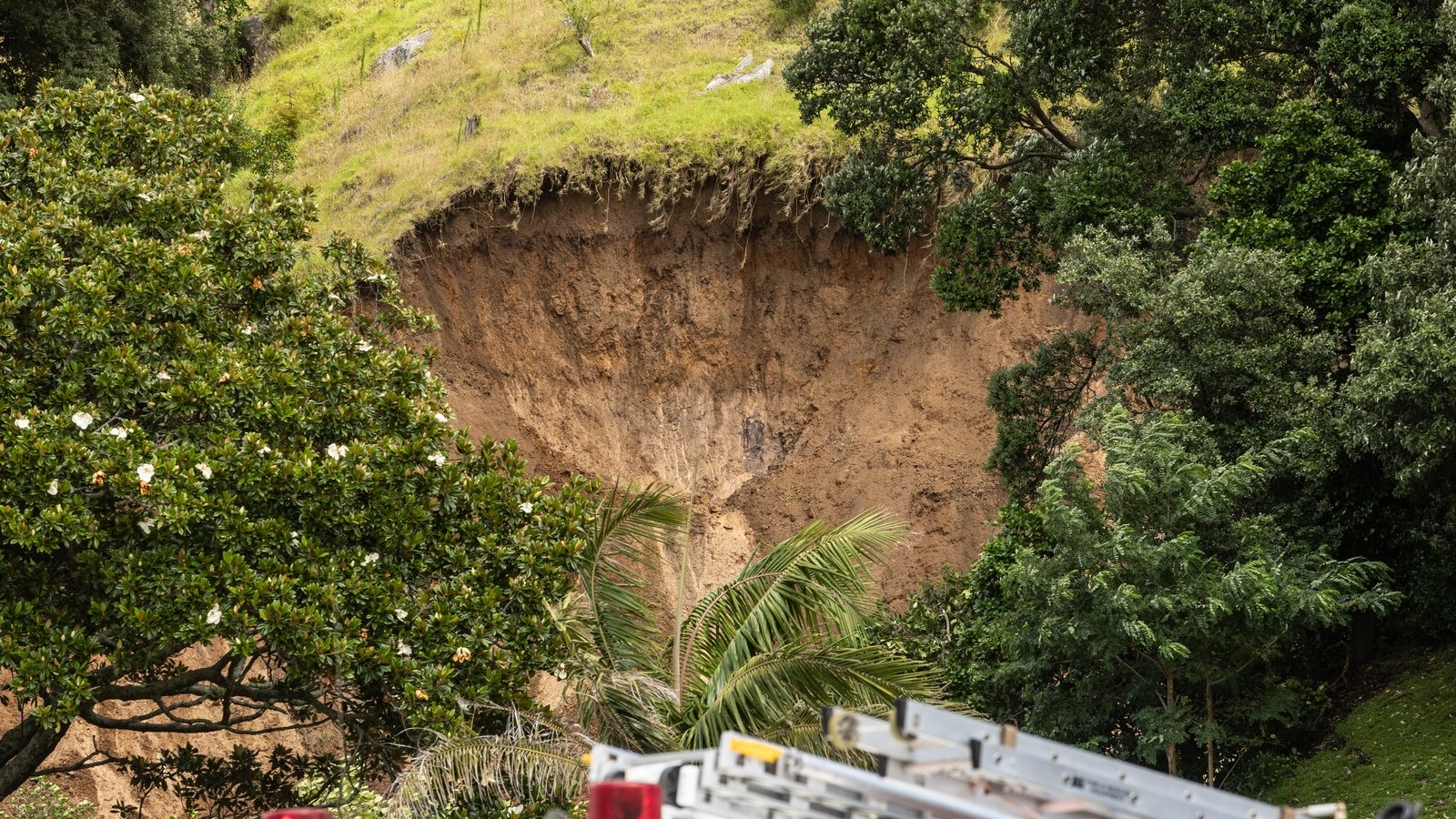
For two days, local volunteers and emergency crews worked through wet, cold hours, driven by the hope that someone — anyone — might still be pulled alive from the debris. That hope has now evaporated. Police say the operation has shifted from frantic search-and-rescue to the grim, meticulous task of recovering bodies after a landslide levelled part of a popular campsite in Mount Maunganui, on New Zealand’s North Island.
The Scene
The holiday park sits close to the water, a low-key cluster of sites and amenities that usually bustle in summer. It is a place of mini-golf and barbeques, of families dragging surfboards out to the beach and teenagers camped with friends. This week it was a staging ground for grief.
Rescue crews — police search teams, fire and emergency responders, volunteers and heavy machinery operators — navigated fields of mud that could swallow a boot in seconds. Authorities warned repeatedly about unstable ground and pockets of saturated earth, the kind that turns rescuers from saviours into casualties if they are not careful. “Safety comes first,” a senior operations officer told the press, “we cannot risk lives for a recovery that could put more people in harm’s way.”
Lives Lost, Families Waiting
At least six people were reported buried when a mountain of dirt and debris tumbled onto the campsite during heavy rain. Among them, officials said, was a 15-year-old — an image that made the town’s vigils feel even more fragile. For days, people gathered at community centres and on the beach, lighting candles, hugging, and singing quietly. “We kept hoping, against reason, that someone would knock on the caravan door,” one neighbour said, voice thick. “We still keep checking our phones for a miracle.”
Police have warned the public and media that the recovery could take several days. “When you’re working in metres of shifting mud, locating a body is not like locating an object,” a police spokesperson explained. “It’s painstaking. It’s heartbreaking. You have to do it right.” Officials also stressed the complexity of the scene — the mud had filled confined spaces such as shower blocks and undercarriages of vans, making mechanical extrication slow and delicate.
Leadership, Consolation, and Questions
Prime Minister Christopher Luxon offered condolences from Wellington and pledged support for the families and the community. He acknowledged the wrenching reality that rescue efforts had been halted and that the operation was now concentrating on recovery. “Every New Zealander is grieving with the families who have lost loved ones,” he said in a public statement.
Yet the tragedy has also prompted difficult questions. Neighbours and relatives told reporters they had heard warnings of a possible landslip earlier in the day, and some are asking why there was no wider evacuation. “We heard a rumble on the phone alert, then the rain got heavier,” said one camper who spent the night at a nearby site. “Why weren’t people moved? That’s what we want to know.” Authorities have said they are investigating the timeline of warnings and responses, while also stressing that sudden slope failures can happen with little to no visible forewarning in extreme weather.
Why Landslides Happen Here — and Why They’re Growing Riskier
New Zealand’s jagged landscapes and steep coastal slopes are beautiful — and, in times of heavy rain, treacherous. Geologists point to three converging factors that make areas like Mount Maunganui vulnerable: topography, soil saturation from intense rainfall, and human use of the land. The southern hemisphere’s oceans and atmospheric changes have pushed more extreme rainfall events into regions that historically saw them less frequently.
“When soil becomes saturated, it behaves like a liquid,” explained Dr. Hana Raukura, a landslide specialist at a regional university. “A slope that’s been stable for decades can come loose after sustained, intense downpours. Add a caravan park built in the run-out path, and the consequence can be catastrophic.”
Climate scientists are not pulling punches: as the atmosphere warms, it holds more moisture, and models show an increase in heavy precipitation events in many parts of New Zealand. This does not mean every wet day becomes deadly, but it does mean that communities must reckon with greater frequency — and with emergency systems that are tested more often.
Community Response: Vigils, Volunteers, and Quiet Resilience
The past 48 hours have produced a steady stream of small, human moments that stitch a community back together. Fishermen offered boats for searches and family members. Local cafes delivered free hot drinks to rescue teams. A nearby marae opened its doors as a support centre, serving warm meals and offering space for people to cry without being watched.
“We’ve sheltered each other through storms before,” said a Māori elder who helped coordinate relief efforts. “You come with a blanket, a meal, a hangi if you can. That’s what our people do. But this — this goes deep.”
A neighbor, who asked only to be identified as Marie, described going to the site at dawn with a thermos and a blanket. “There were vans we used to wave to every summer,” she murmured. “Now they’re half-buried. The kids who used to ride their bikes past are standing very still. It’s like the town took a breath and forgot how to let it out.”
What Comes Next?
In practical terms, the weeks ahead will bring recovery, counselling, and investigations. Police have warned the area will remain cordoned off while crews locate and retrieve remains and evidence. Families whose relatives are unaccounted for face waiting periods that can feel endless; counsellors and social workers are being deployed to help.
Longer term, local planners and national agencies will need to revisit how holiday parks and other vulnerable sites are sited, how warnings are issued, and how fast evacuations can be carried out in the face of rapidly changing weather. The horrific loss here will become part of that conversation.
And for the rest of us, watching from afar, there’s an invitation to reflect. How would we act if our weekend refuge became a disaster zone? How prepared are our own towns for the sudden fury of nature? Are we listening to scientists, and to neighbours, or do we hope that nothing will happen because it didn’t happen before?
Remembering the Human Face of Disaster
In the days after, people will tell stories about who those caravans belonged to — the family who always played guitar at dusk, the teens who made a campfire that smelled like marshmallows, the couple who brought an old radio and danced to it. Those small recollections are a kind of memorial: ordinary details that accumulate into a portrait of a place suddenly altered.
For now, Mount Maunganui holds its breath. The beaches will still see surfers. The mountain — Mauao — will bathe in sunlight and not know why people are speaking softly by its base. But the town has been changed, stitched with grief and generosity. It will echo with lessons about warning systems, land use, and climate change. And most urgently, it will hold the memory of those who did not return home.
What would you take with you if the ground under your feet gave way? How fast could you make a decision? In a warming world, these are no longer just questions for faraway places — they are the kinds of questions every community may be called to answer.