The Roar, the Rivers of People, and the Price of a Pint: Cheltenham’s Festival in 2026
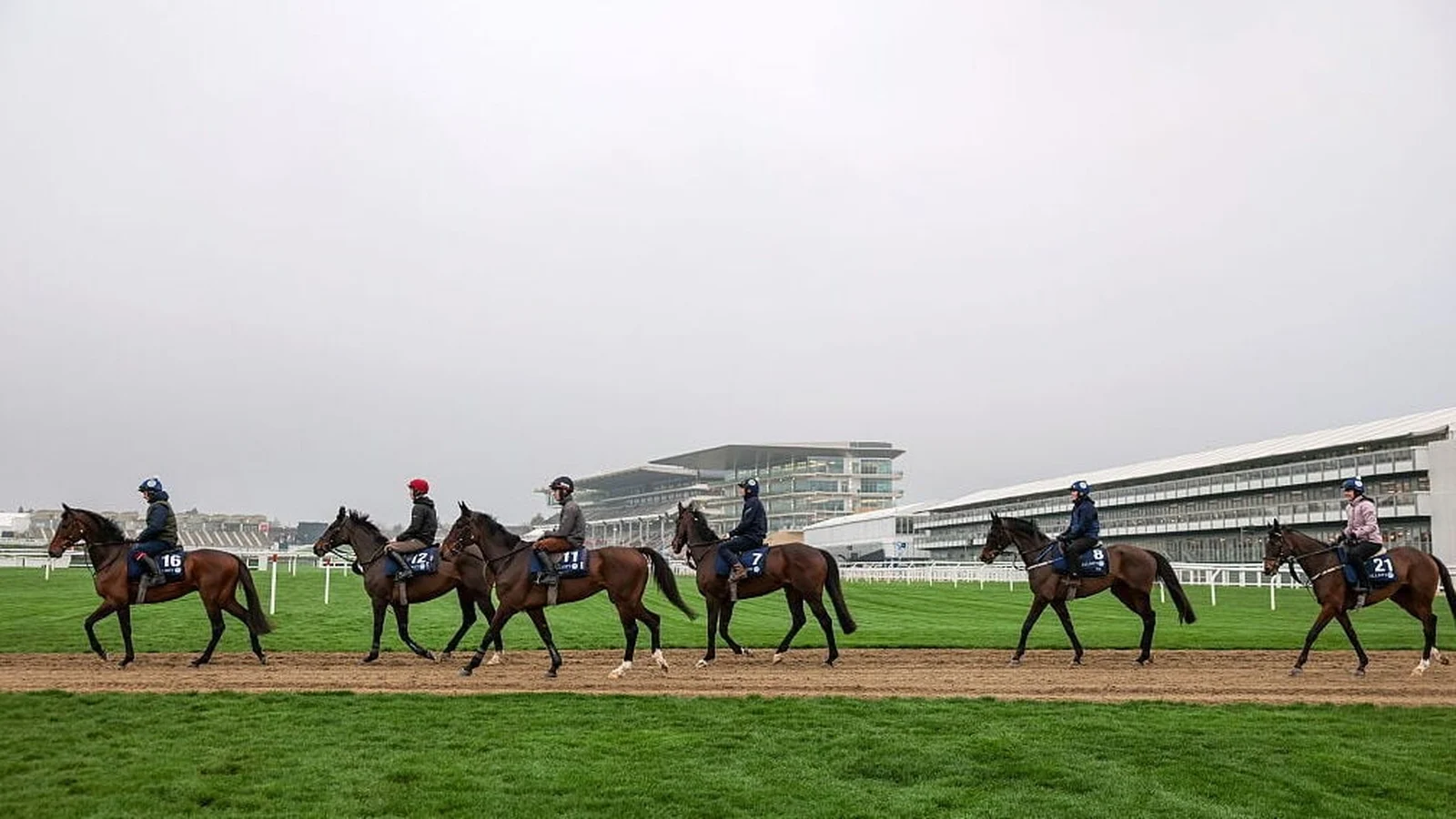
There is a sound that arrives with the first pale wash of March sunlight over the Cotswolds — a human tide letting out a collective breath that has a name and a history: the Cheltenham roar. It cracks across Prestbury Park like a starting gun, sends pigeons from the grandstand roof into the sky, and tells you in one instant that this is not merely a horse meeting, but a four-day ritual that stitches together families, bookies, trainers and townsfolk.
Ask any regular and they’ll tell you the roar feels the same every year — loud, warm, tribal. Yet under the noise, the numbers are talking back. Attendance that once shot to a post-pandemic high of roughly 280,000 in 2022 has tightened into a new rhythm. Organisers capped daily entry at 68,500 the next year to make room for comfort; for 2026 that cap has been nudged again to 66,000, a small retreat that signals a bigger question: how do you preserve the atmosphere when the economics of getting here are changing fast?
Counting the Crowd — Why 219,000 Matters
When the festival drew around 219,000 people last year, pundits noticed. It was the smallest turnout in about a decade and day-two footfall dropped by more than a third compared with earlier years, with only some 42,000 on course. For a festival estimated to inject roughly €300 million into the local economy, that decline is not an academic curiosity — it is a pulse reading for pubs, B&Bs, taxi drivers and the bakeries that racegoers line up at before the first race.
“You can feel it in the town,” says a Cheltenham pub owner, wiping down a bar scarred by decades of shouting bookies and jubilation. “Thursday used to be pandemonium. People would stay the week and fill every corner. Now it’s a shorter, sharper weekend for many. That changes what the town needs from us.”
Small Fixes, Big Hopes
Organisers have not stood idly by. In the autumn they rolled out a package of measures designed to make the week more inviting for repeat visitors and new faces alike: a reduced daily cap for comfort, extended “early bird” windows for cheaper tickets, and a rollback of drink prices to 2022 benchmarks — meaning a pint of Guinness will retail at about £7.50 (€8.67) during the meeting. There’s also a special four-day package for those travelling from outside Britain, offered to early bookers at around £299 (€346).
To ease the accommodation pinch — a perennial headache in a town that swells drastically for the week — the racecourse’s “Room to Race” initiative expanded this year. The scheme pairs visitors with more than 500 discounted rooms and alternative lodgings beyond Cheltenham’s town centre, an olive branch to any traveller gobsmacked at last-minute hotel invoices pushing €500 a night for a single room.
- Daily cap in 2026: 66,000
- Post-Covid peak attendance (2022): ~280,000
- Attendance last year: ~219,000
- Estimated local economic impact: ~€300 million
- Price of a pint during the festival (2026): ~£7.50 / €8.67
“We’re trying to protect the feel of the place while making it more affordable,” says a festival organiser, who adds that comfort and atmosphere are not luxuries but essentials that keep people coming back. “People remember how they felt at Cheltenham more clearly than the winners they saw.”
The Irish Connection: Horses, Habit, and Tradition
Walk the parade ring and you’ll see tricolours as frequently as Union flags; roughly one-third of festival goers make the crossing from Ireland. The Irish presence is not just demographic, it is competitive. In recent festivals, Irish trainers have dominated the big races and the Prestbury Cup — the tally of Irish versus British winners — has not been prised back to Britain since 2015. Last season Ireland registered a commanding 20 to 8 victory, a margin driven in part by prolific yards whose names have become shorthand for excellence.
That sporting imbalance feeds into broader strategies. British trainers and owners have been shifting their buying and recruitment policies, eager to reverse the tide. At the same time, Ireland’s powerhouse yards — and a new generation of trainers — mean the festival is still widely expected to tilt green.
“We travel for the horses,” says a woman from County Carlow who has booked through a long-established Irish tour operator for two decades. “Two days of racing, two nights away — that’s the sweet spot for us now. We still get the same crack, but we don’t have to be exhausted by Sunday.”
Tully’s Travel, one of the specialist Irish operators, reports steady bookings despite the changing habits: two-day packages — flights, transfers and rooms — can be had for around €500, a sum many consider reasonable given the costs of travel. But other options have sprouted. The phenomenon known as “Costa del Cheltenham” has British fans flying south to Spain or the Canaries to watch the livestreams in sunshine, swapping muddy boots for flip-flops and a TV screen that shows Rachael Blackmore as brightly as it shows the Atlantic.
Who Comes, and Why It’s Changing
The contours of the crowd are shifting. Long-standing four-day devotees are aging out or choosing to condense their pilgrimage into two days. Younger fans, or those more price-sensitive, are finding creative ways to be present without breaking the bank: coach trips, morning commutes for day tickets, or the increasingly popular practice of staying in neighbouring towns and villages.
“Cheltenham used to be the week where you didn’t sleep,” laughs a young punter from Gloucester. “Now we plan, we pick two big days and we go hard. It’s more efficient — and our liver agrees.”
Beyond the Ropes: What Cheltenham Says About Sport and Society
There is a deeper story here than attendance figures and ticket caps. Cheltenham is a microcosm of how tradition adapts in a world of rising costs and shifting leisure patterns. It raises the question: how do cultural moments survive when the economics that sustain them are under pressure? And who gets priced out of rituals that were once the province of middle-class weekenders and racing obsessives alike?
Local businesses talk about the festival like family: the baker who sells out of sausage rolls by 11 a.m., the taxi driver who memorises the faces of regulars, the bar staff who can predict the order of pints on a foggy Friday. For them, the festival is lifeblood. For visitors, it is respite, sport, superstition, and sometimes, community. For trainers and owners, it is an advertising billboard measured in stud value and reputational capital.
And for the rest of us — the spectators of these stories — Cheltenham asks us to reflect. Do we preserve a beloved festival by making it more exclusive, or by bending everything slightly to meet modern needs? Can the roar remain, even as the crowd reshapes itself?
When the first tape snaps at 1.20pm for the Supreme Novices’ Hurdle, the questions will wait at the rails and be answered, for a moment at least, by the shapes of horses and the rhythms of the crowd. Until then, the town hums with anticipation, with last-minute suitcases being jammed shut and voices comparing form lines as if they were family stories. The roar will come — as it always does — and with it the delicious, complicated certainty that for four days, Cheltenham matters.