On the Edge of the Strait: War, Oil, and the Fragile Thread That Holds a Region Together
The air above the Gulf tastes like dust and diesel. Markets that normally hum with the banter of shopkeepers and the rattle of delivery trucks feel hushed, as if the whole economy is holding its breath. From Tehran to Tel Aviv, from Riyadh’s glass towers to the fishing ports that dot the Strait of Hormuz, life has been rerouted by a single, terrible fact: a conflict that erupted in late February has spread like a stain, and nobody is sure how long it will take to scrub clean.
“We wake up and count who we have left,” said Mahsa, a flower seller near Tehran’s Grand Bazaar, her hands wrapped around a plastic cup to keep warm. “The flowers will die if the trucks don’t come. The trucks won’t come if the sea is closed.” Her voice was low, a map of exhaustion and resolve.
A timeline compressed into weeks, or at least that’s the line
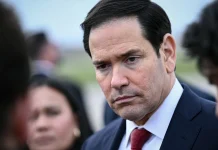
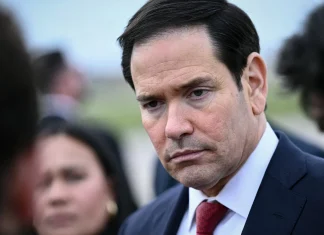
Washington now says it expects military operations to be wrapped up in weeks rather than months. “We are on or ahead of schedule and expect to conclude it at the appropriate time here — a matter of weeks, not months,” US Secretary of State Marco Rubio told reporters after meeting G7 counterparts in France.
Still, the language of reassurance sits next to the language of escalation. US officials say they can meet core objectives “without ground troops,” and yet tens of thousands of service members have been repositioned. Two contingents of Marines — each one the size of a small town — are headed to the region, the first arriving aboard a massive amphibious assault ship. The Pentagon is also moving elite airborne units. “We’re sending forces to give the president maximum optionality,” Rubio said, a phrase meant to soothe but which carries the weight of contingency and possible expansion.
What the fighting looks like on the ground (and in the air)
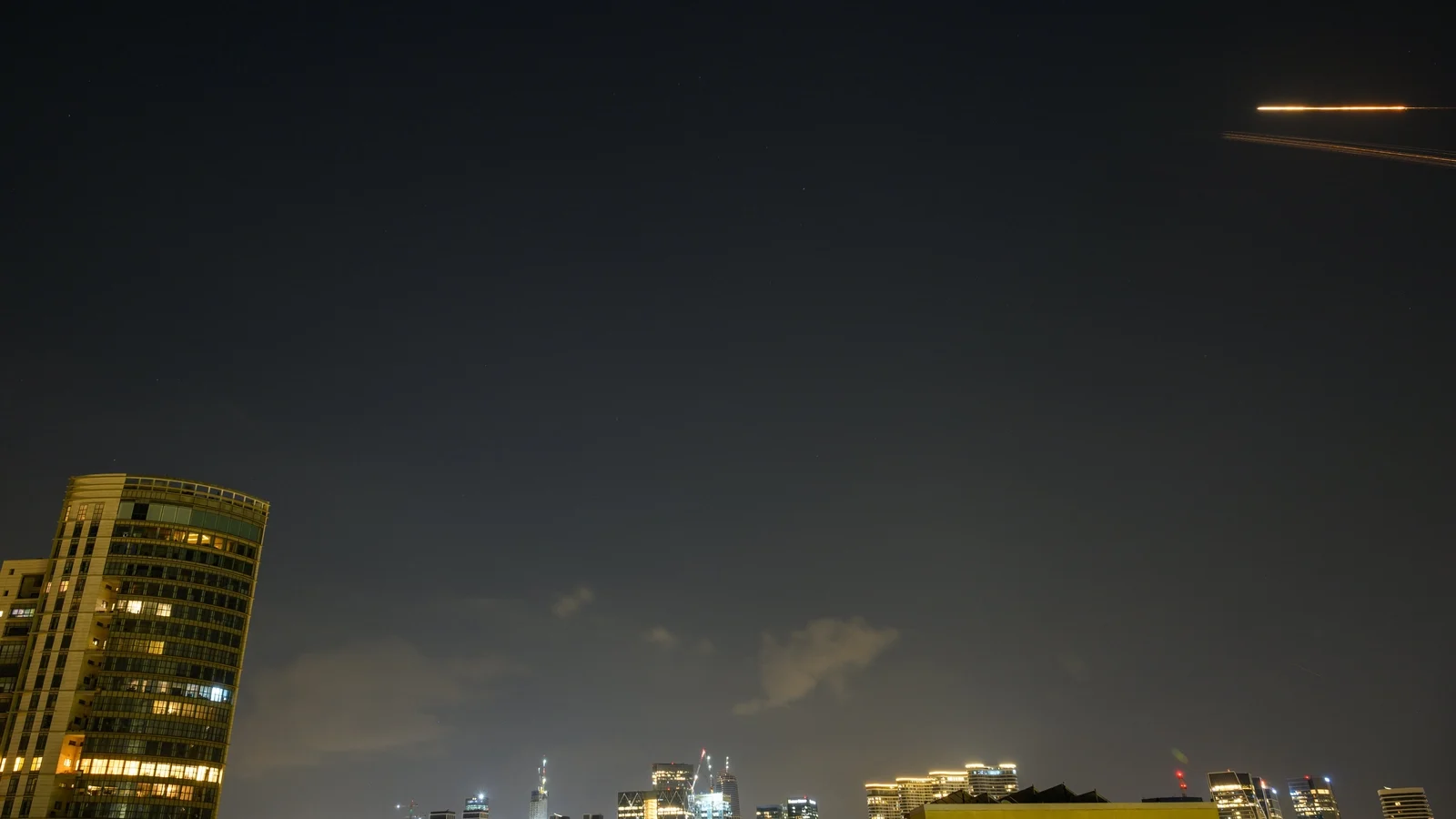
Missiles and drones have become the punctuation marks of the conflict. Iran’s strikes — aimed at military, industrial and, at times, civilian targets across the region — have left damage in Tel Aviv and wounded US troops in Saudi Arabia.
At Prince Sultan Airbase, a US official told Reuters that an Iranian attack seriously wounded two service members and injured ten more, while other media reports said refuelling aircraft were damaged. The tally of American casualties since the fighting erupted now includes more than 300 wounded and 13 killed — numbers that ripple outward into small towns and apartment complexes across the United States.
In Iran, relief agencies say more than 1,900 people have died and at least 20,000 have been injured — figures supplied by the International Federation of Red Cross and Red Crescent Societies. In Lebanon, sustained strikes and counterstrikes have displaced roughly one in five people, according to humanitarian groups working on the ground.
Targets, talks, and the thin line between diplomacy and all-out war
Even as bombs fell, Washington pressed a diplomatic bent. President Donald Trump has sought to portray negotiations as a pathway out of the spiral, extending a deadline by ten days for Iran to reopen the Strait of Hormuz and warning of strikes against the country’s civilian energy grid if it did not comply.
Steve Witkoff, the president’s special envoy, said the US was hopeful of meetings with Tehran within a week, asserting that a 15-point proposal aimed at ending the war had been transmitted to Iran via Pakistan. “There are red lines,” Witkoff told reporters. “No enrichment, relinquish the stockpile” — demands that many analysts say will be politically, technologically and nationally fraught for Tehran.
Iranian officials have been ambivalent in public. After strikes damaged a decommissioned heavy-water reactor and a yellowcake production facility — incidents the International Atomic Energy Agency said did not show off-site radiation increases — Tehran did not immediately accept or reject the US proposals. A senior Iranian official told Reuters that continuing strikes while diplomatic channels were being explored were “intolerable.”
The risk that shipping becomes a revenue stream for conflict
Perhaps the most geopolitically bruising idea on the table is Iran’s potential to impose tolls on commercial traffic through the Strait of Hormuz, the narrow maritime choke-point through which around a fifth of the world’s oil passes. Marco Rubio told G7 ministers that countries benefiting from the passage — not just the United States — should step up to secure it.
“It can’t be that global shipping pays for the price of war,” said a Gulf diplomat speaking on condition of anonymity. “We need an international, sustained framework to protect commerce.”
Markets shudder; ordinary lives strain
The damage is not only human and diplomatic. Markets are reacting. Brent crude topped $112 a barrel and had risen more than 50% since the war began, amplifying anxieties about inflation and recession. In the US, diesel prices in California hit a record average of $7.17 a gallon, according to the American Automobile Association — numbers that trickle down to farmers, truck drivers and families deciding between heat and groceries.
“When fuel goes up, everything goes up — bread, fertilizer, shipping,” said Sara Ibrahim, who manages a small shipping company in the port city of Jeddah. “We recalibrate every day.”
On the neighborhoods: small tragedies, big disruptions
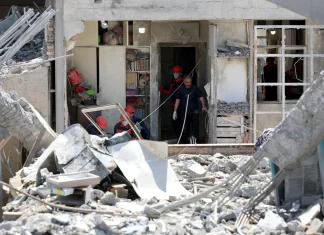
In Zanjan, a northwestern Iranian city, a US-Israeli strike on a residential unit reportedly killed five people and injured seven more. In Tel Aviv, buildings were damaged and a 60-year-old man was killed in one of the missile strikes. Each casualty has an address, a lover, a neighbor — thousands of small narratives that together form a very large grief.
“There’s a list on my fridge,” said Daniel, a volunteer with an aid group in Beirut. “Every night we add a name. It makes it more real, more urgent.”
Ask yourself: where does responsibility lie?
It’s easy to assign blame in headlines. It’s much harder to answer the practical questions that keep diplomats and generals awake at night: Can military strikes neutralize long-range capabilities without unleashing uncontrollable escalation? Can demands that a country dismantle nuclear and missile programs be verified and sustained? Who pays for safeguarding the trade arteries that feed the global economy?
Security analysts point out that, according to US intelligence sources cited by Reuters, only about a third of Iran’s missile arsenal has been confirmed destroyed. That uncertainty means a durable peace would require more than battlefield wins; it would require careful, multilateral mechanisms for verification and armament control — and perhaps concessions that neither side wants to make.
“Historically, wars that end on shaky diplomatic terms don’t stay quiet for long,” said a senior analyst at an international research institute. “You can scrimp on the details now, but the bill will come due later.”
What’s next?
For now, the region spins between military action and signaling toward diplomacy. Forces are in place, proposals are on the table, and the immediate economic shocks are spreading outward — to pensions, to food prices, to the cost of heating a home.
But beyond the charts and casualty counts, there are the small moments that linger: the florist adjusting her stock, the volunteer checking the list on the fridge, the father in a small US town opening the door and seeing a soldier who had gone to war now home with a limp. Those moments are the human ledger of any conflict — the unpaid hours that will echo long after the headlines move on.
Will diplomacy stitch this region back together? Or will the tolls of war — economic, human, strategic — compound into another chapter of generations-long strife? The answer will shape not only the peoples who live around the Gulf but the global markets, migration patterns and security architectures that touch us all. Where do you stand when the strait that fuels the world’s tanks and homes becomes a bargaining chip? Think of the flowers in Mahsa’s stall. How much is a passage worth when a life is on the line?