When Alliances Fray: A Paris Rebuke, A Kyiv Grief, and the Hard Calculus of War
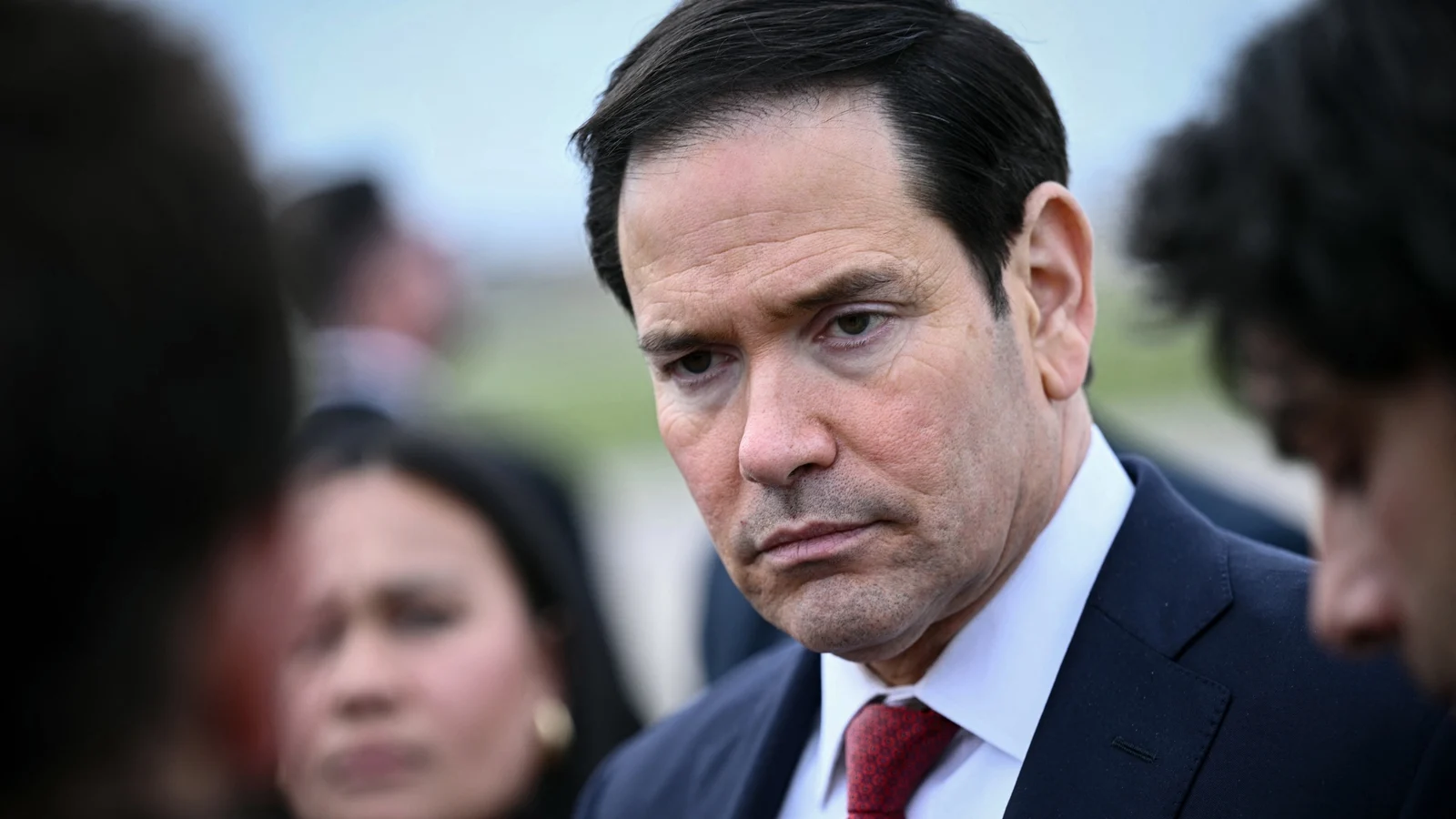
The rain on the Paris pavement had a way of sharpening words that afternoon—everything seemed louder, closer, as if the city itself leaned in. Marco Rubio, the U.S. Secretary of State, stepped away from a flurry of diplomats and pointedly dismissed President Volodymyr Zelensky’s charge that Washington had been pushing Kyiv to cede the eastern Donbas region in exchange for future security guarantees.
“That’s a lie,” Rubio told reporters. “What he was told is the obvious: security guarantees are not going to kick in until there’s an end to a war because otherwise you’re getting yourself involved in the war.” His tone was flat, final. “That was not attached to, unless he gives up territory. I don’t know why he says these things. It’s not true.”
A small word—lie—big ripples
It is a small, ugly word in diplomacy. Lie. Said in public. Said in Paris, after leaders from the Group of Seven had filed through a day of tense meetings. The exchange rippled quickly across feeds and newsrooms: a rare public rebuke of Kyiv from a senior U.S. official at a moment when unity among allies matters more than ever.
Zelensky, in an interview earlier, had suggested Western pressure to accept territorial compromises—something that, if true, would sit like a burr under the coat of NATO unity. Rubio’s denial was aimed not only at the claim but at the politics spinning around it: the possibility that Kyiv might be pushed into conceding ground before it ever received the formal security guarantees it has been pleading for since the 2022 invasion that so brutally reconfigured eastern Europe.
The human cost behind the talking points
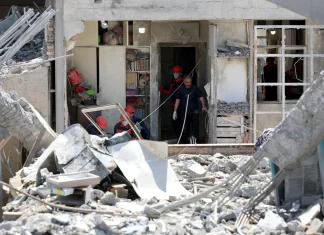
Talk of territory and guarantees can feel abstract in capital corridors—but it is raw and immediate for people living near the front lines and for millions displaced by the conflict. Since Russia’s full-scale invasion in February 2022, the region has been convulsed by destruction and displacement—millions of Ukrainians uprooted, entire neighborhoods turned to rubble.
“When they discuss Donbas like it’s an item on a menu, I think of my brother’s house in Severodonetsk,” said Kateryna, a teacher from the eastern suburbs who now volunteers at a shelter in Lviv. “You cannot bargain over someone’s home as if it’s a promise to be fulfilled later.” Her voice carries the weary steadiness of someone who has become fluent in the vocabulary of loss.
Experts remind us the math of modern war is unforgiving. Weapons, ammunition, air defenses—all are finite. Supply chains have been stretched for more than four years; factories, political will, and national inventories have limits. That is why Rubio’s subsequent comment—that equipment could be diverted to meet U.S. needs following strikes on Iran—landed with particular gravity.
“Nothing yet has been diverted, but it could,” Rubio said. “If we need something for America and it’s American, we’re going to keep it for America first.” It’s a blunt, utilitarian calculus: sovereign countries prioritizing their own security in a moment of competing crises.
Voices from the ground and the war rooms
Across the globe, reactions threaded through living rooms, ministries, and think tanks. In Kyiv, a foreman named Oleg, who lost his masonry business to shelling in 2023, slammed his fist lightly on a café table. “We fought to keep our land. We’re not bargaining away cemeteries,” he said. “If allies mean to help, they should say so with weapons and words that match.”
A NATO analyst in Brussels, speaking on condition of anonymity, framed the debate differently: “Security guarantees by their nature presuppose a cessation of hostilities. To promise active military support without a finished conflict is tantamount to dragging allies into a war. That is why the sequencing—end the war, then guarantees—has legal and practical logic.”
Yet other voices worry about political signaling. “When you publicly call a partner a liar, you weaken trust,” observed Dr. Sabrina Malik, a senior fellow at an international security institute. “Trust is the oxygen of alliances. You can have plans and lists and lines of communication—like NATO’s Prioritised Ukraine Requirements List—but public fractures amplify fears in Kyiv and Moscow alike.”
Local color: markets, mothers, and memory
In Kharkiv’s open-air market, a vendor handed me a cup of bitter coffee and a small, wry smile. “Everyone watches what America says,” she said. “But we also know how long it takes to rebuild a house. You cannot tell me that a guarantee after the war will bring back a winter in the basement of my mother’s building.” These are not abstract policy problems to her—they are the lived realities of winters spent without heat, of children learning to duck at every distant thunder of artillery.
And in a Washington café, a retired Marine named James weighed in: “No one wants shortages. If there are strikes elsewhere that require equipment, yeah—you preserve your own forces. But have the conversation honestly with your partners. Don’t make it a surprise.” His eyes were tired; his voice held the kind of straightforward clarity developed under pressure.
What the lists and jargon mask
Diplomatic and defense apparatuses have names for the machinery that organizes aid: prioritisation lists, shared procurement, pooled funding. The so-called Prioritised Ukraine Requirements List—an initiative by NATO allies to coordinate weapon purchases for Kyiv—was mentioned by Rubio as unchanged, for now. But behind the bureaucratic comfort lies a brittle reality: these lists are only as good as the political will and industrial capacity that back them.
Supply chains can be rerouted, factories repurposed, and priorities reshuffled. When two theaters of conflict demand similar munitions, the decisions are as much about domestic politics as they are about military needs. And when senior figures publicly squabble, the ripple effects can be strategic, economic, and deeply human.
Questions that linger
So what do we make of it? Is Rubio right to insist that guarantees wait until a conflict ends? Is Zelensky justified in fearing being asked to pay for them with Ukrainian soil? How do allies balance the obligation to deter aggression with the immediate imperative to protect civilians and front-line defenders?
These are not hypothetical questions for the families living along the frontline. They animate everyday life: whether to repair a roof now or hold out; whether to send a son back to school or keep him in a shelter. They reverberate in foreign ministries and factory floors, in parliamentary debates and kitchen-table conversations.
Where do we go from here?
Alliances are tested in the crucible of competing crises. They are, after all, human institutions—built on promises, politics, and the messy honesty of self-interest. If the moment in Paris did anything, it was to reveal the raw edges where policy rhetoric meets lived reality.
What would you do if you were in charge of a dwindling stockpile that three theatres of conflict could demand? Prioritise homeland defense? Share with an embattled ally? Keep diplomatic bridges open with blunt honesty, or smooth over the rough talk for the sake of unity?
These are hard choices, and the people in Kyiv, Washington, Paris, and beyond are watching. They want clarity, commitment, and above all, a plan that recognizes that treaties and territories are not simply lines on a map—they are the outlines of people’s lives.
So we wait, watch, and ask our leaders to explain not only the what, but the why. And in the meantime, those on the ground will keep counting what matters: homes rebuilt, lives saved, and the fragile hope that promises will meet the grit of reality.