When the Night Roared: Kyiv, a Hypersonic Missile, and a Continent on Edge
The city smelled of smoke and melted plastic before dawn. Sirens tore the cold air, and for a few terrible hours the capital of Ukraine felt less like a capital and more like a village huddled under a long, grinding storm.
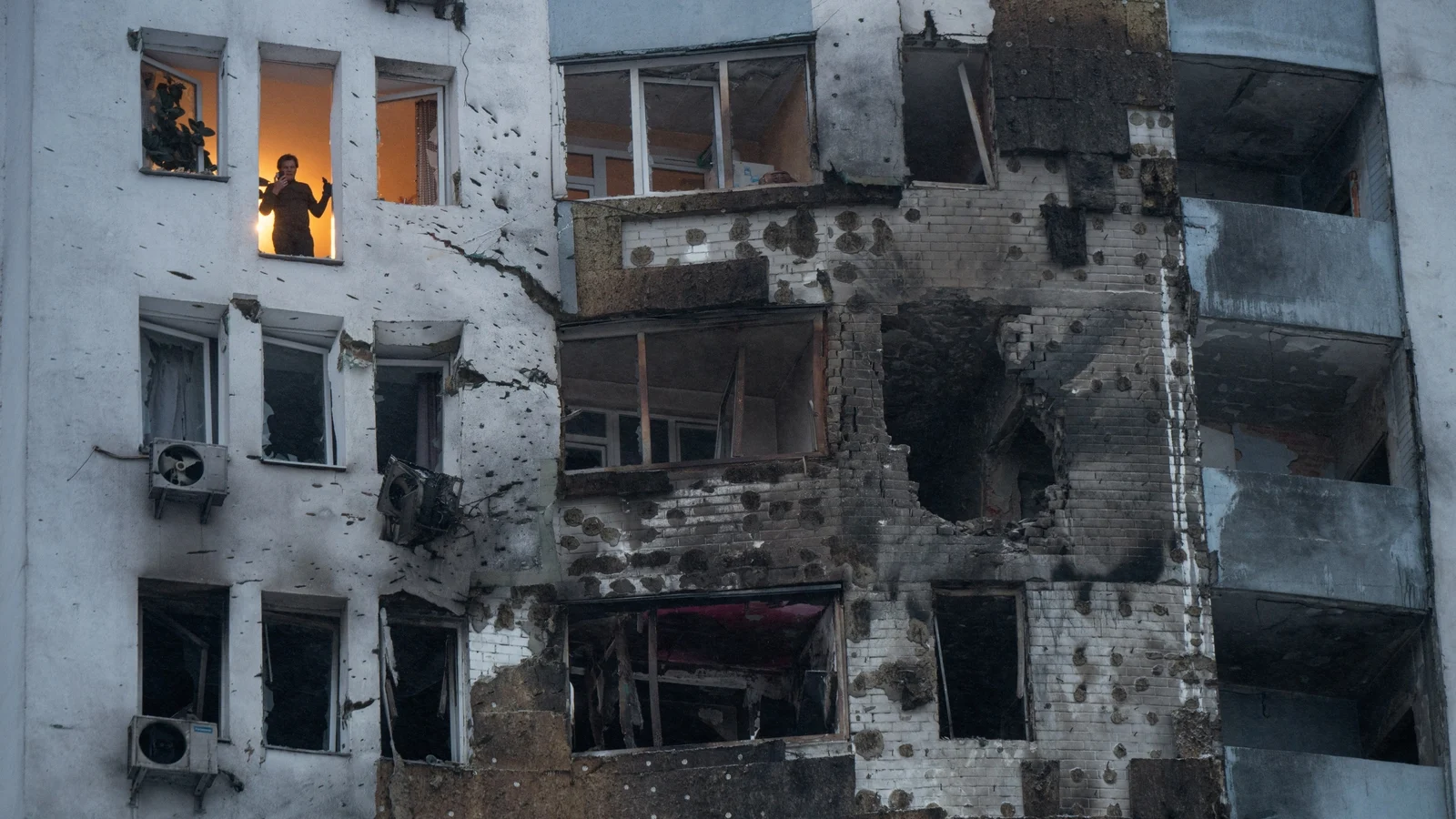
Overnight, Russian forces launched a powerful hypersonic missile — the Oreshnik — striking in western Ukraine, roughly 60 kilometres from the Polish border. Kyiv officials say the strike came amid a wave of air attacks that killed at least four people in the capital, damaged residential blocks, and knocked out heating for nearly half the city as temperatures hovered around -8°C. The assault also reportedly dented the facade of the Qatari embassy, a jarring image of diplomacy bruised in the middle of a frozen European winter.
More than a Weapon: A Message Fired at Europe
The Oreshnik is not just another missile in a long list. Moscow markets it as a high-speed, hard-to-intercept system with a strategic range that places much of Europe within reach. Western analysts warn it is capable of carrying nuclear payloads, though there is no indication that the strike involved any such escalation.
“Firing a missile of this class so close to NATO’s eastern flank is a calculated provocation,” said Dr. Lina Petrov, a security analyst in Warsaw. “It’s meant to unsettle capitals, to force conversations about air-defence stocks and what deterrence looks like in the 21st century.”
Kyiv’s foreign ministry was blunt. “Such a strike close to the EU and NATO border is a grave threat to security on the European continent and a test for the transatlantic community,” Andriy Sybiha, Ukraine’s foreign minister, wrote on social media. “Putin uses an IRBM near EU and NATO border in response to his own hallucinations — this is truly a global threat.”
What Moscow Says — and What Others See
Russia framed the strike as retaliation for an alleged drone attack on one of President Vladimir Putin’s residences at the end of December. Kyiv dismissed that claim as false; Washington publicly said the incident did not occur. Still, the Kremlin insisted its action targeted a drone factory and energy infrastructure in the Lviv region.
“The logic here is perverse,” said Elena Markov, a European affairs commentator. “Announce a phantom attack, then fire a missile to ‘punish’ it — all while tests of resolve in Brussels, Washington, and across capitals are under way.”
On the Ground: Voices from Kyiv
At a metro entrance converted into a makeshift shelter, people wrapped in heavy coats and thermal blankets made quiet lists in their heads: relatives to call, apartments to check, where to find a warm meal. Officials urged residents with means to temporarily evacuate to places with alternative heating — an extraordinary plea from a city that had endured months of bombardment and adaptation.
“Where is Europe, where is America? It doesn’t hurt them the same way,” said Nina, 70, who lives in one of the apartment blocks scarred by the blast. Her voice was edged with fatigue and a sharp disbelief that the world’s decision-makers might be negotiating in drawing rooms while her staircase smelled of burnt wood.
“I fought the fire with a garden hose,” added Kostiantyn, 58, a neighbour who learned to improvise firefighting and first aid after repeated air alerts. “We keep living between the sirens and brief silences. That silence always feels like the breath before a storm.”
Journalists on the ground described drones exploding against residential buildings and missiles whistling overhead. Casualties — at least four dead in Kyiv — and damage to roughly 20 residential buildings were reported. City officials said heating was disrupted for about half of the capital’s apartment blocks when critical infrastructure was hit.
Immediate Reactions in Europe and Beyond
European leaders reacted with alarm. EU foreign policy chief Kaja Kallas wrote that the Oreshnik’s reported use was “a clear escalation against Ukraine and meant as a warning to Europe and to the US.” She urged EU countries to “dig deeper into their air defence stocks and deliver now,” and warned that the bloc must increase the costs for Moscow through tougher sanctions and support.
President Volodymyr Zelensky, addressing the country in a brief recorded message, called for a “clear reaction from the world, above all the United States, whose signals Russia truly pays attention to.” He framed the attack as both a human tragedy and a diplomatic litmus test.
Where Does This Leave Negotiations and the Broader War?
The strike landed at a delicate moment. Diplomats have spent months trying to nail down post-war security guarantees, and Kyiv has said it is close to finalising a security package with the United States. Yet on the ground, Russia has continued fierce air and ground offensives since launching a full-scale invasion in February 2022.
Territorial issues remain bitterly unresolved. Russia occupies roughly one-fifth of Ukrainian territory, and its insistence on control of areas in the Donbas region sits at odds with Kyiv’s positions. These are not mere bargaining chips; they are towns, thousands of families, and long histories of life and loss.
“A missile like the Oreshnik is not just about the hardware,” said Dr. Petrov. “It’s about how Russia shapes the conversation: to make the West consider the immediate need for more robust air defences, and to pressure negotiators to recalibrate their red lines.”
What Should the Rest of the World Do?
It’s tempting — and perilous — to simplify the choice: send more weapons, sanction harder, open new diplomatic channels. In reality, the options are messy and costly. Europe must decide whether to accelerate deliveries of air-defence systems, whether to widen sanctions that will ripple through global energy and food markets, and how to protect NATO’s eastern members from being dragged into a wider conflict.
Ask yourself: if a high-speed weapon can reach deep into Europe and skirt interception, what does deterrence look like? How do democratic countries reassure their citizens without escalating tensions into open war? And perhaps most human of all—how do we keep ordinary lives, like Nina’s and Kostiantyn’s, from being erased in the calculus of strategy?
In the End, a Human Story
The missile exploded somewhere west of the city; its echo travelled farther than any official line of text. For those in Kyiv, the blast rearranged routines — turning commutes into searches for warm spaces, deadlines into lists of loved ones to call, plans into potential evacuations.
For the rest of Europe and the wider world, the strike was a reminder that a regional conflict has long ago become a global fault line. It asks whether institutions built after the last great war — alliances, conventions, shared norms — still have the power to prevent an escalation that would redraw the map of security in the decades to come.
Tonight, as people sift through ash and email, the question hangs over the continent: will the international community respond with clarity and speed, or will this be another night that passes into a long, grinding winter?