A blaze on the Baltic: Ust-Luga wakes to smoke and sirens
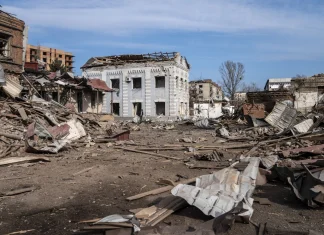
Just before dawn, a ribbon of smoke carved a dark seam across the Baltic sky above Ust-Luga — a place usually known for the low, steady clatter of cranes and the salt-sweet smell of seawater and diesel. Then came the red and blue flashing lights, the distant boom of emergency engines and, in the mouths of port workers and fishermen, a stunned quiet that has a way of speaking louder than words.
Regional officials said a drone strike set a fire at the sprawling port complex. “There is damage to the port. There were no casualties,” governor Alexander Drozdenko posted on social media, and emergency crews were reported to be working to cut the blaze. In the same update, he said 36 drones were destroyed overnight in the wider region — a stark marker of the intensity and persistence of these nightly attacks.
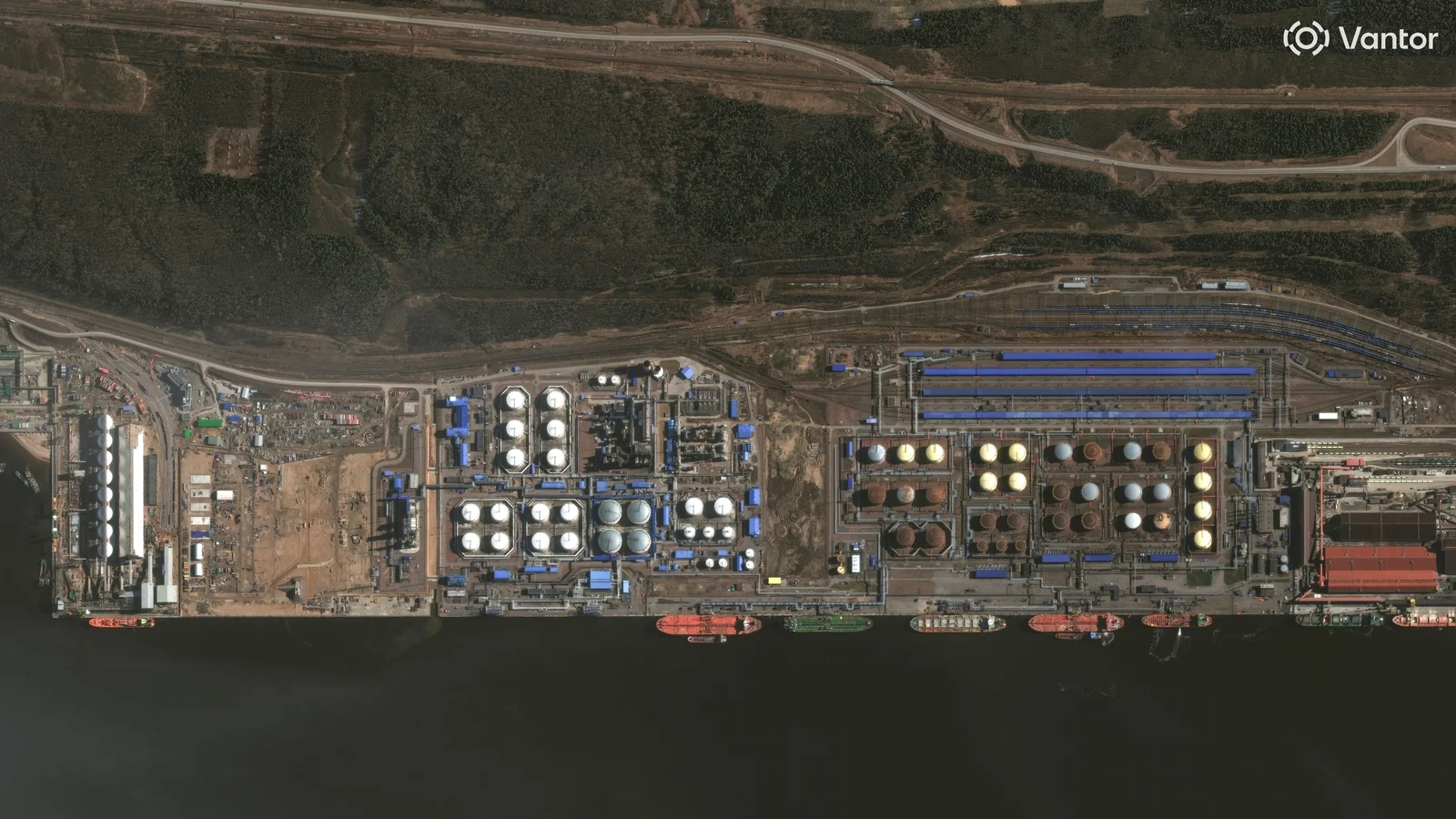
Ust-Luga is no sleepy seaside town; it is a major export hub for fertilizers, oil and coal. Towering silos and conveyor belts feed tankers that slip out along the Gulf of Finland. When operations there are interrupted, the ripple reaches far beyond the immediate shoreline: ships diverted, contracts renegotiated, markets jittery. For workers who rely on the port’s rhythm, the fire is not only an abstract geopolitical headline — it is a threat to everyday livelihoods.
Ports in the crosshairs: a strategic pattern
This strike is the latest episode in a pattern that has intensified in recent weeks: drones, often low-flying and hard to detect against coastal backdrops, have been used to target infrastructure that underpins economic and military power. Ukrainian forces have said they view refineries, oil depots and ports as legitimate targets in efforts to reduce revenue streams that help fund Russia’s offensive. Moscow, for its part, describes the strikes as attacks on its sovereign territory.
Earlier this week, the Baltic port of Primorsk — one of Russia’s key oil export terminals — was also struck. Satellite images captured a column of black smoke, a stark visual that circulated globally and underscored how local fires become international signals. In another incident, a drone strike in the Belgorod region killed a civilian in the border town of Grayvoron, according to local authorities — a grim reminder that these operations do not exist in a vacuum and that the human cost can be immediate and tragic.
Numbers that complicate the picture
Military statisticians and air defense briefings offer a mix of figures: in its latest overnight offensive, Russian forces reportedly launched 442 drones and one missile, Kyiv’s air force said, adding that 380 UAVs were shot down or intercepted. Whether one reads those numbers as proof of an overmatched defense system or as evidence of exhausting attritional warfare, the underlying reality is that both sides are deploying unmanned systems at an unprecedented scale.
From the quay: voices that carry salt and sorrow
“You get used to the horn of the tugs and the cranes at night,” said Yuri, a tugboat captain who has worked Ust-Luga’s docks for three decades, his hands stained from engine grease and his eyes rimmed with sleep and worry. “But you never get used to the boom of something falling from the sky. We are not soldiers. We pull ships in and out. Now everyone asks each other whether we’ll work tomorrow.”
A young port crane operator named Anya, who lives in an apartment block overlooking the terminals, described the surreal choreography of a community under partial blackout. “The cranes keep moving during the day. At night, you notice how quickly everything goes quiet. You stand on the balcony with a mug of tea and watch the red dots moving. They don’t look like much on a screen, but they make the whole place shake.”
From the other side of the border, residents of Grayvoron speak of a different fear. “We went out to see what happened,” said Lena, a schoolteacher, voice tight. “There was broken glass, a man on a stretcher. People were crying. It’s so close to where we send our kids to kindergarten. This is not a front line for us, but it feels like one.”
Why these ports matter — locally and globally
It’s worth asking: why target ports? The answer is both practical and strategic. Ports like Ust-Luga and Primorsk are nodes in a global supply network. They handle chemicals and bulk commodities that ripple through price indices, farmer balance sheets and heating bills in Europe and beyond. When these arteries are constricted, the effects are not immediate only for the belligerents; they are felt at grocery stores, at fertilizer depots feeding seasonal crops, and in energy markets that price in risk as much as supply.
Energy revenue has been a central source of export earnings for Russia in recent years. Analysts warn that sustained disruption to key export hubs could translate into lower hard-currency inflows, complicating military procurement or foreign payments. But the calculus is complex: attacks that affect civilian supply chains or kill civilians risk international sympathy and have legal and ethical implications. “Targeting economic infrastructure is a blunt instrument,” said Dr. Marta Ivanova, an analyst who studies conflict economics. “It can pressure a state, but it also risks civilian suffering and wider instability in commodity markets.”
Escalation, defence and the age of drones
The recent spate of attacks is part of a broader trend: drones and other unmanned systems have lowered the bar for cross-border strikes, enabling actors to strike with a degree of deniability and with comparatively low cost. Air defenses, designed during an era of missiles and aircraft, are adapting — often imperfectly — to a barrage of small, hard-to-detect targets.
“We are seeing the democratization of strike capability,” said a military technology specialist who asked not to be named. “For hundreds of thousands of dollars, states and even non-state actors can field systems that in previous wars would have required millions invested in aircraft or missiles. That changes the dynamic on both tactical and strategic levels.”
Local authorities and emergency services, meanwhile, are left to deal with the aftermath: fires to extinguish, export schedules to rearrange, and people to reassure. The psychological toll — the hours of sleep lost, the constant checking of phone alerts, the parents who double-lock the windows — is harder to quantify but no less real.
What does this mean for the reader, for the world?
From afar, these are lines on a map and numbers in a briefing: ports hit, drones downed, one civilian killed. Up close, they are the lives of Yuri and Anya, the potash and the crude that feed and heat homes thousands of miles away, and the fragile infrastructure of international trade. When a port like Ust-Luga smolders, it prompts a series of reflections about how modern warfare reaches into markets and kitchens as well as front lines.
So I ask you: when infrastructure becomes a tool of war, where do we draw the line between pressure and punishment? How should international law reckon with strikes that aim at revenue streams but also imperil civilian livelihoods? And as drone technology proliferates, what responsibilities fall on exporter nations, port authorities and insurers to protect the movement of goods that sustain millions?
For now, the cranes at Ust-Luga will swing again. The tugboats will nudge tankers into the gray water, and men and women who know how to read the weather and the waves will return to work. But the memory of this night — the smoke, the sirens, the text alerts flashing across phones — will remain. It will shape decisions at the local quay and also in capital rooms where strategy is made. Nothing about this is contained to a shoreline; it radiates outward, into economies and into the daily lives of people who thought a port was just a place to send and receive goods, not a battlefield.