When the lights went out in Havana: a shadowy tanker and a nation on the brink
It was late afternoon when the lamps died across Havana—one by one the light bulbs in apartment blocks winked out, neon signs stuttered and fell silent, and the hum of traffic receded into a muffled, anxious quiet. For many, the blackout felt less like an accident and more like a reveal: the brittle wiring of an island’s energy life, exposed.
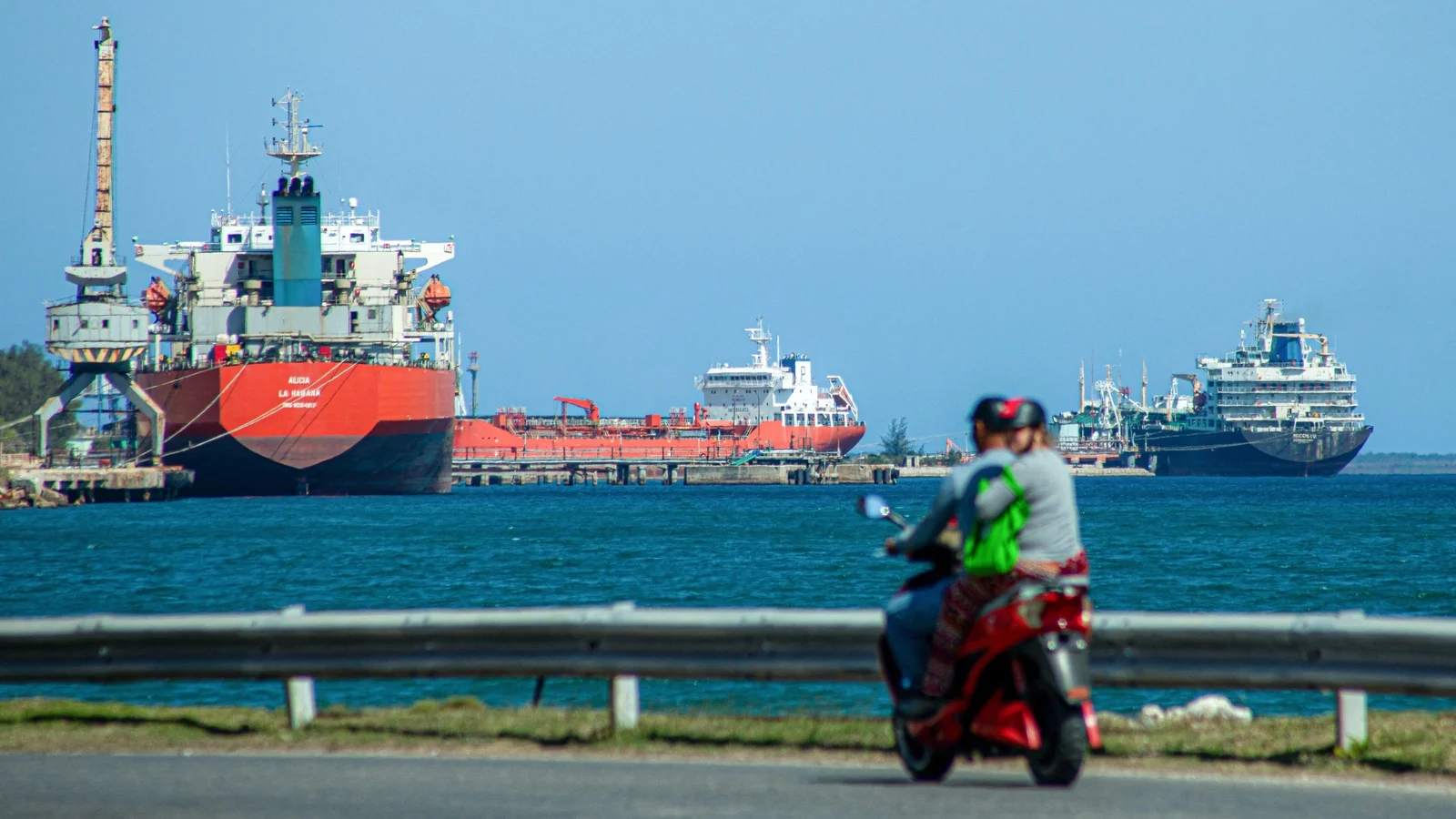
Now comes word that a Hong Kong‑flagged tanker, the Sea Horse, is steering toward Cuba after a voyage marked by evasive maneuvers. Maritime trackers say it is laden with roughly 190,000 barrels of gas oil. If it docks, experts say, it would be the first confirmed delivery of refined fuels to the island in months—an arrival watched closely from Washington to Moscow, from Havana’s Malecón to shipping desks in Gibraltar.
What the trackers saw
Maritime intelligence firms have been following the Sea Horse’s unusual path. Windward, a data firm that monitors ship movements, reports that the tanker took on diesel in a ship‑to‑ship transfer off Cyprus in early February, signaled Havana as a destination, then abruptly changed course to “Gibraltar for orders” as scrutiny on inbound cargoes intensified.
Instead of steaming straight into Cuban waters, the vessel stopped some 1,300 nautical miles out and began drifting slowly—so slowly that its log read “not under command.” The ship’s Automatic Identification System (AIS), the GPS‑like beacon commercial vessels broadcast to avoid collisions and for regulatory oversight, was switched off on multiple occasions. Windward also flagged the lack of Western insurance, a common trait among ships that seek to evade sanctions.
“These are textbook behaviors of the ‘dark fleet’—vessels that use ship‑to‑ship transfers, AIS interference, and alternative registries to obscure cargo origin and destination,” said Elena Rivas, a maritime security analyst who has tracked sanction‑circumvention for more than a decade. “They’re not breaking into a safe; they’re exploiting holes in an old system.”
The human cost of stalled fuel
Cubans feel the consequences of these geopolitical chess moves in the most immediate way. Hospitals burn fuel in generational succession when the grid trips. Food markets shutter when refrigeration fails. The old 1950s Chevrolets idling with anxious drivers sometimes rumble into long queues for gasoline that may or may not come.
“I work the night shift at the municipal hospital,” Maria Delgado, a nurse in Marianao, told me by phone as lights flickered back on. “We ran on a generator for 12 hours last week. The oxygen machines stayed on the whole time, but you always fear what happens if the backup fails.”
Reports suggest that around 10 million people were affected during the most recent national grid collapse—an enormous number on an island of roughly 11.3 million residents. For a society where state systems provide the backbone of daily life, extended outages have cascading effects: medicines that require refrigeration, small businesses that cannot operate, students unable to study after dark.
Where did Cuba’s fuel go?
Cuba’s energy system has long been propped up by external deliveries—most notably from Venezuela in recent decades. But those lifelines have frayed. In January, shipments from Venezuela were suddenly suspended, a blow that compounded an already fragile generation system weakened by long years of underinvestment and an intensifying financial squeeze.
At the same time, the United States has tightened restrictions on shipments to the island, targeting entities that supply or facilitate transfers of fuel, in an effort to pressure the Cuban government. Washington describes many of these measures as sanctions and export controls aimed at curbing revenues to state actors; Havana calls them a blockade and blames them for shortages that bite into everyday survival.
Into this vacuum step tankers like the Sea Horse—and, according to other maritime analytics, the Russian‑flagged Anatoly Kolodkin, carrying some 730,000 barrels of crude. Kpler, another industry tracker, listed the Anatoly Kolodkin as en route to Cuba, a massive cargo that, if delivered, would add crude to an island in urgent need of feedstock for its refineries.
How these deliveries work
To the untrained eye, a tanker is just a big ship. But in geopolitics, tankers are the instruments of policy. Ship‑to‑ship transfers—where one vessel meets another at sea to swap cargo—are a long‑standing practice for commercial reasons. In recent years, however, they’ve also become a tool for sanctions circumvention. By turning off AIS transponders, switching flags, or hiding behind third‑party registries and insurers that operate outside Western markets, some operators can mask who owns the cargo and where it’s actually headed.
“The maritime world is global but not always transparent,” Rivas said. “There are commercial reasons for opacity, but in conflicts or sanction regimes, the same opacity becomes a strategic advantage.”
Voices from the street
On the sidewalks of Old Havana, people spoke with a mixture of hope and skepticism. “If fuel comes, maybe things will calm,” said Jorge, a taxi driver whose English is rusty but whose worry is unmistakable. “But we’ve had promises before. We learned to save our last litres.”
Petra, a grocery stall owner near the capitol, was more blunt: “A tanker is a drop in a bucket. We need a system that works every week, not a shadow delivery every now and then.”
What this means beyond Cuba
These maritime maneuvers are not just about one island. They sit at the crossroads of several global trends: the weaponization of trade, the growth of a “shadow” shipping economy, and the increasing difficulty of enforcing economic pressure in an interconnected world. When a vessel decides, for days at a time, to go dark, it exposes how much of global governance relies on transparency by default.
For countries under pressure, new supply chains will be sought. For those enforcing restrictions, new technical tools and legal pressure must be developed. And for citizens caught between, the stakes are survival and dignity.
Questions that linger
Is a single tanker enough to steady an energy system that has been degrading for years? What happens when fuel arrives without the repairs and investment needed to make the grid resilient? And ethically: should human need be negotiated on the same chessboard as geopolitics?
“Sanctions are a blunt instrument,” said Ana Mestre, a public policy researcher. “They can alter government calculus, but they rarely spare everyday people. Energy is life—it runs hospitals and schools. Any policy that blocks it must be weighed with the human costs clearly in view.”
Afterward
As the Sea Horse plies the Atlantic toward Havana, its arrival is more than a shipping story. It is a moment that asks us to consider the ways in which global power plays translate into disruptions at kitchen tables and in hospital wards. It invites reflection on how the modern world—anchored by technology, legal frameworks, and an increasingly crowded maritime commons—can leave entire populations in the dark.
What would you do if your city went dark for days? How should the international community balance pressure with humanitarian need? These are the questions that will hum long after a tanker docks or turns away—and the answers will shape not just Cuba’s future, but how the world governs the flow of essentials in an age of contested seas.