Nightfall, sirens, and the slow calculus of survival
There are moments that split a life into before and after. In Kharkiv, one such slice of time arrived with a thunder that shook windows and a sky full of light no one wanted to see.
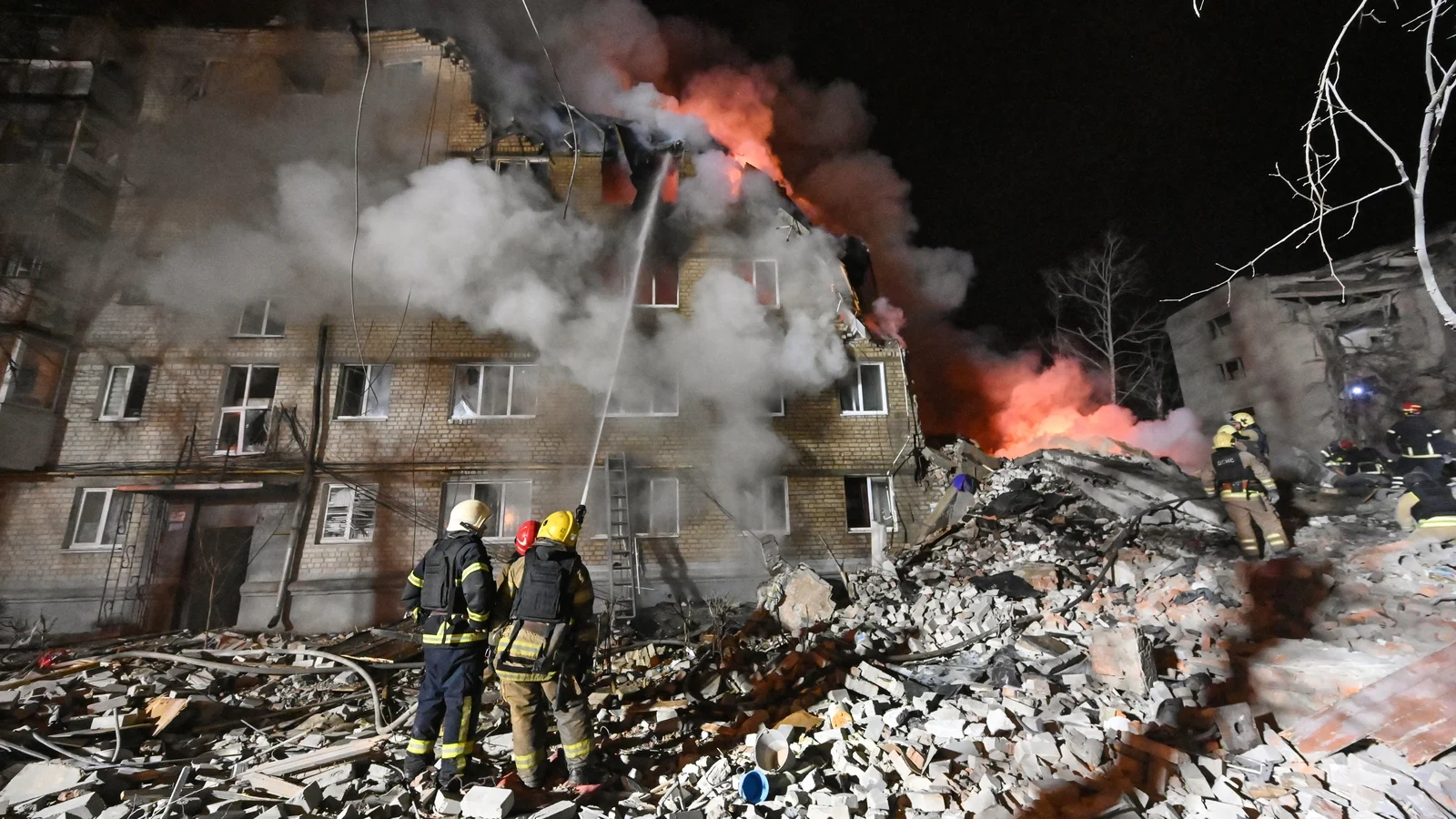
Residents woke to the smell of smoke, the crunch of glass underfoot and the sight of a five-storey apartment building reduced to a jagged pile of concrete and memories. By morning, the official toll read like another grim ledger in a long war: at least 12 people killed across Ukraine and dozens wounded, including children. In Kharkiv alone, officials said a single ballistic missile strike flattened a residential block and killed ten people; Mayor Igor Terekhov later said the victims included two women and two children.
“Since last night, the rubble of a residential building in Kharkiv is being cleared following a Russian ballistic missile strike,” President Volodymyr Zelensky wrote on social media, summing up the stark scene with the clinical cadence of a leader who has known too many such nights.
Weapons in the air, infrastructure on the ground
The scale of the attack was large and specific. Zelensky described a volley of 29 missiles and some 480 drones fired at Ukraine overnight, many aimed at energy hubs and rail lines — arteries that keep hospitals warm and grain moving to market. Russia, for its part, called it a “massive high-precision strike” on military targets, a frequent rebuttal when civilians die.
Ukraine recorded multiple fatalities beyond Kharkiv: one person in the Dnipropetrovsk region, three wounded in Kyiv, and a 24-year-old in Sumy killed when a drone hit his car. In Russian-occupied Kherson, Moscow-installed authorities reported casualties from a separate Ukrainian drone strike.
An air-raid alert rang across the country through the night. Poland, watching the skies over its border regions, scrambled jets in a familiar ritual that accompanies large-scale Russian strikes — an anxious choreography between neighbors.
On the ground: silence, and the work of rescuers
AFP reporters saw crews at the Kharkiv site, flashlights picking over broken concrete, firefighters coaxing embers into submission. “We worked through the night,” said one rescuer, wiping soot from his face. “We are always looking for people. That is what keeps us going.”
A neighbor, a woman in her sixties who asked only to be called Halyna, stood nearby in a threadbare coat. “I heard a roar, like a train coming through the house,” she said. “Then the windows exploded. My granddaughter asked if the stars had fallen.” The language of grief here is small — names, dishes, a child’s drawing — and it persists in the face of statistics.
Counting weapons, counting needs
Numbers matter in this war not only for what they tell us about death but for what they reveal about capacity. Zelensky said Ukraine faced a shortage of expensive US PAC-3 air-defence ammunition, a bottleneck that leaves entire cities exposed. He told French President Emmanuel Macron during a phone call that the European Union’s 90 billion euro aid package — and the next round of sanctions against Russia, currently held up by Hungary — must be implemented without delay.
Across the line of supply and demand, the political arithmetic is blunt: fewer missiles in the sky intercept fewer incoming weapons, and more civilians pay the price. “Every interceptor costs money, but every time a missile gets through, we pay in human lives,” said an air defence analyst in Kyiv who asked not to be named for safety reasons. “This is not a technical problem alone; it’s a purchasing and political problem.”
Zelensky has proposed a barter of sorts: Ukraine’s drone interceptors in exchange for US missiles, even offering to send Ukrainian drone specialists to help Gulf countries defend against Iranian drones. The proposals are inventive, tactical, and underscore how intertwined regional conflicts and global alliances have become.
Prisoner swaps, stalled talks, and wider geopolitics
The missile and drone barrages came on the heels of a dramatic but fragile diplomatic gesture: an exchange of 500 prisoners of war from each side, arranged during the latest Geneva talks. Yet the momentum of those negotiations appeared to dissipate, not least because resources and attention have been redirected by the eruption of war in the Middle East.
“When the world’s attention narrows, so too do supply lines,” said a European diplomat who requested anonymity. “Weapons, munitions, political bandwidth — all of it is finite. And in winter especially, delays can be lethal.”
That winter memory is not abstract. A delay in US missile supplies during a previous cold snap left large swathes of Ukrainian cities without heating after mass strikes on energy infrastructure. Hundreds of thousands faced freezing conditions — a grim reminder of how military logistics ripple into everyday survival.
Faces and facts: the human ledger
Beyond the numbers is the small ledger of lives: the neighbors who lost a floor of flats and their Saturday morning routines, the rescuers who continue to pull at concrete despite exhaustion, the children who now count their days in sirens. These are not mere footnotes. They are the stitches that hold communities together — or reveal how thinly they are woven.
“We keep coming back because someone has to,” said a volunteer medic at a field hospital in Kharkiv, her voice steady despite the curve of fatigue under her eyes. “You can replace a radar or a missile. You cannot replace a life.”
What this means for the rest of us
Read from afar, these events can feel like an abstract cascade: missiles, drones, sanctions, aid packages. But the story is intimate. It is about how fragile infrastructures — power grids, schools, hospitals — become deliberate targets in an era when modern warfare blurs the boundary between the battlefield and civilian life.
What responsibility do neighbors and allies bear when one country’s skies are littered with drones and the other’s political processes stall? How do we weigh the costs of deterrence against the immediate needs of people freezing in their apartments? These questions are uncomfortable because the answers demand more than sympathy — they demand policy, money, and sometimes the political will to act now.
Closing: a city listening for the next sound
In Kharkiv, the night’s echoes have settled into a wary hush. The rubble is being cleared; the names are being recorded. The rhythms of daily life — the bread at the corner shop, the way pigeons cluster on the ledge of a church tower — continue, fragile and defiant.
“We will rebuild,” Halyna said, voice small but certain. “We have rebuilt before.”
Perhaps that is the most human fact of all: in the face of destruction, people tend toward repair. The rest of the world can watch, count the numbers, send aid. Or it can ask another question: when will the moment come to do more than watch?