A Curtain Call for a Comic Icon: Remembering Catherine O’Hara
There are actors whose faces and voices become part of the soundtrack of our lives — a line said just so, a pause that turns ordinary speech into pure comic gold. Catherine O’Hara was one of those rare performers. On a quiet morning in Los Angeles, at the age of 71, the Emmy-winning actor passed away “following a brief illness,” her agency CAA said. The news felt, for many, like the closing of a beloved show; the lights dimmed not on a set but on a luminous, decades-long career that shaped how we laugh, how we weep, and how we recognize the daily absurdities of modern life.
From Toronto sketchrooms to Hollywood stages
She began where many great comics do — in a small, hot room with too much caffeine and no script that lasted more than the next sketch. In the 1970s, O’Hara cut her teeth at Toronto’s Second City Theatre and played a central role in creating the influential sketch show SCTV, a Canadian crucible that sent talent like John Candy, Martin Short, Rick Moranis and Eugene Levy into the wider world.
“We were hungry and we learned to fight for each other,” O’Hara once said in a profile many years ago, moments that feel prophetic now. Those second-city nights taught her timing, inventiveness and an ability to disappear into character — skills that would carry her from cult-classic sketches to big-screen family comedies and to television’s warmest, weirdest living room: Schitt’s Creek.
Moira, wigs, and the miracle of reinvention
If you asked strangers on the street to hum a Moira Rose lullaby, many could likely oblige. The role made O’Hara a defining presence for a new generation. Schitt’s Creek — a reversal-of-fortunes story of a wealthy family reduced to living in a small-town motel — became an unlikely global hit between 2015 and 2020. It wasn’t just a comedy; it was a study in grace, absurdity and love. For the show’s final season, it swept the 2020 Emmys, taking nine awards and rewriting the rules of streaming-era prestige comedy.
Her Moira was operatic and cruel and utterly vulnerable, wrapped in feathered capes and dramatic wigs, often delivering a line that made you laugh and then, minutes later, choke up. In 2020 she won the Emmy for Outstanding Lead Actress in a Comedy Series — recognition of a performance that was both fearless and finely tuned. “She made strange language sound beautiful,” said one critic at the time, and the phrase feels apt today.
A craft built on empathy and risk
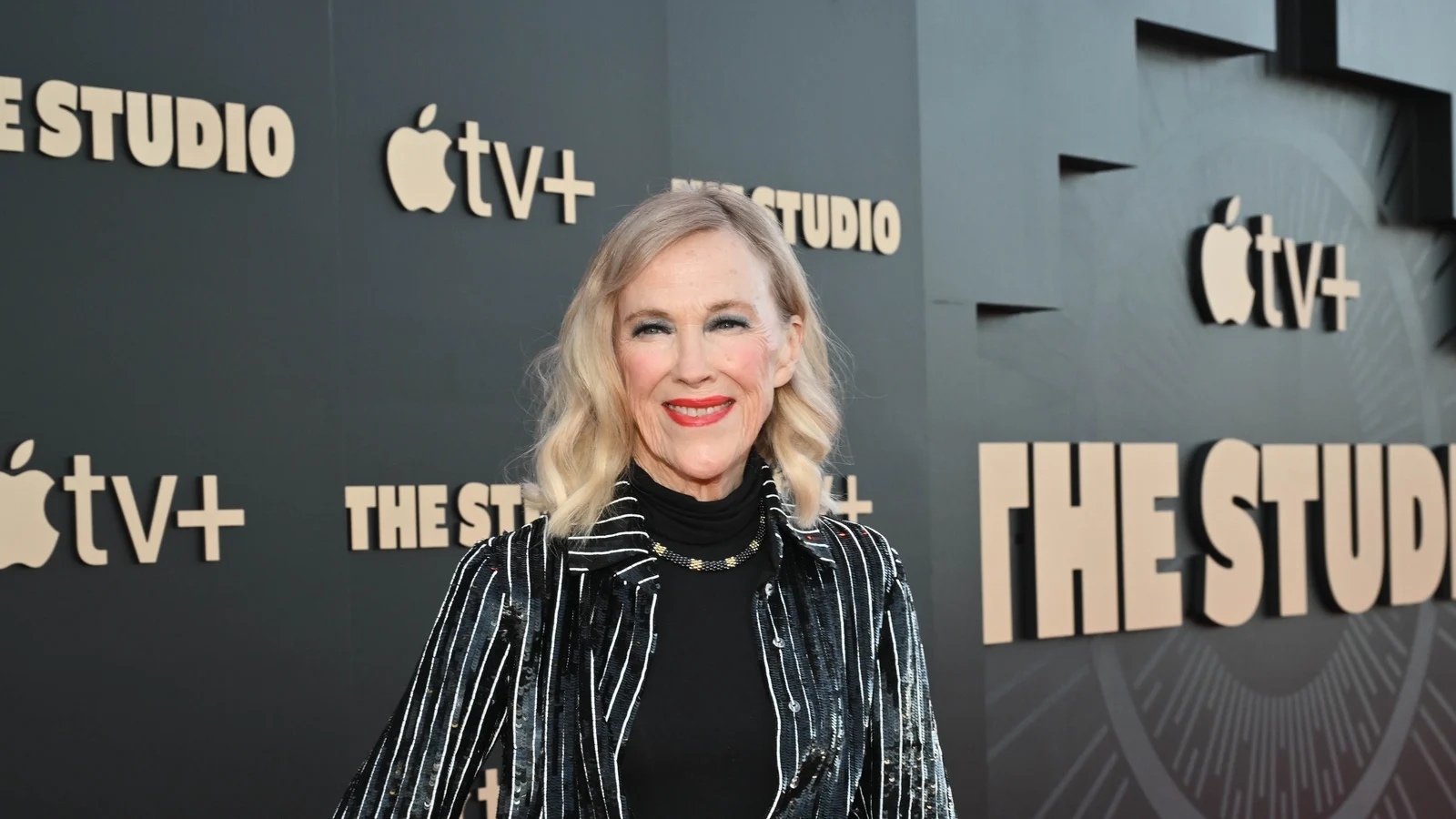
O’Hara’s gifts were not only comic. She showed surprising dramatic depth in recent work, notably earning an Emmy nomination for her turn in HBO’s The Last of Us and another for her role in the satirical series The Studio. These roles revealed an artist unafraid to stretch, to expose tender seams beneath the laughter.
“Catherine had a way of making impossibility feel inevitable,” said a film historian, Dr. Leah Morris, who studies television comedy. “Her timing was a moral force — she could make you forgive a character the moment they became human.”
From Kate McCallister to a mother to generations
Long before her late-career renaissance, millions knew O’Hara as Kate McCallister, the harried mother in Chris Columbus’s 1990 holiday phenomenon Home Alone. The film grossed hundreds of millions worldwide and became a perennial in households every December. Macaulay Culkin, who played Kevin and grew up in the role, was among the first to post a raw, personal tribute: “Mama. I thought we had time. I wanted more. I wanted to sit in a chair next to you. I heard you but I had so much more to say. I love you. I’ll see you later.”
That candor — equal parts grief and the private longing of someone who grew up in public life — landed like a shock. The image of O’Hara at the head of a chaotic family table, both exasperated and fiercely protective, reminded viewers how intimately comedy can connect to memory.
Voices from the street: What she meant to people
Outside the coffee shop on Queen West in Toronto, where she is still remembered as one of the city’s great exports, people paused to recall the small, human things. “She made us feel seen,” said Aisha Rahman, 38, a local barista. “Like the funny, complicated parts of ourselves were okay.”
Fans posted photos of Moira’s exaggerated fashions, clips of SCTV sketches and home videos captioned with gratitude and disbelief. On social platforms around the world, people shared stories of discovering Schitt’s Creek in difficult times — a balm during illness, a refuge after loss. The show’s message, simple and radical, came through: flawed people can rebuild; dignity isn’t owned by wealth.
Legacy and lessons
There are measurable ways to mark O’Hara’s impact: an Emmy, a career spanning five decades, roles in films that collectively earned half a billion dollars at the box office, a television series that reshaped how streaming services elevated comedy. But metrics don’t capture the warmth of the welcome she offered audiences or the steadiness she modeled for younger performers.
“Catherine taught us that comedy is revision — you try, you fail, you refine,” said Daniel Reed, a Toronto-based comedian. “And she showed us you could live many lives on stage and still be the same person off it.”
Questions to sit with
As readers, as fans, what are we to keep from a life like this? Is it the image of a woman in a feathered scarf delivering a line so sharply you sting? The memory of a mother fumbling a thousand tiny, loving errors? Or the fact that a Canadian sketch troupe once became a worldwide touchstone? Maybe it’s all of these. Maybe it’s also the way a single performer can remind us that laughter is not a mask but a bridge.
In a time when the entertainment industry can feel atomized and precarious, O’Hara’s career is a quiet manifesto: start small, keep working, refuse easy answers, and when you find collaborators who trust you, hold on. Eugene Levy, the fellow Second City alum and long-time collaborator, often described their chemistry as familial. That sense of chosen family — the Levy-O’Hara dynamic on and off screen — became the heart of Schitt’s Creek and a model for how comedians can age gracefully together.
Final reprise
Catherine O’Hara is survived by her husband, production designer Bo Welch, and their sons, Matthew and Luke. There will be a flood of formal obituaries, clips and retrospectives, each trying to locate the precise frequency of her humor. But perhaps the truest memorial is quieter: a rerun of a Schitt’s Creek episode at midnight, a tender line from Home Alone, the memory of a woman who could make you laugh so hard you forgot to breathe.
She leaves behind characters who will live in our heads and hearts — Moira wrapped in sequins, Kate at the front door shouting for her kids, the countless faces that popped up in sketches and films, each one a small miracle of specificity and tenderness. We are poorer for her absence and richer for the laughter she gave us. What will you remember most?