Smoke Over Golders Green: When Ambulances — and Trust — Were Set Alight
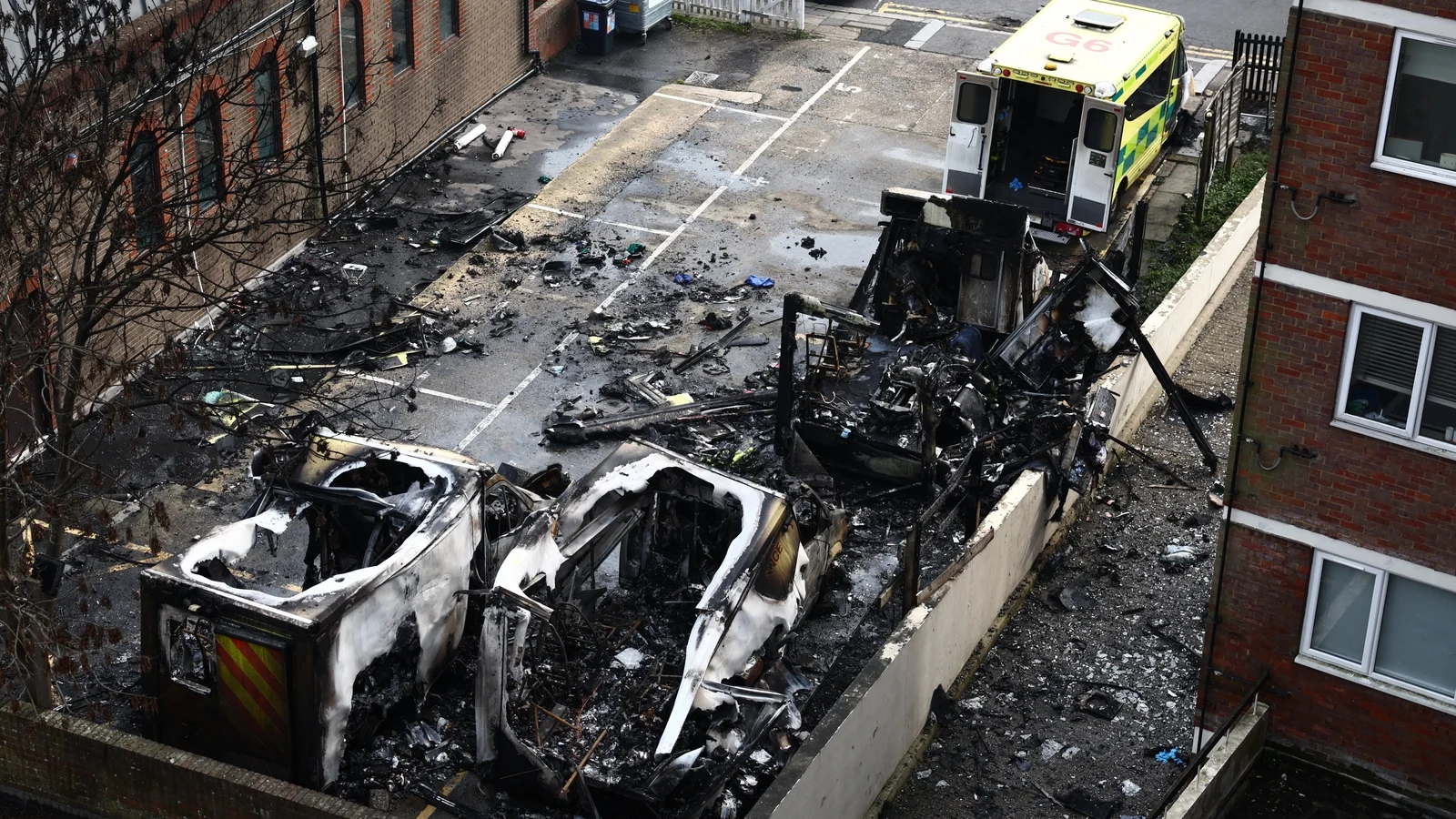
Before dawn on a cool London morning, the hush of Golders Green was ruptured by orange tongues of flame licking at the sides of four ambulances. The vehicles belonged to Hatzola, the volunteer Jewish ambulance service whose sirens have threaded through North London’s streets for decades—answering calls in the darkest hours, regardless of faith or background.
By 1:45am the quiet residential road had become cordoned off, windows steamed from the heat, and a charred bouquet of metal and melted plastic lay where lifesaving vehicles had stood the night before. Neighbours were evacuated, roads closed, and the usual late-night hum of this diverse community paused beneath the acrid smell of smoke.
What Happened
Police say CCTV footage captures three people setting fire to the ambulances. Officers also reported hearing explosions consistent with gas canisters stored on board the vehicles. Miraculously, no people were hurt—no volunteers, no passers-by—but the symbolic damage was immediate and raw.
The Metropolitan Police have opened a hate crime investigation, saying the attack is being treated as an anti‑Semitic incident. “We are in the process of examining CCTV and online footage,” said the local superintendent, adding they are looking for three suspects and urging witnesses to come forward. At the time of writing, there have been no arrests.
Voices from the Ground
The shock was felt across a community accustomed to being both visible and visible for the right reasons: charity, care, and mutual aid. “They come when anyone needs them,” said Damon Hoff, president of Machzike Hadath synagogue, which houses the ambulances. “This isn’t only about Jewish people—it’s about people who are there to save lives.”
One Hatzola volunteer I spoke with, who asked to remain anonymous, wiped soot from his jacket and said softly, “We train to run into danger for strangers. Tonight, someone chose to turn that back on us.” His voice trembled between anger and exhaustion.
Outside a nearby kosher bakery, Miriam, a shop owner who’s lived in Golders Green for 22 years, summed it up with weary clarity: “This place is my home. We hear all kinds of stories here—weddings, funerals, babies crying—now we hear sirens in a different way. People are frightened.”
Political and Communal Response
From Downing Street to the streets of Golders Green, words of condemnation came fast. The Prime Minister urged communities to “stand together,” calling the episode a “horrific anti‑Semitic attack.” London’s mayor described it as a “cowardly attack on the Jewish community,” promising that “Londoners will never be cowed by this kind of hatred and intimidation.”
The UK’s Chief Rabbi framed the assault as an attack on shared values, saying Hatzola’s volunteers “protect life, Jewish and non‑Jewish alike,” and that the targeting of such a service is “particularly sickening.” The Archbishop of Canterbury, community leaders, and medical bodies also condemned the assault; the British Medical Association highlighted how deliberate attacks on healthcare services are “reprehensible.”
Why This Cuts So Deep
It’s not just that ambulances were torched. It’s the symbolism of attacking emergency responders—the people who stand as a society’s last, neutral line against chaos. It’s an assault on an institution that, by its very mission, refuses to pick sides.
Hatzola, founded in 1979, operates as a volunteer emergency response and transport service in North London. It has long been a point of civic pride: trained volunteers from within the community who step forward when someone’s life hangs in the balance. To target them is to target a social fabric stitched together by care.
Context: A Rise in Fear
Across Britain and much of Europe, Jewish communities have reported heightened anxiety in recent years. Charities and community groups track thousands of antisemitic incidents annually, noting spikes often linked to geopolitical tensions overseas. That pattern leaves neighbourhoods on edge: when global headlines flare, local streets feel the heat.
“You can’t separate local safety from global politics entirely,” says Dr. Naomi Feldman, an expert in community security. “But it’s crucial to remember that hate crimes are acts of choice by individuals or small groups. They are not inevitable. They are preventable with vigilant policing, community solidarity, and political leadership.”
What Comes Next
Investigators are piecing together a timeline from CCTV and digital leads. Patrols around synagogues and community centres have been increased. Hatzola’s London base—though shaken—remains operational, Shomrim confirmed, as volunteers re-route resources and reassure those who call for help.
Local councillors expressed a mix of shock and sorrow. “My first reaction was horror,” said Peter Zinkin of Barnet Council. “Then profound sadness.” Councillor Dean Cohen called it “a new low” to attack ambulances—vehicles dedicated to saving lives 24/7.
Questions for the Reader
What does it say about a society when those who come to help are themselves targeted? How do communities rebuild trust after an act designed both to destroy property and to intimidate people into silence?
These are not rhetorical questions for Golders Green alone. They echo in neighbourhoods where emergency workers, teachers, and volunteers operate under the shadow of targeted violence. How a city responds—through policing, outreach, and leadership—says as much about its values as any statement from a podium.
Beyond the Flames: A Call to Action
There are concrete steps neighbours and officials can take: bolster CCTV and lighting in vulnerable spots; fund rapid-response patrols that work in partnership with community organisations; expand hate‑crime education in schools and faith institutions; and ensure that victims and volunteers have psychological support.
- Encourage anonymous tip lines and community reporting mechanisms.
- Increase dialogue between law enforcement and community charities like Hatzola.
- Support local initiatives that build cross‑community resilience—shared meals, emergency drills, educational events.
As one long-time resident put it, “We need to show up for each other—not just talk about it.” It’s a modest prescription for something far greater: preserving the basic decency that makes a mosaic city liveable.
Final Thought
Golders Green woke to a scene that would be unsettling in any city: the grotesque tableau of ambulances set ablaze. But beyond the photographs and the police tape, this moment exposes a deeper test, one that asks how communities react to fear: by retreating into joyless isolation, or by stepping forward, together, into the light.
In the weeks ahead—when inquiries move on and the press cycle turns—what will remain is the choice each neighbour, leader, and passer-by must make. Will we let this be a wedge, or will we let it be a reason to stand closer? The answer will be written not in statements alone, but in small, everyday acts: volunteers returning to their posts, shopkeepers opening their doors, and people in a diverse city deciding—again—to care for one another.