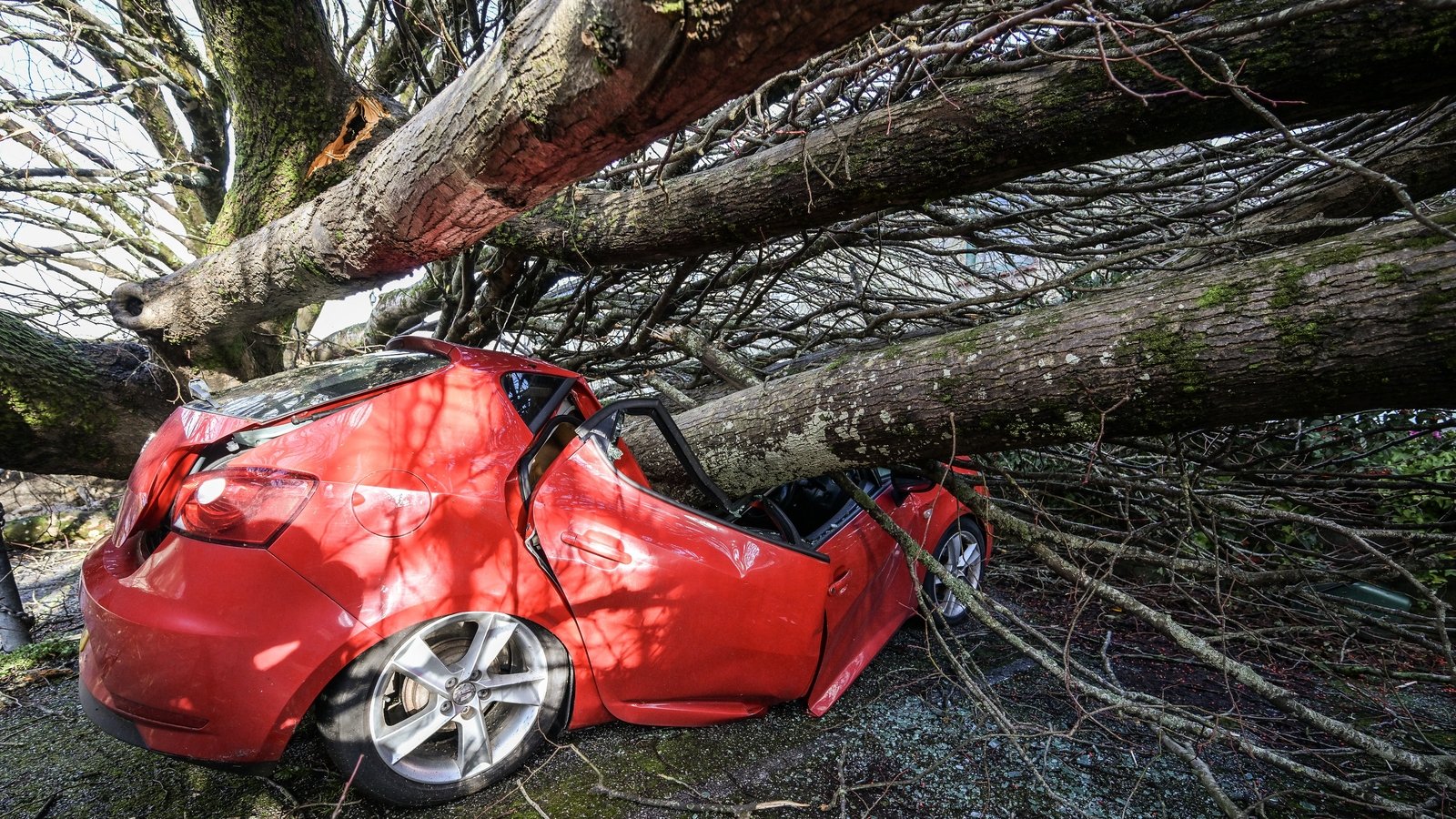
Storm Goretti: A Furious Overnight Sweep That Left Northern Europe Shivering and Still
When the wind woke Marie Leclerc in Cherbourg at 3 a.m., it sounded like the ocean had left its bed and was trying to rearrange the town.
“It wasn’t just a gale,” Marie, who runs a small café on the port, told me as she shoveled her way to the shop in the light of a borrowed headlamp. “It felt like the house was being lifted. We could see roofs flying past in the streetlight.”
By dawn, that force had a name — Storm Goretti — and a tallying trail of disruption across northern Europe: hundreds of flights canceled, thousands of households plunged into darkness, trains halted, and roads rendered impassable under a drizzly mix of sleet and heavy, wind-driven snow. The storm slammed into Britain before sweeping east, leaving communities to pick through wreckage, question preparedness, and wonder whether these extremes are becoming the new normal.
Numbers that Make You Pause
Statistics help make sense of chaos. In France, some 380,000 households experienced power cuts — concentrated largely in Normandy and Brittany. Meteorological stations recorded winds exceeding 150 km/h in Manche, with a jaw-dropping peak of 213 km/h at Barfleur. In the United Kingdom, the National Grid logged more than 40,000 properties without electricity in the southwest at midday, and the Met Office extended yellow warnings for snow and ice across vast swathes of Scotland, England and Northern Ireland.
Air travel was severely dented: Heathrow announced around 69 flight cancellations affecting more than 9,000 passengers, Schiphol’s operator and carriers such as KLM axed dozens of flights (KLM reported about 80 cancellations), and Hamburg Airport canceled roughly 40 departures. Deutsche Bahn, Germany’s state rail operator, suspended long-distance services, with spokespeople calling the event “one of the most severe winter weather episodes we have seen in years.”
On the Ground: Cities, Villages and People
In Barfleur, on the jagged edge of Normandy, fishermen who once measured storms by the tell of gulls and the smell of the sea spoke of a new threshold.
“The buoys were unplugged from their anchors,” said Lucien Tremblay, an 58-year-old boatman, rubbing snow from his beard. “I’ve fished through winters and tempests — but this tore the air apart. The town is like a portrait with a hole burned through it.”
In northeast England, commuters faced a desolate morning: trains that usually teem with students and office workers were still, their platforms empty and their timetables a stubborn, unhelpful mosaic of cancellations. “We told people not to travel,” a rail official in Birmingham said. “Safety first. It’s better to wait than to send people into the elements.” The city’s historic Gas Street canal basin, usually framed by pub windows and bicycle bells, was rimed in frost and silence.
Meanwhile in rural Hungary, soldiers were pressed into roadside rescue, digging cars free from banks of white. In Albania and parts of the Western Balkans, flooding compounded the crisis; at least one person was reported dead after severe inundation, reminding us how quickly a winter storm can shift into a multi-hazard emergency.
An Energy System Under Stress
Goretti didn’t just topple trees — it stressed national infrastructure. French utility EDF confirmed that Flamanville nuclear plant had to take reactors one and three offline after the loss of a high-voltage transmission line. “We have safe, established protocols for these events,” an EDF engineer in Normandy told me, “but each shutdown is a stark reminder of how interconnected our systems are and how exposed they can be to a single, powerful storm.”
Across the Channel, the cascading effect was evident: when a wind gust can sever lines or blow out signaling equipment, entire networks feel it. Agencies from SNCF in France to Deutsche Bahn in Germany said crews worked through night and frost to clear tracks and restore services, emphasizing they aimed to avoid leaving passengers stranded in open carriages — a grim image from previous winters.
Travel in Turmoil
Airlines and airports have rapidly become bellwethers for broader disruption. Schiphol had already cancelled hundreds of flights earlier in the week due to freezing conditions; Goretti’s return flung fresh cancellations onto already fragile schedules. For many travelers, the crisis was painfully personal.
“We were meant to fly to visit my mother,” said Ahmed, a father of two stranded in the departures hall at Heathrow. “They told us to wait. Phones keep dying. We swapped stories with strangers, warmed with takeaway coffee. The airport becomes this tiny, transient village where everyone is tired but calm.”
What This Storm Reveals
There are practical lessons here and deeper questions. Practically: the need for resilient grids, improved tree management along power lines, better winterized signaling and more flexible contingency planning at airports. Broadly: is this part of a shifting pattern? Climate scientists have warned for years that a warming planet can intensify some weather extremes, making heavy precipitation and fierce wind events more common in some regions.
“We can’t attribute a single storm to climate change categorically,” said Dr. Elise Martí, a climatologist at a European research institute. “But what models do show is that as the atmosphere warms, the energy available for storms increases. That means we should prepare as if these kinds of high-impact events will be more frequent.”
That preparation involves money, policy and politics. It also involves quiet, human choices: neighbors checking on the elderly, families altering travel plans, councils investing in better emergency shelters. “Community response made a big difference tonight,” said Councillor Niamh O’Connell in a small Irish town cut off by snow. “We set up a warm hub in the parish hall. People brought kettles and chairs. That felt like winning.”
After the Gale: Questions for the Reader
As you read this, consider where you live: Are your local services prepared? Do you know where to go if the power fails or the buses stop? Storm Goretti is not a one-off spectacle to scroll past; it’s a test run for a world being nudged into new rhythms by extreme weather.
What would you do if your neighborhood lost power for days? Who in your community might need help first? How should governments and businesses prioritize spending — on hardened infrastructure, on neighbourhood resilience, or on carbon cuts that may prevent worse storms decades from now?
Closing Scene: The Calm After
By evening, the wind started to fall like a tired animal finding a bed. Crews had cleared main routes, and many lights were restored, though lines of traffic and repair vehicles still marked the landscape. Marie reopened her café with a pot of tea and a counter full of customers who had nowhere else to be and everything to talk about.
“We will fix the windows,” she said, doling out slices of almond cake to volunteers. “But you remember nights like this — when everyone came together. That doesn’t break with the wind.”
Storm Goretti will be logged in systems and briefings, compressed into figures and charts. But for those who lived through its howl and aftermath, it’s already been written in the small ledger of human memory: a storm that tested battered wires, delayed airports and trains, and — beneath the howl — revealed acts of care. How we answer those tests will shape the winters to come.