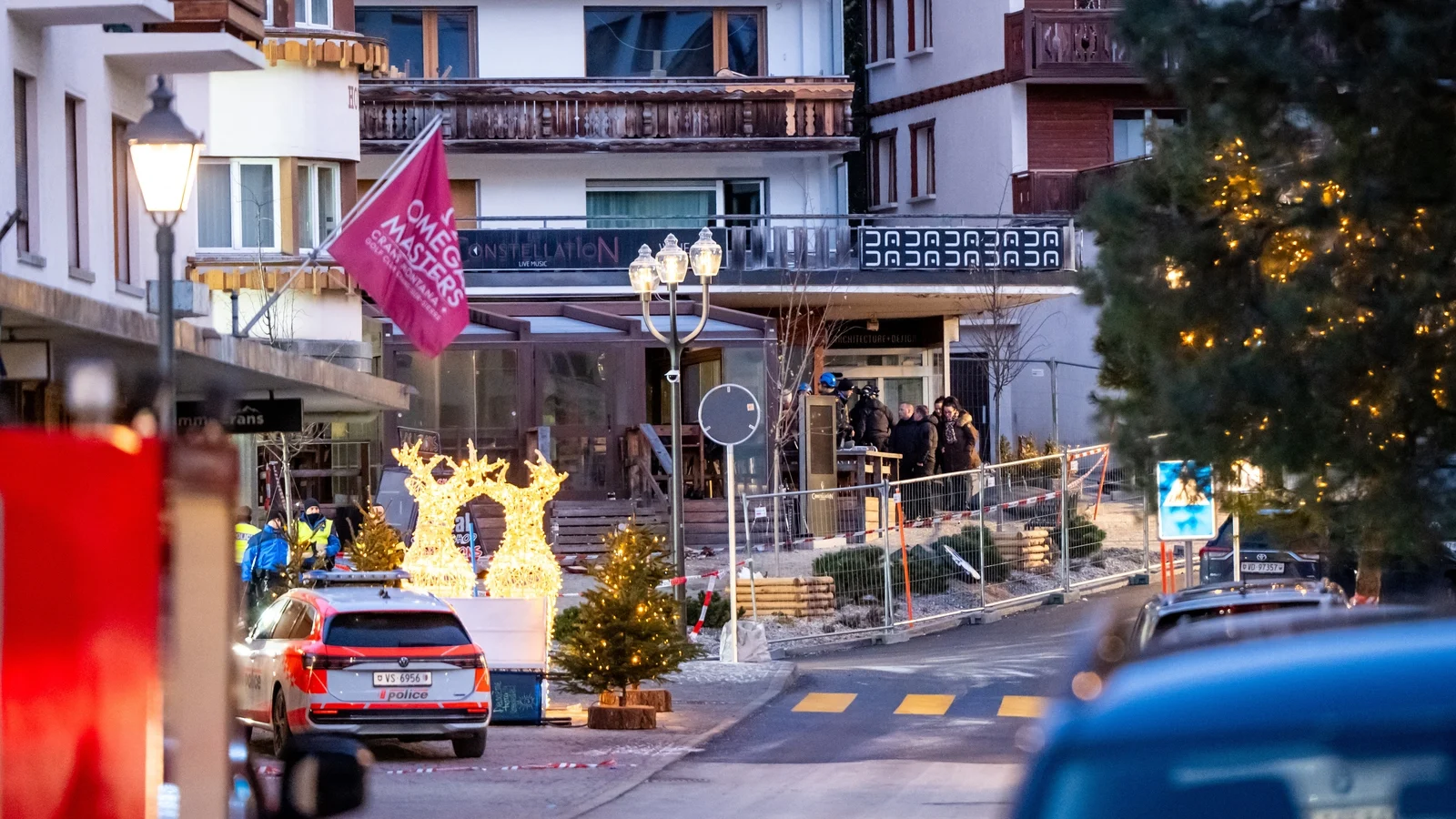
A nation pauses: bells, silence and a valley of questions after the Crans-Montana blaze
Today, at 14:00 local time, a country will stop. For one minute the hum of traffic, the chime of radio, the murmur of cafés will fall away and Switzerland—small, orderly, alpine—will hold its breath. Church bells will ring out across towns and villages, and a nation will try to stack itself like the stones of a cairn around 40 lives that were extinguished in a single, terrible night.
The place at the centre of that silence is Le Constellation, a basement bar in the fashionable ski resort of Crans-Montana, where New Year revellers had gathered to count down to 2026. What began as celebration turned into catastrophe: 40 people killed, 116 injured, 19 nationalities among the bereaved and the wounded, and half of the dead under the age of 18.
The scene: cold mountains, a crowded basement, and a flash of flame
Crans-Montana is bookended by slopes and pine; its streets shimmer with après-ski lights and rental chalets. This past week the resort was girded by a ferocious snowstorm that made access difficult and made rescue operations more complicated. Yet the kind of freeze that turns spines to ice could not cool the crowds who gathered beneath the bar’s low ceiling to ring in the New Year.
Prosecutors say the blaze began when champagne bottles with sparklers attached were raised too close to soundproofing foam in the basement. Experts suggest the foam—apparently highly flammable—may have caused a flashover, a phenomenon in which a room’s contents ignite almost simultaneously and leave little chance of escape. Video that has circulated shows young people frantically trying to flee, smashing windows, and clawing at doors.
“It was like a movie, except no one could press pause,” recalled one witness, a local ski instructor who asked that his name not be used. “We heard screaming and then the sirens—what you expect in a distant disaster, not in your own village.”
Human cost: teens, tourists, families
The numbers are stark: 40 dead, 116 injured, and 83 still hospitalized, with the most severely burned patients airlifted to specialist centres in Switzerland and abroad. The victims span 19 nationalities; while most were Swiss, families from neighbouring France and Italy—who lost nine and six nationals respectively—have helped turn this into an international grief. Swiss President Guy Parmelin described the fire as “one of the worst tragedies that our country has experienced.”
Of those who died, half were under 18. Some were as young as 14. These are not statistics in a ledger; they are school lockers emptied, ski passes uncollected, parents who will forever face the winter without a child walking beside them. “The faces at the hospital were so young,” said a nurse from Martigny who volunteered in the emergency response. “We are trained for trauma, but not for this kind of sorrow.”
Accountability and failures: inspections, renovations, and a troubling video
Questions about how this could have happened have been immediate and unavoidable. Municipal authorities acknowledged that no fire safety inspections had been carried out at Le Constellation since 2019—a lapse that has provoked public outrage. Photographs taken by the owners show soundproofing foam installed during renovations in 2015, and a 2019 clip—now widely shared—features a bar employee warning, “Watch out for the foam!” as sparklers are brought out during celebrations.
Romain Jordan, a lawyer representing several affected families, called the 2019 video “staggering,” adding: “It shows there was an awareness of this risk—and that possibly this risk was accepted.”
The bar’s owners, Jacques and Jessica Moretti, a French couple, have been called in for questioning and face charges including manslaughter by negligence, bodily harm by negligence and arson by negligence. They have not been detained; in a written statement they said they were “devastated and overwhelmed with grief” and pledged full cooperation. Still, many in the valley are asking: how did minors come to be in a basement venue? Were capacity limits observed? Were escape routes adequate?
Today’s memorial and the small rituals of public mourning
Beyond the minute of silence, a memorial ceremony will be held in Martigny, some 50km down the valley, where roads were cleared enough for families and officials to gather. The ceremony will be livestreamed back to Crans-Montana so that residents—many of whose homes now hold an echo where a voice used to be—can watch on large screens, including at the congress centre that temporarily housed families searching for missing loved ones in the days after the fire.
Swiss leaders will not stand alone. Presidents from France and Italy are expected to attend, joined by officials from Belgium, Luxembourg, Serbia and representatives of the European Union. “We will not let this become just another tragedy,” said a municipal spokesman. “We owe the victims answers, and we owe survivors better protection.”
Voices from the valley
In a bakery near the cable car station, a woman who runs pastry stalls for holiday tourists wiped flour from her hands and spoke quietly. “We sell chocolate to people who are laughing. Now they come in here and there’s a silence. The children—my neighbour’s son—he was at that party. I do not know what to say.”
An older resident, a retired mountain guide, tapped his cane on the pavement. “This is a place where people come to feel alive,” he said. “We must make sure the way we let them celebrate does not kill them.”
What this means more broadly: nightlife safety, regulation and the tourism economy
This tragedy lands against broader pressures: the enormous economic value of winter tourism, the push to squeeze more nights and more revenue out of alpine resorts, and a generation’s appetite for late-night socialising. It also fits a grim global pattern—nightclub and venue fires caused by pyrotechnics and flammable interior materials have periodically highlighted regulatory blind spots. How do local governments reconcile economic vibrancy with uncompromising safety? Who is responsible for enforcing standards when private businesses serve young people late into the night?
Burn specialist Dr. Elaine Müller of Lausanne University Hospital, who has treated several of the most seriously wounded, warns that the consequences are long-term. “Beyond the acute injuries,” she said, “we are talking about lifelong rehabilitation—physical scars, psychological trauma, families rearranged around a loss. Burn medicine is resource-intensive. We must think about prevention as an investment in public health.”
Questions to carry home
As Switzerland tolls its bells, it is worth asking: what will change when the minute of silence ends? Will inspections be more frequent and stringent? Will venue licensing be tightened? Will owners, regulators and tourists learn from this, or will grieving slide into routine? How do we balance youth culture and celebration with hard rules that protect lives?
Grief is a loud teacher. In Crans-Montana it speaks through empty phone messages, through the names of those who will not return to the slopes. It speaks through the crack of a smashed window and the scraped hands of rescuers. Today’s ceremony is not an end but the visible beginning of accountability and reflection.
When the bells finish, life will return to roads and lifts. But for those listening, the silence will have a memory. What will we do with it?