When Flags Shift: Syria’s Quiet Reclamation of the North
There are days when a town’s rhythm — the clatter of market stalls, the schoolchildren’s laughter, the slow churn of evening prayer — marks out a kind of sovereignty. For more than a decade in northern Syria, Kurdish-administered areas had that rhythm: an emergent, messy autonomy grown from the ashes of war. Then the drums of a different authority began to beat. In a matter of days, the Syrian army pushed into neighborhoods and towns that had effectively governed themselves for years, reclaiming airfields, oilfields and, with them, the contours of daily life.
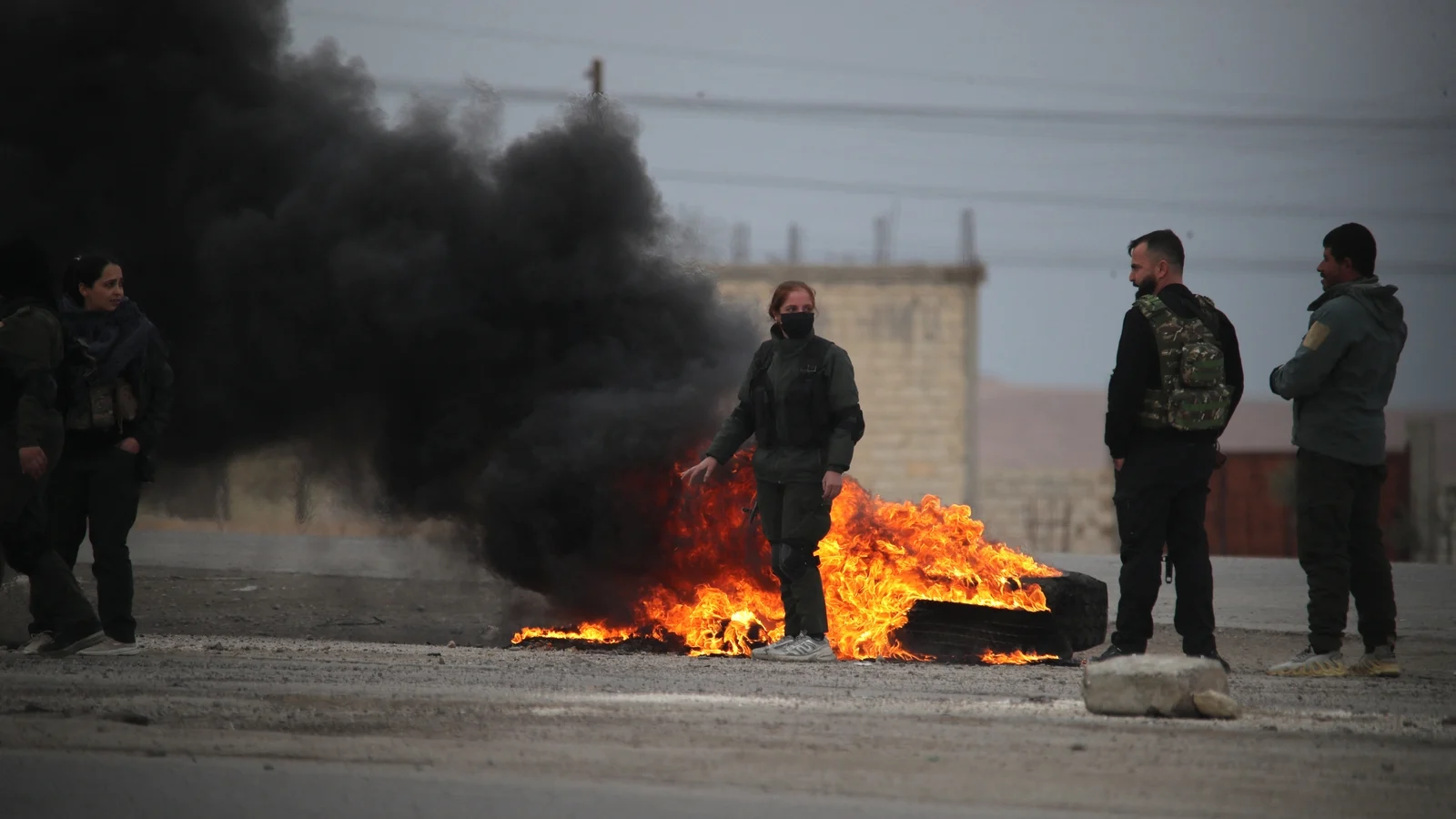
I drove through Deir Hafer recently, about 50km east of Aleppo, under a sky streaked with dust and the taut, metallic smell of fuel. Men in plain clothes — fighters from the Kurdish-led Syrian Democratic Forces — were loading trucks. Mothers stared from doorways. The army’s flag, unfamiliar to many here for years, snapped in the wind over checkpoints that had been newly reinforced.
What changed — quickly
In March, Damascus and Kurdish authorities signed a deal: a blueprint, at least on paper, for integrating Kurdish forces into the state security apparatus and resolving the odd geography of control that has divided northeast Syria. The agreement included withdrawals, redeployments east of the Euphrates and promises of some political inclusion.
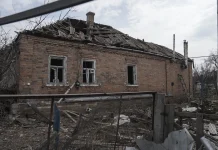
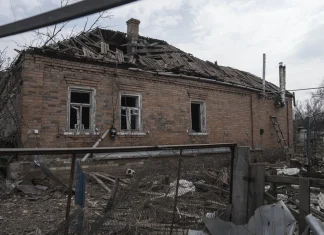
But agreements on paper are brittle in times of war. Implementation slowed, trust frayed, and the Syrian army — moving in what officials called the enforcement of the pact — swept into areas around Aleppo, into Tabqa in Raqa province and toward precious oilfields. Witnesses say army units took the military airport at Tabqa and seized two oil installations nearby. Kurdish commanders confirm clashes and casualties on both sides.
“We woke to the sound of engines and soldiers,” said Layla Haddad, a schoolteacher who lives on the outskirts of Tabqa. “We don’t want new battles in our homes. People here have already lost too much.”
More than language: a decree and its limits
At the center of this uneasy reordering was a political gesture: a presidential decree declaring Kurdish a “national language” and granting citizenship to Kurds stripped of nationality decades ago. For many families in Qamishli — the region’s main Kurdish hub — the decree was the first formal acknowledgment from Damascus since the country’s independence that Kurds are a part of the Syrian nation.
But symbolism can be shallow. “This tells us we are noticed; it doesn’t tell us we will be heard,” said a shopkeeper, Ahmad Baran, as he stacked baklava near the city’s mosque. “We want legal protections, constitutional rights, and a say in how our region is run. Language is important, but it doesn’t stop a checkpoint from arresting a neighbor.”
Analysts say the decree is a classic trade-off: cultural recognition without significant power-sharing. “What Damascus offered is an olive branch wrapped in a leash,” said Dr. Mira Al-Najjar, a Middle East analyst. “It softens the optics, but the zones of power — security, resource control, administration — remain in state hands.”
Why the north matters
The Kurdish-led administration controlled large swathes of Syria’s oil-rich northeast, territories captured during the civil war and the long fight against the Islamic State group. These areas are not only ethnically diverse; they are strategic. Control of the oilfields, the highways and the agricultural plains means leverage over reconstruction, revenue and regional influence.
That leverage is why external powers watch closely. The United States, which supported Kurdish forces for years in the fight against IS, has called for de-escalation. European capitals and regional leaders have urged calm. A U.S. military statement urged Syrian government forces to “cease offensive actions” in areas between Aleppo and Tabqa. France and leaders from Iraqi Kurdistan issued calls for restraint and a ceasefire.
On the ground: fear, pragmatism and the quotidian
For ordinary residents, the choices are painfully pragmatic. Some see the return of Syrian troops as a route to stability, an end to checkpoints run by militia groups and a step toward restoring state services. Others fear that new control will mean reprisals, new mobilizations, or simply the grinding, bureaucratic sclerosis that has followed centralization elsewhere in Syria.
“If the army brings fuel, food, and opens the hospital, people here will accept it,” said Hassan Khalil, a farmer who has tilled the same land his grandfather did. “But if they come only to take our fields or to punish the fighters, that is different.”
Curfews have been declared in parts of Raqa, and the army has labelled zones southwest of the Euphrates “closed military zones,” warning of strikes on what it called military sites. The SDF, accusing Damascus of betrayal, has reported clashes south of Tabqa and has called for international mediation.
Across borders and headlines
The battle for northern Syria is never just local. Turkey, Iran, Russia, the United States and regional Kurdish authorities all have stakes. Ankara, in particular, views the Kurdish-led forces as linked to groups it considers terrorist organizations and has historically launched cross-border operations to prevent an autonomous Kurdish corridor. Moscow and Tehran back Damascus, but their priorities — influence and reconstruction contracts — are not always aligned with the Syrian state’s tactics.
Outside the region, pundits ask whether Damascus’ moves signal a broader campaign to reassert control over the country’s fractured peripheries, or whether this is a limited push to secure resources and strategic points. Some see a pattern: cultural concessions offered to minorities, but strict limits drawn around political or military autonomy.
- Key point: Kurdish forces have held de facto autonomy across much of northeast Syria for more than a decade.
- Key point: The Syrian army’s recent advances include towns around Aleppo, Tabqa airbase and nearby oilfields.
- Key point: A presidential decree granted Kurdish language recognition and citizenship to some stateless Kurds, but many say it falls short of political guarantees.
What comes next?
Readers might ask: can reconciliation be engineered from these pieces? A sustainable settlement would require more than decrees. It needs constitutional guarantees, participatory governance, and oversight mechanisms that bridge security and civil life.
“Rights are defended in constitutions, not in press statements,” said an academic in Erbil who has tracked autonomy debates for years. “If this moment is to be historic, it must translate into real power-sharing, not merely cultural tokens.”
And there is another question worth considering: how will the people who have rebuilt schools, grown economies and formed civil councils over the last decade reconcile with a central state that has, for decades, sought to centralize control? Can local institutions be folded into national ones without losing what made them functional during the chaos?
For now, life in the north goes on in fits and starts — markets open, children go to school when streets are quiet, farmers plant when seeds are available. But in the cafes and courtyards, the talk is not only about the next harvest. It is about belonging, justice and the thin margin between recognition and real rights.
As the dust settles each evening, people here ask the same thing they’ve asked for years: Will promises turn into protections? Will new flags mean new freedoms? Or are we witnessing, yet again, a passing of control that leaves the deeper questions unresolved?