A New Year’s Speech Under a Darkening Sky: Taiwan’s Resolve in the Wake of “Justice Mission 2025”
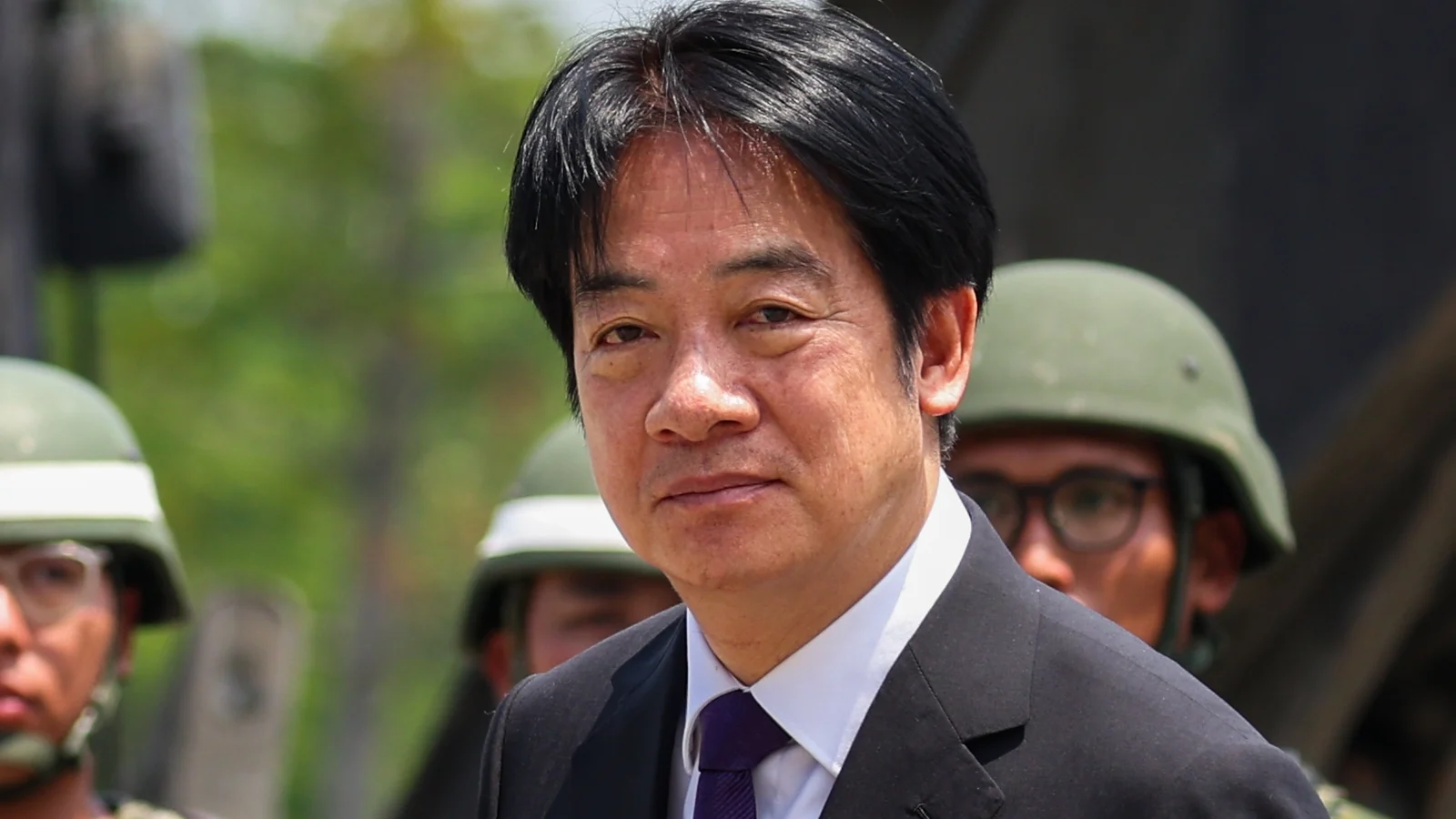
When President Lai Ching-te stepped into the ornate chamber of the presidential office on New Year’s Day, the festive confetti of Taipei’s celebrations felt oddly distant. Outside, the capital hummed with its usual blend of scooter horns and street-food vendors, but inside the glass and stone of the presidency, the mood was sober and deliberate.
“Our job is to keep this island free and to keep its people safe,” Lai told the nation, his voice steady against a backdrop of recent, dramatic events. The speech was no ceremonial pat on the back—it was a call to action. Just 48 hours earlier, China had launched what it called “Justice Mission 2025,” a sweeping set of missile launches, naval maneuvers and aircraft sorties that came closer to Taiwan than previous exercises and forced cancellations of dozens of domestic flights.
Rockets, Ships, and a Nation Watching
Beijing’s drills were described by Chinese state media as the largest by area and among the closest to Taiwan’s shores in recent memory. Dozens of rockets were fired; fleets of warships cut through the Taiwan Strait; fighter jets sketched menacing arcs over waters that for most people are simply a place of fishing and ferry crossings.
Taipei scrambled military jets and dispatched navy vessels to monitor the movement, and ordinary citizens adjusted their routines. “We woke to the sound of a different kind of rumble,” said Mei-Ling Chen, who runs a tea stall near the Dadaocheng wharf. “People asked each other whether to cancel plans. There was fear, yes—but also this: a stubborn, quiet refusal to be pushed around.”
What Lai Asked For—and What Stands in the Way
In his address, Lai urged the legislature to back an ambitious plan to expand Taiwan’s defensive capabilities—an initiative that includes a proposed $40 billion procurement package aimed at modernizing the military, enhancing asymmetric defenses, and shoring up deterrence over the next several years.
“We must make plans for the worst, and hope for the best,” he said. He framed the request not as militarism but as realism: in a neighborhood becoming more volatile by the year, Taiwan must be credible in its own defense.
But politics on the island is fractious. The opposition-controlled parliament has delayed action on the package, wary of the economic and diplomatic ripples. “Defense is vital, but we cannot chase an arms race that diverts funds from schools and hospitals,” an opposition legislator told reporters, asking not to be named for fear of inflaming tensions.
Numbers That Matter
These are not abstract choices. Taiwan is home to roughly 23.5 million people and remains a technological powerhouse: the island hosts firms like TSMC that are central to the global semiconductor supply chain, producing a large share of the world’s most advanced logic chips. Economically, Taiwan’s GDP hovers in the high hundreds of billions of dollars—large enough to be consequential, small enough that a misstep could have outsized consequences.
Defense spending has historically been around 2–3% of GDP; some analysts argue that higher investment is necessary to face a modern, high-tech threat. Earlier, the U.S. announced a record arms package—$11.1 billion—intended to enhance Taiwan’s missile defense, anti-ship capabilities and air power. Washington says such cooperation strengthens deterrence; Beijing calls it dangerous meddling.
Voices from the Ground
On a cold morning in the city’s Shilin market, I spoke with a taxi driver named Ho, who summed up a sentiment I kept hearing: “We are not looking for a fight. We just want to carry on our lives. But if someone comes at us, we will defend our home.”
A younger voter, university student Lin Yu, put it differently: “Democracy is why I stay. I don’t want to live under an order that tells me who to vote for or when to speak. If a bully knocks on the door, you don’t hand them the key.”
Security experts provide a more analytical tone. Dr. Samantha Wu, a defense analyst at a Taipei think tank, argues that Taiwan’s strategy has to be layered and creative. “You cannot simply match a larger military ship for ship,” she said. “The goal is to complicate any invader’s calculus—anti-ship missiles, mobility, cyber resilience, and hardened logistics.”
International Reactions and a Wider Contest
Across the globe, capitals watched with concern. The European Commission and the UK called for de-escalation; the United States reinforced its long-standing policy of providing Taiwan with defensive assistance, citing the island’s role as a vibrant democracy and a linchpin in global technology supply chains.
For China, Taiwan sits at the heart of a narrative about national rejuvenation. President Xi Jinping’s New Year remarks repeated a familiar refrain: reunification is a historical mission that cannot be stopped. Beijing says the drills were intended to deter foreign interference. Taipei sees something darker: coercion in the shadow of rising power politics.
Local Color and Everyday Resilience
Walking through the neighborhoods that dot Taipei—lanes of light where elderly men play xiangqi, neon signs over shops selling stinky tofu—one realizes how resilient ordinary life is. A fisherman in Keelung shrugged and said, “The sea has always been a dangerous place. This year it feels more crowded by ships with guns than by fish, but we still go out. Bills do not stop coming.”
At the same time, the nervous choreography of everyday life is changing. Flight cancellations ripple through families and businesses. Supply chain managers monitor contingency plans. Parents ask schools about emergency procedures. The stakes are practical, immediate—and deeply human.
So What Comes Next?
The moment is fragile. A U.S. intelligence assessment cited by officials suggested China might be aiming for a capability to defeat Taiwan’s defenses by 2027. Lai called 2026 a pivotal year—“a year to prepare, to build, and to show resolve.”
But this is not just about armaments. It’s about the enduring question of how a small democratic island navigates the ambitions of a powerful neighbor, in a world where economic links are as tangled as political rivalries. Do we double down on deterrence? Do we seek new diplomatic apertures? Can global institutions build enough pressure and incentive to keep the cross-strait waters calm?
“We will keep talking to China, but only as equals,” Lai said in his speech. “Mutual respect and recognition of the Taiwanese people’s way of life—that must be the ground for any dialogue.”
Questions for the Reader
What would you do if your city—your children’s school—were suddenly the staging ground for global power plays? Would you stay, leave, or try to change the political direction? These are not hypothetical for millions in Taiwan; they are daily decisions wrapped in uncertainty.
As the world watches a small island brace for an uncertain year, the deeper story is not only about missiles and budgets. It is about identity, dignity, and the ordinary courage of people who carry on with markets, schools, and family dinners amid the rumble of geopolitics. Whatever the map lines say, the humanity of those who live here is what should shape the choices we make.
- Population: ~23.5 million
- Recent U.S. arms package: $11.1 billion
- Proposed Taiwanese defense procurement: $40 billion
- Economic note: Taiwan plays an outsized role in global semiconductors
Our attention matters. Not only to the leaders and generals, but to the fishermen, the vendors, the students and the lawmakers who will live with the consequences. Will the coming year bring a path to steadier equilibrium, or will tensions escalate further? The answer may rest as much on politics and compromise as on weapons and war games.