Smoke on the horizon: a standoff that smells of diesel and fear
On a raw morning at the Razi‑Kapiköy crossing, a little over a hundred people shuffled through passport booths and into the uncertain safety of Turkey. They carried backpacks, rolled blankets, and the kind of silence that follows sudden loss. A woman in a faded headscarf clutched a framed photograph to her chest as she told me, “We left because the streets were not safe. I could not stay where my neighbor had been struck in his doorway.”
That single image—faces hollowed by grief and the soft thud of a child’s shoes on concrete—captures a moment when local sorrow collides with global brinkmanship. Across the Gulf, a flotilla of American warships has rearranged the maritime chessboard. On one side, Tehran talks of dignity and defense; on the other, Washington signals power and pressure. Between them are people trying to sleep, escape, negotiate, or simply live.
Ships, sabers, and the geography of dread
The U.S. Navy has concentrated a striking force in the region: according to official briefings, six destroyers, one aircraft carrier—led by the USS Abraham Lincoln—and three littoral combat ships are now operating in the Gulf and nearby waters. For mariners and market watchers alike, the presence of steel and sonar is a clarion call.
Why does anyone care beyond the obvious military drama? Because the Strait of Hormuz is not an abstract line on a map. Roughly one in five barrels of seaborne oil passes through this narrow choke point. Any disruption reverberates across fuel prices, shipping schedules and the fragile economies of Europe, Asia and Africa. A miscalculation could turn a standoff into a supply shock.
What’s deployed
- U.S. presence: 1 aircraft carrier (USS Abraham Lincoln), 6 destroyers, 3 littoral combat ships (per U.S. statements)
- Iran: regular naval patrols and announced drills by the Islamic Revolutionary Guard Corps in the Strait of Hormuz
- Mediators active: Qatar—along with Moscow in back‑channel reports—and diplomatic conversations reportedly underway
The rhetoric: ironclad and unpredictable
“We do not seek war, but we will defend ourselves,” I was told by a security official in Tehran who asked not to be named. He spoke in measured Persian and then, half in a joke, added: “But we will not be pushed into surrender on our doorstep.”
From the other side, an aide close to the American command described the deployment as “a deterrent posture—designed to create options and buy leverage at the negotiating table.” Yet deterrence, history teaches us, is a brittle thing. “A ship on the horizon can be read as an invitation or an ultimatum,” said Dr. Lena Frost, a maritime security analyst based in London. “It depends entirely on what each captain hopes the other will do next.”
From protests to repression: the domestic pressures that shape foreign policy
The unrest that began in late December as protests over rising living costs has left Iran visibly changed. According to official tallies presented by the government, roughly 3,117 people died in the unrest. Human rights organizations outside Iran paint a grimmer picture: the U.S.-based Human Rights Activists News Agency (HRANA) has reported 6,713 confirmed deaths, including 137 children. Independent verification has been scarce; the figures cannot be fully reconciled.
These numbers matter. They are human lives and they are also political levers. Leaders in Tehran have described the disturbances as a “coup attempt” and “sedition,” words that harden domestic sentiment and stiffen the spine of security services. For many Iranians I spoke with at border crossings, the drama of politics is not abstract—it is the reason someone they loved is gone. “They were shooting us in the back,” said “Shabnan,” a pseudonym used by a man who crossed into Turkey. “You imagine your home as a shelter, not a battlefield.”
Diplomacy in the shadow of ships
And yet amid the saber-rattling, whispers of negotiation have not fallen silent. Tehran’s foreign ministry and figures close to Iran’s Supreme National Security Council have indicated channels of discussion are open. Qatar’s prime minister and foreign minister reportedly shuttled between Tehran and other capitals to defuse the situation; Moscow also hosted meetings, according to diplomatic sources.
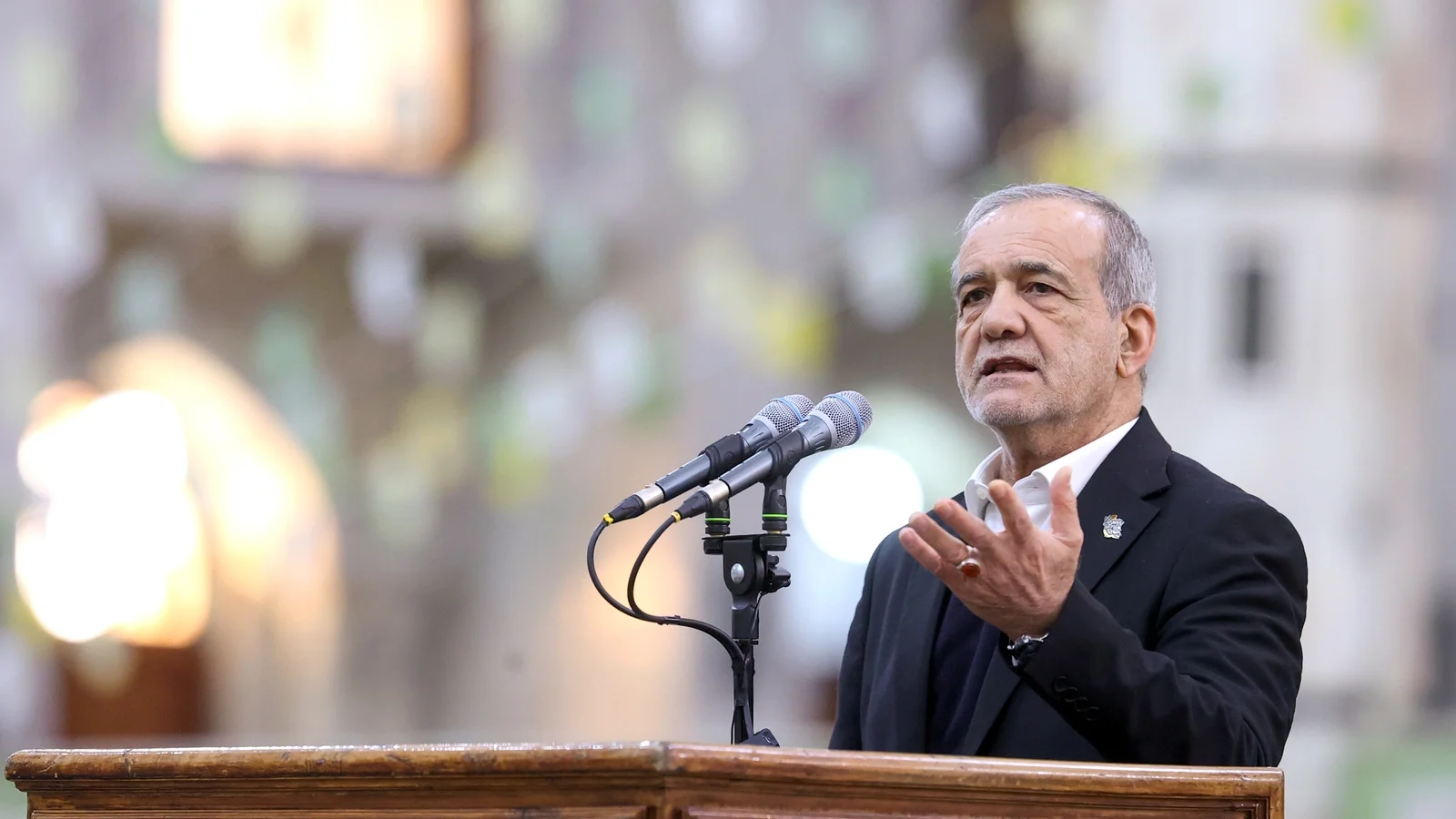
“Talks are ongoing in structural form,” said Ali Larijani, the head of Iran’s security council—an assertion that changed the tenor of the story even as warships still churned the sea. President Masoud Pezeshkian spoke to his Egyptian counterpart and emphasized mutual harm in any wider conflict: “No one gains from a fire that spreads,” he said, adding that Iran is prepared for “fair” negotiation on nuclear issues—provided its defensive capabilities remain off the table.
Escalation risks and the human cost
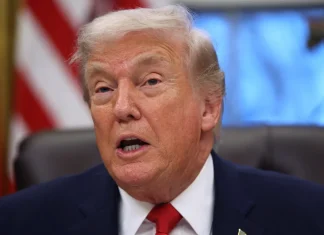
Warnings from Iranian commanders have been blunt. “If the enemy makes a mistake, it will endanger itself and the region,” Admiral Amir Hatami declared in remarks seen by state media. On the other side, President Donald Trump, speaking to Fox News, confirmed dialogue while reminding viewers of the naval build‑up. “They’re talking to us. We’ll see if we can do something,” he said. “We have a big fleet heading out there.”
For ordinary people, the danger is not strategic posture but explosive immediacy. In Bandar Abbas, a port city whose name often appears in dispatches about the Gulf, a local fire chief insisted that a recent blast was the result of a gas leak—not sabotage. In another neighborhood, shopkeepers described days when customers did not come at all, and when bread lines lengthened in the shadow of uncertainty.
Wider reverberations: alliances, labels and the new map of mutual suspicion
The U.S. designation of the IRGC as a terrorist organization—and the European Union’s decision to follow suit—helped trigger a new wave of countermeasures from Tehran. In parliament, a speaker clad in a Guard uniform announced that, under a domestic law, European armies would be treated as terrorist groups in response. Whether that is a symbolic gesture or portends concrete action remains unclear, but symbolism matters in a conflict where honor and image underpin strategy.
Analysts warn that this moment is emblematic of a broader trend: local grievances at home fuelling intransigent foreign policy stances abroad. Economic hardship and social anger create pressure points that leaders deflect outward. “When leadership feels vulnerable, they often externalize the problem,” said Dr. Faisal Rahman, a political sociologist. “It’s safer to direct blame to foreign actors than to confront painful domestic questions.”
Questions for the reader, and for the world
So what should we watch for now? A few markers matter: the tenor of diplomatic conversations, ship movements through the Strait of Hormuz, and hard data about civilian casualties. But beyond metrics, there are quieter signs—the return of refugees, the reopening of bazaars, the sound of children in schoolyards. Those are the measures of whether normal life is rebounding or collapsing.
What would a good outcome look like? Can two countries with decades of mutual suspicion create a negotiating framework that preserves security and human dignity? And if not, who will pick up the pieces when the next wave of refugees forms, the next embargo bites, or the next ship is hit?
There are no simple answers. There are, however, faces at a border, a carrier’s silhouette on the horizon, and a population that has already paid a painful price. As the world watches, the real question is whether global actors—governments, mediators, and citizens—will treat this as another headline or as an urgent human crisis demanding careful, courageous diplomacy.