Behind Closed Doors in Hamburg: A Trial That Reaches Across Oceans
There is an old oak in Blankenese whose leaves turn copper and gold long before the rest of the city. The trees stand guard over tidy houses on the Elbe, where well-kept front gardens meet the first murmurs of the North Sea breeze. It is from this suburban calm — from a student’s room in a quiet parental home — that investigators say a digital storm began to form.
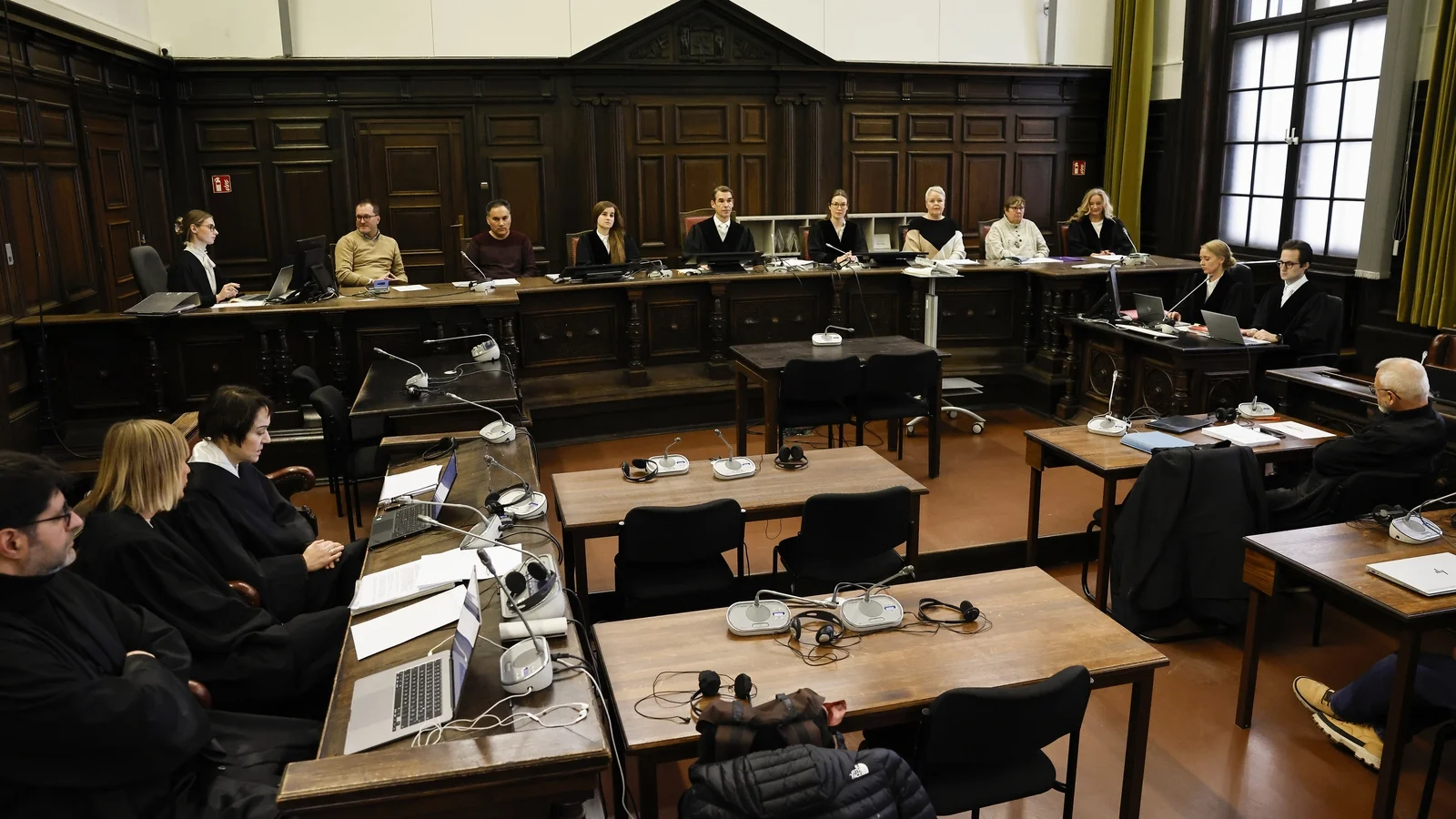
In a packed, shuttered courtroom in central Hamburg, judges have begun hearing a case that will test the reach of law across borders, the limits of juvenile justice, and the terrifying intimacy of coercion conducted through a screen. The defendant, a 21-year-old German-Iranian man identified only as Shahriar J. under German privacy rules, stands accused of orchestrating a campaign of grooming, blackmail and abuse that prosecutors say pushed a 13-year-old in the Seattle area to kill themself during a livestream.
A crime that travels with the click
“We are grappling with violence that does not respect geography,” said Dr. Marayke Frantzen, a court spokesperson, in a brief statement as the trial opened. “The victims are often children. The harm is enormous. And the legal framework — historically rooted in bricks and borders — struggles to keep pace.”
The hearing is closed to the public because the alleged victims are minors and vulnerable. This is no routine case: German prosecutors describe it as a precedent — the country’s first trial for a murder by suicide that occurred in another jurisdiction. The charge sheet is grim. Shahriar J. is accused of murder and five counts of attempted murder, and of exploiting more than 30 children in hundreds of separate incidents dating back to January 2021.
Prosecutors say he used the online name “White Tiger” to operate within an abusive network known as “764,” a group allegedly named for a Texas ZIP code and reported to traffic in the most extreme material — gore, sexually abusive images, and techniques for manipulating children into creating pornographic content that could later be used to blackmail them.
Grooming, coercion, and the terrifying calculus of trust
“He didn’t come at them like a monster,” said one former online role-player, speaking on condition of anonymity. “He was a friend at first. Someone who listened. Someone who knew how to make them feel seen.”
According to the indictment, that was the pattern: White Tiger allegedly found vulnerable young people in gaming chats and online forums, built emotional dependence, and then escalated pressure — persuading them to create sexualized content, threatening to share it, and deepening control through humiliation and isolation. In at least one case, prosecutors argue, the coercion ended in tragedy.
The accused was arrested in a police raid on 17 June 2025. He has been held in pre-trial detention since then. Authorities say the case took time to unravel: the FBI passed information to German authorities in February 2023, and investigators in Hamburg had to sift through a “large number of data storage devices” while tracing victims and other suspects scattered around the globe, some using false identities.
How the internet becomes a hunting ground
This is not an isolated story. Child sexual exploitation online has surged across recent years as technology connects young people to vast, often anonymous communities. Large non-profits and law enforcement agencies report millions of tips and flagged images each year. Platforms designed for play and socializing have become hunting grounds when predators employ grooming techniques masked as friendship — a phenomenon experts say is growing, sophisticated and deeply damaging.
“We’ve seen the grammar of abuse change,” said Dr. Anja Keller, a cybercrime researcher at a European university. “Perpetrators now coordinate, share tactics, and weaponize the very things young people love — games, anonymity, private chats. The emotional leverage that creates can be devastating.”
The courtroom and its limits
There are 82 hearings scheduled in Hamburg that will stretch until at least mid-December. Because the alleged offenses began when the defendant was still a minor — prosecutors say he was 16 in January 2021 — he will be tried in juvenile court under German law. If convicted, sentencing options are constrained: juvenile penalties range from six months to ten years, even for crimes prosecutors classify as murder. A typical murder conviction under adult law can carry a 15-year sentence.
Defense attorney Christiane Yueksel has been blunt in public remarks: “The allegation that my client indirectly caused a suicide is a construct that cannot be proven,” she said ahead of the proceedings. “We will show that the evidence does not support these claims.”
Prosecutors, by contrast, stress patterns: manipulation, emotional dependency, and escalation. They say the accused used threats, shame and blackmail to force children to produce material and to submit to ever-degrading commands.
Voices from two cities: Hamburg and Seattle
On the rain-slick streets of Hamburg, neighbours say the family home that became the scene of the arrest seemed ordinary. “Students come and go, there’s a piano sometimes, bicycles,” said Martina, who lives across the lane. “You never imagine the screens hold that kind of shadow.”
In the Seattle suburb where the 13-year-old once lived, community members have been mourning quietly. “Parents are scared now,” said Jamal Rivera, a youth soccer coach. “Kids I work with are online all the time. They ask me: ‘How do I know who’s real?’ What can you tell them?”
These questions ripple beyond any single family. They strike at the social fabric: How do societies protect children when the danger is global, anonymous and relentless? Where does responsibility lie — with parents, platforms, tech companies, educators, or law enforcement stretched across borders?
Key facts at a glance
- Defendant: 21-year-old identified as Shahriar J., accused of using pseudonym “White Tiger.”
- Allegations: murder (for the death by suicide of a 13-year-old in the US) and five counts of attempted murder; exploitation of more than 30 children in hundreds of cases since January 2021.
- Arrest: police raid on 17 June 2025; pre-trial detention since then.
- Trial: juvenile court in Hamburg, closed sessions; 82 hearings scheduled through December; no verdict expected this year.
- Legal note: as a minor at the time of alleged offences, possible sentence ranges from six months to ten years under juvenile law.
What this case asks of us
Beyond the legal mechanics, the trial is a mirror. It shows how quickly intimacy can be engineered online, how small acts of kindness can be weaponized into traps, and how law and technology race to catch up. It also forces difficult conversations about identity, vulnerability and compassion. The 13-year-old who died was transgender — a fact that underscores how marginalised young people are often the most targeted and the least protected.
So I ask you, reader: how would you advise a teenager today? What systems would you redesign to make children safer without closing off the enormous benefits of online connection? Is our world ready to treat digital harm with the urgency it deserves?
When the oak in Blankenese drops its last leaves and winter comes, the courtroom will still be busy. Lives and reputations are on the line. The hearing will continue, day after day, in a sealed room, while the consequences of what unfolded on tiny, glowing screens extend across oceans and into the homes of families who may never fully understand how a stranger became so close.
What happens in Hamburg over the next months may not only determine one man’s fate — it may also shape how we reckon with a modern form of violence that travels at the speed of light, landing on the most vulnerable among us.