Smoke Over Two Seas: How a Month of Strikes Has Shaken the Middle East and the World
On a wind-stiff morning, the skyline above Beirut looked like a charcoal sketch — dark plumes lifting from neighborhoods where families had once walked to the shops and children had chased pigeons. In Tehran, shopkeepers swept dust from the doors of long-closed storefronts, listening to a radioscape of rival broadcasts: evacuation orders, statements from embattled ministers, and the occasional, brittle note of defiant music.
This is not a small flare-up. It has been a month of war that began on 28 February with strikes that drew the United States and Israel into direct action against Iran — and has since bled across borders, igniting a multi-front crisis that is killing civilians, unnerving markets, and threatening the fragile recovery of economies around the globe.
Frontlines and Fire
In recent days the map of the conflict has felt like a fever chart: jittery, spiking, uncertain. Iranian missiles have reached Israel, Hezbollah has exchanged fire from Lebanon, and Yemeni Houthi fighters launched drones toward Israeli airspace. Israel says it struck military nodes in Tehran and infrastructure used by Hezbollah in Beirut; Lebanon woke to black smoke over its capital. Three United Nations peacekeepers in southern Lebanon were killed in separate incidents.
“We wake up to the sound of sirens and we go to sleep with the explosions in our heads,” said Amal Haddad, an emergency nurse in Beirut, her voice threaded with exhaustion. “It’s hard to explain — you become both numb and angry.”
Officials from Washington have signaled a willingness to escalate further. U.S. President Donald Trump warned that if the Strait of Hormuz is not reopened to international traffic, Washington will target Iranian energy infrastructure — naming power plants, oil wells and the vital export hub of Kharg Island — a threat that has sent chills through ports and markets from Singapore to Rotterdam.
The Strait of Hormuz: A Chokehold on Global Energy
Few narrow waterways carry so much weight. The Strait of Hormuz funnels roughly one-fifth of the world’s seaborne oil and liquefied natural gas — a figure that has become a shorthand for the potential shock to global energy supplies. Block that channel and you do not merely inconvenience shippers; you reshape global inflation, fuel costs, and the balance sheets of nations that count every barrel.
“If traffic through Hormuz stops for weeks, not only will oil prices spike — you will see supply chain disruptions across industries that rely on petrochemicals,” said Dr. Lina Ortega, an energy policy analyst based in London. “It’s not an abstract number. It’s the cost of transport, plastics, fertilizer — things we touch every day.”
Markets already reacted. Benchmark crude extended gains as traders priced in a new and unpredictable element: not a regional spasm, but a sustained threat to chokepoints. The International Monetary Fund warned that frontline economies are already suffering serious damage and that the conflict risks derailing recoveries from past crises. G7 finance leaders pledged to protect energy markets from runaway volatility, but promises of coordination offer only limited comfort to businesses and households facing higher prices.
Kharg Island and the Water Puzzle
Kharg Island, a beige dot off Iran’s southwestern coast, is more than an oil terminal. For ordinary Iranians it is a reminder of how vulnerable basic services are when infrastructure becomes a target. Threats to desalination plants — the source of drinking water for millions — exacerbate the humanitarian stakes.
“Water is life. If they start talking about destroying desalination, they are attacking common people,” said Hassan Rouhani* (name withheld), a fisherman from Bandar-e Lengeh who asked to speak anonymously. “We can mend walls, we cannot make water appear out of thin air.”
Diplomacy at the Edge
Amid the thunder of missiles and diplomatic ultimatums, there have been channels of conversation: envoys, intermediaries, and the shadow diplomacy of foreign ministers meeting in neutral rooms. Iran said it received U.S. proposals via intermediaries — Pakistan, Egypt, Saudi Arabia and Turkey were reported to have fed messages — but dismissed them publicly as infeasible. A Tehran spokesman described demands as being out of step with the country’s reality, and the Iranian parliament began discussing a possible withdrawal from the Nuclear Non-Proliferation Treaty, a deeply consequential step if pursued.
At the same time, U.S. officials signaled readiness to escalate on the ground: thousands of soldiers from the 82nd Airborne Division have been deployed to the region in recent days, widening Washington’s military options and raising the specter of boots on Iranian soil. But there is a parallel thread — a White House that insists it prefers a deal before any deadline it sets. “We’re talking, but the public face and private conversations are not always the same,” a U.S. administration official told a journalist.
Voices From the Ground
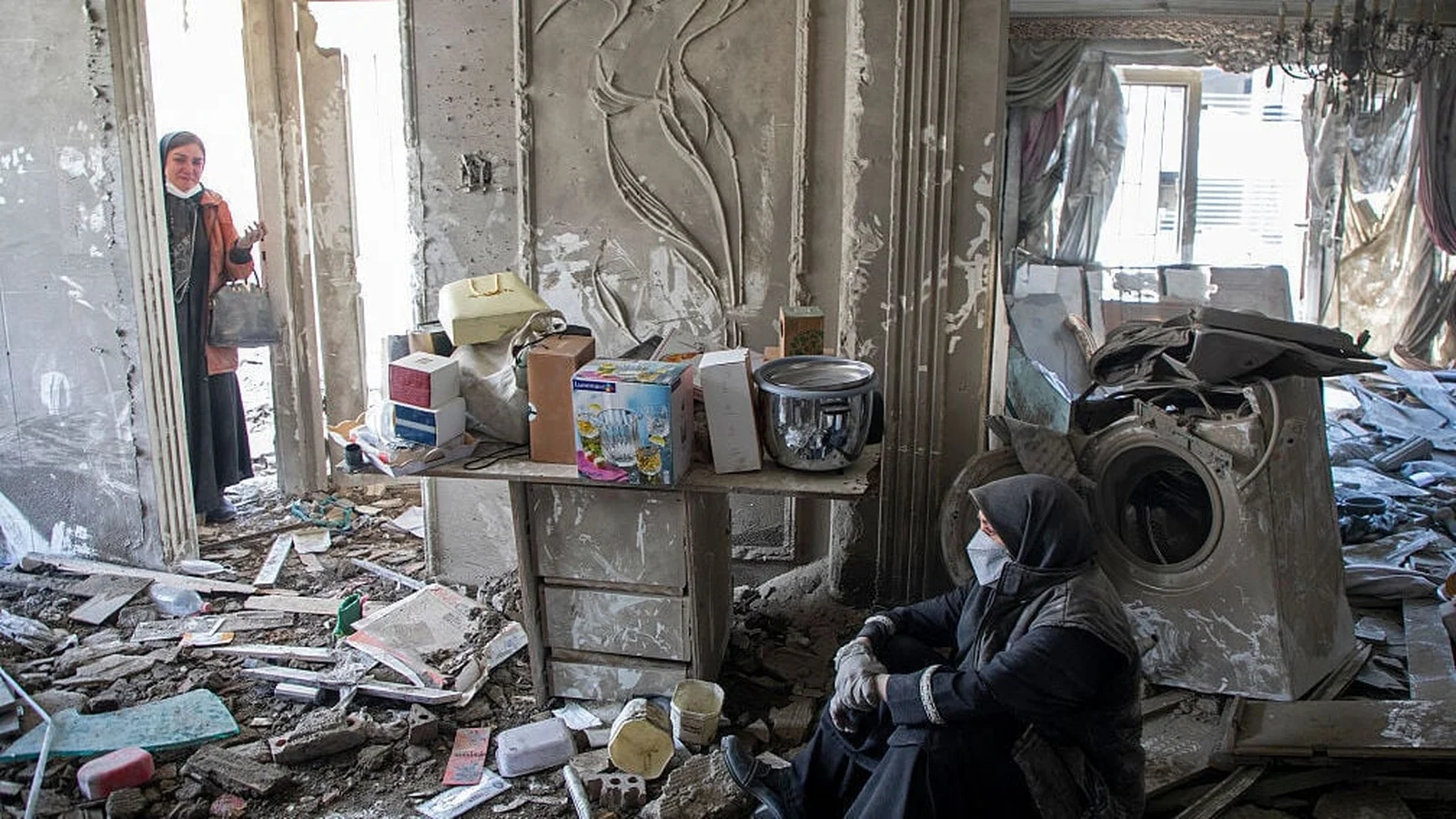
For civilians, the calculus is not geopolitical; it is survival. In southern Lebanon, Fadi Karam, a shopkeeper, spoke of the ache of small losses: burned-out vehicles, a market where foot traffic has dropped to a trickle. “We’re caught between rockets we don’t control and decisions we don’t make,” he said. “The futures of our children are being negotiated somewhere we cannot reach.”
In Tehran, people are rationing, not yet out of necessity but out of fear. Grocery shelves remain stocked in some neighborhoods, empty in others. A university student, Leila, described attending a lecture one day and watching security footage of airstrikes the next. “You study politics in books, then you live it. It’s surreal.”
Global Ripples and the Big Questions
Beyond the immediate human tragedy, the war raises urgent questions about alliances, the price of intervention, and the limits of military power in a hyper-connected world. Can sanctions and strikes eliminate a perceived threat without creating new, prolonged instability? How should the international community balance the need to deter aggression with the imperative to protect civilians and keep global markets stable?
Congress in Washington is divided. The administration has requested an additional $200 billion in funding for the conflict — a number that faces resistance in a country where polling shows public scepticism about a long-term war. Around the world, governments are scrambling to insulate vulnerable populations from energy shocks and to prepare contingency plans for shipping disruptions through the Bab el-Mandeb Strait at the southern entrance to the Red Sea — another critical artery now under threat from attacks by Houthi forces.
Where Do We Go From Here?
There are no clean endings in this story. Even if talks gain traction and a temporary opening is negotiated for the Strait of Hormuz, the underlying drivers — regional rivalries, domestic politics, and the weaponization of economic lifelines — are likely to persist. The human cost is mounting. Thousands have been killed, most reportedly in Iran and Lebanon, and each statistic is a life interrupted.
Ask yourself: what would a responsible international response look like if you had to design it today? Would it prioritize immediate ceasefires, humanitarian corridors, and binding inspections of energy infrastructure? Or would it double down on punitive measures to deter future aggression — knowing that such an approach risks further escalation?
There are no easy choices. But we do know this: the people who will pay the greatest price are not policymakers in Washington, Tehran or Jerusalem — they are teachers, shopkeepers, medics, and children who will inherit neighborhoods scarred by war. If you follow the news, let that human reality anchor your understanding of the geopolitics. And if the smoke clears tomorrow, remember the cost that brought us to that moment.
What you can watch for next
- Any verified reopening of the Strait of Hormuz to commercial traffic
- Movement of U.N. humanitarian convoys into affected cities
- Statements from G7 finance ministers on coordinated energy market interventions
- Parliamentary votes in Tehran about the Nuclear Non-Proliferation Treaty
We will keep listening to those on the ground and following the data. In times like these, the newspapers are not enough — so let us look for the stories that put faces on the figures and context on the headlines.