A Jar of Pickles, a Port, and a Courtroom: How One Ruling Ripples Across Kitchens and Capital
On a humid morning in suburban Chicago, Maria Alvarez hesitated in front of a row of pickles. She’d come for a simple jar to top her son’s sandwich, but the price tag made her blink. “It used to be $3.29,” she muttered, tucking an invoice from last month into her purse. “Now I’m paying more for things I’ve always taken for granted.”
By midafternoon the conversation had migrated – from grocery aisles to press rooms, from chattering kitchen tables to the marble steps of the Supreme Court. In a 6–3 decision, the justices concluded the president had overstepped his authority when he used emergency powers to impose a sweeping slate of tariffs. Less than a day after the ruling, President Donald Trump announced a 10% global levy as a stopgap. Then, in a sudden escalation, he raised that temporary tariff to 15% — the maximum permitted under a little-used legal tool called Section 122.
What Section 122 Is — and Why It Matters
Section 122 is obscure in the annals of trade law. It allows the president to impose import duties of up to 15% for national security or other specified reasons, but it comes with a catch: after 150 days those tariffs need congressional sign-off to remain in place. No president has previously invoked this precise mechanism at scale, which is why lawyers, trade experts and lawmakers describe the move as legally novel — and potentially litigated again.
“It’s a legal Hail Mary,” said one trade analyst in Washington who asked not to be named. “The administration is cleaving to a statutory lane that hasn’t been driven down before. Expect courtrooms and Capitol Hill to remain very busy.”
Money, Politics, and the People Who Pay
The arithmetic here matters — and it is not abstract. The tariffs announced last year have already pulled in more than $130 billion, according to White House figures released when the duties were first rolled out. That money doesn’t disappear quietly: retailers, importers and freight companies say much of the cost is passed downstream to consumers.
How much did households pay? Estimates vary. A Yale-affiliated study cited by Illinois Governor JB Pritzker suggested an average hit of about $1,700 per household last year; the Penn-Wharton Budget Model has estimated potential refund liabilities as high as $175 billion if the government were required to repay collected duties. These are heavy numbers in an era when many families are still licking pandemic-era financial scars.
“We are talking about real pressure on budgets,” said Dr. Renee Cho, an economist who studies household consumption. “Even small percentage increases on imports can amplify in grocery bills, building materials and the cost of manufactured goods.”
Governors, Refunds, and a Furious Chorus
Angry governors didn’t wait for slow-moving machinery in Washington. Governor JB Pritzker of Illinois sent an invoice to the White House demanding nearly $9 billion in refunds — roughly $1,700 per household in his state — calling it a necessary antidote to what he described as tariff-driven pain for families and farmers.
California Governor Gavin Newsom, whose state has some of the nation’s most complex supply chains, also demanded “every dollar” be refunded. In a fiery public statement he called the duties “an illegal cash grab” that had driven up the cost of living for ordinary Californians.
“We have constituents who had to choose between prescriptions and groceries,” said a community organizer in Fresno. “That’s not politics for the privileged — that’s survival for our neighbors.”
From Pharmacies to Ports: Exemptions and Uncertainties
The White House said some exemptions remain in place — notably for pharmaceutical goods and items entering under the US-Mexico-Canada Agreement (USMCA). Yet those carve-outs add another layer of administrative complexity at ports and distribution centers, where importers now face shifting customs rules and the possibility of retroactive refunds.
“Logistics teams hate volatility,” observed a port manager at the Port of Los Angeles. “When the rules flip overnight, you see a domino effect: scheduling headaches, demurrage charges, delayed shipments. Small businesses get squeezed the hardest.”
The Political Chessboard: Congress, Courts and the Ballot Box
Even with Section 122 invoked, the tariffs have a 150-day shelf life unless Congress votes to extend them. Many trade experts and congressional aides are skeptical that a Republican-led Congress will rush to extend a policy increasingly unpopular with Americans who blame tariffs for rising prices. Polling — both public and private — has pointed to rising frustration among voters who feel the pinch at the marketplace.
“This is where law, politics and economics collide,” said an aide to a senior senator. “Leaders must weigh the rhetoric of ‘protecting American jobs’ against the immediate suffering of constituents paying higher prices.”
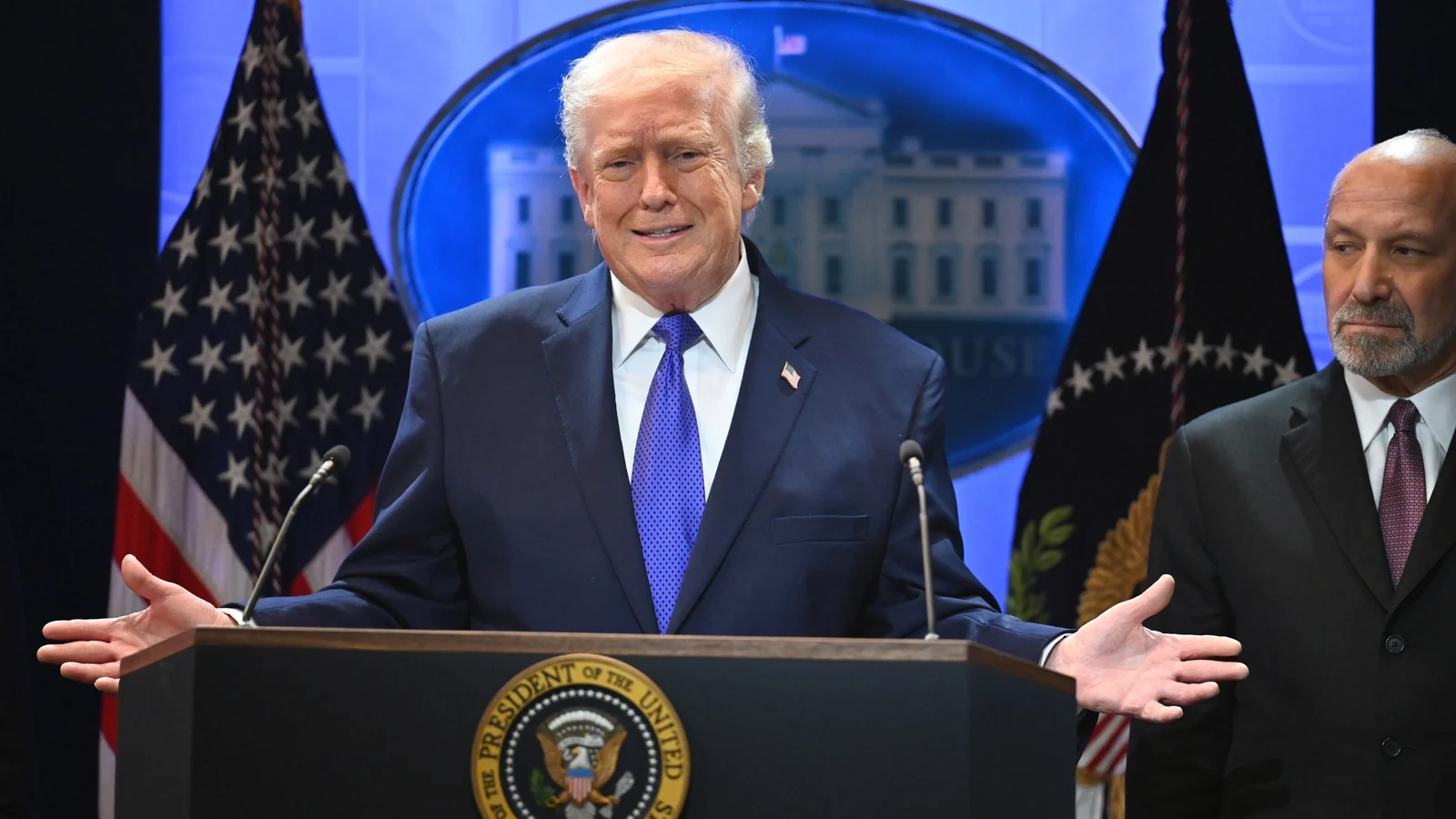
At the same time, the president struck a defiant tone on Truth Social. “This decision is ridiculous, poorly written, and extraordinarily anti-American,” he wrote, then moved quickly to set the tariff at the full 15% permitted — saying it would take effect immediately while the administration “determines and issues the new and legally permissible Tariffs.”
A Larger Story: Power, Trade and the Everyday
Beyond legal briefs and balance sheets, there’s a human story unfolding: shopkeepers, farmers, truck drivers, small manufacturers — all trying to plan around policies that can flip with a court ruling or an executive tweet. The episode shines a light on several larger currents: the fragility of globalized supply chains, the resurgence of tariffs as a political tool, and the perennial question of who pays when governments use trade policy to wield leverage.
Ask yourself: when governments use tariffs as instruments of diplomacy or domestic politics, who should shoulder the cost — the government, multinational firms, foreign exporters, or the everyday consumer? And what does it do to faith in institutions when the court declares one policy unlawful and the executive branch reaches for another uncertain path?
Where This Might Head
- Legal challenges: Expect renewed litigation as stakeholders test Section 122’s scope.
- Congressional debate: A 150-day clock forces politicians to choose on a national stage — and the choice will have electoral consequences.
- Economic fallout: If refunds are mandated, the Treasury could face high repayment bills spread over years; if not, consumers may bear lasting costs.
Final Thought
Policy is often spoken of in abstractions; in trade disputes, the abstractions hit home. A court’s opinion, an executive’s declaration, a governor’s invoice — they become supermarket receipts, lunchroom budgets and loan applications. As this legal and political drama unfolds, the real question is lived every day by people like Maria Alvarez: will the institutions meant to protect civic life also protect pocketbooks? The answer will tell us a lot about the balance of power in an era when trade policy is both weapon and lifeline.