At the Edge of an Exit: The Fragile Calm and Furious Flames of a War That Could End — Or Not
There are moments in history when the air itself feels charged, waiting for an announcement that could defuse a region or detonate it further. On one of those nights, Washington’s lights flickered with a different kind of urgency: the White House scheduled a late-night address, markets blipped, and in cities from Tehran to Doha, people went to sleep with one ear tuned for the sound of sirens.
“We’re preparing to wind this down,” a senior White House aide told me, off the record but weary in a way that the official briefings did not betray. “The president believes there is a path to stop the shooting. Whether Iran walks through the door is another question.”
How Close Is the Finish Line?
“We’ll be leaving very soon,” the aide said, summing up what has become the rhythm of recent days: bold timelines from Washington, strategic vagueness about the conditions for an end, and a parallel drumbeat of military action across the Gulf. In plain speak, officials are suggesting the U.S. might scale back operations within weeks — with or without a formal diplomatic pact.
That uncertainty is a double-edged sword. On one hand it opens space for direct talks. On the other, it undercuts trust: Iran’s foreign ministry has described recent messages from the United States as “communications, not negotiations,” adding that threats sent through intermediaries cannot replace face-to-face diplomacy.
What World Leaders and Street-Side Vendors Are Saying
“Words are cheap when missiles keep falling,” said Leyla, a tea seller in Tehran’s Enghelab neighbourhood. Her hands, stained with cardamom, trembled as she spoke about air-raid sirens and families who slept in stairwells. “We want peace, but we are tired of promises.”
A maritime-security analyst in Dubai, Samir Haddad, offered a different vantage. “If the U.S. truly wants to reopen the Strait of Hormuz by force, that’s a different war than the one they’ve been fighting,” he said. “This waterway carries roughly one‑fifth of the world’s seaborne oil and a comparable share of LNG — you don’t play with that without inviting global fallout.”
Fighting on Multiple Fronts
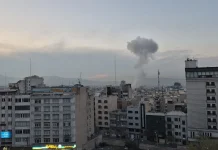
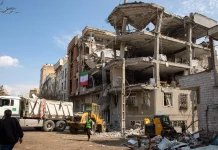
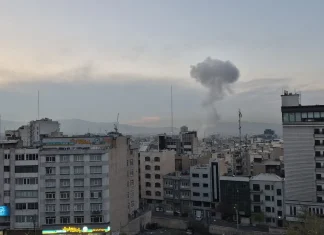
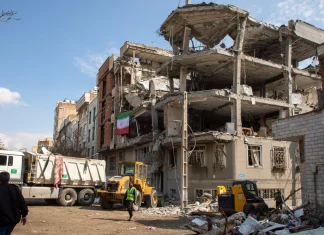
Despite talk of an imminent withdrawal, the conflict’s violence has not abated. Drones struck fuel tanks at Kuwait’s international airport, sparking towering flames. A commercial tanker near Doha was hit by an unidentified projectile; its hull was damaged though the crew escaped injury. Iran reported air-defence activations and explosions in parts of Tehran after air raids, while a major passenger port suffered damage in a strike described by a local deputy governor as a “criminal attack on civilian infrastructure.”
On another front, Yemen’s Houthi rebels — now openly aligned with Tehran’s campaign — launched a missile barrage they called a joint operation with Iran and Hezbollah, striking towards Israel. Missile debris later rained down in central Israel; thankfully, early reports suggested no immediate fatalities, though the psychological toll of debris and intercepted rockets has already left casualties across the region.
Targets and Threats: The Economic Battleground
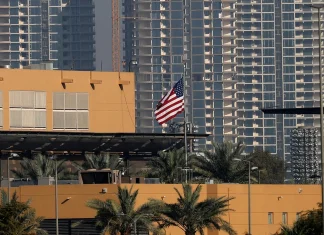
In a move that blurred military and economic lines, Iran’s Revolutionary Guards published a list of multinational companies — including some household tech and aerospace names — naming them as potential targets in the region. The message was unmistakable: companies are not neutral bystanders in this conflict’s theater.
“Attacking infrastructure or corporations is an attempt to widen the war into global economics,” said Dr. Marianne Koenig, a former diplomat and current fellow at the Global Security Institute. “That’s a dangerous escalation — and it also speaks to Iran’s calculation that economic pressure can pressure others back to the table.”
Politics, Polls and Petrol
It’s not just geopolitics on the line. Fuel prices in the United States have crept higher; the national average retail price of gasoline has crossed the psychologically potent $4-a-gallon mark for the first time in years, squeezing households already stretched by inflation and rent. Global markets reacted, too: Brent crude edged up more than 1% as investors recalculated risk, while Asia-Pacific equities rallied on hopes of de-escalation — MSCI’s broad index of Asia-Pacific shares outside Japan rose by roughly 2.7% in early trade.
Public opinion is clear in the polls: a Reuters/Ipsos survey found nearly two-thirds of Americans think the U.S. should work to exit the war quickly. That pressure leans on policymakers who must juggle military strategy with electoral realities.
NATO, Allies and the Question of Burdens
In Washington, voices in the administration have pointed fingers. “After this conflict is concluded, we are going to have to reexamine alliances and burden-sharing,” a senior adviser said. Critics in Europe bristled at the suggestion, while some Gulf partners quietly discussed proposals to retake control of shipping lanes if a political solution remained elusive. The Wall Street Journal reported that one Gulf state had suggested a UN resolution to authorize the use of force to reopen the Strait of Hormuz — an idea that, if pursued, would rewrite decades of maritime precedent.
Human Costs: Names and Numbers
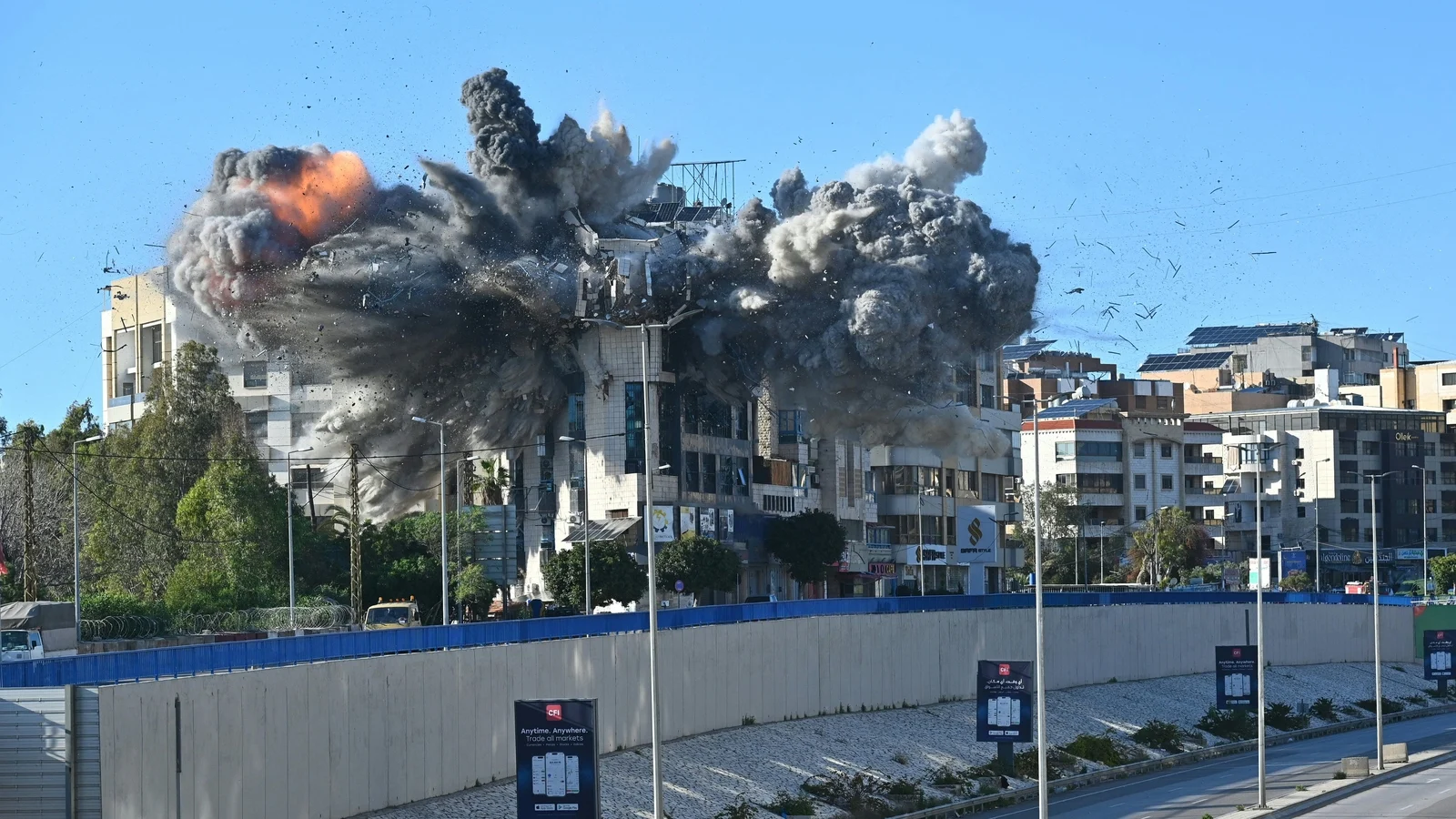
By the latest estimates circulating among international monitors, thousands have been killed since the outset of the wider regional conflict and tens of thousands displaced. Hospitals in border regions report surges in trauma cases. In southern Lebanon, Israeli strikes in and around Beirut killed at least seven people and wounded more than two dozen; in southern Lebanon, the deaths of three UN peacekeepers prompted Indonesia to demand an independent UN inquiry.
“These are not statistics to be debated over coffee,” said Hassan al-Rashid, a volunteer coordinator in Beirut. “They are fathers, mothers, students — people who had simple plans for their day and whose lives have been upended.”
So What Comes Next?
There are a handful of possible endings to this fraught sequence — a negotiated ceasefire with tangible guarantees, a unilateral U.S. withdrawal, an escalation that draws in more state and non-state actors, or a protracted low‑intensity conflict that spins for months. Which of these proves true depends on decisions made in closed rooms, at secret meeting tables, and amid the clatter of missiles over city streets.
“Diplomacy is not a press release,” Dr. Koenig reminded me. “It’s a long, messy process that requires mutual credibility. Threats on both sides erode that credibility.”
Questions for the Reader
As you read this, what do you think the global community owes civilians caught between geopolitics and geography? Should corporations be held responsible for operating in high-risk zones, and could international law adapt fast enough to protect them — and the people who work for them? If the Strait of Hormuz is the prize of leverage, must the world accept such leverage as a permanent bargaining chip?
These are not theoretical exercises. They are the real-time dilemmas diplomats, soldiers, and ordinary people are wrestling with across a region whose ripple effects reach every continent.
Tonight’s national address from Washington could be a curtain call on an era of open conflict, or the opening salvo of something longer. Either way, the cost will be measured not only in barrels of oil and stock indices, but in the quiet spaces of kitchens and classrooms where people wonder if peace will finally arrive at their door.