Brussels at a Crossroads: The Alliance, an Unlikely Peacemaker, and a War That Won’t Let Go
There is a peculiar hush in the corridors around NATO’s headquarters this week — not the kind that comes from agreement, but from the bristling pause between hope and skepticism. Delegates shuffle papers, sip too-strong coffee, and trade guarded glances. Outside, Belgian flags snap in the wind as if impatient for news. Inside, ministers are wrestling with a question that reverberates far beyond marble facades: who gets to steer the endgame in Ukraine?
For weeks, the momentum of any potential cessation of hostilities has been oddly concentrated in a handful of meetings far from these halls. Back-channel talks in Moscow, unusual envoys flying between capitals, and an initial 28-point draft peace plan have put NATO in an uncomfortable role—observer, commentator, and sometimes critic. “We’re not spectators,” a senior NATO diplomat told me in a quiet hallway. “We’re a collective defence alliance. We need to be at the table, not watching from the doorway.”
The New Map of Influence
The most headline-grabbing development has been the prominent — some say outsized — role played by Washington’s direct backchannel to Moscow. Envoys from the U.S. met with senior Russian officials in lengthy sessions that left few concrete breakthroughs but stirred plenty of political consequences. Around Brussels, there’s a palpable unease that the architecture of consensus that has bound Europe and North America since the Cold War could be fraying.
“It feels like we’re watching a relay race where one team suddenly decides to run alone,” said a Dutch official, who asked not to be named. “It might get you to the finish faster on its own terms, but what happens to the rest of the race?”
Where NATO Fits In
At this NATO foreign ministers gathering, delegates reiterated that coordination with Washington remains tight — and necessary. But they also signalled a need for a more unified approach. Two facts stood out from the briefings: a majority of NATO members are committing beyond words to Ukraine’s defence, and new partner contributions from far-off allies are arriving in a show of global solidarity.
- Roughly two-thirds of NATO countries have committed material support through the Prioritised Ukraine Requirements List (PURL).
- So far, pledges to that list have totaled about $4 billion in value.
- For the first time, partners like Australia and New Zealand have stepped in directly to contribute to PURL.
“That’s real money and real matériel,” said an analyst who tracks defence procurement in Europe. “It demonstrates that NATO’s label still carries weight — but the question is whether political leadership will match it.”
Voices from the Room and the Road
Not everyone in Brussels speaks in diplomatic circumspection. At a press doorway, a Finnish minister, arms folded against the draft plan’s rhetoric, was blunt: “We must not be intimidated by bombast. Europe has capability. Europe is ramping up.” The statement captured both pride and wariness — pride at the continent’s increasing defence readiness, wariness about hyperbolic statements that could inflame rather than resolve.
Across town in Dublin, the tenor was different but connected. Ukrainian President Volodymyr Zelensky’s recent address to Ireland’s parliament drew a standing ovation and tears from some in the chamber. Outside, in the quieter part of the city where Ukrainian families have settled, there is gratitude mixed with a weary longing. “Ireland took us in when it mattered,” said Olena, a mother who fled Kharkiv with two children and now volunteers at a community kitchen. “But we all pray for one thing — the day our children go home.”
Backchannels, Bluster, and the Price of Influence
Reports from recent talks in Moscow describe a complex mix of posturing and pragmatism. One senior Russian official characterized the sessions as “productive,” a word that was met with polite scepticism in Brussels. Many ministers insisted publicly that Moscow had yet to show a willingness to make meaningful concessions; privately, some admit that the mechanics of a settlement are as thorny as ever — borders, security guarantees, the question of Ukraine’s future ties with NATO among them.
“Rhetoric is cheap,” said a British official during an evening briefing. “What we need are guarantees, verification mechanisms, and a pathway that ensures Ukraine’s sovereignty and security.”
Allied Unease: When Washington Leads Alone
There is a deeper strain in the conversations: unease over the United States acting as an independent broker rather than a committed NATO partner in coalition negotiations. Absences at the meeting — such as the notable nonattendance of certain officials balancing multiple crises — have only added to the sense that the old script of transatlantic coordination may be being rewritten in real time.
“I don’t read absences as abandonment,” the Dutch official shrugged. “But I do read them as a reminder: alliances are made of people, commitments and presence. Presence matters.”
Weapons and Peace: A Delicate Balance
One of the central strategic debates here is the old, painful trade-off: how to equip Ukraine to defend itself decisively while keeping a diplomatic window open. The PURL program is NATO’s attempt to make that duality concrete — prioritizing Ukraine’s immediate needs while channeling support in a coordinated fashion so it does not become a free-for-all. That coordination is not merely bureaucratic; it is political insurance against missteps that could widen the war.
“We are trying to thread a needle,” an armaments expert said, leaning over a map. “Too little, and Ukraine could be outgunned. Too much or too chaotic, and you risk escalation or political fragmentation.”
What This Means for Ordinary People
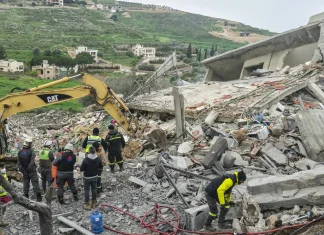
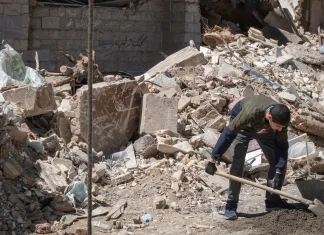
It’s easy in conference rooms to talk about balance sheets and diplomatic leverage. It’s harder when you stand in a community hall in Lviv or walk the quay where a refugee mother keeps turning the switch of a radio to catch updates. The stakes are not abstract. For civilians, the calculus is simple: safety, sovereignty, and the ability to rebuild without the constant fear of bombardment.
“We don’t care who signs the paper so long as it keeps the shells away,” said Mykola, an elderly tavern owner, watching NATO flags pass by the window outside a Brussels cafe. “Peace must be something we can live in, not just a document.”
Questions to Carry With You
As the ministers return to their capitals, and as envoys continue their stop-start diplomacy, ask yourself: do you trust a handful of political deals struck in private rooms to shape the fate of an entire region? Do you believe alliances built over decades can be reshaped overnight by new actors and bold gambits? And perhaps most urgently, what do we owe to the millions whose lives hang in the balance while diplomats negotiate the terms of their future?
The answers will determine whether NATO remains the arbiter of collective security in Europe, whether backchannels can coexist with multilateral processes, and whether a fragile ceasefire becomes a durable peace. For now, the flags still fly, the meetings continue, and the world watches — waiting for the moment when rhetoric turns into relief.