When a Comment Became a Crisis: Greenland, Davos and the Fragile Art of Alliance
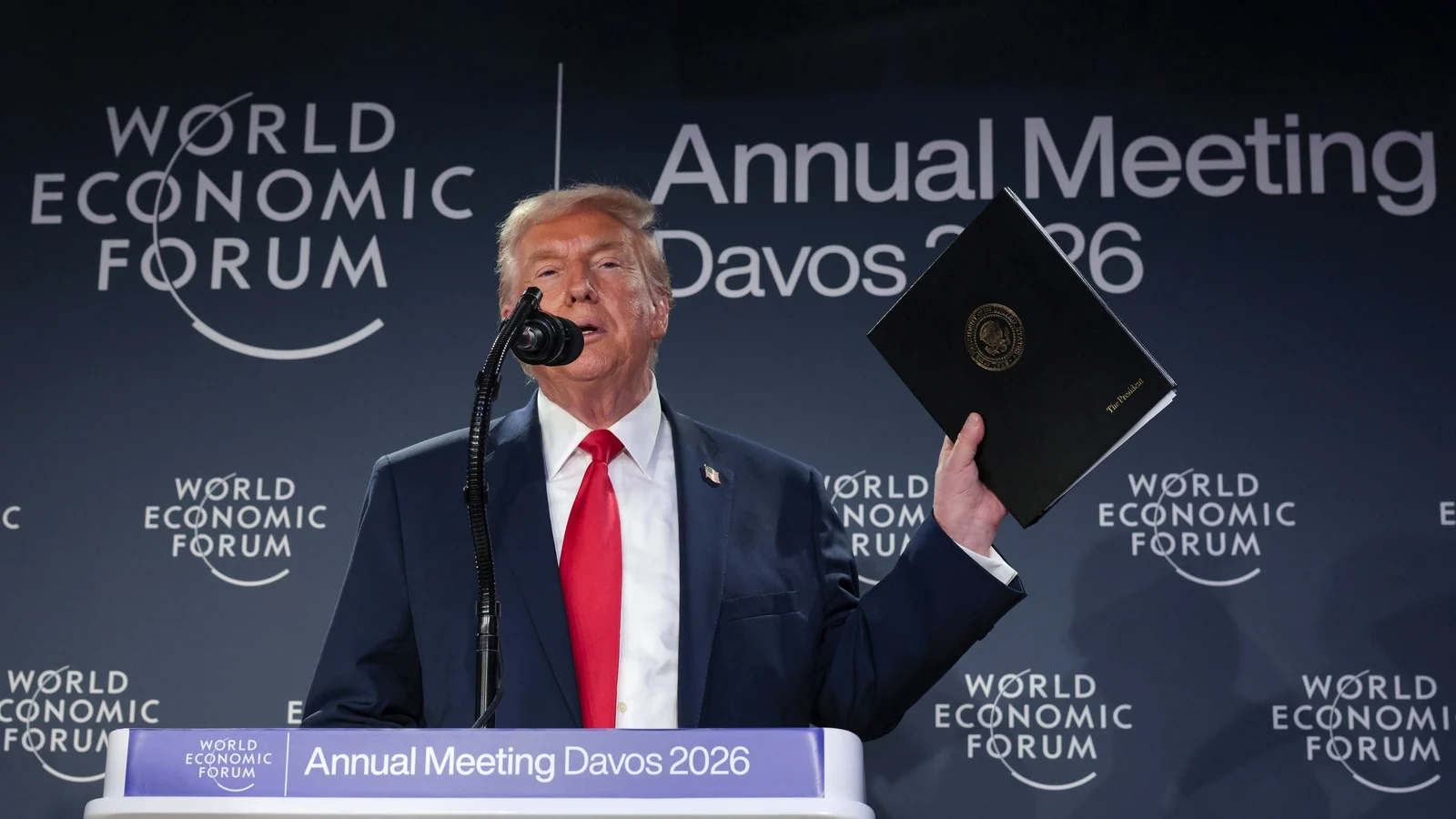
The scene at Davos felt like a political thriller played out in broad daylight: Blackhawk helicopters slicing the Alpine air, leaders swapping handshakes beneath crystal chandeliers, and one president — loud, theatrical, decisive — turning a rhetorical flourish into a diplomatic headache.
Donald Trump arrived with a line that hardened into a moment. He threatened to take Greenland — an island the size of Western Europe, home to roughly 56,000 people and more ice than most countries have rain — and then, within hours, announced a softer note: a vague, apparently permanent security arrangement negotiated with NATO leadership and discussed in public alongside Dutch Prime Minister Mark Rutte. He called it a win. He said, “It gives us everything we wanted.” But beneath the sound bite, questions festered.
The story in a sentence — and then the backstory
At Davos, the United States appeared to step back from talk of seizing Greenland, lift threatened tariffs against European partners who had voiced outrage, and instead described a pact to secure the Arctic against the strategic reach of rivals such as Russia and China.
“We won’t use force,” Mr Trump told reporters. “All the United States is asking for is a place called Greenland.” It was a sentence that left sovereignty untouched on paper but unsettled in practice: who gets to talk about Greenland’s future, and who is merely allowed to listen?
Why Greenland matters
To most of us Greenland is a postcard: bright corrugated houses clinging to fjords, hunting boats bobbing against hulking cliffs, and an endless palette of ice. But beneath the aesthetic is a strategic reality that has modern powers circling. Greenland sits astride the North American-Atlantic gateway, a place where military presence translates directly into strategic advantage. It also sits atop geological riches — deposits of rare earth elements and other minerals that could matter immensely as the world transitions to green technologies.
And the climate is changing fast. The Arctic is warming at roughly twice the global average, opening sea lanes and exposing shores that were yesterday locked in permafrost. That reality sharpens the geopolitical appetite.
- Greenland area: about 2.16 million km² — the world’s largest island
- Population: roughly 56,000 people
- Arctic warming: approximately twice the global average, accelerating ice melt and new access
These facts are the backdrop for what the president framed at Davos as a defensive move: an effort to ensure that “Russia and China never gain a foothold” in Greenland. NATO officials later said Denmark, Greenland and the United States would work on measures to keep outside influence at bay. But the phrasing — “work on measures” — left room for interpretation and, for many Greenlanders and Danes, concern.
Voices from the north
In Nuuk, the capital, government offices quietly distributed leaflets about emergency preparedness. On the streets, people wore a mixture of incredulity and weary acceptance.
“We are not a real estate item in some transactional game,” Aaja Chenmitz, one of Greenland’s two representatives in the Danish parliament, told me in a phone interview. “NATO has a role in security, yes, but everything about us must include us. Nothing about us without us.”
Lis Steenholdt, a 65-year-old pensioner, summed the mood another way: “We have told the world before: Greenland is not for sale. We will defend that, whether people shout about minerals or missile sites.”
Those words chime with a long history. Greenlanders are primarily Inuit; their identity, language and livelihoods are intertwined with the land and sea. Political control has been Danish since colonial times, and autonomy expanded with Greenland’s home rule and later self-rule measures. Yet the island’s course forward is being debated by capitals thousands of kilometers away — a fact that fuels anxieties about representation and respect.
Alliances under strain
For NATO, the episode was a rare public spat that exposed fissures. Allies bristled at what many saw as unilateral grandstanding. Markets breathed easier when the threat of tariffs against Denmark and several European partners appeared to be lifted: stocks climbed, at least briefly, as traders exhaled at the prospect that one major spur of transatlantic conflict had cooled.
“It was a diplomatic shock that had potential economic consequences,” said Dr. Marianne Holt, an expert on transatlantic security at the Atlantic Policy Institute. “Even the suggestion that one ally might levy sanctions against another — or threaten to rearrange sovereignty talks by force — is poisonous for alliance cohesion.”
And yet there was no firm transfer of sovereignty. When asked whether Denmark would cede Greenland, Prime Minister Rutte—acting as a conduit for European concerns—said the question of sovereignty simply “did not come up.” The net effect: a deal claimed as a win by the White House, ambiguity for the region, and a reminder that presidential rhetoric can ricochet across global institutions.
A local lens on a global problem
What this country-by-country sparring misses, critics say, is the everyday reality of Greenlanders. The economy is small, dependent on fishing, public sector employment and a growing—but controversial—interest in mineral extraction. Villages still hold traditional practices. Nuuk’s colorful rows of houses against the ice are not just scenic backdrops; they’re homes where families talk about sovereignty over coffee and fish soups.
“People are asking: who speaks for us in these rooms where decisions are made?” asked Signe Narsaq, a young community organizer in Nuuk. “And they’re also wondering about the climate. Ice melt isn’t an abstract problem — it’s our water, our coastlines, our future.”
Questions for the reader
How should the world balance strategic security with the political rights of small peoples? Can alliances like NATO protect more than borders — can they protect trust? And who gets to decide the future of places whose value is suddenly magnified by geopolitics and climate change?
These aren’t rhetorical flourishes. They are urgent civic questions as the Arctic becomes a theatre of competition and collaboration.
What comes next
For now, the outcome is an uneasy pause. The president announced he would drop threatened tariffs and framed the deal as durable. NATO spokespeople said talks would continue about deterring great-power entanglement in Greenland. Greenland’s leaders and residents, meanwhile, insist on being at the table — and in charge.
“We want protection,” Aaja Chenmitz told me, “but not protection that comes at the cost of our voice. Not like a museum piece. Not at all.” It’s a simple, human demand: to be recognized, consulted and respected as Greenland charts its own path through the new Arctic.
So when world leaders return home and the helicopters depart, it’s worth remembering the human geography behind geopolitical headlines: an island, a people, and a climate both fragile and strategic. The next conversation about Greenland should begin not in Davos or in Washington alone, but with those who live at the edge of a changing world.