At the Edge of Escalation: A Region on Fire and the Voices Trying to Put Out the Flames
The morning felt different in Beirut this week — a heavy, metallic sky hung over the southern suburbs as residents moved like ghosts between rubble and silence. In Tehran, families huddled around radios and screens, trying to parse another layer of bad news. In a quiet office in Washington, a war strategy was being aired publicly, blunt and unapologetic. This is not a neat drama with a single villain and a tidy ending. It is messy, human and accelerating.
A President Steps In — Or Leans In
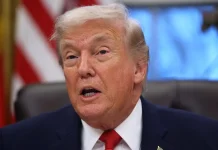
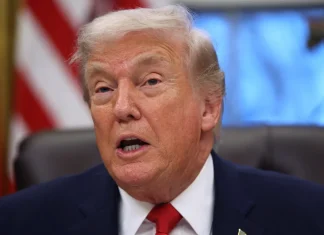
From the White House came an assertion that startled diplomats and analysts alike: the United States, its leader said, wanted some say in who steers Iran next. The statement — part geopolitical calculus, part provocation — signaled a readiness to tilt the region’s delicate succession dynamics toward American interests.
“We want a hand in how Iran’s future is shaped,” a senior aide summarized from the president’s remarks. “Not to dictate, but to influence outcomes that protect our allies and our interests.” For families living under the threat of missiles and drone strikes, these high-level calculations can feel distant and cruel.
There was also a direct nudge to Kurdish groups operating along the Iran-Iraq frontier: take the initiative, the administration seemed to say. Whether that was encouragement, permission, or mere rhetorical flourish depends on who you ask.
What this means, practically
On the ground, Kurdish militias have indeed been in consultations with Western officials about whether to strike at Iranian security posts inside Iran — and if so, how. These groups, based in Iraqi Kurdistan, have trained for cross-border raids for years; recent conversations have focused on timing, targets and the risks of escalation.
“We are tired of waiting for the world to decide our fate,” said Bahar, a Kurdish fighter who asked not to use her full name. “If the opportunity comes to weaken a force that has oppressed our people for decades, many will take it.”
Hormuz: The Choke Point and the Specter of Supply Shock
Then there is the Strait of Hormuz — the narrow maritime throat through which roughly one-fifth of the world’s seaborne crude oil and liquefied natural gas flows. It is a strip of water about 21 nautical miles at its narrowest; geopolitically, it is a pressure point. Closing it has been a long-standing lever in Iran’s strategic playbook.
Recent attacks on commercial vessels in nearby waters have all but paralyzed shipping. Insurance premiums for oil tankers have spiked and some shipping companies have rerouted around the Cape of Good Hope, adding days and millions of dollars to voyages. The global economy feels these jolts in real time: higher delivery costs, nervous energy markets and a ripple effect on inflation.
“When a tanker is struck, it’s not just a headline,” said Lina Martinez, an energy economist in London. “It’s a supply chain event that can touch everything from the petrol pump to the price of fertilizer months from now.”
Beirut’s Southern Suburbs: A City Pushed Into Flight
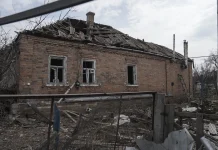
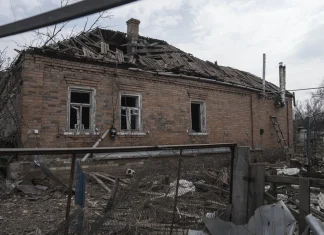
On another front, warplanes have driven residents from their homes in Beirut’s southern neighborhoods. Israeli forces issued stark orders for people to evacuate north of the Litani River, and health ministry figures out of Beirut report more than 100 dead and hundreds wounded since hostilities widened earlier this week.
“We left with nothing but the key,” said Amal, a shopkeeper who stood near an emptied market stall flanked by shattered glass. “I don’t know if we’ll be able to come back. My children are sleeping at a friend’s house as if this were a bad dream.”
International aid workers are racing to the fringes of the city, but hospitals strained by an already fragile health system warn the numbers are likely to climb as more injured reach treatment centers.
Civilians in the Crossfire and the Language of Blame
Accusations have flown in a predictable pattern: Tehran blames Washington and Tel Aviv for deliberately targeting civilian sites. Iranian officials invoked the deaths of schoolchildren in Minab — a tragedy reported to have claimed over 160 lives — as evidence that the cost of “strength” is being paid in blood.
“How can anyone call this defense?” asked Ali Larijani, a high-ranking security official, in a social media statement. “What we are witnessing is a stain on the rhetoric of peace through power.”
For families in Minab and across conflict zones, the abstract debates over deterrence are painfully concrete: which hospital still has supplies, which neighborhood still has water, who will care for orphaned children.
Spillover and Small States Caught in a Big War
Beyond Iran’s borders, the conflict’s reach has been disconcertingly wide. Drones crossed into Azerbaijan’s Nakhchivan exclave — a sliver of territory wedged between Iran, Turkey and Armenia — striking an airport terminal and injuring civilians. Baku warned such moves would not go unanswered.
“We cannot stand by as our neighborhoods are struck,” said a local official in Nakhchivan. “We will respond in ways that defend our citizens, but we do not seek a wider war.”
This is the dangerous math of modern warfare: non-state actors, asymmetric tools and a tangle of alliances mean a spark in one place can become a blaze in another.
Diplomacy in the Margin: Warnings, Pleas, and the Cost of Inaction
In Brussels, EU foreign ministers met with Gulf representatives, and Kaja Kallas, the EU’s foreign policy chief, voiced fears that internal fractures could erupt within Iran itself. “When we speak to regional partners, there is a real concern about civil war,” she said.
It is a sobering admission: even as leaders posture, many diplomats believe the only path out of this spiral will be negotiations that leave room for diplomatic breathing space — the kind of nuanced, time-consuming work that rarely makes front pages.
“Wars only end at the negotiating table,” said Dr. Miriam O’Connor, a conflict resolution specialist. “If diplomacy is squeezed out by the logic of instant military gains, the region risks generations of instability.”
What Now? Questions for the Reader — and for Leaders
As you read this, ask yourself: what kind of world are we building when foreign capitals claim a role in deciding the leadership of another nation? When does support for an ally cross into pushing others toward risky fights?
These are hard questions without easy answers. The human stakes are clear: displaced families in Beirut, grieving parents in Minab, schoolchildren whose days will now be shadowed by trauma, small towns along borders that were once quiet.
There may still be room for another path — one that emphasizes protection of civilians, restraint in rhetoric, and real investment in mediation. It will require heavy diplomatic lifting and, crucially, the willingness of external powers to prioritize de-escalation over short-term advantage.
Until then, the region’s nights will continue to be restless, and its mornings — for ordinary people — unbearably uncertain. What would you do if the world’s leaders treated decisions about your country as a strategic card? How would you choose to be represented when history is being rewritten around you?