A Pope, a President, and a Continent: When Moral Authority Meets the Age of Outrage
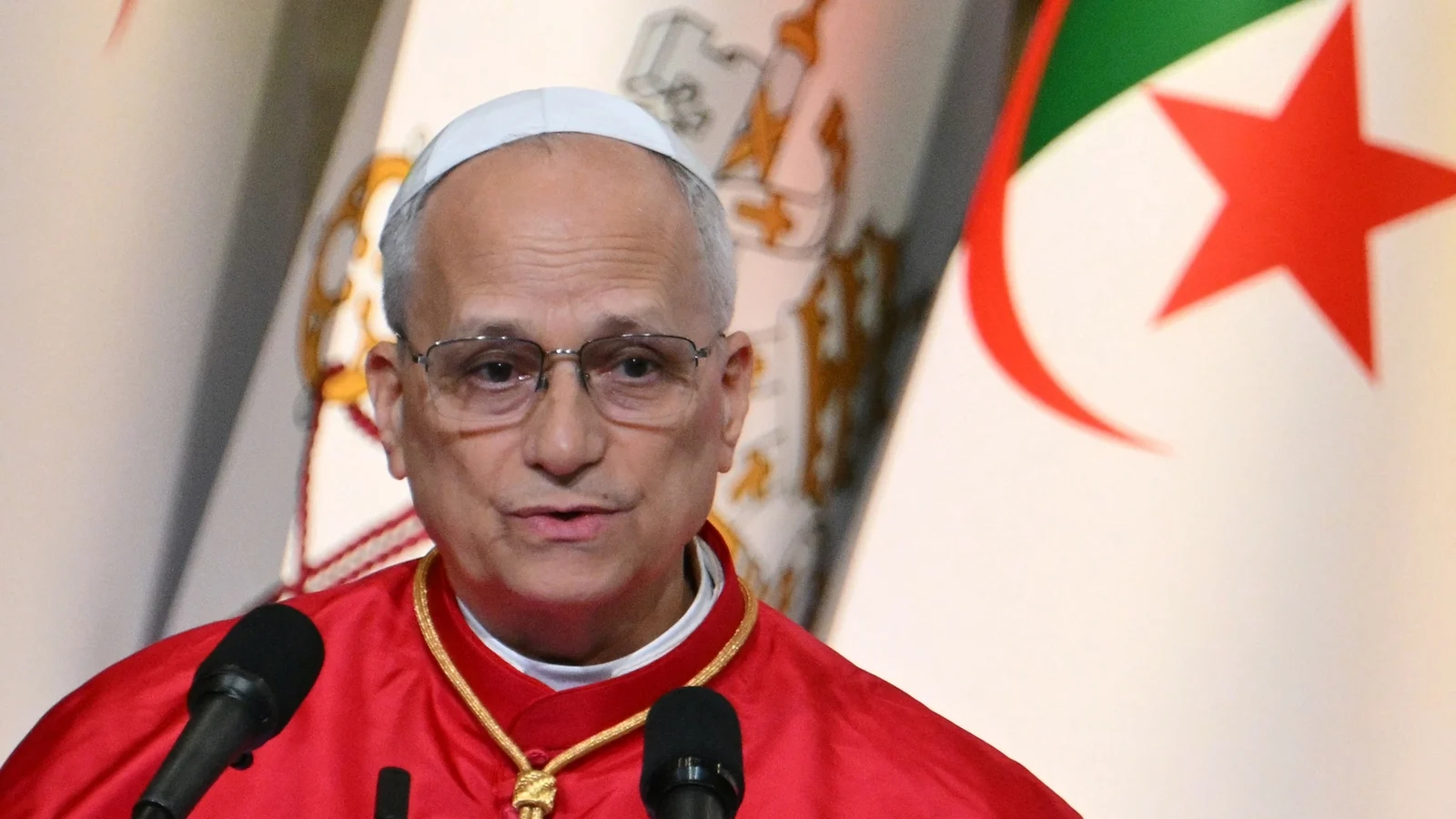
The papal plane dips low over the Mediterranean, and below the glinting ribbon of Algiers’ coastline the scent of jasmine and diesel mingles in the air. Journalists crane their necks, cameras clicking like anxious hearts. For Pope Leo XIV—Chicago-accented, fluent in half a dozen tongues, and newly installed in the ancient office that has survived empires—the landing here is more than a travel itinerary. It is a test.
Not just of his message, or of the fragile art of interfaith engagement in a Muslim-majority country. A test, too, of whether the moral voice of the Vatican can withstand the combustible currents of modern politics: social media fury, celebrity-style presidential denunciations, and the partisan tug-of-war across the pews and the ballot box.
The public quarrel that followed him onto the tarmac
What began as a measured sermon about the sin of war metastasized overnight into front-page fodder. When the Pope criticized the bellicose rhetoric surrounding a potential strike on Iran—calling the notion of total annihilation “a delusion born of power”—he expected resistance. He probably did not expect the blistering rebuttal to land via a presidential social-media rampage: a terse dismissal of the pontiff’s credibility and a tweet-thread accusing the Holy See of being “soft” on national security and crime.
“I respect the office,” one senior Vatican aide said privately, “but we do not—and cannot—become a branch office of any administration.” That line has become a lodestar for many inside the curia: moral independence, even when it hurts.
Closer to home, the reaction has been raw and personal. “I grew up in a Chicago parish where the priest knew my family by name,” said Maria Delgado, a schoolteacher in suburban Naperville who still carries a rosary in her pocket. “When the Pope speaks like that, it lands. When the president calls him weak, it feels like an insult to my whole upbringing.” Across the United States there are roughly 50 million people who identify as Catholic—an electorate large enough to be swept up in both spiritual and political crosswinds.
Why this matters beyond the headlines
The clash is not merely between two men. It is a collision of roles: an elected president who governs by mandate and a pontiff whose power is moral rather than legal. The Pope relies on persuasion, ritual, and centuries of theological weight; a modern president relies on polls, pundits, and instant rebuttal. When these two currencies of influence collide, the exchange is noisy.
“Popes have always spoken against war,” explains Dr. Lina Hariri, a scholar of religion and international affairs. “From encyclicals to pastoral letters, the Vatican’s toolbox isn’t tanks or sanctions—it’s conscience. In a world where public opinion can be weaponized in seconds, that slow, steady moral voice is both more necessary and easier to vilify.”
The stakes extend even further. The Vatican’s message is heard in capitals from Rome to Kinshasa; its pronouncements can shape diplomatic atmospheres and nudge warring parties toward talks. And with about 1.3 billion Catholics spread across the globe, the pontiff’s words carry weight in embassies and refugee camps alike.
Algeria: A deliberate first step
It is no accident that Leo XIV chose North Africa for his first major tour. Algeria—Arabs and Berbers, a history of colonization and revolution, the winding alleys of the Casbah and the solemn Monument des Martyrs—offers a different kind of audience than Washington. Islam is the fabric of public life here. Christianity is a small, patient thread.
“We welcomed Pope Paul VI in 1969 and we remember,” said Imam Ahmed Bouzid outside the Great Mosque of Algiers, offering tea to passing reporters. “This visit speaks to the possibility of living together. We do not want sermons from each other; we want hands joined in service.”
That quiet, pragmatic tone contrasts with the noise coming from the Atlantic. In Algiers, the pontiff can rehearse a different argument: that peace is not merely a policy preference, but a moral duty anchored in daily gestures—hospitals rebuilt, neighborhoods cooled by dialogue, families not shattered by airstrikes.
Local color, global resonance
At a makeshift market near the presidential palace, a woman named Fatima sells roasted almonds and braided scarves. “We are proud when someone speaks for peace,” she says, tucking a coin into a child’s hand. “But we are suspicious of grand speeches from afar.” Her skepticism, grounded in everyday life, is a reminder that high diplomacy must translate into local relief to have meaning.
Inside the cathedral that still hosts a tiny Christian congregation, Father Karim—an Algerian who learned Latin as a child—smiles when asked about the Pope’s insistence on dialogue. “We must listen harder,” he says. “Not to change our faith but to understand how to live with those who worship differently. That is the work of saints and citizens alike.”
The wider pattern: faith in the political age
What is unfolding between the Vatican and the White House is a theatre of a broader global pattern: institutions that once carried automatic authority now must justify that authority in public. Churches, universities, and international organizations are being asked to prove their relevance amid digital echo chambers.
“We are seeing a new taxonomy of power,” says Elias Donovan, a foreign-policy analyst in Brussels. “Soft power—moral suasion, cultural influence—matters, but only if it can be communicated persuasively. The Pope’s rhetorical skill and his American background give him tools. But so does the president’s ability to mobilize outrage. The collision is inevitable.”
And there are real consequences. Young Catholics and Muslims watching these headlines judge not only the words but the character behind them. They decide whom to trust with their future, their taxes, their conscription papers. They decide whether institutions are guardians of justice or relics of a bygone era.
Questions for the reader
So what should we, as global citizens, expect from our leaders when war drums beat? Do we prefer a measured, centuries-old moral voice or the blunt, rapid responses of contemporary politics? Can both exist without one undermining the other?
These are not abstract musings. They are the questions mothers ask when a son does not come home, the queries refugees whisper as they cross borders, the calculations voters make when they choose who will hold the levers of power.
What comes next?
Pope Leo XIV will walk the streets of Algiers, shake hands, pray in mosques and cathedrals, and deliver a message he has been refining for months: that war is a failure of imagination and compassion. President Trump will tweet, rally, and let domestic politics do its work. Between them, millions of people will parse every sentence, seeking either comfort or fodder.
But for every speech amplified by the media, there are smaller, quieter acts that can reshape destinies: a joint charity clinic in a dusty neighborhood, a mediated conversation between rival community leaders, a refugee child given a single warm meal. If the Vatican and the White House disagree, perhaps the people in the middle can remind both sides what the argument should ultimately be about—keeping human beings safe, whole, and capable of thriving.
When the plane lifts off again, heading to the next stop, what will remain is not a headline but the memory of who spoke, how they spoke, and whether their words moved anyone to act. Will the Pope’s appeal to conscience ripple into policy? Will the president’s rebuke rally his base? Or will the space between them become, for a moment, a room where common humanity can take its first, tentative steps back toward each other?