Nightfall Over the Strait: A Region on the Edge
The sky over the Gulf turned from a bruised orange to a cold steel within hours, as if the horizon itself were bracing for a verdict. Street vendors in Bandar-e Mahshahr tied down umbrellas. Drivers in Doha slowed and listened to foreign broadcasts. In Tehran, a thin, stubborn queue formed outside a bakery that had been there for generations, people exchanging whispers instead of news.
By late evening the world had been given a deadline: an ultimatum that read like an old, terrible play—one act left, the curtain about to fall. A president’s words, posted where he speaks to millions, promised ruin unless Iran opened the Strait of Hormuz, the narrow maritime choke point through which roughly one-fifth of the world’s traded petroleum and liquefied natural gas typically moves.
Orders were not just geopolitical; they were engineering equations. Cut the power grid, said the message, and whole cities would go dark. In a matter of hours, the language of diplomacy gave way to the language of the switchboard and the transformer.
The Countdown and the Targets
The clock to the deadline ticked down against a backdrop of strikes that escalated through the day. Railway bridges, road overpasses, a suburban airport, and a petrochemical complex were reported hit. Kharg Island—long the symbol of Iran’s capacity to put oil on tankers—was targeted by coalition forces, according to military statements. For many here, the island’s name conjured images of black gold loaded into steel-hulled tankers under the blaze of noon sun; to others, it was a choke point that could be seized or snuffed out.
“They struck what feeds our economy,” said Hassan, a former dockworker from Bushehr who lost a cousin in an earlier maritime incident. “Kharg is not only pipelines and storage; it is where people worked, where families were fed.” His voice was low. “Now we don’t know if the engines will run tomorrow.”
In Tehran’s western suburbs, a strike on transmission lines plunged parts of Karaj into darkness. In a city that has always lived in the margin between ancient and modern, the lights go out and the old rhythms rush back: diesel generators cough to life, children sleep early, radios become the only window to the outside.
Beyond Kinetic Strikes: The Threat to Civilization
Words can be blowtorches. The president’s post—its phrasing stark and apocalyptic—was read around the globe as an ultimatum with existential heat. “A whole civilization will die tonight, never to be brought back again,” it said. For many observers, the line crossed from tough diplomacy to something darker.
“Under international criminal law, language that threatens mass destruction of civilian life can be interpreted as a genocidal threat,” said Brian Finucane, a former US State Department legal adviser now with the International Crisis Group. “Whether that legal threshold is met would depend on intent and context, but the rhetoric is alarming.”
Alarming, yes, but also bluntly strategic. Target a nation’s grid and you do not simply damage power lines; you starve hospitals of refrigeration, strip water pumping stations of the energy needed to deliver clean water, and make desert megacities uninhabitable in days. The ripple effects would cascade—not just across Iran but through its neighbours and global commodity markets.
Retaliation and the New Rules of War
Iran’s response was swift and unequivocal. The Revolutionary Guards declared that restraints had been lifted. A senior Tehran source told mediators in Islamabad that Iran would no longer spare the infrastructure of Gulf neighbours—evoking the reality that today’s conflicts are as much about power stations and pipelines as they are about tanks and missiles.
“We told them: we can make your desert cities unlivable,” one Iranian official said on condition of anonymity. “Not because we want to punish civilians, but because the balance of deterrence must be understood. If you take away our sea lanes, we can take away your ability to live in those cities.”
Video surfaced—smoke and fire at a giant petrochemical complex in Jubail, one of Saudi Arabia’s key downstream industrial sites where international oil majors operate multi-billion dollar refineries and plants. Tehran’s guards said the action would “deprive America and its allies in the region of oil and gas for years.” Whether they can enforce such a claim remains to be seen; infrastructure repair and the resilience of multinational energy firms complicate any simple tally.
Collateral Cracks: Synagogues, Schools, and Streets
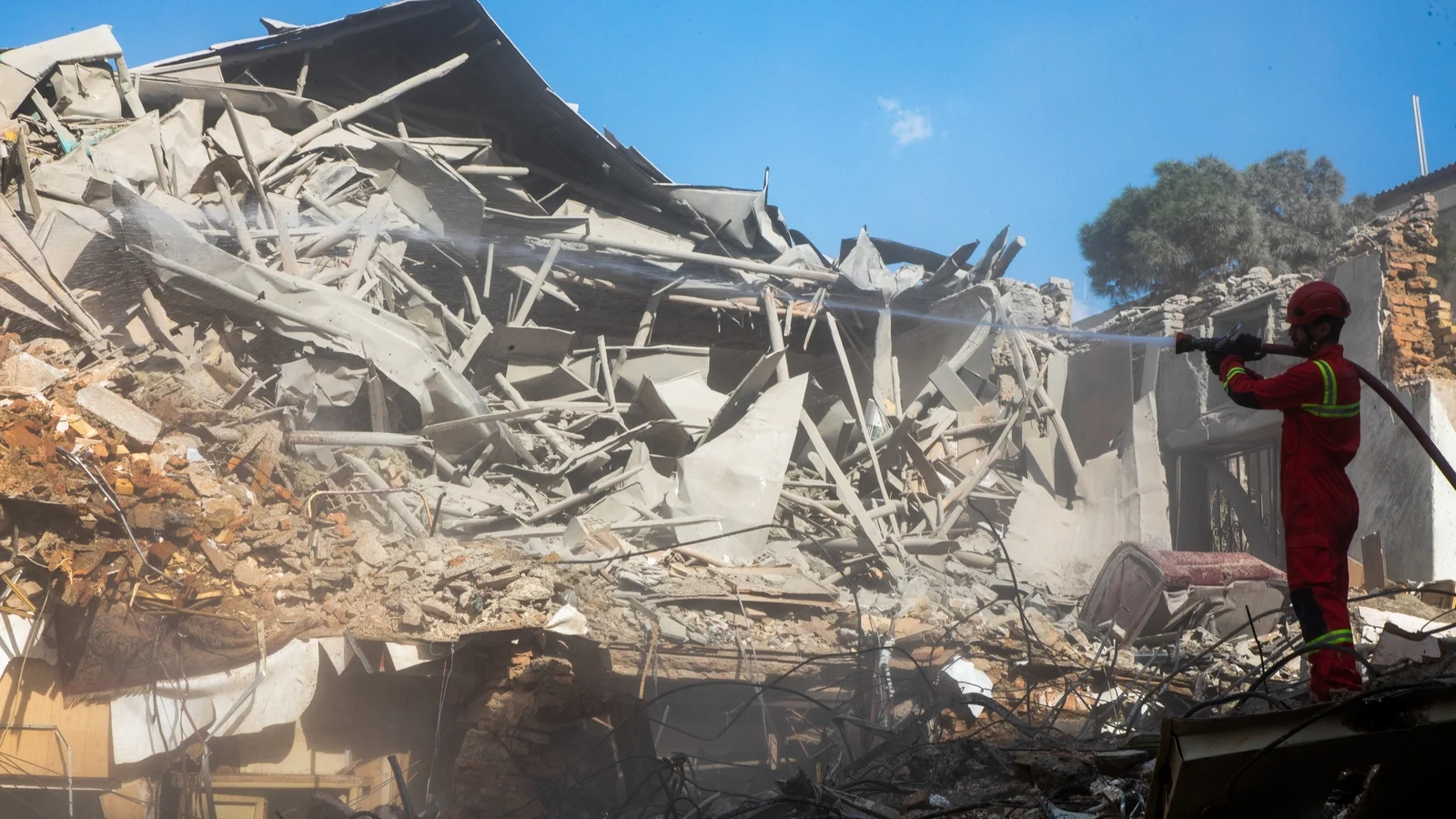
Amid the strategic language lay human, fragile detail. A synagogue in Tehran was reported destroyed after an overnight strike; Torah scrolls were reportedly left under rubble. “Our building was a small, stubborn thing,” said Homayoun Sameh, who has represented Iran’s Jewish community. “It stood for decades. We took weddings and funerals there. Now it’s dust.”
Small and stubborn—two adjectives that could describe the region’s civilian fabric as much as the shrine-strewn streets of Tehran or the oil-stained docks of Kharg. Power outages in Karaj left hospitals running on backup and patients worrying about continuity of care. In a city that serves as a commuter belt for the capital, the outage felt like a civic wound.
Diplomacy’s Frayed Thread
Even as strikes intensified, Pakistan stepped into the role of mediator. Islamabad relayed a proposal for a temporary ceasefire: Iran would lift pressure on the strait; the coalition would pause attacks and discuss a more permanent settlement. Tehran’s publicly stated demands were far broader—a ten-point package that would require an end to hostilities, lifting of sanctions, reconstruction aid, and a new governance mechanism for passage through the strait.
“We are not asking for the moon,” said Reza Amiri Moghadam, Iran’s ambassador to Pakistan, through a translator. “We want security for our shipping and for the livelihoods that depend on it. We want guarantees that the past will not repeat itself.”
Those guarantees are not just diplomatic niceties. The Strait of Hormuz is, by any sober measure, a physical manifestation of 21st-century interdependence. A disruption there ripples from ports in South Asia to refineries in Europe, from shipping costs to the petrol pump in a small town far from the fighting.
What Comes Next?
Markets hesitated, newsrooms stayed open, and ordinary people adjusted. For those living in Gulf metropolises, the prospect of losing reliable water and power is no abstraction. For global consumers, it is a reminder that energy security is entwined with geopolitics—and that a tweet can be a fuse.
So where do we look now? To cooler heads, certainly. To engineers who can fortify grids. To diplomats who can negotiate facesaving exits. To citizens asking whether it is possible to build a system of international waterways that can’t be held hostage by force.
And to you, the reader: how do we balance the need to deter aggression with the ethics of targeting infrastructure that sustains life? When a nation’s pipeline is a lifeline for others, when a grid failure means hospitals stop breathing—what is legitimate and what is ruin?
The night will pass. The sun will rise somewhere over the Gulf, though where it finds light—and where it finds blackened towns—may be the most consequential question of all. In the meantime, families pack a few essentials into bags; engineers log into control systems around the clock; mediators whisper in corridors. The scene is at once ancient and uncomfortably modern: diplomacy played out against generators and transformers, with civilization itself hanging in the balance.