Midnight Burials and Missile Warnings: Iran’s Grief Meets a World on Edge
They buried him at two in the morning. Under the weak glow of security floodlights at Behesht-e Zahra, Tehran’s great cemetery, four masked relatives shuffled through a perimeter of uniformed men to place a wrapped body into the earth — hushed, hurried, and watched. The graveyard that should be a place of private mourning had become, in recent weeks, a stage where politics and pain collide.
“They told us to speak softly. They told us to sign the paper. They told us — again and again — that we were lucky to get him back at all,” whispered a woman who identified herself as the sister of a young man killed during nationwide protests. Her voice trembled between fury and fatigue. “There was no time for wailing. That’s not how you bury a child.”
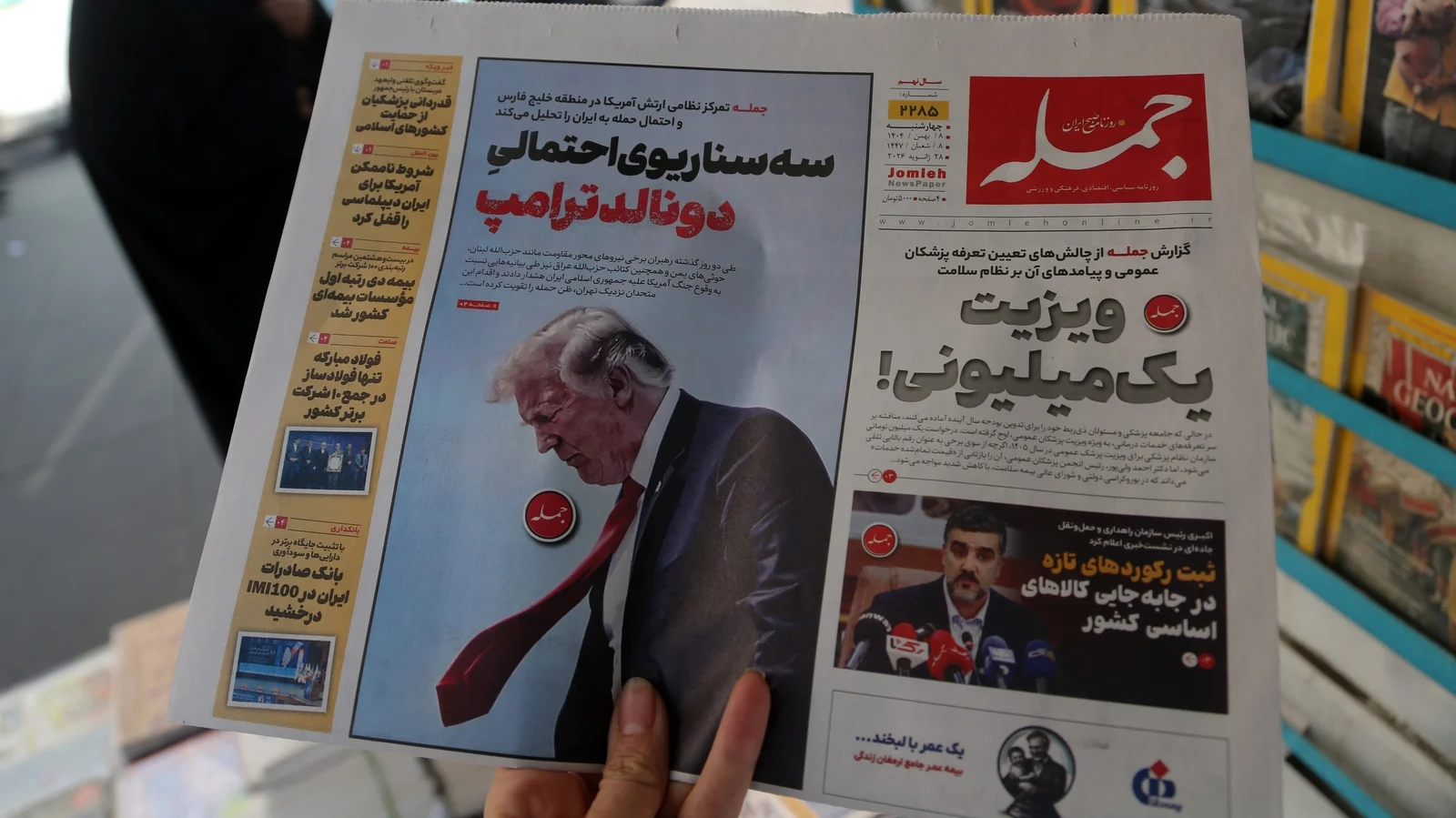
Across the virtual iron curtain that separates Tehran from Washington, a different kind of brinkmanship played out on social media and in naval routes. A former U.S. president warned Tehran to “come to the table” and reiterated that the “next attack will be far worse,” while Tehran’s diplomatic handlers snapped back: Iran will “defend itself and respond like never before” if pushed.
Two Crises, One Story: Domestic Repression and International Saber-Rattling
On the ground in Iran the drama is unmistakably human: families seeking bodies, morgues overwhelmed, funerals curtailed. Internationally, the rhetoric turned military — aircraft carrier strike groups redeploying, promises of “armadas,” public threats that conjure images of another Middle Eastern conflagration. The two threads — internal repression and external confrontation — are braided tightly, each feeding the other.
“When funerals are turned into control measures, you’re not just suppressing protest — you’re trying to extinguish memory,” said Dr. Leyla Mansouri, an Iranian-born sociologist now teaching at a European university. “And when foreign powers shout from afar, it becomes even harder for everyday Iranians to see a path forward that isn’t either violence or despair.”
What families say
Rights groups and families speak of extortion and coercion: demands for large sums to release bodies, forced declarations that the deceased were members of Basij militias, burials at night to avoid gatherings. The stories stack like ledger entries of grief. Iran Human Rights recounts the ordeal of Hossein Mahmoudi, shot in Falavarjan — his family permitted to take his body only after paying a fee equivalent to roughly €2,400 and agreeing to silence.
Another account, from the Hengaw group, told of Ali Taherkhani, whose family reportedly had to pay the equivalent of €18,000 and remove condolence banners before they could bury him under heavy guard. “They treated my brother’s life like an invoice,” said a cousin, voice hoarse from tears. “How do you put a price on someone’s name?”
Numbers and Narratives
Authorities in Tehran have offered their own tally — a figure of over 3,000 dead during the unrest, most purportedly security personnel or bystanders killed by “rioters.” Human rights organizations dispute the official count. Some experts warn the true number could be much higher; voices on the ground say scores, even hundreds, of families remain searching for missing loved ones.
And then there are the long-haul figures that stalk the corridors of power. A widely cited calculation, reiterated by a prominent U.S. political figure, notes that the wars in Afghanistan and Iraq cost the United States more than $7 trillion and resulted in over 7,000 American deaths. Those numbers — economic, human, geopolitical — routinely resurface when policymakers weigh the promise and peril of military action.
The nuclear question and naval posturing
Overlaying the funeral scenes is the shadow of nuclear anxieties. After the United States’ withdrawal from the 2015 Joint Comprehensive Plan of Action (JCPOA) in 2018, Tehran and Washington drifted into a dangerous choreography of crimps and countermoves. Claims of a U.S. “armada” moving into the region — led in recent dispatches by the carrier USS Abraham Lincoln — have been followed by reports that ships did arrive in Middle Eastern waters. Tehran, predictably, has readied rhetorical and, it warns, kinetic responses.
“We have seen decades of brinksmanship,” noted Marcus Alvarez, a retired naval officer and analyst at an international security think tank. “Carrier groups are as much signals as they are tools. They are meant to deter, to reassure allies, and to complicate an adversary’s calculations. But to families losing sons and daughters in secretive morgues, the geopolitics can feel distant and irrelevant — a storm rolling in above a very localized thunder.”
Law, Memory, and the Weaponization of Mourning
International human rights bodies have not been silent. Amnesty International has described systematic harassment and intimidation of bereaved families; the UN’s special rapporteur on human rights in Iran, Mai Sato, has received reports of coercion to falsely claim deceased protesters were militia members and of extortion for body retrievals. “These are cruel practices that compound grief with extortion,” Sato was quoted as saying.
That cruelty has a strategy: control of narrative. Funerals in Iran, as in many Islamic cultures, are meant to be swift, communal affairs — occasions for lament, remembrance, and the reaffirmation of family and social bonds. By fragmenting funerals, pressuring families, or staging burials en masse, authorities aim to blunt the mobilizing power of grief.
- Immediate burial is customary in Islamic practice, intensifying the pain when families cannot access bodies quickly.
- Public funerals have historically been moments of political expression; authorities are acutely aware of that symbolic power.
- Forcing false narratives about victims’ affiliations erases personal histories to make political claims.
Questions That Won’t Leave the Room
What does sovereignty mean when a state tightens its chokehold on mourning? Who wins when global powers flex naval force while families are silenced on the ground? And perhaps most urgent: where does accountability reside in a world where grief is both weapon and casualty?
These are not rhetorical luxuries. They matter to the family in Falavarjan, to the shopkeeper pasting condolence notices on his storefront and ripped down by officials, to the soldier at a checkpoint who may be following orders while watching mourners pass. They matter to foreign diplomats choosing rhetoric or restraint, to humanitarian groups counting the cost of silence, and to citizens everywhere who watch the news and wonder if outrage or inaction will define their generation’s response.
Looking Forward — And Back
The immediate scene may be of burials at night and carrier strike groups by day, but the deeper story is about memory, legitimacy, and the future of civic life in Iran. The 2015 nuclear deal may no longer anchor U.S.-Iran relations; yet the shared imperative — to avoid an escalation that costs thousands more lives — remains. Whether through renewed diplomacy, multilateral engagement, or the soft power of international law, the world faces choices.
“People want two things: truth and dignity,” said Arash Kaveh, a human rights advocate who has worked with families of the killed. “They want to know what happened, and they want to bury their dead with honor. If the international community can’t help with either, then our interventions have been incomplete.”
As you read this, consider how far the reverberations of grief travel. How do we respond as global citizens when the private business of mourning becomes a public battleground? And what does it take — materially and morally — to bring both accountability and healing to a people whose pain has been made political?
There are no easy answers. But history suggests that silenced sorrow rarely stays buried. It rises, in chants outside cemeteries or in quiet remembrances that refuse to be rewritten. And sometimes, that insistence on memory becomes the seed of change.