Budapest at Dawn: When the Danube Became a River of Candles
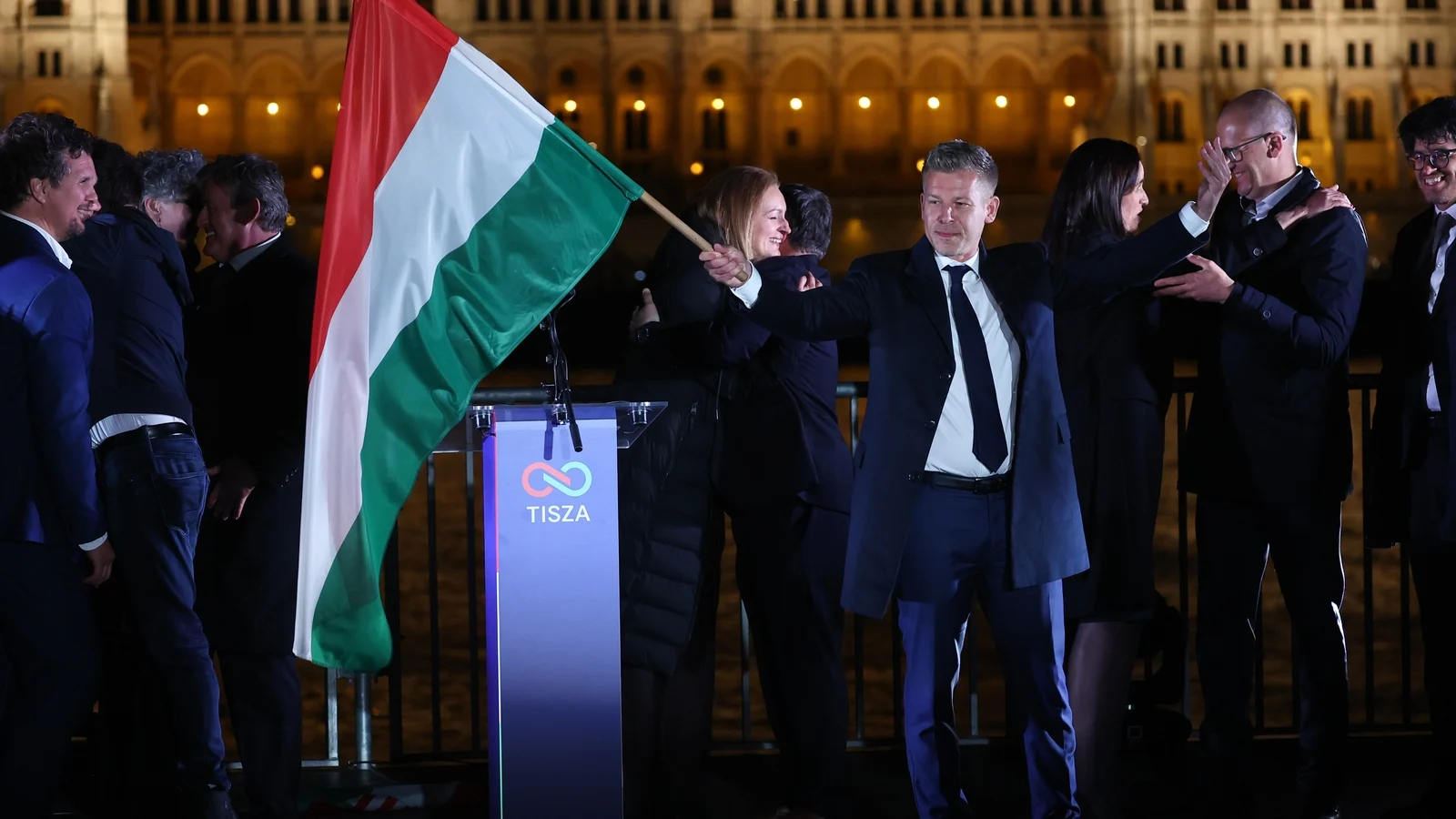
There was a smell of coffee and chimney cake in the air, and the river looked as if someone had strewn tiny lamps across its surface. Tens of thousands had gathered along the Pest embankment, faces still flushed from the night, clutching wax candles and polishing off the last notes of Frank Sinatra’s “My Way” as if that song could somehow stitch the moment into memory.
At the center of the crowd stood Peter Magyar, the leader of the centre-right Tisza party, who had just ended Viktor Orbán’s 16-year tenure. Supporters chanted, children waved hand-drawn flags, and somewhere a tram bell tolled, as it always does in Budapest—reminding everyone that everyday life continues even when history seems to pivot.
“We came here because we wanted to be seen,” said Eszter Kovács, a secondary-school teacher who had waited until midnight to celebrate. “After so long, people wanted their voices back. That’s all—our voices.”
What the Vote Changed
For much of the past decade and a half, Hungary was synonymous in many corners of Europe with a certain style of politics—centralized power, combative rhetoric with Brussels, and policies that critics said eroded democratic norms. Viktor Orbán first governed from 1998 to 2002 and then again from 2010 until now. His Fidesz party dominated the political landscape, reshaping institutions and steering Hungary’s foreign policy toward a more confrontational posture with the European Union and, at times, a warmer tone toward Moscow.
That chapter appears to have closed. Peter Magyar and his Tisza party campaigned on a platform of re-engagement with the European mainstream, promising to repair frayed ties with Brussels and to restore checks and balances at home. The message resonated: turnout was described by election authorities as the highest in recent memory, and the scale of the victory surprised even seasoned analysts.
“This is not just a change of faces,” commented Anna Szabó, a political scientist at Central European University. “It’s an attempt to recalibrate Hungary’s place in Europe. The electorate has signaled that it wants to remain a full participant in the European project—both economically and democratically.”
By the numbers
Hungary is a country of roughly 9.7 million people and has been a member of the European Union since 2004. Viktor Orbán’s long stewardship—particularly since 2010—brought deep changes to Hungary’s political architecture. Now, with Tisza at the helm, Brussels—where disputes over rule of law and conditional EU funds have simmered for years—will be watching closely.
Voices from the Streets and TV Screens
Not everyone celebrated. Outside Fidesz headquarters, small groups gathered, watching their former leader on television with tears and clenched hands. “This is painful,” one elderly man said, wrapping his coat tighter against the chill. “We felt safe. Now it’s uncertain.”
Meanwhile, in cafes and bistros in the Jewish Quarter, young professionals debated the implications for business and travel. “If the new government can unlock delayed EU funds and restore investor confidence, it’s good for everyone,” said Márk, a software engineer who preferred to use only his first name. “But they must act fast. People want bread-and-butter changes.”
Europe Reacts: A Moment of Relief—or A Warning?
Leaders across the continent responded within hours. Poland’s prime minister hailed the result as proof that “Europe is not inevitably drifting toward authoritarianism,” while officials from Slovakia, the Czech Republic, Ireland and Germany offered cautious congratulations and vowed to work with the incoming Hungarian government. For many in the EU capital, the vote is a signal that pendulums can swing back.
“This sends a ripple through the Union,” said a senior European diplomat in Brussels. “It reminds policymakers that democratic backsliding is not unstoppable—if societies mobilize and demand change.”
Yet the win also poses thorny questions. Were voters driven more by exhaustion than enthusiasm? Can Tisza keep its coalition intact long enough to deliver reforms? Will Orbán’s political machine retreat gracefully into opposition, or will it regroup and transform into a potent counterweight?
Why This Election Mattered
There are practical stakes as well as symbolic ones. Hungary has been at the center of disputes over EU conditionality—mechanisms tying some funding to respect for democratic norms. For years, Brussels and Budapest were at loggerheads, slowing the flow of some payments and complicating cohesion projects. Analysts say a renewed alignment with EU partners could free up capital for infrastructure and social programs, and thaw strained diplomatic relations.
“If the new government can demonstrate concrete rule-of-law reforms, Hungary’s frozen EU funds could be unfrozen, which would be a significant economic boost,” said László Horváth, an economist who advises municipal governments. “But expectations should be measured. European bureaucracies are cautious by design.”
Local color and everyday hopes
On the embankment, among the candles and cheers, the conversation drifted to matters both grand and intimate. “I want my parents to feel safe,” said Dóra, a nurse and new mother, as she wiped candle wax from her palm. “I want my son to grow up in a Hungary that’s open and part of Europe.” Nearby, a baker handed out free pogácsa (savory scones) to celebrate. “It’s tradition to share bread in good times,” he grinned.
Looking Ahead: Repair, Reckoning, or Repeat?
Change in politics is messy and incremental. The Tisza government will face urgent tasks: rebuilding trust with the EU, stabilizing investor sentiment, reshaping domestic institutions, and—perhaps most difficult—bridging a deep societal divide. Orbán’s supporters remain a sizable constituency, and their grievances and fears cannot be dismissed.
“You can’t just flip a switch and undo 16 years of political culture,” Szabó warned. “There will be litigation, constitutional tussles, and a long battle over public institutions that were reshaped under Fidesz.”
Still, there is an undeniable feeling of possibility in Budapest’s spring air. Markets may respond within weeks, diplomats within months, but the most important shifts will be measured in everyday life: schools, courts, hospitals, the commons where citizens encounter the state.
Questions for the Reader
What do you expect from a government that promises to “restore ties” after years of confrontation? How should societies balance the urgency of reform with the need for stability? And perhaps most importantly: in an age of polarization, how do nations heal when politics has become identity?
Hungary’s story is now part of a broader European conversation about democracy in the 21st century. Whether this election becomes a turning point or a temporary pause in a longer contest depends on the choices of politicians—and the continued engagement of citizens like Eszter, Márk, Dóra, and the old man by the TV screen.
Final Note
By noon the embankment had mostly emptied. Candles had melted into the cobbles, and the city began to hum with trams and delivery vans. Budapest, like all cities that have been witness to big political moments, settled into a cautious, watchful normal. The question now is whether that normal will bring reconciliation—and whether Europe, watching closely, will find in Hungary’s vote a reason to hope or a reminder of the hard work that democracy demands.