Between Rubble and Resolve: Gaza’s Next Act
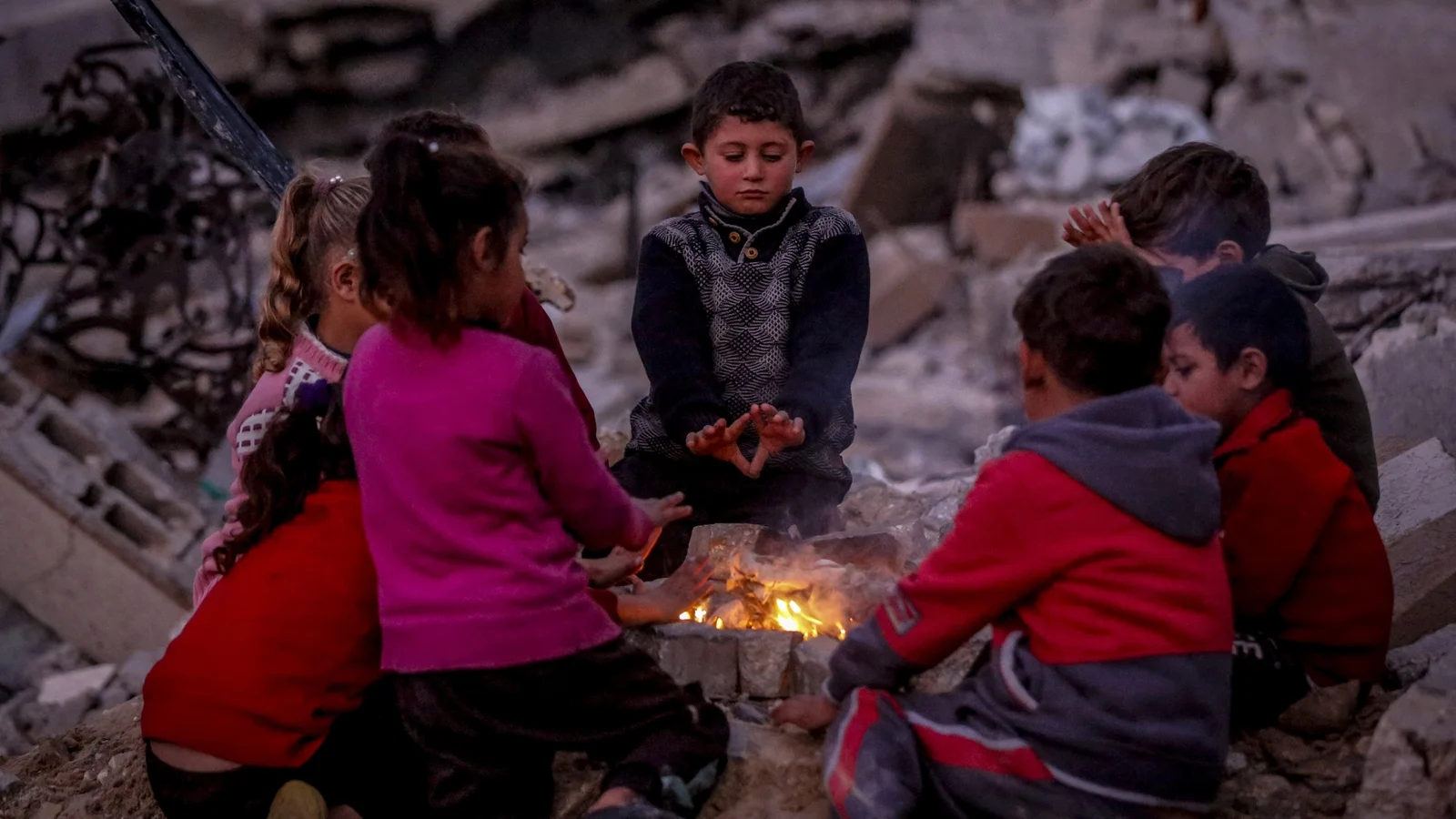
There is a smell that lingers over northern Gaza after a night of strikes — the same acrid, metallic scent that lives in the back of the throat long after the smoke clears. Children play among jagged slabs of concrete like it’s another kind of playground. Men sit beneath twisted rebar, drinking tea from chipped glasses, talking about what might come next. Outside a makeshift clinic, a mother laces a child’s sleeve while nurses hush a coughing line of patients. This is the ordinary and extraordinary landscape where a new phase of diplomacy will try to rewrite an old script.
Late last week, U.S. officials moved forward with the second phase of a plan aimed at ending the latest Gaza war — even though the promises of the first phase remain, in many ways, incomplete. The announcement, made on social media by the U.S. special envoy, framed the next steps as a pivot from immediate ceasefire diplomacy to institution-building: the establishment of a technocratic Palestinian administration in Gaza, the start of disarmament, and the launch of large-scale reconstruction.
What’s on the Table
The architects of the plan envision a 15-member Palestinian committee to govern Gaza for a transitional period. It will be led by Ali Shaath, a figure with roots in the Palestinian Authority and a history of work on economic zones, according to an announcement by mediators Egypt, Qatar and Turkey. The committee is to be overseen by an international “Board of Peace” — a body diplomats say will include private sector figures, NGO leaders, and a representative on the ground expected to be Nickolay Mladenov, the former UN Middle East envoy.
“First things first — shelters, water, health,” Shaath told a West Bank radio station in an interview carried in several regional outlets. “If I can move rubble and make new land, I will. We can build houses. We can give people roofs.” His voice was calm, almost surgical, as if rebuilding Gaza could be reduced to logistics and timelines. But the UN’s own 2024 assessment paints a far more complex picture: rebuilding Gaza’s homes alone could stretch to 2040 or beyond.
Who’s In — and Who’s Out
Reports list names expected to be on the technocratic committee: Ayed Abu Ramadan from the Gaza Chamber of Commerce; Omar Shamali, formerly of Paltel; Sami Nasman, a retired security officer tied to Fatah and a longstanding critic of Hamas. Both Hamas and Fatah have reportedly endorsed the list, even as tensions between them remain a live current under the surface.
On the international side, diplomats said another announcement tied to the Board of Peace was planned for Davos, a signal that global capital and global diplomacy are being asked to do heavy lifting in a small, battered coastal strip.
The Hard Part: Disarmament
Talk of technocrats and reconstruction quickly runs up against the thorniest knot: disarmament. The plan calls for the “full demilitarisation” of Gaza, a phrase that looks easy on paper and near-impossible in practice. Hamas agreed, at least publicly, in October to hand governance to a technocratic committee. It has not, however, agreed to put down its weapons. And a powerful reality remains: many inside Gaza see armed groups as guarantors of survival, identity, and resistance.
“You can’t talk about rebuilding while people think their safety is at stake,” said Lina Haddad, a humanitarian worker who has coordinated aid convoys into Gaza. “Disarmament won’t be just a technical operation; it’s a political and social one. Who disarms? Whose guns are taken? Who guarantees protection afterward?”
Egyptian officials, who have been mediating talks in Cairo, say conversations with Hamas will now turn to the mechanics of disarmament. Israeli officials have tied further withdrawals within Gaza to the successful demilitarisation of armed groups — a linkage that Hamas has rejected, saying it would relinquish weapons only once Palestinian statehood is guaranteed.
Voices from the Ground
In Gaza City, tent clusters hug the shoreline where seafront hotels once stood. A fisherman, his hands still stained with fish oil, told me: “We cannot eat politics. We cannot sleep on promises. My son asks why there’s no school, and I do not know what to say. They speak of committees and boards, but I need clean water and a teacher.”
Across the border in the West Bank, Palestinian Vice President Hussein Al-Sheikh expressed cautious support for the initiative on X, underlining a principle his government calls “one system, one law and one legitimate weapon.” The Palestinian Authority’s endorsement signals a desire to keep Gaza institutionally linked to the West Bank — a continuity many Palestinians see as vital to long-term governance.
An Israeli security official, speaking on condition of anonymity, told me: “We need guarantees that the mechanisms on the ground will prevent cross-border attacks. Demilitarisation must be verifiable, irreversible, and swift. Without that, the cycle simply repeats.”
What Rebuilding Would Really Mean
What does “reconstruction” actually demand? Engineers estimate that rebuilding basic housing, water networks, schools and hospitals will mean years, a vast flow of resources, and a delicate choreography between donors, local leaders, and security forces. The UN’s 2024 report warned that even under optimistic assumptions, reconstruction could run into decades. That projection is not simply bureaucratic pessimism; it’s a recognition of how much of Gaza’s physical and social infrastructure was eroded over years, then shattered in waves of violence.
Practical questions stack up like the rubble itself: Who will fund the projects? How will contractors be vetted? Will displaced families be able to return to their neighborhoods, or will new “safe zones” be created? And perhaps most fraught: can rebuilding be disentangled from political outcome?
Why the World Should Watch — and Care
Beyond the immediate human toll, Gaza’s future is a litmus test for an era where wars of attrition meet globalized capital and multilateral diplomacy. If an international Board of Peace steers a transparent, effective reconstruction — and if disarmament can be achieved without fueling new grievances — there may be lessons for post-conflict recovery elsewhere. If not, Gaza could become another cautionary tale of aid, politics, and perpetual limbo.
So, what do you think? Can technocrats, backed by foreign boards and messy compromises, rebuild not just homes but trust? Can security be disentangled from sovereignty? These are not only diplomatic puzzles; they are questions about how societies heal after trauma and who gets to craft the rules of that healing.
Small Steps, Huge Stakes
For now, the plan advances despite unfinished pieces of the first phase — a ceasefire that never fully materialized, hostages whose fates remain unresolved, and border crossings whose openings have been delayed. The new committee’s first tasks will likely be painfully practical: housing for those under tents, medicines for a rise in respiratory illnesses, and perhaps the ritual of rubble-clearing that often precedes new construction.
- What the plan offers: a technocratic admin, international oversight, and a pathway to reconstruction.
- What it demands: disarmament, funds, and political compromises that many parties say are non-starters.
- What’s uncertain: timelines, enforcement mechanisms, and the willingness of all stakeholders to see the process through.
On a recent afternoon a teacher in Gaza, surveying a classroom of five students and a broken blackboard, whispered, “Give us a roof, a pencil, a chance. We will teach our children the rest.” That plea — simple, human, urgent — is what every diplomat’s statement will have to answer if rebuilding Gaza is to be more than an exercise in architectural ambition. It must be an act of restoring life.