A Little Boy, a Spider‑Man Backpack, and a Neighborhood Held Breath
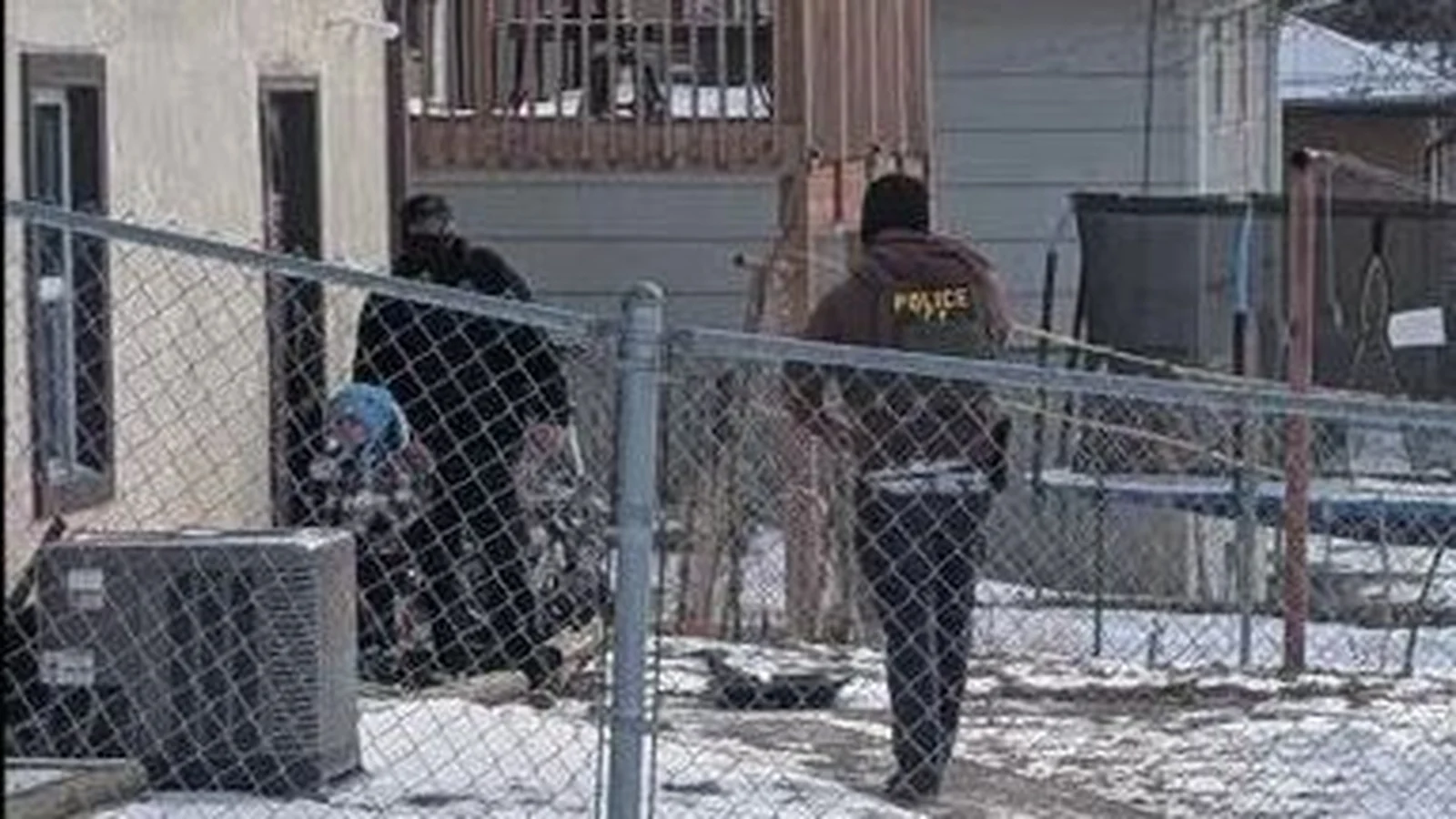
On a cold Minneapolis morning, a five‑year‑old named Liam stood on a driveway with his blue hat pulled low and a Spider‑Man backpack bumping his small shoulders, watching masked officers move through the yard where he’d just been dropped off from preschool.
“He looked like any kid getting home from class — backpack, snack in his hand, clueless about the way the adults around him were about to change everything,” a neighbor later said. “One moment there’s ordinary, the next moment there’s a black SUV and officers who might as well have appeared out of a movie.”
That scene, recounted by school officials and neighbors, became the sharpest image in a tense week for Columbia Heights, a Minneapolis suburb where the rhythm of school drop‑offs and coffee shop conversations was interrupted by federal immigration enforcement activity.
What Happened — Two Stories, One Child
According to the school district and the family’s lawyer, Immigration and Customs Enforcement agents detained at least four students this week, including two 17‑year‑olds, a 10‑year‑old and Liam. The boy and his father, who the family’s attorney says were in the United States as asylum applicants, were placed in family detention in Dilley, Texas — a facility familiar to immigration advocates for housing mothers and children.
But as the story spread, the narrative split. Vice President JD Vance — visiting Minneapolis amid rising tensions — pushed back on the initial headlines. Speaking at a press conference, he said the officers had been pursuing Liam’s father, who fled, and that the child was taken only after the father ran away.
“I was stunned when I first heard it,” Vance said. “I’m a father myself. But when you look at the facts, agents chased a man who ran. They aren’t supposed to leave a small child in the street.”
Department of Homeland Security officials offered their own version, stating that Liam’s father, identified as Adrian Alexander Conejo Arias, was in the country illegally. The family’s lawyer, Marc Prokosch, disputes that and says the family was awaiting an immigration hearing.
Conflicting accounts don’t make the child less real
Wherever the truth settles in the paperwork and the court dockets, the human scene was undeniable: adults — school officials, neighbors, even a city council member — offered to take custody of the child and were reportedly denied by agents.
“Our job is to keep kids safe,” said Zena Stenvik, superintendent of the Columbia Heights Public School District. “We are authorized to care for a student in the absence of a parent. But to have armed officers circling school buses, moving through parking lots, taking children — that’s a trauma you can’t easily mend.”
Community Reaction: Fear, Anger, and a New Normal
“The sense of safety in our community is shaken,” Mary Granlund, chair of the school board, told reporters. “Our hearts are shattered. Children should be in school with their classmates, not being put into the back of an SUV and driven away.”
Rachel James, a Columbia Heights city council member who witnessed Liam’s frozen expression as officers led him to the car, said, “He wasn’t crying; he was paralyzed. That look will stay with me.”
For families who have walked these streets for years, or months, the appearance of heavily armed federal teams has been a psychological blow as much as a practical one. Across Minneapolis, the announcement that roughly 3,000 federal enforcement personnel were being deployed — a number cited by officials in the area — has turned neighborhoods that once felt routine into places of vigil and whisper.
“People are drawing curtains earlier,” one local parent said. “Parents are checking with each other: ‘Did you see any vans? Are your kids safe?’ That’s not how communities should feel.”
Legal and Political Ripples
What unfolded in front yards ties into a larger, national debate about immigration enforcement tactics and the use of family detention. Dilley’s family residential center in Texas has been used intermittently for years to hold families while their cases proceed, and advocates say it churns through people who are seeking refuge.
Minnesota officials have moved to challenge the scope of the sweeps in court. The state has sought a temporary restraining order that, if granted, would pause the operation; a hearing was set for Monday. Meanwhile, community groups organized watch patrols, filling neighborhoods with whistles and phone calls meant to warn residents of approaching enforcement operations.
“This is about policy and practice,” said an immigration attorney who has worked on family‑detention cases. “When enforcement becomes theatrical — armored cars, masked officers in neighborhoods — it amplifies fear. That can chill people with legitimate claims, and it can tear at the social fabric of places where immigrant communities have made lives.”
Why this matters beyond one driveway
Ask yourself: what is the purpose of enforcing immigration law if the methods leave families in panic? How do we balance public safety and humane treatment? These aren’t theoretical questions. They echo across the United States wherever enforcement actions touch everyday life — at bus stops, at work, at school.
Children bear costs that are measurable and not. Studies have shown that traumatic encounters with armed authorities can produce symptoms of anxiety and post‑traumatic stress in children. Even without a formal diagnosis, a child who watched his father taken at gunpoint is carrying that memory to school, to the playground, to every corner where safety once felt natural.
Voices From the Ground
- “I’ve lived here 20 years,” said one neighbor, who asked not to be named. “It’s the first time I’ve seen neighbors stand at windows with phones in hand, waiting like that. That’s how you know something has changed.”
- “We will do everything to get them back,” attorney Marc Prokosch said. “This family deserves due process and protection, not a spectacle.”
- “We can and should secure borders,” another resident offered. “But children are not bargaining chips. There’s a way to do enforcement that doesn’t terrorize neighborhoods.”
A Larger Picture: Enforcement, Politics, and Humanity
What happened in Columbia Heights is part of a trend: the federal government has increasingly leaned on tactical, visible operations to deter migration and to arrest those it deems removable. For policymakers, these tactics signal resolve. For communities, they often signal danger.
So as Minnesotans prepare to watch a court hearing and as a family waits in a detention facility hundreds of miles away, the real question persists: how will a nation reconcile its laws with the humane treatment of families and children? And what kind of precedent will this set for neighborhoods across the globe where migrants raise children who learn in two languages and have two kinds of national attachments?
If you were in that neighborhood that morning, what would you have done? Would you intervene, call a lawyer, raise an alarm? These are hard questions with no simple answers — but they are worth asking because they cut to the core of who we are as communities.
For now, Columbia Heights will try to stitch itself back together. Parents will take extra comfort in school drop‑off circles. Officials will trade statements and lawyers will file motions. And a little boy with a Spider‑Man backpack will carry another kind of memory to class, one that adults may try to explain but never fully repair.