Congress on Edge: A Narrow Vote, a Wider War, and the Question of Presidential Power
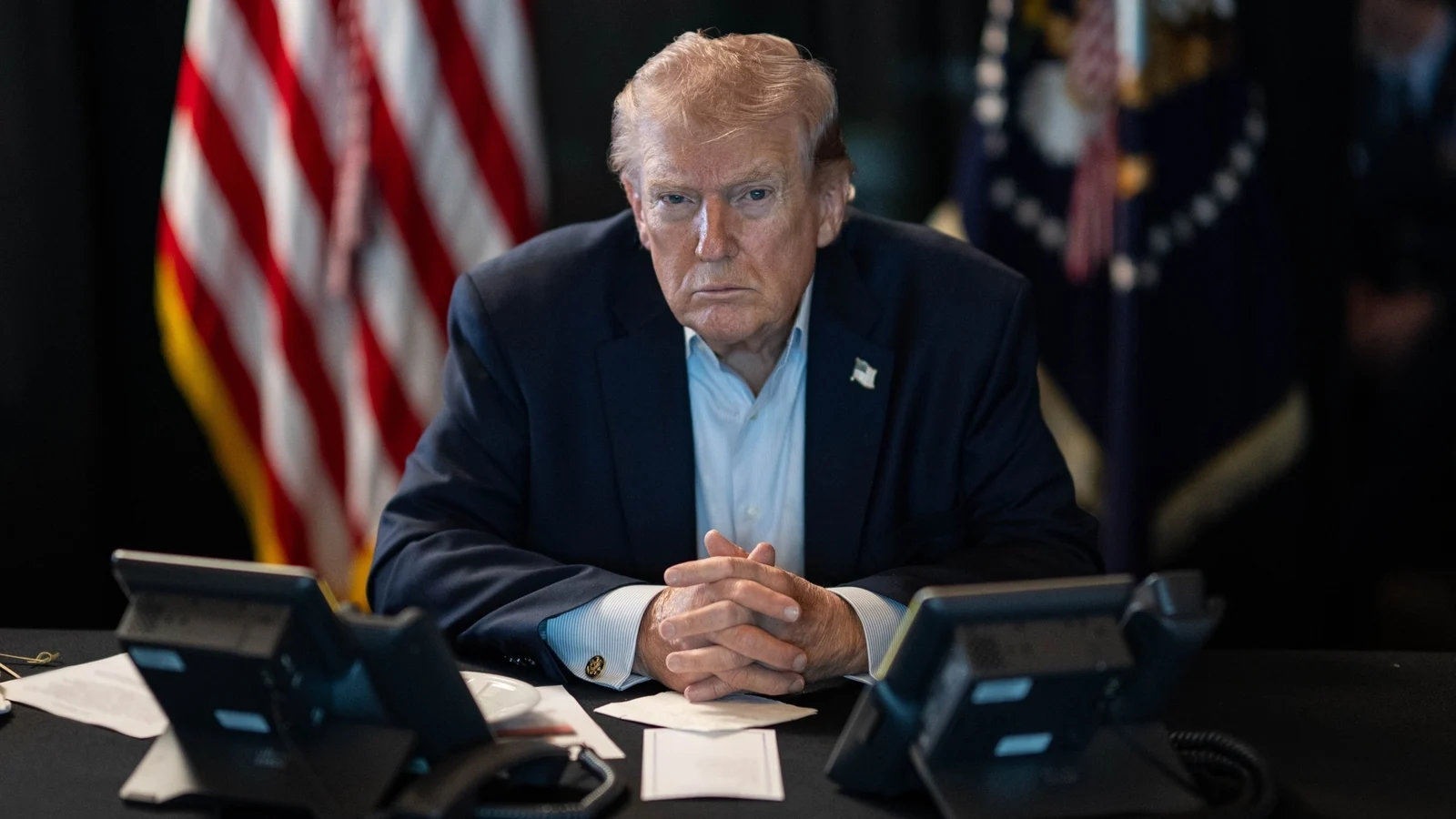
For a Capitol Hill accustomed to slow, procedural wars of words, yesterday felt different — urgent, raw, and strangely intimate. Senators filed out of the cavernous chamber with the tired faces of people who had been holding their breath. The U.S. Senate voted 53-47 to reject a bipartisan resolution that would have forced President Donald Trump to halt U.S. military operations against Iran unless Congress explicitly authorized them.
It was a vote that read like a map of the country’s divisions: party lines, constitutional anxieties, and the old argument over who, exactly, gets to decide when America goes to war. But beneath those numbers lay homes disrupted, diplomats sprinting from airports, and a Washington wrestling with a question as old as the republic itself — how do you restrain a president who says action is necessary now?
The vote and what it meant
The measure, steered by Democrat Tim Kaine and Republican Rand Paul, invoked the 1973 War Powers Act — the law Congress wrote in the post-Vietnam era to check presidential military adventurism. In practical terms, the Act says Congress can force a decision: an unauthorized engagement should come to an end after 60 days unless lawmakers consent to its continuation.
“We didn’t see evidence that the United States faced an imminent threat,” Senator Kaine told colleagues after a closed briefing by administration officials. “We owe the American people and their representatives a higher standard than a unilateral act of war.”
But the Senate math made the resolution’s fate almost inevitable. Republicans control the chamber 53-47, and most rallied behind the president’s decision to launch strikes alongside Israel. To pass, the resolution needed at least four Republican defectors. It got none. Pennsylvania Senator John Fetterman, a centrist Democrat, voted no, and one of the campaign’s most visible Republicans, Senator Lindsey Graham, went on social media to defend the strikes: “They mean it when they say ‘death to America,’” he wrote. “We couldn’t let them keep building missiles.”
What a win would — and wouldn’t — have done
Even if the resolution had cleared the Senate and passed the House (where a companion vote was expected today), it would have faced a presidential veto. Overriding that veto would require a two-thirds majority in both chambers — a near-impossible hurdle under today’s polarized conditions.
Still, supporters of the bill argued the real victory was forcing a public reckoning. “This wasn’t just about stopping a particular operation,” one House Democrat said. “It was about reasserting the Constitution’s balance. If we don’t, what precedent are we setting?”
On the ground: a widening crisis
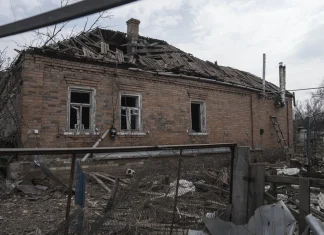
The stakes are not abstract for the people living amid the fallout. Within days of the strikes that set off this regionwide spiral, Iran’s top leader, Ayatollah Ali Khamenei, and several senior figures in Tehran were reported killed; retaliatory missile and drone attacks have since swept across the Gulf, and U.S. troops were struck in an attack on a base in Kuwait. Governments raced to evacuate citizens from embassies and commercial hubs, trying to thread the needle between chaos and calm.
At Dubai International Airport, an air of uneasy normalcy settled over transit halls crowded with travelers clutching backpacks and passports. “The last flight out was chaos,” said Leila, 34, an Emirati who helps coordinate flights at a private logistics firm. “Families left behind toys, clothes — people are moving like the ground has shifted under them.”
In Baghdad, a teacher named Mahmoud described nights when the sky seemed to hum with drone activity. “My children wake up asking if the lights are for them or for rockets,” he said. “This is no longer about leaders; it is about children learning how to sleep with sirens.”
Economic tremors and geopolitical ripple effects
Markets and shipping lanes felt the tremor. Global crude markets, already jittery from years of geopolitical tension, spiked in response to supply-chain fears. Ports from Dubai to Jeddah found themselves hosting not just cargo but also anxious evacuees and diplomats deciding whether to keep operations open.
“When the Persian Gulf — one of the world’s arterial oil routes — becomes a theater of conflict, the global economy pays attention,” said Dr. Meera Anand, an international security analyst. “Energy markets are the canary in the geopolitical coal mine; companies hedge, insurers raise premiums, and small exporters feel it in their ledgers a week later.”
Constitutional tug-of-war
At the heart of the debate is constitutional law. The War Powers Act gives Congress a forum to act. But presidents have argued — with increasing frequency since World War II — that certain actions fall within the executive’s inherent authority to protect national security. That tension has turned every military flare-up into a constitutional argument.
“This is not just a legalistic fight,” said Professor Aaron Cole, a historian of American foreign policy. “It’s a political calculation. Presidents prefer agility. Congress prefers deliberation. But the Constitution intentionally made war—and its oversight—hard, because the consequences are too grave otherwise.”
Indeed, this episode raises broader questions: In a moment of instant global connectivity, should a single officeholder be able to commit forces to a sustained conflict? And if the president can do so without legislative consent, where is the line drawn?
Voices from the Beltway and beyond
Senators who oppose the administration’s approach say it’s less a critique of tactical decisions than a plea to revive legislative authority. “Do we want to be a country where one person makes life-and-death decisions without our say?” asked one Democratic senator who voted for the resolution. “I could live with a debate. I cannot live with silence.”
But there is also a strain of thought, especially among hawks in both parties, that tight procedural checks risk becoming paralysis. “We don’t have the luxury of letting adversaries consolidate gains while we debate in slow motion,” a Republican strategist said. “The question is how to be decisive and accountable at once.”
What happens next?
For now, the military campaign is continuing, officials say, and Pentagon leaders have briefed lawmakers that the operation could last weeks and may require additional funding to replenish weapons and supplies. Lawmakers from both parties acknowledged that replenishment requests are likely coming, forcing Congress to weigh not only policy but material commitments.
So where does that leave the rest of us? As you scroll past the headlines, ask yourself: do you want the safety of quick, centralized decision-making or the deliberative risk of democratic checks? Which costs more in the end — delay or unexamined action?
History will mark how this chapter is written. For the people in the Gulf watching the sky and for families of soldiers awaiting news, the answer is not academic. It is about the immediate calculus of life and death, and about whether our institutions can still absorb the shocks they were built to manage.
- Senate vote: 53 in favor of rejecting the resolution, 47 opposed.
- War Powers Act (1973): restricts unauthorized military engagements to 60 days without congressional approval.
- Veto override: requires a two-thirds majority in both chambers — an unlikely outcome in the current partisan landscape.
We are at a crossroads not just for foreign policy but for the shape of American governance. The question remains: when the drums of war beat, who keeps the beat in check?