When the Capitol Put a Line in the Sand
There are moments in Washington when the clatter of daily politics briefly sharpens into something like conscience. This week one of those moments arrived on the Senate floor: a bipartisan push to check a president’s unilateral use of force in Venezuela cleared a key procedural hurdle, driven in part by alarm over reports that American forces had carried out a clandestine operation in Caracas that resulted in the capture of Nicolás Maduro.
It was a striking sight — senators from both parties clustered in the well, voices low and urgent, the chamber feeling less like a debating society and more like a juryroom. When the roll call showed five Republicans breaking with party leadership to join Democrats, the room exhaled. The vote was a procedural step, not the end of the story, but its symbolism was loud and clear: Congress was reasserting the power to decide when the United States goes to war.
What the Resolution Does — and What It Doesn’t
The measure that advanced would bar any further US hostilities against Venezuela without explicit congressional authorization. In practical terms it is a reassertion of the War Powers that the Constitution places with the Legislature — a reminder of a balance that has frayed in recent decades.
But this is also politics in the raw. The resolution’s chances of becoming law are slim. The House faces a steeper partisan divide, and a White House veto appears all but certain. Still, for many lawmakers the vote was about principle, not prognosis.
Facts on the table
- The vote passed a key procedural hurdle in the Senate with five Republican senators joining Democrats.
- The War Powers Resolution of 1973 is the most recent historic congressional assertion limiting presidential military action — it became law over President Nixon’s veto.
- Non-governmental monitoring group Foro Penal estimates there are roughly 806 political prisoners in Venezuela today, including 175 military personnel.
“An Act of War,” Some Say — “A Necessary Strike,” Others Counter
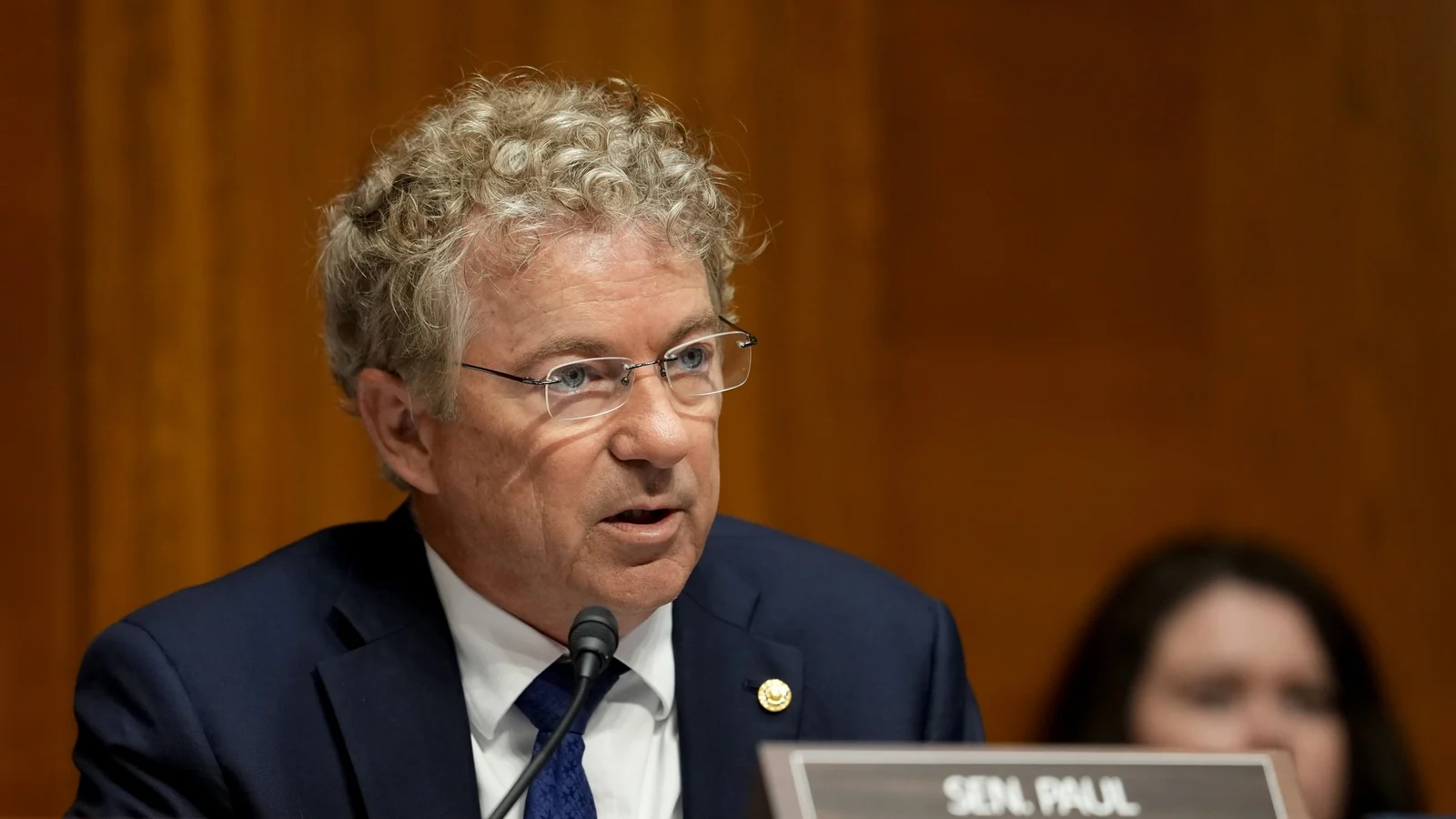
On the Senate floor, language was blunt. “Bombing another nation’s capital and removing their leader is an act of war, plain and simple,” said Senator Rand Paul in a voice that carried the weight of constitutional argument rather than partisan theater. For him, the vote was about stopping a dangerous precedent — leaving the decision to send troops into sovereign capitals solely to one man.
At the same time, supporters of the administration defended the operation as part of an ongoing campaign against transnational criminal networks. “This was not theater; it was an effort to dismantle the cartels that have turned Venezuela into a narco-state,” said a senior Republican aide who asked not to be named. Senator Markwayne Mullin of Oklahoma, a vocal defender, told reporters that only this administration had the resolve to act against a leader he described as illegitimate.
Caracas: A City Reacts
In Caracas, the morning after the reported operation felt surreal. On Calle El Conde, a narrow street in the old city, shopkeepers swept storefronts and argued about what they had seen on their phones. “We saw helicopters at night,” said Ana Morales, a schoolteacher who lives in the shadow of Miraflores. “People are afraid. But some are smiling in secret, because for years they have been afraid of what lived inside those prisons.”
Jorge Rodríguez, who stands as speaker of the Venezuelan parliament, announced the “release of a large number” of prisoners following the events — a move he described as a unilateral gesture by authorities trying to stabilize the streets. He did not give a number. Foro Penal’s tally of 806 political prisoners provides a bleak backdrop: men and women who activists say have been detained for dissent, including dozens of military officers.
“They opened one cell and closed another,” said Carlos Vega, a taxi driver who ferries hospital workers at dawn. “There is a lot we don’t know. But every time the world decides we are a chess piece, it is the ordinary people who feel the move.”
The Human Detail: Small Things That Reveal Big Truths
Walk through a Caracas market and you find the country’s story in miniature: interrupted supply chains, neighbors sharing canned goods, vendors debating whether the peso or the dollar will survive politically. In Miami’s Little Caracas, though, the mood is different — a mixture of hope, skepticism, and the urgent worry for relatives back home. “We’ve been waiting for change for 25 years,” said Elena Rivas, who fled Venezuela in 2016. “If this is the start, it must be careful. We cannot trade one fear for another.”
Such snapshots matter because they ground the abstract debate about war powers in human experience. Who bears the cost of a raid? Which institutions respond when a leader is removed? How are prisoners treated afterward? These are not legal hypotheticals; they are livelihoods, families, and futures.
Why This Matters Beyond Venezuela
This debate is not only about one Latin American nation or one president’s impulse. It taps into a broader global question: how democracies decide to use force in an era of shadow operations, drones, and deniable actions. When a state conducts a nighttime seizure in another country’s capital, the ripple effects pass borders and alliances. They raise questions about norms, international law, and the stability of the world order.
Congressional assertion here would be a rare, forceful rebalancing of power in Washington — a reminder that the decision to commit Americans to armed actions is supposed to be collective. But the limits of that power are also stark. The House, deeply divided, is unlikely to take the Senate’s measure up in the same spirit, and a White House veto would dramatize how the branches now conceive of national security authority.
What Comes Next?
Expect more votes, more hearings, and more wrenching testimony. Expect also more fog: competing narratives about what actually happened in the dark of Caracas, how many were detained, and what the long-term plan for Venezuela will be. For now, the Senate’s action is symbolic, but symbols can become scaffolding for later law. They can also inflame divisions.
So here’s the question I leave with you: when a nation decides to act on its own — in secret and across borders — who should get to decide? Should the president be able to send Americans into a foreign capital on his authority alone? Or does the Constitution mean what it says about the shared responsibilities of governance?
Whatever your answer, the debate unfolding is more than a row in Washington. It is a conversation about how democracies preserve restraint and accountability while confronting transnational threats. It is about whether the people’s representatives, not just one office, hold the keys to decisions that can change the lives of millions.
That is the real story here — not only a vote, not only a raid — but a civic test. And the outcome will be felt in Caracas and in kitchens across America for years to come.