Beneath the Whitecaps: How a Quiet Month-Long Undersea Game Unfolded off Britain
Imagine standing on a cliff north of Scotland, wind tearing at your coat, watching a gray slice of ocean that looks indifferent to politics. Beneath that indifferent surface, for a month this winter, a tense game of hide-and-seek played out—silent, patient, and dangerously intimate. Not bombs, not dramatic surface clashes, but submarines: a Russian Akula attack boat and two specialist submarines linked to Russia’s enigmatic deep-sea research service prowling the North Atlantic—tracked by British, Norwegian and allied forces until they turned and went home.
“We picked up activity that we could not ignore,” Defence Secretary John Healey told reporters at Downing Street. “Our forces were deployed to track, to deter and to ensure that these movements were not covert.” It was, he said, an operation that ran around the clock for weeks before concluding with the submarines’ withdrawal.
A low-noise ballet in the depths
The scene is not cinematic in the Hollywood sense. There were no periscope shots or gunfire. Instead there was a choreography of sonar pings, long patrol flights, and the slow, infuriating patience of anti-submarine warfare (ASW). A Royal Navy vessel shadowed the contacts on the surface while RAF P‑8 Poseidon maritime patrol aircraft conducted the airborne watch—capable platforms designed to sniff out what the sea is trying to hide.
A Royal Navy officer who asked to speak off the record described the rhythm: “You listen. You correlate. You wait. There are days when all you have are ghosts in the water, and then suddenly signals resolve into something you can follow.”
That follow-through matters because the undersea domain is unusually consequential. Around 95% of intercontinental data—emails, financial flows, streaming video—travels through submarine cables. Shipping, fisheries, and national security pipelines also traverse these waters. Keeping those arteries safe is a silent but essential job.
Who were the shadowy visitors?
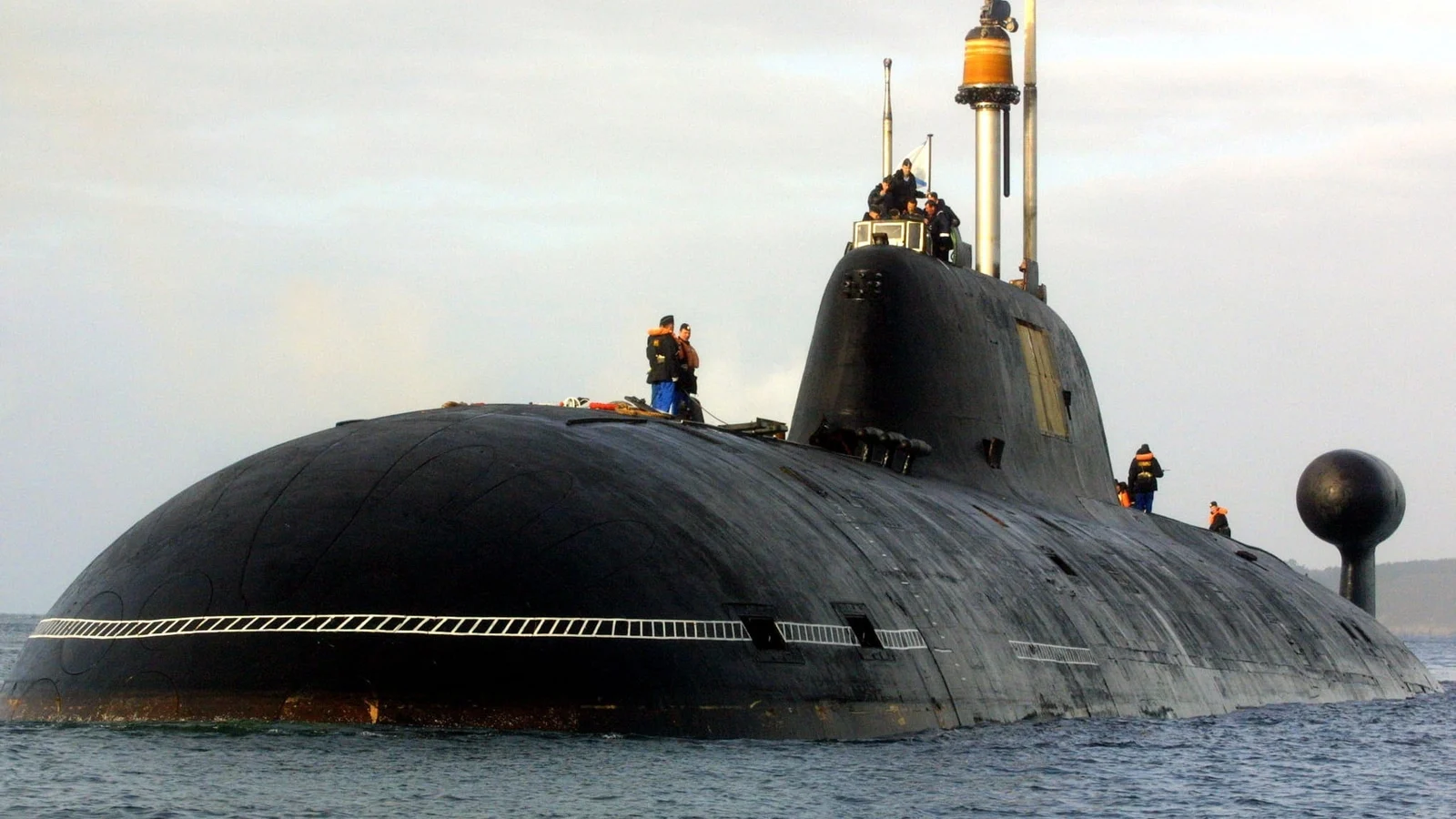
The submarines reported were an Akula-class nuclear attack submarine and two vessels associated with the Main Directorate of Deep-Sea Research, commonly known by the Russian acronym GUGI. The Akula series are purpose-built for anti-submarine and anti-surface warfare; their appearance signals a military intent to operate in contested spaces.
GUGI is less well understood by the public but not by observers. “They aren’t just doing academic oceanography,” said Dr. Nina Petrov, a defence analyst who has studied undersea operations. “GUGI assets have been linked to deep-sea work—robotic submersibles, cable approaches, and recovery tasks—that can have both scientific and strategic applications.” Past reporting has tied GUGI to vehicles capable of working at extreme depths, which raises the stakes when such vessels appear near vital seabed infrastructure.
Allies, coordination and the art of deterrence
What made this operation noticeable was not just the hardware—it was the coordination. Britain, Norway and other allies set a watch in waters north of the UK at a time when global attention was intensely focused elsewhere. That matters. Strategic opportunism is a logic of modern conflict: while the world watches one crisis, another actor can probe, test, or try to work in obscurity.
Captain Lars Eriksen of the Royal Norwegian Navy put it plainly: “We were side by side with our British colleagues. In the North Atlantic, proximity breeds cooperation. We track, we share, and we make sure nobody slips through unnoticed.”
Allies reported 24/7 monitoring. Surveillance imposed costs on the intruding vessels and—crucially—exposed their movements. “If you’re going to run a covert operation, the last thing you want is to be visible,” said one defence source. “The message we sent was: you are being seen.”
From the quays to the cabinet table
Onshore, the story rippled through fishing villages and naval towns. “We saw the P‑8s out for days,” said Iain MacLeod, a fisherman from the Orkney Islands. “You get used to noticing things—the planes, the big ships—and there’s a quiet reassurance when they’re around.” For local communities that depend on a healthy sea and safe shipping lanes, undersea security is a practical, everyday concern, not an abstract policy debate.
At the same time, the episode landed back in London’s corridors of power. Defence briefings, diplomatic demarches and allied coordination all played a part. Officials framed the operation as a measured deterrent rather than a provocation—a posture that aims to avoid escalation while making clear that certain behaviors will be observed and countered.
Why the North Atlantic matters now
The timing and place of this patrol are significant. The North Atlantic is a strategic thoroughfare connecting Europe and North America, threaded with underwater infrastructure and transit routes that both economy and security depend upon. Recent years have seen a renewed emphasis on undersea competition: navies have returned to the ocean’s depths with modern submarines, new sensors have improved detection, and the protection of seabed assets has become a diplomatic and military priority.
“We talk about the ‘high seas’ like they’re empty spaces,” Dr. Petrov reflected. “But they are full of critical infrastructure—cables, pipelines, and even scientific installations. That makes the seabed a frontier in strategic competition.”
Questions worth asking
As readers, what should we take from an episode that happened largely out of sight? First, that modern security increasingly depends on domains most people rarely think about: the electromagnetic spectrum, space, and the ocean floor. Second, that deterrence often takes the form of patient observation rather than headlines and explosions. And third, that alliances matter; shared awareness is frequently the first line of defense.
How would you feel knowing the cables that route your video calls or bank transfers pass under waters where foreign submarines might operate? Does visible monitoring comfort you or unsettle you? These are not merely technical concerns—they touch on trust, sovereignty, and what it means to secure an interconnected world.
A quiet end to a noisy risk
After weeks of tracking and shadowing, the Akula reportedly retreated home, and the two GUGI-associated vessels departed northward. For now, the incident ended without overt confrontation. But the episode underscores a broader reality: the instruments of power have grown stealthier, and much of the pressure between states now plays out in quiet, demanding theaters where skill and patience matter more than spectacle.
“We didn’t make a show of it,” said a defence official. “But presence itself is a statement.”
As the ocean returns to its unremarkable rhythms, the silence that follows is not the absence of risk—it’s an invitation to remain watchful. The waves may look the same tomorrow, but beneath them the world’s great powers continue to test boundaries, map vulnerabilities, and write the rules of a new, hidden frontier. Will we notice only when something goes wrong, or will we learn to value the quiet work that keeps our digital and physical lives moving? That is the choice facing democracies—and their seas—today.