On the Brink: How a Patchwork of Diplomacy Aims to Stitch a War-Torn Tomorrow
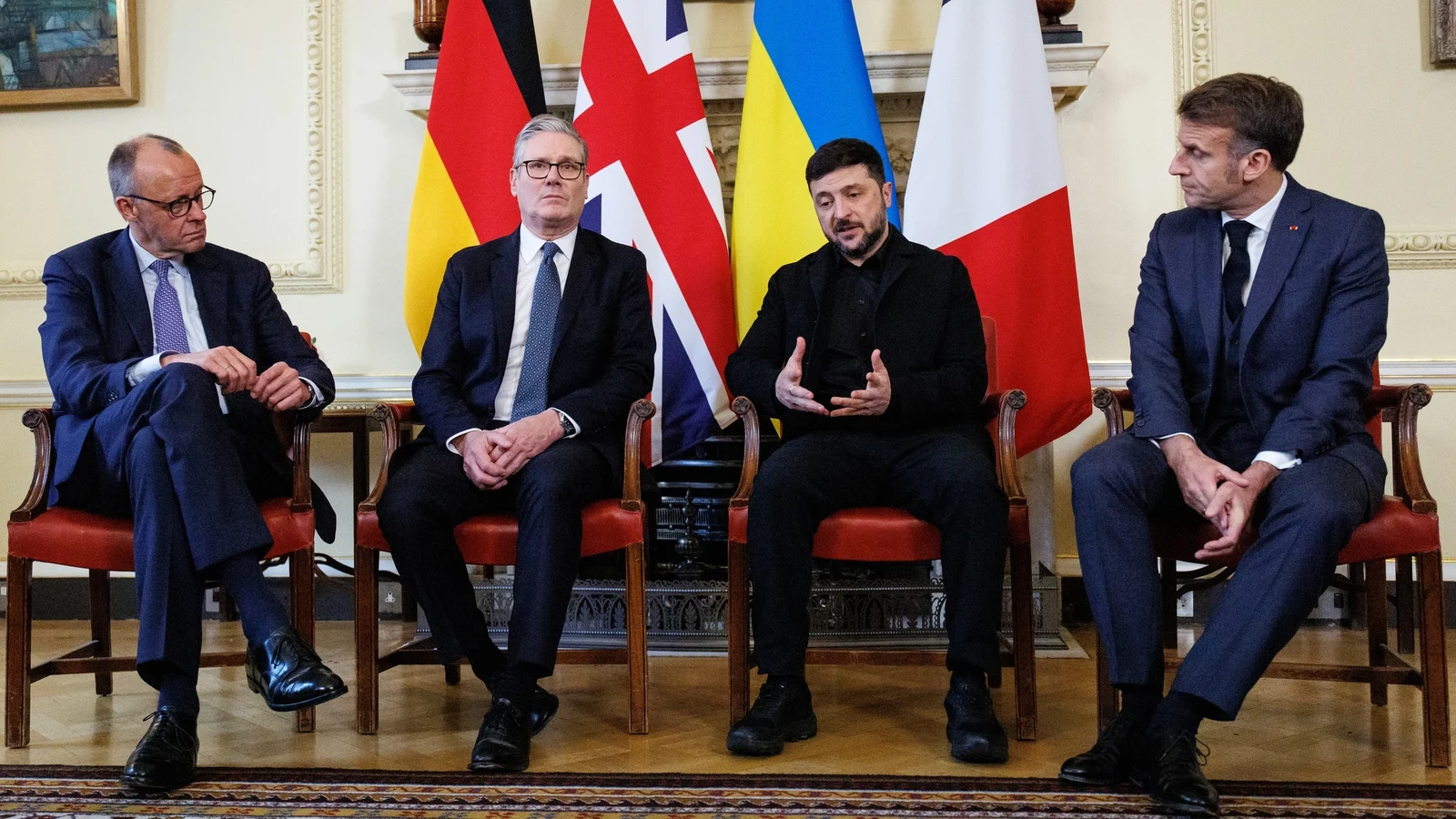
There is a particular hush that settles over a city when its leaders return from a long day of talks — the kind of silence that carries the weight of urgent possibility. In Kyiv, that hush was pierced this week by a single, concise message from President Volodymyr Zelensky: Ukraine and its European partners have refined a set of documents they are ready to hand to the United States — a fresh peace architecture, he suggested, born of tense conversations in London among British, French and German leaders.
It reads like the opening of a new chapter. It also feels like the middle of an old, stubborn one: a war that began with a full-scale Russian invasion in February 2022 and has since reshaped the lives of millions, fractured the map, and reconfigured geopolitics. The documents Zelensky referenced are not silver bullets. They are a mosaic — a 20-point framework, a set of security guarantees and a reconstruction plan, according to Finnish President Alexander Stubb — and they carry with them the hope of a negotiated end and the risk of costly compromise.
What diplomats traded in London
Imagine a conference room in London: coffee cups cooling beside diplomatic briefs, maps unfolded like the skin of a globe; voices low and urgent. That is where, officials say, European partners worked to tighten the contours of a Ukrainian proposal. The goal was not to draft a surrender, but to prepare a document the United States could scrutinize, refine and — perhaps — use to broker something wider.
“The Ukrainian and European components are now more developed, and we are ready to present them to our partners in the US,” Zelensky wrote on X, signaling a readiness to move the conversation across the Atlantic. “Together with the American side, we expect to swiftly make the potential steps as doable as possible.”
Finnish President Alexander Stubb framed the breakthrough bluntly at an event in Helsinki: delegates had labored on three complementary texts — a 20-point roadmap, a package of security guarantees, and a reconstruction plan. “I think we are closer to a peace agreement than we have been at any time since the war began,” he said, his voice carrying the weary optimism of someone who has watched conflict ebb and surge.
What’s in the packet?
From the fragments available publicly and through conversations with analysts, the documents aim to knit together several imperatives: preserve Ukrainian sovereignty, deter future aggression with enforceable guarantees, and lay the groundwork for rebuilding cities and lives. Put simply:
- A framework of mutual commitments and timelines — the so-called 20-point plan.
- Security guarantees backed by a coalition of states, possibly including collective defense mechanisms, rapid-reaction contingents, and long-term training and equipment pledges.
- A reconstruction strategy that links finance, governance reforms and international oversight to ensure transparency and sustainability.
These are not mere legal niceties. They are lifelines for towns like Kupiansk and Bakhmut, where the war has hollowed out neighborhoods, and for countless families who measure their futures in whether bridges are rebuilt and wells returned to service.
Pressure from Washington and a chorus of caution
But the pathway to agreement is jagged. Washington has been pressing for a deal that can be achieved quickly — a posture that has generated pushback in Kyiv, where the memory of territorial losses and the specter of vague guarantees breed skepticism. At the same time, President Donald Trump publicly signaled impatience: “They’re much bigger. They’re much stronger in that sense,” he told Politico, speaking of Russia’s battlefield momentum, and urged Zelensky to consider concessions. “He would have to get on the ball and start … accepting things,” the interview continued, a hard-edged nudge that landed like a stone in a still pond.
Inside the United Nations Security Council, the American deputy ambassador, Jennifer Locetta, said U.S. efforts were aimed at bridging the chasm between Kyiv and Moscow to achieve “a permanent ceasefire and a mutually agreed peace deal that leaves Ukraine sovereign and independent and with an opportunity for real prosperity.” Russia’s UN ambassador, Vassily Nebenzia, cast the proposals as reasonable and insisted that Russia would achieve its aims “in any event,” whether through diplomacy or force.
Voices from the ground
Diplomacy is not an abstract exercise to those whose lives have been rearranged by it. In a small teahouse in Lysychansk, a café tiled with floral curtains and decorated with hand-painted teapots, Olena, a teacher, sipped her tea and looked at a city map marked with pins where her students used to live.
“We want peace,” she said simply. “But peace without our children’s schools, without the names of our streets and without accountability — what kind of peace is that? We are tired, but we are not willing to sell our history.”
Across the frontline, a middle-aged mechanic in a factory town near the Donbas, who asked not to be named, was more pragmatic. “If our men don’t come home this winter, we will vote for anything that brings them back,” he said. “Reconstruction, guarantees — words are easy. I want bolts, boilers, bread.”
Experts watching the back-and-forth warn against equating speed with justice. “A rushed settlement without enforceable security architecture and clear verification creates the risk of frozen conflict,” said Dr. Mira Kovac, a conflict resolution specialist who has analyzed post-conflict transitions in Eastern Europe. “If guarantees are not backed by credible military and economic commitments, history shows they can be breached.”
The larger picture: Why this matters globally
What happens next in the talks is not just a matter for Ukraine and Russia; it is a bellwether for a global order facing multiple stresses. From energy markets to NATO’s cohesion, from refugee flows to norms about territorial integrity, the stakes are broad. A settlement that holds could reset regional security and spur reconstruction across a devastated industrial belt. A botched deal could leave the region in perpetual limbo — and embolden revisionist powers elsewhere.
Consider the migration map: millions have been displaced, with neighboring European nations absorbing refugees and the international community shouldering humanitarian and fiscal burdens. Consider the economic toll: infrastructure destroyed, harvests interrupted and a construction bill that will run into tens of billions if not more. And consider credibility: what message does a failed negotiation send to states watching from the margins?
Questions for the reader
How should international guarantees be structured to be both firm and politically acceptable? Can reconstruction be insulated from corruption and capture? Is a peace that preserves the core institutions and identity of Ukraine possible without further territorial concessions?
These are not theoretical queries. They are the hard questions that will determine whether the refined documents Zelensky plans to send to Washington become the scaffolding of real peace — or another shelf of unfulfilled promises.
What comes next
In the next days and weeks, the US will pore over the proposals from Kyiv and its European partners. Expect more shuttle diplomacy — officials crisscrossing capitals, late-night calls, legal teams tracing every clause. Expect counteroffers and new red lines to be drawn. And expect the lives of ordinary people — those who have spent years learning how to live with sirens and cellars and rationed hope — to hang in the balance.
“We cannot trade our future for temporary quiet,” a Ukrainian municipal official told me. “If the world wants peace, let it be peace that can be lived in.”
So we wait, not as idle spectators but as participants in a global drama. A patchwork of documents is headed to Washington; whether it becomes a blueprint for durable peace or the scaffolding of another stalemate will depend on resolve, imagination and the willingness of powers large and small to anchor promises with deeds.